Key Highlights
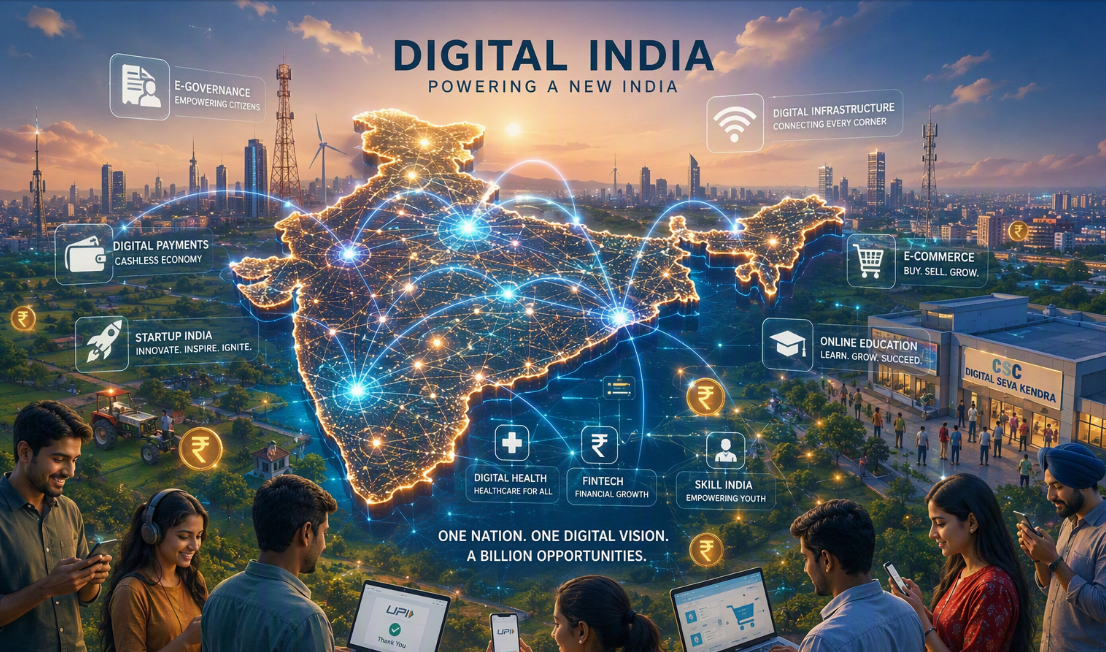
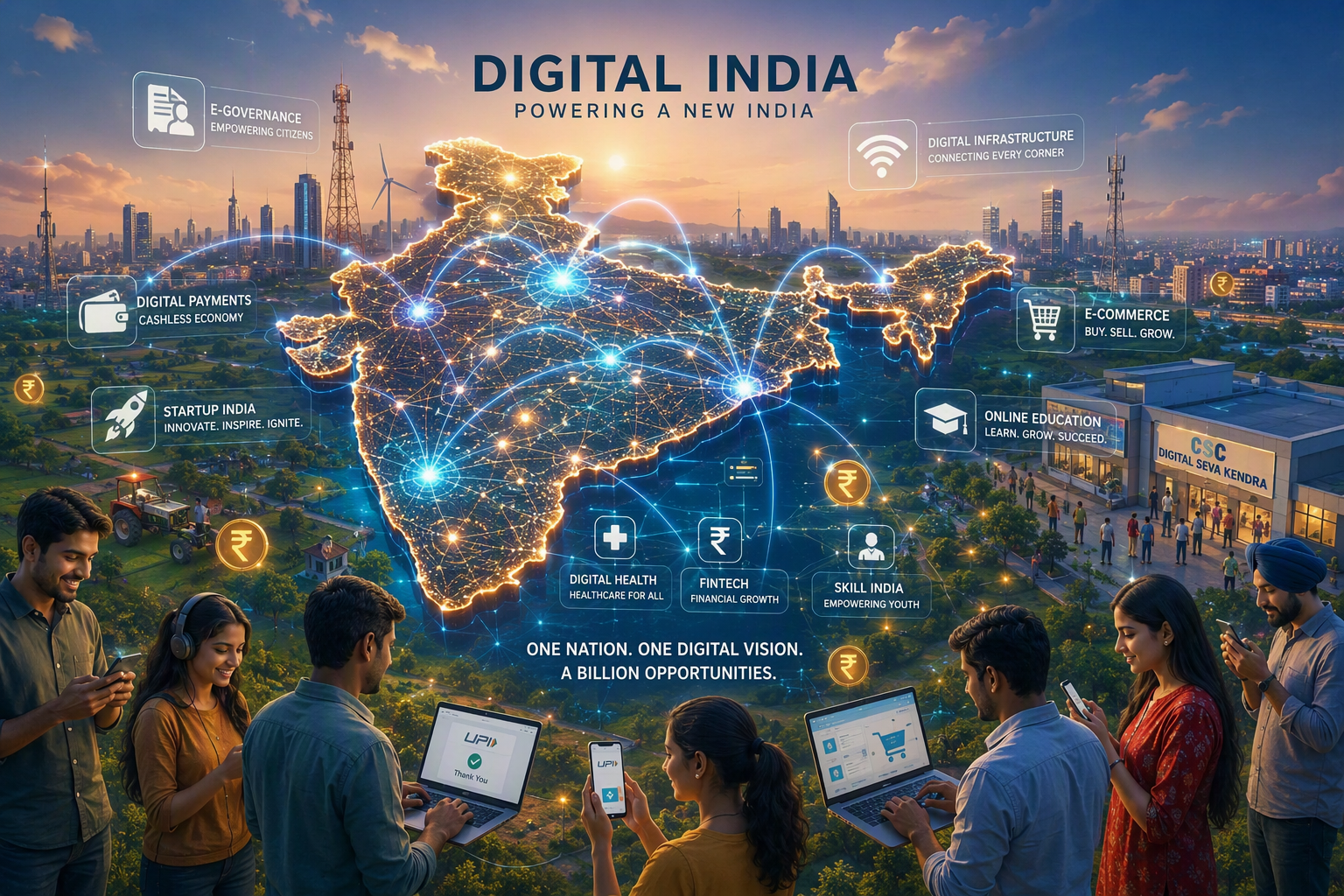
- India’s digital economy is growing fast. It now is a big part of the country’s GDP.
- Digital transformation is changing the way we do things. This is true in governance, markets, and all parts of economic activity.
- Digital payments, like UPI, make it easy for people, small vendors, and service providers to use these services.
- Digital public systems with better internet help more places grow. This also helps us see more inclusive growth.
- But, there is still a digital divide. People in rural areas, remote areas, and those who do not have much money feel this most.
- For UPSC, this topic brings several things together. The digital economy, governance, technology, social justice, and the way they all connect.
Table of Contents
Introduction
India’s digital economy is now a big part of the Indian economy. This is also something you need for UPSC study. The digital economy looks at how digital transformation brings change. It helps business, government work, and public services through digital platforms and systems. These help connect people.
You can see its effect in the way we do payments, public welfare, getting online services, and how new startups grow. But, there are still some problems. It is about who can get it, the cost, and if this is fair for all. So, this topic is important for Prelims, Mains, and the interview stage too.
Defining the Digital Economy in India
In India, the digital economy is the part of the economy that uses digital platforms and digital technologies. People use these tools for different kinds of economic activity. This includes digital commerce, e-governance, online financial services, and work done through new digital platforms.
For UPSC, you need to see digital transformation as both a sector and something that is happening everywhere in the economy. It is not only about IT. Digital transformation also changes how old sectors, public services, and the way people do things in many areas of the country.
Scope and Significance for UPSC Aspirants
If you want to take the UPSC exam, the digital economy is a key topic. You will see it in GS Paper 2, GS Paper 3, and sometimes as an essay topic. The digital economy brings together things like how the government works, use of technology, giving out welfare, jobs, and economic growth. When you go for the personality test, there can be a question about the digital economy if you talk about inclusion, new ideas, or the future development.
The status of digitalisation in India has come a long way and is getting better. India is now the third largest digitalised economy in the world. But when you look at how people use digital tools, India is at number twelve compared to other G20 countries. So, you can see the system is getting better fast, but not all people have a chance to use it the same way.
This topic asks you to see both sides. You should know the facts, like how much the GDP goes up, how many people are in digital literacy, how many work in this area, and the gaps that are there between the states. When you use numbers and also give your own view, your answers will stand out from the rest.
Evolution and Milestones in India’s Digital Landscape
India’s digital transformation happened over time. It started little by little, with good public policies and more people able to use mobile phones. Things also got better for welfare and there was a bigger digital revolution in services. Programs such as Digital India and the JAM Trinity helped a lot. The growth of the unified payments interface changed how the government, people, and markets all work together.
Some important steps make it easy to see the present status of digitalisation. These steps help people look at how things like infrastructure, identity, and ways people pay have come together. All these things helped make the indian economy bigger and better.
| Milestone | Significance |
|---|---|
| JAM Trinity | Enabled targeted delivery, identity-based access, and direct benefit transfers |
| Digital India | Expanded digital platforms, governance access, and paperless service delivery |
| Unified Payments Interface | Scaled low-cost, instant digital payments across users and merchants |
| BharatNet | Extended connectivity to gram panchayats and rural regions |
| 5G rollout | Improved speed, adoption, and future-ready digital services |
Key Components of India’s Digital Economy
The main parts of india’s digital economy are digital infrastructure, e-governance systems, fintech networks, digital platforms, and the Unified Payments Interface. All these work together to help digital growth in services, trade, welfare delivery, and jobs.
Another big thing is digital public infrastructure. People need a way to show who they are. They also need a way to pay, and a way to connect with others. But that is not all. People must also have digital literacy. A person having access is not enough without knowing how to use it well. Let’s look at each of these things one by one to get what they mean.
Digital Infrastructure and Connectivity
Digital infrastructure is at the heart of everything we do. It has broadband, mobile networks, smart devices, and tools. These let people and groups use the internet, learn, and do things online. With them, people can do tasks, study, and get what they need. If there is no good internet access, then digital adoption will not grow much.
In India, people are more connected now. This is because of low-cost data, 4G and 5G networks, and BharatNet. BharatNet is trying to get more gram panchayats linked. These changes help the internet user base grow, and people in rural areas now have new digital chances. But some remote places still do not get these benefits.
Key features include:
- BharatNet gives high-speed links to gram panchayats.
- More people now get internet access. This helps with e-commerce, fintech, and public services.
- Rural areas have better ways to connect. This helps close the gap between villages and cities.
E-Governance and Public Service Delivery
E-governance is now a big part of India’s push for digital growth. The government uses digital platforms to give people many services. These services are now faster and more clear for all. This helps the government reach people better, keep losses low, and make administration feel close to the people.
A good example is how direct benefit transfers use digital public infrastructure. The JAM setup helps get support straight to people’s bank accounts. This has led to big savings from DBT. Tools like DigiLocker and CoWIN also show people that digital systems can make it easy for all to get what they need.
Its contribution can be seen in:
- Direct benefit transfers now connect with identity and banking services.
- People now get easier access to financial services and can keep their records without paper.
- There is now more need for digital literacy so people can use these financial services and banking services well.
FinTech, Digital Payments, and UPI Ecosystem
Few places show digital change as well as payments. In India, fintech has seen fast growth. Costs here are low and the systems are simple to use for everyone in their daily life. The unified payments interface is central to this. This system has changed the way people pay, save, and move their money.
UPI has made it easier for more people to use digital payments. This is now common not just in big cities but all over the country. A lot of small vendors, shopkeepers, and other people find it very useful. Many now use QR codes for their daily payments. In October 2024, people did 16.58 billion transactions on UPI, and the total value was Rs 23.49 lakh crore. This shows that digital adoption is helping to bring financial inclusion to all.
This ecosystem matters because it supports:
- You can quickly send payments to users and shops. The cost for this is low.
- There is more financial inclusion for people who live in cities and those in rural areas.
- Fintech is growing fast in our daily life.
Government Initiatives Promoting Digitalisation
Many public plans have helped the growth of digitalisation in India. Some big examples are Digital India, BharatNet, and Startup India. The Ministry of Electronics and Information Technology has also made several policies. Because of these, more people can get services. They get better access, get things done faster, and have more chances to come up with new ideas.
There is support from the Open Network for Digital Commerce and the National Digital Communication Policy. These programs work together to help spread connectivity. They make markets stronger in this way. Because of this, more people and companies can get into the digital economy.
Digital India Program and Its Impact
Digital India began in 2015. It gave the country a new plan to create digital infrastructure. This idea was to help make governance better and help more people use services. Digital India made it possible for services to move to digital platforms. Now, it is much easier to get things done without using paper. This has helped digital transformation happen in many public systems in India.
You can see the effect in how people get services, better welfare help, and how well things go in offices. A platform like DigiLocker made it easier for us to handle our records. Other systems helped more people get services, and things became more clear for everyone. The program also gave a push to digital literacy and helped people use more online services.
Its main impact includes:
- There is a plan to make more digital platforms, so people can use new ways to get services from the government.
- There is help for digital literacy, and this will let more people use these new tools.
- There is also a bigger push for digital transformation, and this will help the government work better as one group.
BharatNet and Rural Connectivity Efforts
BharatNet plays a big role in India’s plan to connect rural areas. The idea is to bring broadband to gram panchayats. This will help increase internet penetration outside the large cities. There are many places in India that do not have good connections, so this work is very important.
The real value of BharatNet is in what people in rural areas can get from it. With a better internet connection, they can use online education. People can also make digital payments and join in e-governance. Small businesses can reach more markets. This helps farmers, small businesses, and families. They can use services that need a good and steady internet connection.
You can remember its role through three points:
- It makes the connection in rural regions stronger at the gram panchayat level.
- It helps internet penetration in places that do not have good service.
- It gives a base for more people to take part in digital things in rural regions.
National Policy on Electronics and Cyber Security
Growth alone is not enough for the digital economy. There is a need for safe systems. Trusted devices and a strong base of electronics in the country are also important. That is the reason why the National Policy on Electronics matters. Right now, India still gets many semiconductors from other countries. Because of this, costs go up and things are not as strong if problems come up.
Cyber security is just as important as any other thing. In 2024, India had over 13 lakh cyber cases. This tells us that we cannot ignore data security. If people do not feel safe using digital systems, then less people will use them. When this happens, the risks can go up for all of us.
To help digitalisation grow, policy needs to be clear about growth and safety. The Digital Personal Data Protection Act gives better personal data protection. At the same time, leaders in information technology should work on safe systems. They should make better ways to keep things safe. People also need to feel trust in these new and old digital systems for a long time.
Economic Impacts of Digitalisation
Digital technologies have changed the way India grows its economy. Now, the country can give better services to people. Digital commerce is growing fast. There is also more efficiency in many sectors. The digital revolution was first seen in technology, but now it is moving into other fields too.
Digital transformation now affects finance, trade, welfare systems, and jobs on platforms. As digital transformation gets bigger, the way people make value also changes. Deals are made in new ways, and the way companies try to be better than others is not the same as before. The next parts will explain these changes in the economy in a simple, easy way.
Influence on GDP Growth and Job Creation
One important thing about digitalisation is that it helps the economy get bigger. From 2022 to 2023, the digital economy became 11.74% of the GDP. We see that this number is set to go up to 13.42% in 2024 and 2025. By 2029 or 2030, it could go up to about 20%. This shows that there is a big change in how the value of goods and services is created and counted, as the digital economy and gross value get bigger.
The labour market is changing very fast. The digital economy now gives jobs to 14.67 million people. This is about 2.55% of all workers. The work people do in the digital economy makes around five times more money than the rest of the market. There are new firms, platform work, and many lakh startups. All these are changing the way people get jobs in the labour market.
Its economic influence appears in:
- The digital field is bringing more support for GDP growth.
- There are more job openings in IT, e-commerce, and platform jobs.
- People see better work done in these jobs when they look at other parts of the economy.
Transformation of Traditional Business Models
Digitalisation has made big changes to many parts of life. It is not only new sectors that feel it. Older fields feel the change now as well. You can see the digitalization of traditional sectors in shops, farming, delivery, and how people get things done. Many businesses that did face-to-face work now use digital commerce. They try QR payments and do more using apps.
This matters a lot for the small businesses and the small vendors. Open digital markets and payment tools help them get customers faster. They also make things run better for them. India does well in business process management. It is also big when it comes to global services that so many use. This shows how using digital tools can change the whole value chain.
You can see this transformation in:
- Now, small vendors get paid with digital payments each day.
- Small businesses now use online shops and service apps.
- The old ways of working are now faster and better because of digital tools.
Enhanced Efficiency in Key Sectors
Another big effect is that people work faster. Digital technologies help people spend less time waiting, bring costs down, and help all know what is going on. That is why banking, welfare offices, health centers, and stores now do things much faster and also work together better.
Financial services make this change easy to see. Now, people can send money or do other fast transactions with just one click. They do not have to fill out many papers. With digital records, it’s easy for anyone to check all the details. In rural regions, people use these services without going far. They do not need middlemen. This makes economic activity grow because there are fewer problems.
Service providers now use digital systems to get better data and stay connected online. This makes it easy for them to do things like move subsidy money, handle shots for vaccines, or make payments to sellers. Digital tools help them work with more people at the same time. The work gets done in the same way each time, which is good for all.
Opportunities and Benefits for India
The digital economy brings many benefits to India. It helps with inclusive growth. It also supports financial inclusion and new ideas. The digital economy lets more people join markets, get services, and find new chances. Now, people who were not in the official system before can take part in it too.
It also helps the country get ready for the future and grow the economy. Startups, new digital tools, and more people getting into modern work can all help the country get better. When digital transformation is open to more people, it can bring good changes for their lives and also help the economy in the whole country.
Inclusive Growth and Financial Empowerment
The digital economy makes it easier for more people to join in when they have better access. A big part of this is financial inclusion. With things like Jan Dhan accounts, direct cash transfers, and mobile payments, people can use the formal financial system. This is one of the best ways for everyone to see more inclusive growth.
Financial empowerment gets stronger when people can get their benefits fast. They can also save their money safely and use banking services without having a lot of cash or always needing help. If payments and accounts are easy to use and check, self-help groups, families, and workers feel more in control. Everyone can see good changes from this.
Its positive role can be summed up in:
- More people now use money accounts and digital payments.
- You can get banking services and welfare money in an easier way.
- Groups who did not get much help before now feel stronger and have more power over their money.
Innovation, Startups, and Global Competitiveness
India is making big moves in digital change. This gives new space for new ideas. Today, there are many startups in the country. They use the latest technology to solve problems in payments, software, services, and stores. This helps people learn better work skills at home. There is also a big chance for Indian companies to answer what people need in other countries.
The numbers here are big. Startup India has helped many businesses grow. Now, there are over 1.4 lakh startups in India. In 2024, Indian startups got USD 30.4 billion, even when things were not easy around the world. Companies in SaaS and digital services show that India can do well in the world by using new technology.
This opportunity stands on three pillars:
- New ideas are making the products and services better. The way people can reach the market is also getting better.
- Startups are getting more chances to grow with help from Startup India.
- Digital ways to do business that can grow are helping companies do well in the world market.
Challenges Faced by India’s Digital Economy
India’s digital economy has seen fast growth in the last few years. But the country still deals with some big issues. The digital divide is still there in India. This gap can be seen between people living in cities and people in rural regions. It also comes between those who have more money and those who do not. A lot of people in rural regions still do not have good ways to get online.
As digital systems get bigger, people are talking more about personal data protection, data rules, and keeping data safe. These things are important. They help build trust, save money, and make things fair. To really know the risks, we need to look at each main problem by itself.
Digital Divide and Access Inequality
The main thing that gets in the way of equal digital growth is the digital divide. Close to 40% of people still do not have internet access. The problem is bigger in rural areas and remote areas. Because of this, not everyone can get the same benefits from digital systems.
Smartphones now cost more for many people. Prices have gone up by about 25% to 35%. On top of that, you have to pay an 18% GST. All this makes it tough for people with low income to buy a phone.
Digital literacy is also a big problem. Right now, only about 38% of people know how to use digital tools well. Even if the internet is there, many people do not join in. This is because they cannot read or use things online.
This inequality appears through:
- There be uneven internet access in some regions and by income groups.
- Lower digital literacy can make it hard for people to use the internet in a good way.
- People in rural areas and remote areas have a greater risk to be left out.
Data Security, Privacy, and Regulatory Concerns
As more of our services are online now, there is a big need to keep data safe and private. People give out things like their money details, ID, and info about services on many websites. If these sites are not safe, people may stop trusting digital adoption very fast.
The number of cyber incidents is a risk for everyone. In 2024, India had over 13 lakh cases like this. This shows that when you go up fast but do not use good safety steps, you can get into big trouble. The rules made for these risks are a problem too. They do not always keep up with how fast new technology comes in.
This is why the Digital Personal Data Protection Act matters so much. India must have stronger personal data protection to build a digital economy people can trust. The country also needs better ways for groups and people to use information technology. Clear rules will help everyone feel safe online. These rules can also help the digital economy grow fast.
Conclusion
Text: > The UK’s equality legislation is based on several pieces of law called Acts:
• Equal Pay Act (1970 in Great Britain, updated in 2010): Makes it illegal to pay different wages to men and women who do the same or similar work.
• Sex Discrimination Act (1975, updated in 2010): Outlaws discrimination in education, training, and jobs because of someone’s sex, pregnancy, or if they are married.
• Race Relations Act (1976, updated in 2010): Makes it illegal to treat someone unfairly because of their skin colour, race, nationality or country they are from.
• Disability Discrimination Act (1995, updated in 2010): Aims to remove barriers that stop disabled people from working, shopping, or using services.
All these Acts were brought together with several updates by the UK Equality Act 2010, so equality laws would be clearer and stronger. Today, this main law helps to protect people from unfair treatment and help the UK be a safer, more equal place for everyone.
How does the digital economy help reduce economic inequality in India?
The digital economy can help lower inequality. It makes financial inclusion better, helps give out welfare more easily, and opens markets to more people. When people in rural areas and remote areas get bank accounts, can make payments online, and have better connectivity, everyone can grow together. But the digital divide is still there. This gap has to be closed so all people can get these benefits.
What steps can be taken to strengthen India’s digital economy?
SAT Words: administer,beneficial,comprehensive,conduct,conventional,convey,criterion,derive,encompass,encounter,evident,imply,parallel,perceive,prevalent,utilize,subsidiary, Keywords: digital economy,digital platforms,digital transformation,digital literacy,information technology
Rephrase the text given above by following all the instructions and using the keywords provided.
Is digitalisation sustainable and resilient for India’s future?
Digital transformation can help shape the future in a good way if it is safe and open to all. When more people get to use digital technologies and feel safe online, they feel part of the change. Strong public systems help make this happen for everyone. This can lead to economic growth and help it last for years. India will need to deal with digital transformation and also use new tools like artificial intelligence to get ready for what is new