Key Highlights
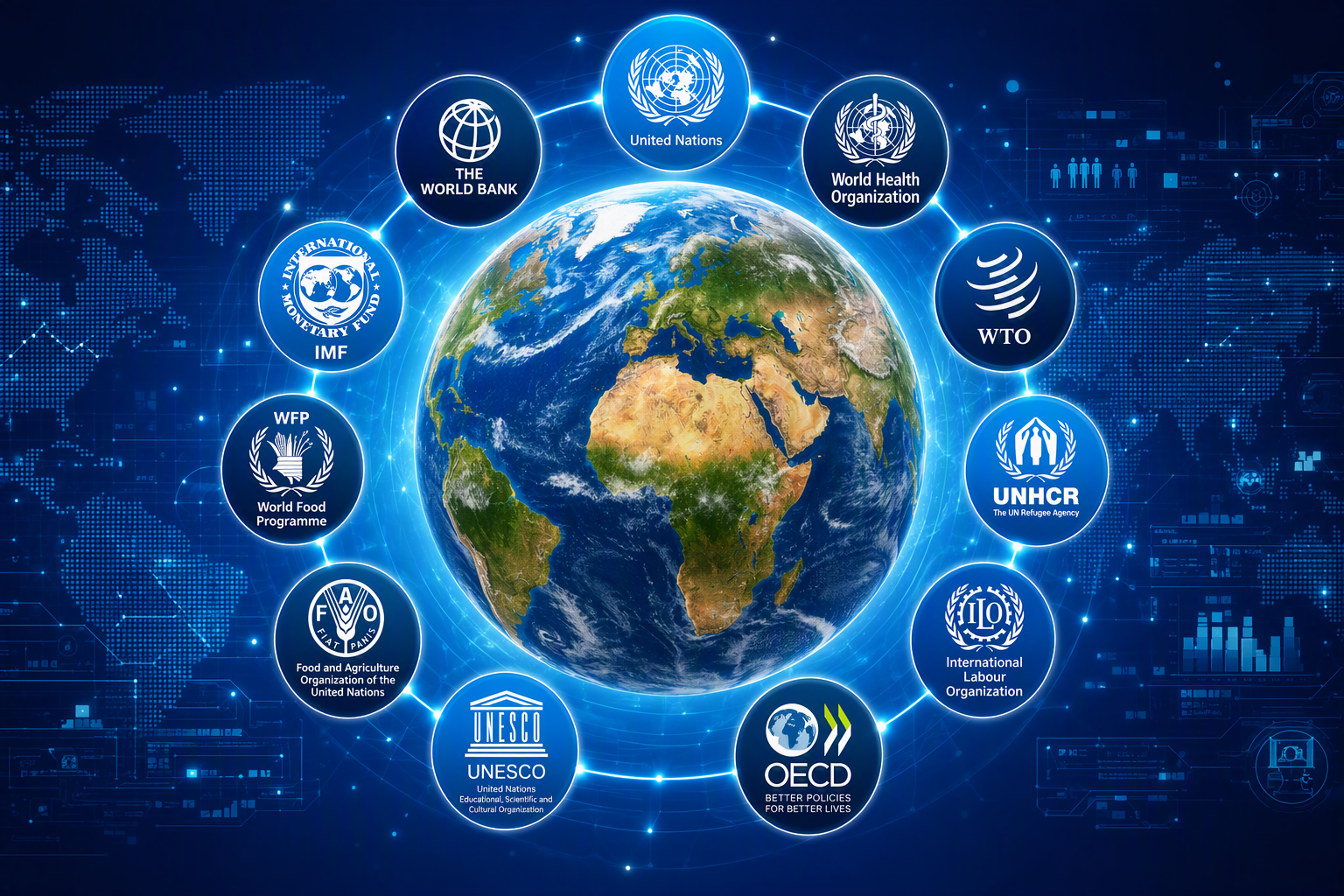
- Important international organizations play a key part in international relations. They are often covered in the UPSC exam and General Studies.
- You need to know where their headquarters are, what they do, and how they help with global governance and international cooperation.
- Many groups linked to economic development, global health, and climate change are common in current affairs.
- The UPSC asks both questions about facts and questions about how member countries and functions work.
- Smart revision can help you with civil services and help you remember better throughout the UPSC syllabus.
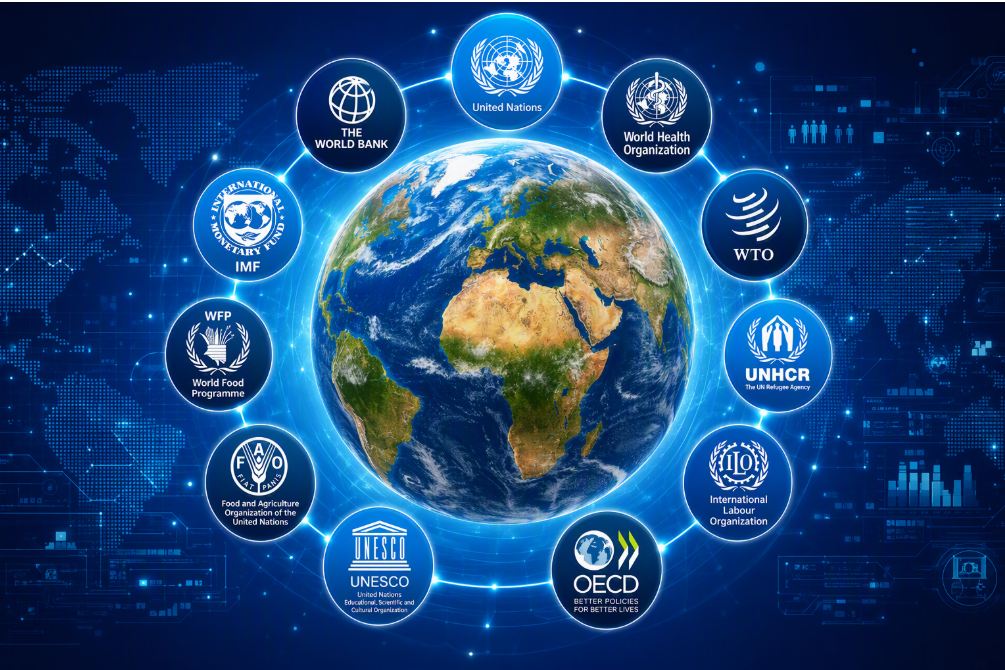
- Most questions come from the United Nations, World Bank, IMF, WTO, WHO, and other related agencies.
Table of Contents
Introduction
If you are getting ready for the UPSC exam, you need to study international organisations. These groups connect to global issues, diplomacy, trade, health, and development. This makes them very important for international relations and General Studies. UPSC asks about this topic in more than one way. They test you with both facts and analysis. So, it is not enough to just know the names. You have to understand what they do. Knowing more about these bodies will help you write better answers, remember facts for prelims, and see how the world works.
Role and Significance of International Organisations in UPSC
International organisations like the United Nations and the World Bank are important. They help set rules and start talks between countries. These groups give aid and help countries work together. They play a big role in global governance and economic cooperation. They also help make peace and support development in different parts of the world.
For the UPSC syllabus, these institutions matter for both facts and ideas. In civil services work, you have to know what they do, where the offices are, and why the countries work with them. This helps you answer direct prelims questions and also gives you good points for mains answers. The next parts explain this in a clear way.
Importance for UPSC Prelims and Mains
For the UPSC exam, international organizations matter a lot. This topic shows up in different ways. In prelims, you will see questions that ask you about facts, like where headquarters are, what they do, or matching answers. In mains, international organizations are part of general studies. They come in through international relations, development, or world institutions.
That is why you need to get ready for this part with memory and understanding. If you look at previous year papers, you will see that UPSC asks direct questions about groups like WHO, IMF, WTO, and UNICEF. So, when you read about them, try to know what each group does, where it is, and why it matters to India.
One good way to prepare for the IAS exam is to use short notes, flashcards, and a prelims test series. You can put places or groups that are alike into one, then read them again and again. This makes the UPSC syllabus feel easier and helps you remember key facts for the exam.
Contributions to Global Governance
International organizations play a big role in global governance. They set up places for countries to talk about problems they all face. These groups also help make rules and norms about trade, health, security, the environment, and social protection. This lets global cooperation happen, even when each country wants different things.
Think about the wide range of work they do. Some groups work for sustainable development and to help with poverty reduction. Others look after human rights, fair work rules, refugees, or food aid. Their help makes it easier to solve big problems that one country can’t fix by itself.
These places help keep the world steady. They want people and groups to talk, work together, and match their plans and rules. For UPSC, you have to know that these places matter not just for running things. The real worth is in setting up strong systems, so people have peace, better lives, and feel like everyone is part of the effort.
Influence on Indian Policies
International organizations often help shape the way India makes its rules about development, health, labor, food, and global deals. The reports, money, and rules they give can be a guide for India’s own plans. This is a main area where international relations and how the country is run join together, and it is important for any UPSC aspirant.
Groups like the World Bank, IMF, ADB, and AIIB want to help with economic development and infrastructure projects. The money and advice they give change how countries plan for growth. They also help with stability and choosing which areas to focus on. Because of these things, they play a big part in talks about economic cooperation.
On the social side, the United Nations system plays a big part in talks about social justice, global health, and food security. The work done by agencies like WHO, FAO, and UNICEF is important. Their work helps connect what is decided at the world level to how things are done in India.
Classification of International Organisations
You can understand this topic more easily if you sort international organisations by what they do. Some are big global bodies and are part of the united nations system. Others focus on areas like trade, money, jobs, migration, science, culture, or health. This simple way to group them helps you get facts quickly in your mind.
Another good way is to keep intergovernmental organizations apart from specialized agencies and those groups that deal with specific issues. This helps when you study for the UPSC, as you can link each group to things like economic growth, help for people, or working together on the world stage. Now, let’s check out these groups one at a time.
United Nations Bodies
The United Nations is the top thing to read about for the UPSC prelims. It has big groups and special teams that work on peace, growth, rights, and helping people. If you want to know what to read first, start with the General Assembly, the UN Security Council, UNICEF, UNDP, UNEP, and UNHRC.
Then go on to groups that help a lot in both current affairs and when you read for static topics. The World Health Organization is very important for global health. The International Labour Organization helps with labour issues. UNHCR, UNCTAD, UNESCO, FAO, WFP, and IAEA are also key groups.
A good way to do well here is to first learn about the body. Next, learn where it is based. After that, know what its main work is. This way can help you feel sure when you answer matching and statement questions. It will also help you with quick examples for mains answers on international relations.
Economic and Financial Institutions
Economic and financial groups are key when we talk about growth, world trade, and development. The main names you must know for UPSC are the World Bank, the World Trade Organization, and the International Monetary Fund. These groups shape world trade, rules, how lending works, and the way countries work together for economic development.
You need to learn about the Asian Development Bank, AIIB, New Development Bank, BIS, OECD, IFC, FATF, and World Economic Forum. Each one has its own job. Some give loans or grants. Some help shape world trade. Others work to make sure there is financial stability or put money into the private sector.
A good shortcut is to put these groups by what they do. Put the IMF, BIS, and FATF with financial stability. Place the World Bank Group, ADB, AIIB, and NDB with development finance. The WTO goes with international trade. This way, it is much easier to remember them when you look back at your notes.
Social, Cultural, and Scientific Agencies
This category is about groups that make a difference in the daily life of people. Some of them work for social justice and labor. There are some others that deal with food security. A few also help with education, culture, science, or intellectual property. These groups are important because UPSC often connects them with big topics like how a country is run and how it grows.
Start with UNESCO, WHO, ILO, FAO, WFP, IOM, and OHCHR. Then add WIPO, IUCN, IPCC, ITU, WMO, CERN, and IOC-UNESCO. These names are important. They link world talks about health, culture, science for the environment, patents, and rules for sharing information.
When you revise, do not see these things as just random points. Make a link between UNESCO and both heritage and education. Connect WHO with health. Join FAO with food and hunger. Bring WIPO in with intellectual property rights. This small step helps you to remember better and give good answers.
Headquarters of Major International Organisations
Headquarters are one of the few things in this topic that you can be tested on easily. In the UPSC exam, you may get questions that ask for the place, or you may see pairs that are wrong just to trick you. So, it is very important to learn where major international organisations have their headquarters. This is a must for general studies and your current affairs revision.
You do not have to learn all the details at one time. Try to learn things in groups. For example, New York is home to the main united nations offices. A lot of health and trade groups are in Geneva. Washington, DC has several big money groups, Paris has cultural groups, and Rome is where food groups are based. When you remember these city groups, it helps you understand global cooperation in a simple way.
United Nations Headquarters and Key Agencies
For UPSC, you will see most questions about headquarters come from the United Nations system. The main United Nations offices are in New York. The General Assembly, UN Security Council, the Secretariat, UNICEF, and UNDP all work from this city. This fact shows up again and again in exams.
Then, there are some city clusters with many big agencies. Geneva is known for the World Health Organization, ILO, UNHCR, UNCTAD, and UNHRC. Vienna is key for UNODC, UNIDO, and IAEA. Paris is the base for UNESCO, while Rome is where FAO, IFAD, and WFP are located. Nairobi is important for UNEP.
Use this quick text table for revision:
| Organization/Body | Headquarters |
|---|---|
| United Nations, UNGA, UNSC, Secretariat | New York, USA |
| UNICEF | New York, USA |
| UNDP | New York, USA |
| World Health Organization | Geneva, Switzerland |
| ILO | Geneva, Switzerland |
| UNHCR | Geneva, Switzerland |
| UNESCO | Paris, France |
| FAO | Rome, Italy |
| WFP | Rome, Italy |
| UNEP | Nairobi, Kenya |
Geneva, Paris, London, and Other Prominent Global Cities
Grouping by city helps you remember where many headquarters are. Geneva is a key place for global health and other areas like labor, trade, and rights. When you think of Geneva, you can think of WHO, WTO, ILO, OHCHR, WIPO, ITU, WMO, and many more international groups.
Paris is easy to remember because of its culture and rules. UNESCO and OECD have their main offices there. Paris is also known for being a place for science and research groups. Rome is known for food and farming. This is because FAO, IFAD, and WFP are in Rome. When you think of Washington, DC, you should right away think of the IMF, the World Bank, the World Bank Group, and IFC.
A good way to remember these cities is to link each one to what it is known for. Geneva is linked to neutrality and international relations. Paris makes you think of culture and education. Washington, DC stands for finance and power. You can use maps, flashcards, and small tests. These tools can help you remember where these headquarters are.
Organizations with Regional Headquarters in India
This topic can be hard for some people, so make your answer short and clear. The main point here is about global headquarters. Do not worry about a big list of places in India. Still, if you are studying for the UPSC exam, it helps to know that some international groups do have offices or a presence in India.
You should keep global headquarters separate from regional offices. For example, the Asian Development Bank has its headquarters in Manila. The World Health Organization is based in Geneva. Both can still matter to India. This is because their work can affect economic development, health needs, and the way policies are made in the country.
If you get a question about offices in India, read it well. UPSC can check if you know the difference between a main office and a smaller regional or country office. This small difference can help you avoid simple mistakes in prelims.
Mandates and Functions of Selected International Organisations
To learn about international organisations, it is important to understand what they are set up to do. A mandate explains why the group is there. The key activities show what it does and how it works day to day. This is useful because UPSC usually asks questions about the role, aim, or the work of an international organisation.
These groups work on a few main themes again and again. They focus on things like economic cooperation, sustainable development, health, labor rights, food relief, trade rules, and working together on science. The World Economic Forum also matters. It helps different people talk about global economic and company problems. The next sections will make it easier to follow what these groups do.
Objectives and Core Activities
The main goals of big groups like the United Nations are simple and based on certain issues. The united nations wants peace, safety, and working together. WHO takes the lead for global health and fights disease. UNESCO helps with teaching, science, and saving culture. FAO focuses on food security. WFP gives humanitarian aid when there is trouble.
Economic institutions each have their own jobs. The IMF helps with economic stability. It also gives financial help. The World Bank Group offers loans and grants. It works to grow development and reduce poverty. The WTO manages trade rules and settles problems that come up. ADB, AIIB, and NDB are there to support infrastructure projects and help economic growth.
When you review your notes, ask one question for each main part: what does it do? This easy practice helps you to understand the details, not just remember facts. It gets you ready for tests that have statements and for answers in exams where you need to give real, clear examples about institutions.
Impact on Member Countries
Member countries get many benefits, but it depends on the institution. Some groups help with financial support. Some set up rules and standards. Others share advice on technical matters or provide help when there is an emergency. This support is important for all. Many problems in a country can also affect other countries.
Take development banks and financial institutions as examples. The World Bank Group, ADB, AIIB, and NDB give money for infrastructure projects and other development needs. The IMF helps keep the finances balanced in a country. These steps can change how fast member countries grow, what policies they pick, and how long it will take for poverty reduction.
Health and social groups also make a big difference. WHO helps shape health policies and fights against diseases. FAO and WFP help to improve food systems and give hunger relief. ILO works for better labor standards. UNHCR helps protect refugees. In UPSC terms, these benefits show that these groups shape both how a country is run and the way it deals with international relations.
Frequently Featured Organisations in UPSC Questions
Some organizations come up often in the UPSC exam. This is because they have a close link to current affairs, global issues, and the basic facts you need to know. When you look at previous year papers or practice questions, you will see that the UPSC likes to ask about groups with known jobs, big roles in the world, or easy-to-ask locations for their office.
If you want a list of key international organisations, start with the ones you see most often. Be sure to read these several times, because they may show up in prelims for facts and in mains as examples.
- The United Nations and its parts like the General Assembly and the UN Security Council
- World Bank and World Bank Group
- International Monetary Fund
- World Trade Organization
- World Health Organization
- UNESCO, FAO, ILO, and UNICEF
This list gives you a good start. When you know these well, you can add ADB, AIIB, FATF, WIPO, UNEP, and IAEA later.
Conclusion
To sum up, knowing about the international organizations is very important for every UPSC aspirant. This helps you increase your knowledge and also get ready for any questions about these topics. These groups have a big role in global governance and they make policies and help with international cooperation. When you know what these organizations do, why they were set up, and when they started, you will do better in your studies.
It’s a good idea to read news and updates about them because they show up often in UPSC exams. While you get ready for this big test, make sure you read from trusted sources and use study books that go deep into the details. All the best for your studies!
How can I remember the headquarters of major international organisations for UPSC?
Use city groups and simple memory tips. For the UPSC exam, learn headquarters by city: Geneva, New York, Washington, DC, Paris, and Rome. Add some flashcards, practice on maps, and use a prelims test series. These easy memory tips can make it much easier to revise international organisations.
Which international organisations have been recently in the news relevant for UPSC?
For current affairs and the UPSC syllabus, you should pay attention to major groups that deal with global issues. This includes the United Nations, World Health Organization, World Bank, IMF, WTO, FATF, and UNEP. These groups often come up when people talk about health, trade, development, security, and the climate. Know what they do, as it is important for UPSC and keeps you updated with current affairs and world issues.
What is the difference between international institutions, agencies, and organisations for UPSC?
For the UPSC exam, you need to know about international organisations in general studies. These groups are big and cover the world. There are agencies that work in certain areas. International institutions are systems with clear jobs to do. The important thing is to understand what they do, how they work, and why they are important. Do not get confused by their names.