Key Highlights
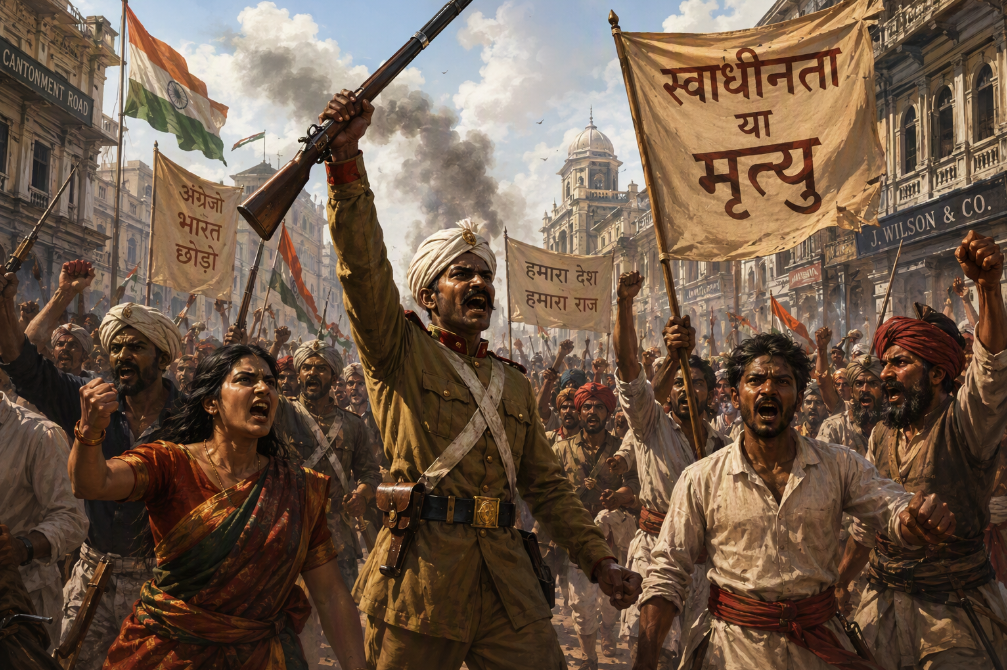
- Indian nationalism in the modern age grew under british rule. Western ideas, reform movements, and anger against colonial exploitation helped this change happen.
- Educated indians, the press, and political associations worked together. They shaped public opinion and helped build a national identity.
- Groups like the indian association helped get indian society ready for more political action. This also led to national unity.
- Dadabhai naoroji talked about economic exploitation. Problems with the civil services made people feel resentment for the first time at this scale.
- The indian national congress gave the nationalist movement an organized platform before the early 20th centuries.
- Later, leaders like bal gangadhar tilak turned this awakening into a fight that many more people joined.
Table of Contents
Introduction
The beginning of modern indian nationalism was an important change. It turned scattered feelings of anger in indian society into organized political awareness. In the 19th century, colonial rule touched many parts of indian society in the same way. This brought people together and made a strong national identity. They started to feel that their problems were not just their own. The issues came from living under foreign rule. This idea helped Indians look beyond their own area or community. It pushed them to move toward a shared public and political life.
Factors Leading to the Rise of Modern Nationalism in India
Modern nationalism in India did not come up because of just one thing. It grew over time. Many changes happened under british rule. New institutions were set up. There was better communication. A common way to manage things brought different regions closer. All these things helped people feel more united than before.
Western education, reform movements, and the rise of public opinion happened at the same time. These gave people a new way to talk about politics. Indians saw that injustice, exclusion, and colonial control were big problems. People started to feel there was a need for a national movement. All these things worked together. They helped build a stronger national identity and set the stage for the nationalist movement.
Political, Administrative, and Economic Unification
One big reason was how british policies helped bring together a huge land. British India was very big. It went from the Himalayas in the north to Cape Comorin in the south. It also stretched from Assam in the east to the Khyber Pass in the west. Some parts were ruled by the british directly. Other places, called princely states, were under indirect rule. Earlier empires managed to form large kingdoms, but this system made a wider way to manage it all.
The British brought in a system where people worked in offices for the government. They also set up one system of judges and rules for the country. These things made how people dealt with the government feel the same in many places. People started to feel that their problems were the same as those in other regions. With time, this helped national unity grow.
Then, the modern means of transport and ways to talk to each other came in. There were railways, roads, telegraphs, and more. These were made for control and economic exploitation. At the same time, they helped connect people and markets across the land. A problem in one part of british india could now be felt in another place. This made it easier for people to see that they had shared interests.
Spread of Western Education and Thought
Western education brought a new world to many Indians. The British set it up mainly for their administration. But this new system also showed students ideas about liberty, democracy, rights, and how to think in a smart way. This made people see how they live under colonial rule in a new way. It gave a political meaning to what was happening in their daily life.
Through english education, many educated indians read writers like Milton, Shelley, Rousseau, Paine, Spencer, Voltaire, and john stuart mill. These writers spoke about how people should ask questions, talk about ideas, and support what’s fair for everyone. With english education, educated indians started to see these ideas and compared them to what was happening in their country. They noticed the difference between these good ideas and the unfairness they saw around them.
The English language acted as a link between different areas. It let leaders from many language groups talk with each other and share what they think. Lawyers, doctors, teachers, and journalists used English to shape public opinion. In this way, western education was not only used to inform people. It made a group of leaders who were well organized.
Rediscovery of India’s Historical Heritage
Another big change came when people started to learn more about India’s past. Both European and Indian experts showed that India was a place with old customs, many parts of culture, solid systems, and busy trade. This idea went against what the British rulers said, who claimed there was nothing special in India’s past.
For many people, the revival helped their national identity. India had greatness in thinking and in how people acted in the past. Because of this, it did not feel like foreign rule was a gift. People started to feel that they could have self-respect and also govern themselves.
This new confidence helped indian society feel a stronger sense of unity. People in different groups could see that they shared a common history. That feeling was important. It helped reform movements and other political activity feel deep. Nationalism was now more than just being upset with rulers. It turned into something that was linked to a feeling of pride for all people together.
Socio-Religious Reform Movements and Their Impact
Socio-religious change helped start the rise of nationalism. Many reform movements worked to get rid of things that made the people weaker from the inside. They had a simple idea: if the people were stronger, they could stand up better to rule from outside.
Groups like the arya samaj and brahmo samaj are important here. These religious reform movements asked people to use reason. They spoke about moral renewal and pointed out customs that do harm. These groups did not bring nationalism by themselves. But they made people talk and think about dignity, reform, and the need to get better together.
They were important for more than just one reason. The main value was in helping people do things better in the world around them. By dealing with problems and old ways of thinking, they helped to bring people together. This made it simple for different groups and classes to work with each other. When the idea of nationalism grew later, it got help from this social change. That is because people were already open to working together and believed they could make things better. This made it easy for the country to feel united.
Growth of Middle-Class Intelligentsia
British changes in how they did things and the economy made a new middle class in cities. The middle class was not very big, but the people in it were active. They stayed connected and had a real influence. There were lawyers, journalists, doctors, and teachers in this group. They shared their ideas with each other and across different places.
The educated middle class played a big part in political education. Because they had more education and jobs, the middle class often worked with official groups. This helped them understand both the idea of rights and how colonial rulers worked. The educated middle class also knew how to bring people together, write petitions, and lead talks on these topics.
This group gave the country many early nationalist leaders. The group started many associations and spoke out against the rules. It also asked for Indians to be part of civil services and the administration. The people in this group could see that the system did not let them in. Because of this, they helped the early nationalist movement by giving it structure, leadership, and letting it continue.
Early Political Associations and Their Contributions
Before the Indian National Congress started, several political associations were doing work in politics. These groups helped teach people how to join the national movement. They spoke up with demands, helped people know about issues, and linked local problems with bigger public issues.
Over time, leadership moved away from wealthy elites and went to educated professionals. This made the way people acted in politics different. Groups like the poona sarvajanik sabha, indian association, and east india association got people in India ready to work together and take action. The next examples will show how actions in different parts of the country helped make an all-India way of looking at politics.
Associations in Bengal: Indian Association, British Indian Association
Bengal was one of the first places where people started organized politics in India. Many political organizations were set up in Bengal before the Congress came. One group was the British Indian Association. It started in 1851 and built on a few earlier groups. The British Indian Association sent requests to the British Parliament. They asked for new laws, lower pay for the officials, that the people who judge don’t also rule, and to lessen some taxes.
Later, a new group of people wanted to do more things. This need brought the indian association of Calcutta in 1876. The group was started by Surendranath Banerjea and Ananda Mohan Bose. The indian association did not stay like the old, small, elite groups. This group wanted more people to join in and take part. They hoped to reach and get help from many different parts of society.
The Indian Association was important because it helped to shape public opinion. It spoke out against lowering the age for the civil service exam. Members of the Indian Association wanted exams to happen at the same time in India and England. The group also stood up against the Arms Act and strict press laws. In 1883, they held an all-India conference. In Bengal, politics at that time was moving toward nationalism.
Organizations in Bombay: Bombay Presidency Association
In western India, political work started to grow. The Poona Sarvajanik Sabha was set up in 1870 by Mahadeo Govind Ranade. This group gave people a new way to take part in public affairs. It brought local problems together with bigger political needs.
Soon after 1885, the bombay presidency association was set up by Badruddin Tyabji, Pherozshah Mehta, and K.T. Telang. The group showed how much hope leaders had after getting western education and taking part in open talk. They looked for change by using rules that were set by the country. They wanted more Indian people to take part in the running of the government.
These political associations in the Bombay Presidency were important. They helped to build much stronger political life outside of Bengal. This showed the national movement was not just in one place. They brought educated people to talk, write petitions, and work together. The Bombay Presidency Association became a big part of the national movement that was growing at that time.
Political Groups in Madras: Madras Mahajan Sabha
Southern India played a part in the rise of early nationalism, too. The madras mahajan sabha started in 1884. M. Viraraghavachari, B. Subramaniya Aiyer, and P. Anandacharlu were the people who set it up. It went on to be one of the main political associations in Madras. This was before Congress got known all over the country.
The value of this was in getting local leaders to take part in public life together. These leaders talked about how things were run. They spoke for the concerns of the people. They also worked within the rules of the system. This helped build strong habits for people to meet, talk about politics, and speak as a group.
The bigger effect was on national unity. People in Bengal, Bombay, and Madras started to take the same kind of political steps. Many Indians could see the same things happening to them under colonial rule. This was very important. By the early 20th centuries, this first work made people aware of politics in a wider way. It was not just about where they lived anymore.
British Colonial Policies and the Development of Nationalist Sentiments
Modern nationalism grew because people reacted to british colonial policies. Many in India started to feel that british rule did not help them. Instead, there was more inequality, and many were left out. The british rule led to colonial exploitation in many parts of political, legal, and economic life.
As people went through these things, they stopped seeing the british government as fair. Public opinion changed because meetings, petitions, and newspapers spread new ideas. People started to feel more upset when they saw racial bias, hard times with money, and how some laws divided people. All this made them get together and turn against the british government in a stronger way.
Reactionary Policies and Racial Discrimination
Many harsh rules showed what colonial power was really like. When Lytton was in charge, the age for the Indian Civil Service exam was made lower, and this made it hard for many Indian hopefuls. At the same time, there was a big gathering in Delhi while a famine was going on. This made people feel angry and stop trusting the rulers.
Then, the british government brought in laws that were unfair. The vernacular press act of 1878 tried to stop newspapers that were not in English from saying anything bad about government rules. The Arms Act from the same year did not let Indians use guns like others could. Many people thought this was a way to make them feel bad and not equal. Because of these laws, people started to feel more angry with the british government.
The Ilbert Bill showed everyone the clear reality. Strong pushback from Europeans against giving more power to Indian magistrates showed open racial discrimination. Many Indian people saw that equal treatment was not easy in colonial rule. These things changed public opinion and showed leaders how important protest and public mobilization could be.
Role of Economic Exploitation in Fostering Nationalism
Economic issues helped make nationalism strong. Over time, people in India saw that poverty and being left behind were not just by chance. They were caused by british rule and how it took resources. This understanding brought together peasants, workers, artisans, professionals, and new business owners. They all began to feel the same political complaints because of this.
Leaders like dadabhai naoroji talked a lot about colonial exploitation. He showed how there was a drain of wealth from India and an unfair economic link between India and Britain. By saying this, he helped the national movement with a strong economic reason, not just feelings or pride. Now, nationalism was based on facts about money too.
Here is a simple summary:
| Issue | Nationalist understanding |
|---|---|
| Poverty in India | Linked to colonial exploitation |
| Economic policies | Served British interests over Indian welfare |
| Shared suffering | Brought different social groups closer |
| Dadabhai Naoroji’s role | Explained economic exploitation clearly |
Divide and Rule Policy and Its Effects
Another bad side of colonial rule was the plan to divide and rule. British policies often split people up instead of helping them come together for a common civic life. This made trust weak between people and made it tough for them to join and resist together.
But the policy led to something unexpected. When Indians saw that colonial rule got help from making people feel divided, some leaders started to push harder for national unity. People began to feel that coming together against the rulers was the best way to stop those in charge from breaking up society.
The partition of bengal is the best-known case like this. Many people did not see it as just an act of administration. They saw it as a way to weaken the new political awareness. The response made nationalism move forward to a new level. People began to feel that unity was more than an idea. It was something they needed to fight the dividing power of colonial rule.
Socio-Religious Reform and Its Influence on Nationalism
Nationalism did not just happen because of politics. Reform movements changed the way people thought and lived. These groups went against old ways that were no longer good. They told people to change indian society with better values and ideas. The reform movements helped make the country better for all.
This was important because social reform and the national awakening often happened together. Efforts with groups like the arya samaj helped people feel more sure of themselves. They gave people self-respect and a fresh start on the inside. These efforts also made people talk about things like education, respect, and how to give power to women. The next sections show how these changes helped people think and feel more like a nation.
Arya Samaj, Brahmo Samaj, and Aligarh Movement
The arya samaj and brahmo samaj are two of the most well-known religious reform movements from that time. These reform movements wanted people to ask questions about the things they did that were not good for them. They also asked people to think again about the way they live, by using reason and thinking about what is right. This was important because the society was having many problems from inside and there was foreign rule, too.
The Aligarh movement helped bring about social and clear thinking changes. It did this by supporting modern education. These movements had different focuses. But, they all showed that indian society can move forward when people work for it. This means that real change can happen if people take action and do not just accept things as they are.
Their link to nationalism was not direct, but it was real. They helped build national identity by pushing for reform, teaching people, and growing self-respect. When a group of people start to believe they can get better, they also start to want more political respect. These movements helped people think in new ways, so it was easier for them to get together for political reasons later.
Participation of Regional Leaders in Social Reform
Social change did not happen because of groups alone. People who led in different parts of the country helped to push for change. They spoke at events, started groups, and led public drives. Their work helped give the people new hope. It also helped more people wake up to new political ideas.
Many educated Indians who went into public life did not see social reform and politics as two separate things. They knew that if Indian society was split and weak, it would be hard for people to take action together. This is why they worked to cut down on bad customs, bring more education to people, and make public behavior better. All of this helped build a stronger feel of working together for everyone.
This is important for knowing why the national movement grew stronger. The idea of nationalism was not just something that happened in government places or political meetings. It spread out into towns, groups that wanted change, and talks led by well-known people from different areas. These leaders taught society to see things in a bigger way. They helped normal people get ready, so when the big political questions came up, these people could take action.
Empowerment of Women and Social Change
A big part of social change was to talk more about where women stand in society. Reform movements started to make people think about the need for respect, education, and better living for women. Because of this, the idea of progress became about more than just politics.
Women’s empowerment was important because nationalism wanted a stronger and more aware group of people. When people tried to fix problems that women faced, they were also looking at rules that held everyone back. In this way, change in society helped build indian society from the inside.
This by itself did not make a big nationalist movement, but it did make it stronger. A group of people asking for freedom from colonial rule also had to think about the problems in their own society. That link between trying to improve themselves and working for everyone made the nationalist movement feel more real and showed it was very serious about what it wanted to do.
Formation and Significance of the Indian National Congress
The indian national congress started in 1885. This was a big step for organized nationalism in India. Before this, many political organizations worked in their own areas. The indian national congress brought these groups together. It gave them one platform to talk about the problems people faced. The Congress helped make these issues important for the whole country.
Its importance was in bringing together leaders from many parts of british india. This helped people talk, sign petitions, and ask for things together. It made national unity stronger. In the early 20th centuries, what it did grew even more. But at first, it was good for making an all-India space for politics.
Objectives and Role in Uniting Indians
At the start, the indian national congress wanted to bring together Indians who cared about politics. They planned to make one platform where these people could meet. The national congress gave leaders from different regions a place to talk about their shared issues. They could also make demands together. This was a big step for indian nationalism.
It played a real and clear part in national unity. The delegates from far-off provinces would come together. They would talk, share what they thought, and see that they had common problems. A larger group of people who cared about politics started to grow. Meeting again and again helped build a strong sense of unity. This is how their meetings helped national unity become deeper.
The Congress helped with political education. It showed leaders how to write resolutions and ask for what they wanted in a good way. It also taught them how to follow the rules. At the same time, the Congress helped people learn about things like representation, rights, and reform. Because of this, the Congress did more than just follow nationalism. It helped to build it in the first place.
Key Personalities in the Early Congress Era
The early Congress era saw several nationalist leaders play a key role in shaping public life. Some of the leaders worked for changes within the law. Later, others pushed for a stronger, more forceful way of working. These leaders, working together, helped make Indian politics bigger and more open to people.
There are a few important names from this period that people remember, even into the early 20th centuries.
- Dadabhai Naoroji spoke out about how the colonial rule hurt the people and the economy.
- Gopal Krishna Gokhale was known for his calm way, his wish to bring change, and how he taught others about politics.
- Bal Gangadhar Tilak showed a stronger and louder form of nationalism.
- Surendranath Banerjea played a big role in making people aware of politics before and near the start of the Congress.
These people were important because they turned the anger of the public into planned politics. Their speeches, what they wrote, and with whom they met, made the need for a nation to feel real. Though each had their own way to do things, they all helped more people in India care about politics and made the Congress party reach more people.
Congress Sessions and Early Political Demands
The early congress sessions were like a school for those in politics. Leaders would come together, talk, and learn how to speak about issues in a way the whole country could understand. These meetings helped turn local worries into shared political requests. They also helped people get used to working together.
The first political goals were not extreme, but they mattered. People wanted the rules to be better. They asked for more Indians to help with running the country. They also wanted everyone to get a fair chance at higher jobs. Groups before this had talked about these issues. But now, the Congress showed these demands across the whole country.
This process was important for political education. It showed leaders and all people that if they were organized, they could make a change in what was talked about. The change might be slow, but it could happen. The first Congress did not start a big national protest. Still, it set things up for the bigger nationalist movement that would come after. That long time of getting ready was one of its most important things it gave us.
The Moderate Phase (1885–1905): Ideas and Methods
The moderate phase from 1885 to 1905 matters as it gave early indian nationalism its first clear political shape. At this time, leaders used petitions, gatherings, resolutions, and public talks to show Indian concerns within a constitutional way.
This stage might seem small when you look at later mass struggles, but it was very important. It tied earlier political associations to a bigger nationalist movement and helped teach a group of people how to act in politics. By the early 20th centuries, this work made a stronger and more bold nationalism possible.
Moderate Leaders and Their Approaches
The moderate leaders thought that reasoned talks and giving people a say could help make life better in India. They wanted change, but they wanted it to happen slowly. These leaders worked with political associations. They often gave public speeches and made careful demands. They trusted using rules and laws to make things better, not fighting or causing conflicts.
Among the leading figures were:
- dadabhai naoroji talked about the economic reasons behind the unfair things done during colonial rule.
- gopal krishna gokhale spoke about the need for change, open talks, and helping the public.
- Pherozshah Mehta worked on making better groups for city and political work.
- Surendranath Banerjea helped more people know about politics in different areas.
They wanted to build strong groups and shape how people think. They asked for more chances for Indians to join the civil services. They wanted Indian people to have a bigger role in running the country and called for fairness before the law. Some leaders later thought they were too careful. But still, these moderate leaders set up the first steady base for politics across India. They also gave the idea of nationalism a smart, well-put voice.
Demands for Administrative Reforms
Moderate nationalism showed itself mostly in calls for changes in how the government worked. The leaders asked for Indians to have a bigger role in running things. They wanted better laws and a system where people were not left out because of their race. These demands were not extreme, but they did ask people to think about how much power the British had in India.
The ilbert bill controversy showed the strong racial bias in the empire. A lot of Indians saw that even a small step towards legal equality got a lot of pushback. This made the need for change feel even stronger. Many wanted more Indian control in public life and better rules to support this.
The Indian National Congress brought these worries to the whole country. With talks and debate, it turned problems into plans to change things for the better. This was a way for people to learn about politics. Indians started to know how state power worked and where people were left out. They saw why fixing how things ran was tied to the bigger idea of Indian nationalism. The Indian National Congress helped people understand political education too.
Evolution Towards More Assertive Forms of Nationalism
The moderate phase did not stop nationalism. It got it ready for a change. As people got tired of seeing slow progress, they started to like stronger actions and politics that had more feeling. Nationalist ideas got stronger and felt more important.
The reaction to the partition of Bengal was one big change. It started the swadeshi movement. In this, people were told to stop buying British things and trust their own work and goods. This was not just about asking in a calm way anymore. Now, many people were part of it, and they used public action and did things which hit the economy.
In the years that came after, these trends grew and became stronger. They turned into the home rule movement and later into civil disobedience. These actions were different steps, but they started because people understood that just asking for changes through laws would not change the way colonial power worked.
Conclusion
To sum up, learning about the start of modern nationalism in India shows how many things worked together to build the nation’s identity. The push for both political and economic unity helped lead people to feel more together as one group. Reform movements about society and religion also played a big role by getting people to think about change. Early political associations and the forming of the Indian National Congress were big steps in the road to India’s freedom. When you look at these first steps, you see the strength and drive that helped people fight for their rights. If you are getting ready for your UPSC exams, knowing these main points will help you in your studies. It will also give you a better understanding of India’s deep and rich history. For more help and support, feel free to reach out!
What were the main differences between early and later phases of nationalism in India?
Early indian nationalism wanted changes by sending petitions, having meetings, and asking for new rules under british rule. It hoped to make people aware of the issues and bring people together. Later, the national movement grew stronger and reached more people. The methods then included things like boycotts and civil disobedience.
Why is the period 1885–1905 considered significant in the growth of Indian nationalism?
This period is important because the Indian National Congress changed earlier political associations into an all-India group. During this moderate phase, the leaders worked to build national unity. They also helped people develop habits for politics and set up clear demands together. These years gave the nationalist movement strong organization, clear direction, and a lasting national system.
What are some important UPSC questions regarding the beginning of modern nationalism in India?
Some common UPSC questions are about the effect of british policies and what caused indian nationalism. Many also focus on the role of the indian national congress. The importance of western education comes up often. Another topic is how economic criticism changed things. There are also questions that connect this time to the freedom struggle and to new events in the early 20th centuries.