Key Highlights
- The Mughal Empire started after the First Battle of Panipat in the year 1526.
- Babur, Humayun, Emperor Akbar, Shah Jahan, and Aurangzeb are the main Mughal rulers you need to know for UPSC.
- You should focus on the Battle of Panipat, how the Mughal empire spread, and the changes to the Mughal throne.
- It is important to read about revenue collection, the mansabdari system, and how the central administration worked.
- Make sure to remember Mughal architecture with places like Fatehpur Sikri, the Red Fort, and the Taj Mahal.
- To understand the decline of the Mughal Empire, link the problems inside the empire with what the East India Company did.
Table of Contents
Introduction
The Mughal Empire is a big topic in Indian history for people who want to clear the UPSC exam. It helped shape the mughal era by its wars, the way it ran things, art, and buildings all over the Indian subcontinent. When you read about the mughal empire, you are not just trying to remember names of people who ruled. You get to know how power worked during the time called medieval india, how the mughal empire grew, and what made it weaker later. This is why people say the mughal empire is very important for both prelims and writing answers in mains.
Overview of the Mughal Empire for UPSC Prelims
The Mughal Empire began in 1526. Babur, who came from Central Asia, started it after he won the Battle of Panipat. This was the beginning of an important time in Indian history led by the Mughal dynasty.
For the UPSC prelims, you need to pay close attention to the order of mughal rulers, the big battles, the system of how they ran things, and their monuments. These are some of the most important mughal empire topics that you should focus on to do well in the UPSC exams. In the next parts, we will break this down into clear and easy exam points.
Origins and Establishment of Mughal Rule
The Mughal Empire started with Babur. He is known as the founder of the Mughal Empire. Babur was a prince from Central Asia. He came into North India when the Delhi Sultanate was no longer strong. This is important because the UPSC often asks about the start of the Mughal Empire and wants you to link it to what was happening in that time.
In 1526, Babur won against Ibrahim Lodi in the first battle of panipat. This win let him take control of Delhi and Agra. It set up the start of mughal india. The battle of panipat was not just a fight that was won. It also moved power from the Lodi family to a new ruling group.
After the battle of Panipat, Babur worked to make his rule stronger. He did this by fighting more battles against Rajput and Afghan rivals. Babur is mostly known as the one who started the empire. The rulers who came after him made the empire grow bigger and more stable. The bigger story about this empire begins with him.
Geographical Expansion and Key Regions
The Mughal Empire grew over time and took control of a large part of the Indian subcontinent. The rule of later emperors, especially Aurangzeb, was when the Mughal Empire became the strongest and reached its greatest territorial extent. For UPSC, you should always link the expansion of the Mughal Empire to the rulers and the regions that they ruled.
Some places stand out because they show both the take over of land and the way rulers kept their control. Other places are important because they became signs of mughal architecture and the power of the state.
- Delhi was an important political center for a long time. Later, people built big monuments there like the Red Fort.
- Agra and Fatehpur Sikri became big imperial centers when Akbar and the rulers after him were in power.
- The empire went from Kabul all the way to Bengal, and from Kashmir down to much of the Deccan.
So, when you read about big battles and the things the mughal empire won, also look at where the power was. Try to see the regions linked to culture and the work of running the mughal empire.
Timeline of Important Events in Mughal History
A simple timeline can help you in prelims. The Mughal Empire started in 1526. This happened when the Battle of Panipat took place. The empire grew bigger when Akbar ruled it. There was cultural growth when Jahangir and Shah Jahan were in power. The Mughal Empire became largest when Aurangzeb ruled.
After 1707, the mughal throne was not strong. There were many fights for power. The mughal emperors could not hold on to their land. Their state became smaller until it ended in 1857. In the next part, you can read about big changes in their family lines and important wars.
Major Dynastic Changes and Battles
The history of the Mughal Empire is easier to remember if you link the rulers with big fights and changes in power. A few main things shaped how the Mughal empire came up, grew strong, and later grew weak. The UPSC often asks about this kind of pattern.
Here is a quick text table for revision:
| Event/Change | Importance |
|---|---|
| First Battle of Panipat, 1526 | Babur defeated Ibrahim Lodi and founded Mughal rule |
| Battle of Khanwa, 1527 | Babur defeated Rana Sanga and secured his position |
| Humayun’s loss and return | Lost power to Sher Shah Suri, regained the throne in 1555 |
| War of succession, 1658 | Aurangzeb defeated rivals and captured power |
| Deccan campaigns under Aurangzeb | Expanded territory but exhausted the empire |
These military campaigns show that battles helped the Mughal Empire grow in the beginning. But later, these same wars made it weaker. So, if someone asks you about the big fights and land won by the Mughal Empire, you can start with these examples.
Significant Cultural and Administrative Developments
The mughal era was not just about winning battles. It also had strong central authority. There was a system for revenue collection that worked well. People saw big changes in culture during this time. All of this is why the mughal era is still important in UPSC.
Akbar is special in this way because he brought state building together with wide support for culture. His court gave space for talk, keeping records, and growing art. The empire made its own kind of mughal architecture and mughal painting.
- The Ibadat Khana at Fatehpur Sikri was a place where people talked about religion and ideas.
- Revenue reforms by Todar Mal made the way that assessment and collection were done better.
- The mansabdari and jagirdari systems helped the administration and also kept the army organized.
- Painting and architecture grew with the help and support of the ruler.
If you want to know how the Mughal Empire managed things, the answer starts with their balance. They mixed culture, money, and strong control from the top. This is what helped the Mughal Empire stay strong and run well.
Major Rulers of the Mughal Empire
The main Mughal rulers to know are Babur, Humayun, Akbar, Jahangir, Shah Jahan, and Aurangzeb. These Mughal emperors helped the Mughal dynasty grow and change. They played a big part in how it started, grew, and later had problems.
For Indian history, it’s important to not just remember the names on the mughal throne. Try to connect every ruler to one or two main things they did or big changes they made. The next sections will help you review each ruler. This way of revising matches how UPSC often makes its questions.
Achievements of Babur and Humayun
Babur was the founder of the Mughal Empire. He was one of the important early rulers to know for the UPSC. His win in the Battle of Panipat in 1526 let him take control of Delhi and Agra. After that, he beat Rana Sanga at Khanwa and made his control over the mughal empire even stronger.
Humayun was the son of Babur. He got the mughal throne, but the state was weak. After losing battles at Chausa and Kannauj, Sher Shah Suri took the mughal throne from him. This stop in mughal rule is important. The UPSC exam sometimes asks about times when mughal rule was broken.
Later, Humayun came back with help from the Persians and took control of Delhi again in 1555. His time as ruler was short, but it brought back the Mughal dynasty before Akbar took power. Bairam Khan then played a key role as regent for the young Akbar, which helped connect Humayun’s return with the Mughal comeback.
Akbar’s Reforms and Contributions
Akbar was one of the greatest rulers of the Mughal Empire. He expanded the territory of the empire. He made the administration stronger. Because of his work, the empire stayed strong for a long time. If you need to write about who the main rulers of the Mughal Empire were and what they did, Akbar should be at the center of your answer.
His rule is known for its religious tolerance and a wide way of governing. He took away the jizya tax. He supported Sulh-i-Kul and let people talk and share ideas in the Ibadat Khana. He also helped art grow, with a special love for Mughal painting and building new things.
- He brought in and made the mansabdari system stronger.
- He made revenue administration better with Todar Mal’s reforms.
- He built Fatehpur Sikri, which is a big example of mughal architecture.
Akbar is important because he brought together winning battles, making rules, and shaping culture in a way that few other rulers did.
Jahangir, Shah Jahan, and Aurangzeb: Policies and Legacy
Jahangir helped keep things steady after Akbar. He kept using many of the rules and ideas from before. People remember his rule for its fancy court life and because he gave a lot of support to art and painting. Nur Jahan had a big say in what happened in the empire. His own writing about his life helps us know more about court life and how things worked back then.
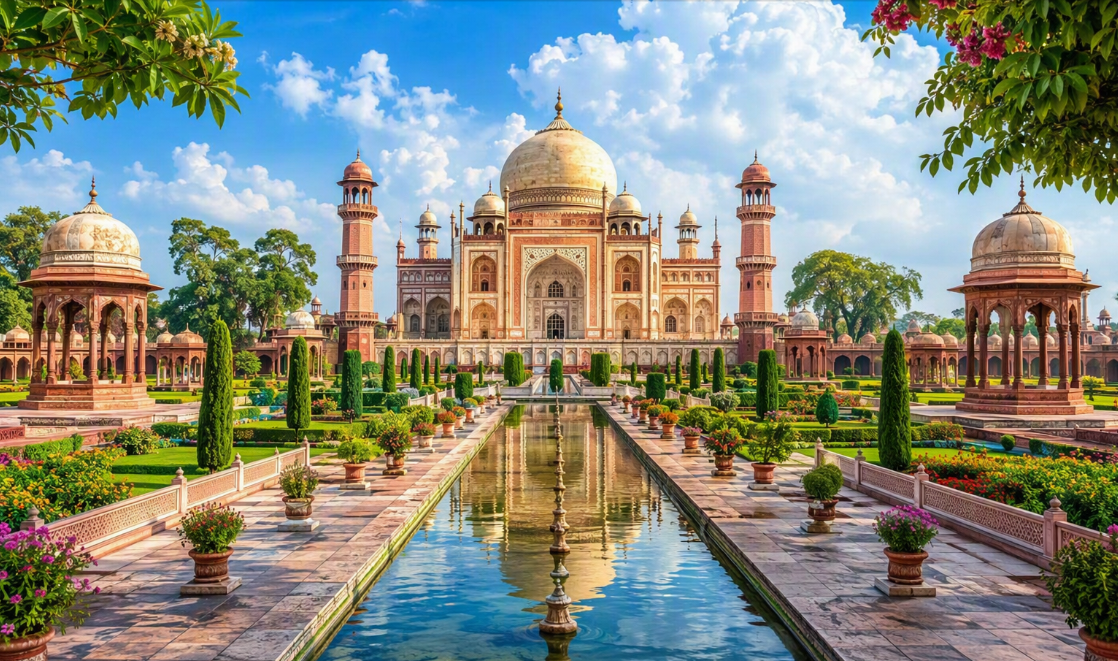
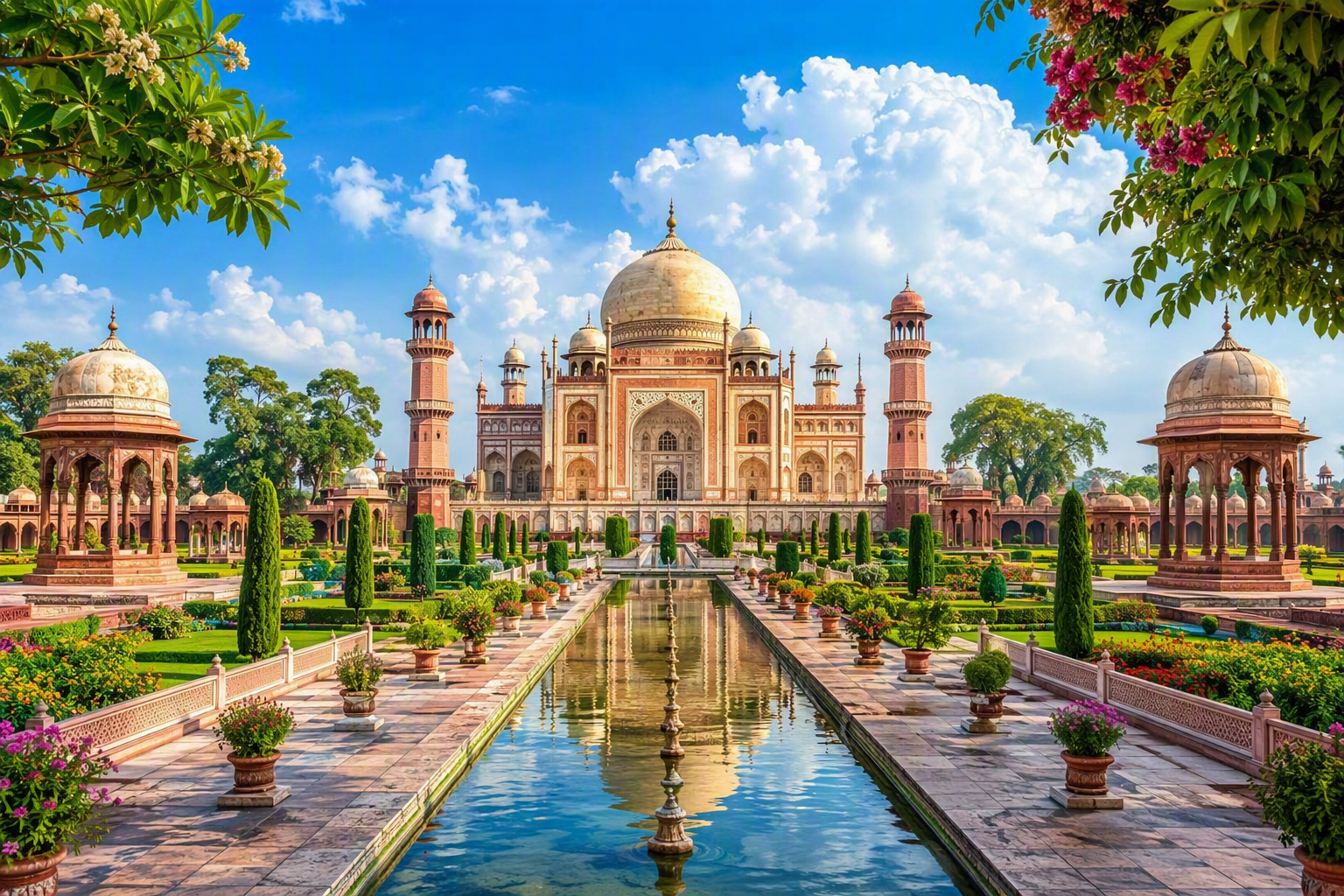
Shah Jahan’s reign is known as the golden age of Mughal architecture. During this time, the Taj Mahal, Red Fort, and Jama Masjid were built. The empire was not just full of culture and beauty in this era, but it was also a time of prosperity. Land revenue was well managed under Shah Jahan’s reign as well.
Aurangzeb used many military campaigns to make the empire as big as it would ever be. But these wins also brought some problems. He made religious rules stricter and brought back the jizya tax. The long wars in Deccan made the state weaker. Because of this, what we get from his time is both growth and loss.
Administration Structure in the Mughal Empire
The Mughal Empire was run through a central system. The emperor was always at the top. After him came the ministers and then the officers who worked in the provinces. The system had control over the army, government, and money. This setup forms the main structure of how the mughal empire was managed.
Key topics cover the mansabdari system, revenue collection, and roles like the Mir Bakshi. If you want to get how the Mughal Empire worked, read the next two sections. They talk first about central governance and then about land and revenue.
Central Governance and Mansabdari System
The emperor was at the top of the government and he held all the power. A group of leading officials helped him. They took care of things like money, the army, religion, and the royal workshops. This central administration made it possible for the mughal rulers to control such a big empire.
One office you need to know is the Mir Bakshi. The Mir Bakshi looked after the military. The Diwan was the one to take care of money matters. Other people handled justice and dealt with religion. Provinces were split into smaller parts, so this made it easier to keep things under control.
The mansabdari system was a way for the Mughal Empire to organize its officials by ranks. A mansabdar had a certain rank. This showed his position and told how many cavalrymen he had to bring. Their pay was tied to land assignments. So, they got land to collect money from, but these mansabdars were not owners of the land by birth. They were just holders of land assignments. This system was a big part of how the Mughal Empire was run in that time.
Revenue Collection and Land Reforms
Revenue collection was at the center of the Mughal state. A big part of the income came from land revenue. This was usually taken as a part of the crops grown by the people. For the UPSC exam, you should clearly know the difference between jagirdars and zamindars. Make sure you get that part right.
Land reforms got better organized under Akbar. The use of measurement and classification methods grew, and these were tied to Todar Mal. Jagirs were land assignments given instead of a salary. They could be moved from one person to another. On the other hand, zamindars had local claims that passed on in their families. They used to collect dues from people.
- Jagirdars were holders of land assignments. They were connected to official work.
- Zamindars were holders of revenue rights. They mostly handled collecting revenue at the local level.
- UPSC has said that the revenue rights of zamindars and land assignments to jagirdars should not be mixed up with hereditary office and police duties.
These basics help make your administration answers a lot better.
Society and Culture under the Mughals
Society in the mughal era was made up of many groups. In mughal india, there were nobles, people who were scholars, zamindars, farmers, workers, shopkeepers, and people who worked close to the king. This way of life shaped how politics, taxes, and daily living were for all.
Culture is just as important for UPSC as other topics. In court life, people got to enjoy literature, gardens, music, and mughal painting. Architecture played a big part in adding to Indian heritage. If you want to pick main topics to read, social order and cultural production should be right with battles and administration.
Social Hierarchy and Religious Policies
The social order in Mughal society was shaped by things like birth, job, religion, and who could reach power. Nobles, people who studied, and big landowners were the top groups. Peasants and makers helped run the farm life. In indian history, people often connect this layered society with how the state used power.
Rural life had many zamindars, peasants, and small local communities. In cities, there were merchants, bankers, skilled workers, and people who thought deeply about many things. The holders of revenue rights were powerful in several places, as having control over the money from farming meant they had local power.
Religious policy was not the same under all rulers. Akbar is famous for his religious tolerance and wanted to include people of all groups. On the other hand, Aurangzeb had a much stricter way with religion. For UPSC, you need to know how these religious ideas shaped central authority, taxes, and the power of the empire. Do not look at religion like it is a stand-alone subject.
Art, Architecture, and Persian Influence
Mughal art mixed styles from Persian, Indian, and Central Asian places. The art and buildings from the Mughal Empire are some of the most important topics to look at for UPSC exams. You might see questions about their monuments, styles, the people who supported the art, and life at court.
Architecture changed with each new ruler. But some places come up again and again in exams. Painting got a big boost from the emperors, especially during the time of Akbar and Jahangir. You should review the monuments and also remember who made them.
- Agra Fort and Fatehpur Sikri have a close link with Akbar.
- The Taj Mahal, Red Fort, and Jama Masjid are important buildings from shah jahan’s time.
- Mughal painting first had a Persian feel, but later started to show more faces and scenes from nature.
This part has facts, pictures, and things you can check. So make sure to look over it carefully.
Notable Battles and Conquests of Mughal Era
Battles played a big part in the early history of the Mughal Empire. The First Battle of Panipat, along with Khanwa, Chanderi, and Ghagra, helped the Mughal Empire grow fast under Babur. These military conquests let the Mughals take control in North India. The battle of Panipat was important for the Mughal Empire’s rise and set the way for their rule.
The later part of the Mughal Empire is also important, and this is when Aurangzeb led big military campaigns in the Deccan. If you need to talk about the important battles and wins of the Mughal Empire, start with Babur. Then, talk about how the empire grew and what it lost after that. The next sections will go over all this in order.
First Battle of Panipat and Khanwa
Babur’s early wins are key to seeing how the Mughal Empire began. The First Battle of Panipat in 1526 and the Battle of Khanwa in 1527 are the two main events in this story. The UPSC often asks about both of these fights.
The first battle of panipat was important for the mughal empire. The battle of panipat set the way for the mughal empire’s growth in India.
The battle of Panipat was important because it gave Babur both Delhi and Agra after he beat Ibrahim Lodi. A year later, Babur had to face a big challenge when Rana Sanga of Mewar, a strong Rajput leader, fought against him. Babur’s win at Khanwa made his control stronger and helped him keep his new lands.
- In the First Battle of Panipat in 1526, Babur won over Ibrahim Lodi.
- In the Battle of Khanwa in 1527, Babur beat Rana Sanga of Mewar.
- These big wins helped Babur make strong control over North India.
So, when you look back at the big battles and wins of the Mughal Empire, you should start with these two.
Later Mughal Conflicts and Territorial Losses
As the empire got older, battles did not always mean more land. The fights also led to it getting too large and losing power. Aurangzeb’s Deccan campaigns made the empire bigger than ever. But these battles used up a lot of resources and kept the state fighting almost all the time.
After he died, there were many wars of succession. This made the center weak. The later mughal rulers could not control the regional powers or the ambitious nobles. The Marathas and Sikhs, who were regional powers, started to grow stronger. Because of this, the empire could not control many provinces the way it did before.
The crisis got worse when Nadir Shah invaded in 1739. This showed that the Mughal Empire was weak. It also led to the empire losing more land. So if you get a UPSC question about the big battles and wins of the Mughal Empire, do not only talk about the good times. Also say how the later fights, like Nadir Shah’s raid, made the mughal empire much weaker.
Decline of the Mughal Empire: Key Points for UPSC
The decline of the Mughal Empire is a topic that often comes up in UPSC because it touches the politics, the economy, fighting, and the coming of foreign rule. After Aurangzeb, the Mughal Empire started to get weak. There was trouble inside, fights about who should rule next, and also lots of pressure from regions around them.
As the main power became weak, new states got stronger. The East India Company started to have more control in that time. This all ended for good with Bahadur Shah II in 1857. The following parts will show the inside causes apart from the money reasons and outside causes. This helps you get a quick look back.
Internal Strife and Successor States
One big reason the Mughal era went down was the war of succession that happened again and again. These fights hurt the monarchy, split up the nobles, and made central authority weak. In the later Mughal era, rulers spent their time on fights in the court and not on good rule.
As control over the area weakened, new states and local powers started to become stronger. The empire did not have enough strength to make people in its old lands stay loyal. This change is important for the UPSC. It shows how different regional powers started to grow after a long time with just one empire. This is how political areas broke up into many parts.
- Disputes about who would take over after strong rulers made things at the center less steady.
- New states came up when local leaders and groups started to act on their own.
Unlike what happened during the early battle of panipat, the later years show that the empire could not use the military power to build lasting unity.
Economic and External Factors
Political weakness got worse because of money problems. Revenue collection went down as fighting grew. Provinces were not stable, and resources ran out. This drop in the economy made it hard for the empire to keep armies and run the government well.
External invasions made the crisis even worse. Nadir Shah’s attack hurt the empire a lot. It took away its wealth and prestige. At this time, the East India Company started to grow its power in Indian politics and trade.
- The economy got worse because farms did not make as much food as before. There was more stress, and the use of what they had was not good.
- Attacks from outside and pressure from other countries made the empire fall faster.
Here are the main things you need to know about the decline of the Mughal Empire for UPSC. The mughal empire started to make less money. There were a lot of outside attacks. Also, the center of the mughal empire had become so weak that it could not get back on its feet.
UPSC Mughal Empire PYQ, MCQ, and Practice Section
Yes, you can practice the Mughal Empire by solving previous year questions. The UPSC often asks both direct facts and questions that need more thought about Indian history. In prelims, you may get questions on things like how jagirdars and zamindars are different or who supported art at that time. In mains, there could be questions about Akbar’s religious ideas or about the Persian books written during the Mughal Empire. It is good to use previous year questions to get ready for both types.
For mughal empire UPSC MCQ practice, it is good to go over the topics one by one. Focus on rulers, battles, administration, culture, and decline. This way, you can spot patterns in the questions. Some people ask if practice questions for UPSC mains about the mughal empire are available and if topic-wise questions on mughal emperors come up in prelims. The answer is yes. PYQ analysis shows that they do appear.
Topic-Wise UPSC Mughal Empire PYQ and mughal empire upsc mcq
A topic-wise revision is good for Mughal history. It helps you group facts and not mix up rulers, their policies, or the monuments. When you read Indian history, read previous year questions with your own mughal empire upsc mcq notes. This will help you feel sure about what you know.
Based on trends from the previous year, these areas keep being useful:
- Administration: There are differences between a jagirdar and a zamindar. These two had different revenue rights and land assignments.
- Culture: Which ruler worked to promote albums and single portraits.
- Foundation: Babur came here and started the Timurid line.
- Main themes: Akbar’s religious syncretism was important. He used many sources, including some from Persian writing.
Yes, I can help you with previous year UPSC questions about the Mughal Empire. These can cover things like Akbar’s ideas from different cultures, the use of Persian sources, the difference between a Jagirdar and a Zamindar, how Jahangir used portraits, and how Babur first came to India. It is good to group these by topic. This will help you remember them better when you study the mughal empire for the exam.
Conclusion
To sum up, it is important for people preparing for UPSC to know about the Mughal Empire. If you want to do well in your prelims exam, you need to learn about the mughal empire’s beginnings, main rulers, how they ran the empire, and what they added to culture. This will help make your knowledge better and can also give you a better chance to do well. It is good to pay attention to big events and what they meant, because many questions in the exam use this as the base. When you study for the test, practice with questions from past years and use practice books or papers. This will help you see how much you know and where you need to work more. Start learning about the mughal empire now, and if you want more help or resources, feel free to ask.
What were the achievements of Akbar during the Mughal era?
Akbar made the Mughal empire larger. He made the mansabdari system stronger. He also worked on improving the way administration and revenue were handled. Akbar was known for his religious tolerance. He showed this through Sulh-i-Kul. Akbar also supported mughal painting and mughal architecture, especially at Fatehpur Sikri. These things made him one of the most important mughal rulers.
How did Sher Shah Suri influence the Mughal period?
Sher Shah Suri stopped the Mughal rule for a while when he beat Humayun. He is important in Indian history not just for this, but also for his strong way of running things. His rule is known for better revenue collection and changes in land rules. For the UPSC exam, he is important because the Mughal Empire had to work hard to get back power after he took over. Later, the mughal empire had to fix things and bring back control.
Are there topic-wise UPSC Mughal Empire PYQ for prelims practice?
Yes, you can put the previous year Mughal questions in groups by topic. You can use topics like mughal emperors, administration, battles, culture, and decline. This will help you get better practice with mughal empire upsc mcq. PYQ trends show that these topics often come up again, so going over each topic is a good way for you to get ready for prelims.