Key Highlights
- The UPSC syllabus for history includes topics from ancient, medieval, and modern Indian history. You will see these parts in both the prelims syllabus and the mains syllabus.
- For the civil services examination, you must give more time to modern Indian history and the freedom struggle in your study material.
- The history section is also linked to current affairs. It is mostly about heritage, important people, and big events that happened in Indian history.
- If you choose history as one of your optional subjects, the upsc syllabus will be bigger. It will have topics about Indian culture and world history as well.
- You can get the latest PDF from the official website. This helps you make sure you read all the topics you need for your exams.
Table of Contents
Introduction
If you want to get ready for civil services, you should start with indian history from the upsc syllabus. You will find the history syllabus in both the prelims syllabus and the mains syllabus. This helps you build a good base for many other topics. You will read about things like big events from the past and the freedom struggle. The history syllabus can feel big, but it gets easier when you know the right topics to read. This guide explains the complete UPSC history syllabus 2026 in a simple way. Now, you can plan your work with more clarity.
Overview of UPSC History Syllabus 2026
The UPSC syllabus for history in the civil services examination has topics from ancient history, medieval India, and modern history. In the Prelims, you will find questions about big events. The focus is also on famous people and things that helped to shape Indian history.
In Mains, you get to learn more about the subject. The topics are bigger and you look at ideas, reasons, effects, and how these link with current affairs. This is the case for modern history and the social changes that go with it. To truly get this topic, you should know why history matters, how the syllabus is made, and if there will be any new updates in 2026.
Importance of History in UPSC Exam
History is important in civil services. It shows you how institutions, society, and ideas change over time. In the IAS exam, you get questions about more than just dates. They want to see if you know about historical events and trends. These things help shape how people live now and in the future.
For upsc mains, history can help you write better answers. When you know about colonial rule, social reforms, or the national movement, you will feel more confident. You can give thoughtful replies. You also feel closer to topics like culture and the way things are run in the country.
If you are new to civil services, start with easy study material. Learn one step at a time. You should read ancient history, as it helps you have a good base. In this, you will see the part on medieval times. It will show you what changed with time. When you read the modern topics, you will be ready for both short and long answers. That is why history is so helpful when you get ready for civil services.
Structure of the History Syllabus for UPSC
The way history is taught for UPSC is split into different parts. The history section is divided into the prelims syllabus, the mains syllabus, and the optional syllabus. In General Studies for Prelims, history comes under Paper I. The topics you will read include ancient history, medieval india, and modern history.
For Mains, you will need a different plan. In general studies, you have to read about themes like modern indian history, social reforms, indian culture, and world history. Here, it is not enough to just know facts. You have to explain things too. You should know what causes these things, what comes out of them, and why these themes are important.
If you pick history as one of your optional subjects, you will need to learn more things. The optional syllabus is often split into different parts. It has topics from ancient history, medieval history, modern history, and world history. Each part uses history, but how you get ready for it is not the same.
Recent Updates and Changes for 2026
Many people want to know if the upsc syllabus, especially the history syllabus, will change in 2026. Right now, the best idea is to check the upsc syllabus on the official website. This is the most trusted way to be sure you get the right history syllabus.
Right now, the main parts have not changed. These include ancient foundations, medieval times, modern Indian history, British rule, and the freedom struggle. Get ready by putting your time on these big parts. Do not listen to or follow any rumors. Stay with what matters.
Current affairs are still important. While the main topics may not change, the way questions are asked can mix history with current talks about heritage, culture, or big events. So, you should look at the official website often for updates. At the same time, keep your preparation steady.
UPSC History Syllabus for Prelims
In the upsc prelims, history comes under General Studies Paper I. The subject talks about a wide part of indian history. The prelims syllabus has sections on ancient history, medieval india, and modern history. You can get questions on big events. You will also find questions on famous people, the way things work, and cultures that have changed over time.
You need to know some key facts and have a feel for how different times in history link together. The civil services examination will ask questions about many things. You can get questions on the indus valley civilization, british expansion, and the freedom struggle. They want to see if you know the main flow of history and can explain it simply. Now, let’s look at the main parts, one by one.
Topics Covered Under Ancient History
Ancient history in UPSC starts with early cultures. It moves on to tell you how states, empires, and key belief systems started. You have to read about the indus valley civilization and the vedic period. The rise of Magadha, the mauryan empire, and other major dynasties are also very important. You must know about social life, religion, trade routes, literature, art, and inscriptions too. All these topics are a key part of studying ancient history.
A good way to learn is to start with society. Then, look at polity. After that, study culture. This way, you can connect what happens in south India and northern India. You will not feel lost. The facts will feel linked and not split.
Key prelims areas include:
- There were early groups of people in India before. The Indus Valley Civilization came later. It brought new ideas about how towns and streets should be built.
- After that came the Vedic period. Next, the Later Vedic period started. Then, the Mahajanapadas appeared, and the state of Magadha grew strong.
- After this, the Mauryan Empire came up. There were other rulers after it. Big families of rulers, called major dynasties like the Guptas, also ruled at this time.
- During all these times, things like religion, art, and how buildings looked started to change. People started using new language and made inscriptions. Trade routes got bigger, and south India saw a lot of new development.
Keywords: indus valley civilization, vedic period, major dynasties, south india, mauryan empire, later vedic period, trade routes
Coverage of Medieval History in Prelims
Medieval India is part of the prelims syllabus. In this section, you read about changes in politics, how new regions came up, and what life was like for people. It also shows how culture got better with time. You will read about the Delhi Sultanate and the Mughal Empire, along with the Rajput states. The syllabus also covers the Vijayanagara and Bahmani kingdoms, and other parts of India too. There will be questions about trade routes, religious movements, and the coming of Europeans.
The eighteenth century was also an important time. During this time, some old powers got weak. New groups came in to take their place. This is a good way to see how people later took control of lands in other places. A lot of this change happened because of trade and fights.
Main areas include:
- There were many early kingdoms and rulers in the medieval period. These were the Rajput dynasties, Cholas, Pallavas, and some other groups.
- The Delhi Sultanate and the Mughal Empire came later. They grew into big powers. These groups changed how the people were ruled, how the economy worked, and they also changed the culture.
- The Bhakti and Sufi movements began at this time. Society also changed. Things started to change for women and people had new ideas.
- Europeans like the Portuguese, French, and English began to visit. This led to more contact and new battles for power. It led to English expansion, the carnatic wars, and many changes in the eighteenth century.
Key Areas in Modern Indian History for Prelims
Modern Indian history is an important topic in the prelims syllabus. It starts with the British rule and the beginning of colonial rule in India. After that, it covers how people started to push back, the changes that happened, and the freedom struggle. You can get more marks from this part. So, it is good to read it with timelines and review it many times.
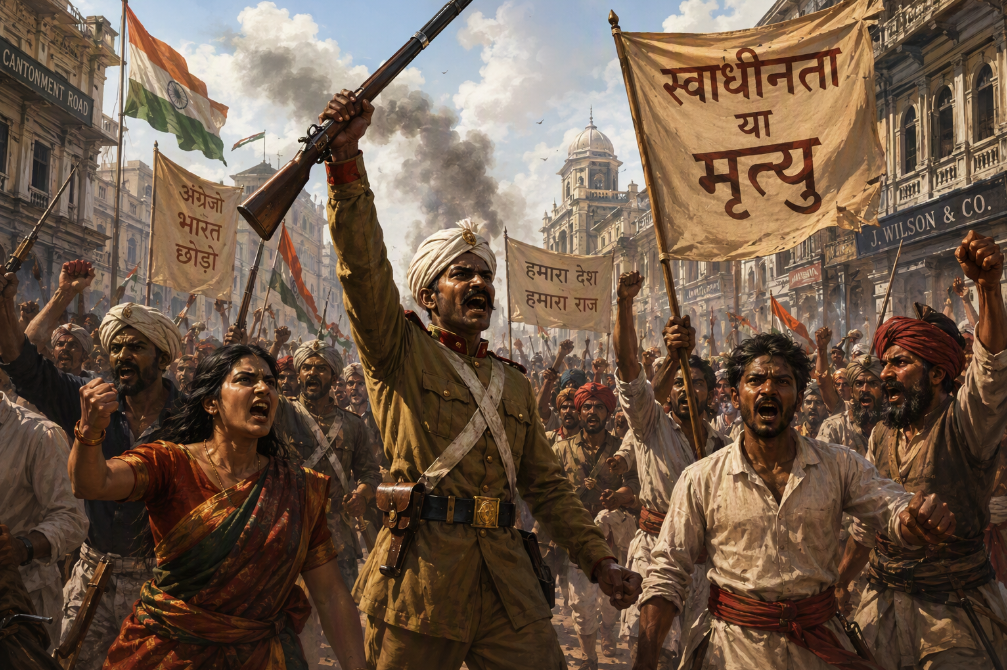
The british expansion changed a lot in India at that time. There were many important events, like the Revolt of 1857, that showed how people did not want foreign rule. This revolt was a big moment in history, and it showed how people came together to fight for their land.
The indian national congress started to grow after these events. It was one way people began to ask for their rights and look for more freedom. Many great leaders took part. They worked hard and started different movements to help people live better lives. Some of these leaders also wanted to bring people together and solve important problems.
Social reform movements played a big role in shaping life in India. These helped people understand new ideas and change things in society that were not good. Many people, because of these movements, learned to think in new ways about their country.
The indian renaissance also had a big effect on India. This was a time when new ideas, learning, and changes in art and thought came into the country. All these changes helped make india the country it is today.
Focus on these areas:
- European trading companies came to India. This is how the british expansion began. Later, they put the country under colonial rule. This rule changed a lot for the people and had a big economic impact.
- There was a big revolt of 1857 against the british. After that, people started the swadeshi movement. Then, the Jallianwala Bagh event happened. A lot of people joined the civil disobedience movement to fight against colonial rule.
- The Indian National Congress was important for the freedom struggle. The quit india movement was started by great leaders like Mahatma Gandhi. Subhas Chandra Bose was also a big leader for the country during the fight for freedom.
- There were many social reform movements going on in this period. The indian renaissance made people think in new ways and changed our society. At last, this all led to the partition and independence. Many leaders had to work very hard for the freedom struggle.
UPSC Mains General Studies History Syllabus
The mains syllabus takes a deeper look at indian history than the Prelims. You do not just read facts. You also learn about what happened and why it happened, along with how things changed. In general studies, the mains syllabus covers indian history by breaking it into topics. These include modern history, social reforms, the british raj, economic development, and the big changes in both society and politics.
You need to get ready for world history in some areas. You should learn about culture and how history has changed over time. This is not only about remembering dates or facts. You also need to be able to explain things well. To know more, look at each paper and see how world history topics are given. Check which topics you need to cover. You will see that it is not the same as what you do for Prelims.
Distribution of History Questions Across GS Papers
In general studies, you do not see history show up the same way in each paper. Most of the time, history comes up in indian culture, modern history, and world history in the mains syllabus. You can also get questions that link history with current affairs if those topics are still important.
Mains is different from Prelims. In Mains, you do not get points just for remembering facts. You have to talk about what leads to events, what happens after, and how things change over time. You need to write in a clear way that shows you understand history. You will not use case studies as the main style in history. But the way you look at a problem and explain it is still very important.
| GS Area | History Focus |
|---|---|
| General Studies Paper I | Indian culture, ancient history references, modern history, world history |
| General Studies preparation style | Analytical answers, theme-based understanding, structured explanation |
| Link with current affairs | Heritage, anniversaries, debates on reform, colonial impact, national movement |
| Nature of questions | Causes, consequences, comparison, significance, and broad interpretation |
Extensive Breakdown of Mains History Topics
For UPSC Mains, you have to do more than just remember things from indian history. It is important to understand modern indian history well. You should focus on british colonial rule, the national movement, and how political change shaped the country’s people and money issues. Learning about world history will also help with your upsc mains preparation.
The eighteenth century is important. This was a time when many things changed in politics. It was also when European power started to grow. There were other main ideas too, like land reforms, economic development, and social reforms. These things let you see how history connects with the way people live and how leaders choose to run things.
Key mains areas include:
- Modern Indian history begins with the period of British colonial rule and goes all the way to the time when India became free. There were many big changes in the country during this time.
- There were social reforms and religious reform movements going on. Indian culture was going through many changes in this period.
- Land reforms and economic development were very important topics at that time. The way colonial rule shaped these policies had a big effect on people and the country.
- When we look at world history, there were a lot of important events like revolutions, world war incidents, and political changes in the outside world. These outside world events also had an effect on what happened in Indian history.
Differences Between Prelims and Mains Syllabus
The mains syllabus and prelims syllabus are not the same. In the prelims syllabus, you have to pick the right answer from several options. For this, you need to know facts, dates, names, places, and people. The mains syllabus is different because you write your answers there. You have to show that you know big ideas and you can explain things in a clear way.
In the civil services exam, there will be questions about modern history, ancient history, and medieval india. These are big topics, mainly in the Prelims part. When you take the Mains for the civil services examination, you will get questions about these topics, but they will be asked in a different way. You need to say why each topic matters, compare what happened at different times, and show how one year led to the next in history.
Another thing that makes them stand out is world history in Mains. The optional syllabus covers even more world history. It explains the topic in much more detail. So, if you get ready for both Mains and the optional syllabus at the same time, you can use one to pick up facts. You can use the other to practice answer writing and how you read world history.
UPSC History Optional Syllabus Structure
If you choose history as one of your optional subjects for the IAS exam, you will find the optional syllabus is bigger than what you have for General Studies. The optional syllabus covers more things. You will read about ancient history, medieval history, modern history, Indian culture, and world history.
You need to find better study material. It is good to make clear notes and keep topics in order. Use current affairs as examples. But you should get the main ideas from the main themes that are given. To make things easy, first look at how the optional papers are set up and what is inside each paper.
How the Optional Papers Are Organized
The history optional syllabus for the civil services examination is divided into two papers. This split lets you read one part at a time. You do not have to study everything at once. For the IAS exam, a clear structure like this is helpful. You know where each part of the optional syllabus starts and ends, making it easier to get ready.
One paper is about the early phases of indian history and the culture from that time. The other paper is about modern history and world history topics. You need to get ready for each paper on its own. But also keep in mind how each time period is linked to the other.
The organization broadly looks like this:
- Paper 1 is about ancient history, medieval india, and indian culture.
- Paper 2 is about modern history, british expansion, and world history.
- Both papers want you to do good analytical writing. You do not just have to know facts.
- A good way to get ready is to make timelines, write notes for each time period, and practice with topic-based case studies for revision.
What’s Included in Paper 1
Paper 1 covers the early parts of indian history. It shows how indian culture changed over time. This part looks at both ancient history and medieval india. It also talks about the political systems people had, the economy, the religion, and the literature from that time. You will also read about the way people lived. To do well in this part, you need to put the events in the right order.
People first lived together in small groups. Early communities started from these groups. After some time, they changed and formed larger societies. This led to the vedic period. People used new ways to live in that time. Then came the later vedic period. In this period, more changes took place. People began to settle down in different areas more often.
After that, it was a time when the first states began. Big leaders and their groups took over and started to run the states in new ways. The mauryan empire was a strong power at this time. It used new rules and plans to govern the people.
When the mauryan empire broke down, smaller powers and states started to grow in different places across India. During the medieval times, new religious groups and common practices also appeared in many places. There were big shifts in how people worked and lived then. Each part of India saw its own culture during these times, including art, building styles, and music.
Core Paper 1 areas include:
- There were people who lived in prehistoric times. After that, the indus valley civilization started. Then, the vedic period began.
- The later vedic period came after this. Then, there were Mahajanapadas. Magadha and the mauryan empire started during this time too.
- Some major dynasties used their own ways for religion and art, and made their own inscriptions. These all helped shape indian culture.
- In medieval india, there were several regional kingdoms. A lot changed in the social system back then. There were many big changes to indian culture, but not many social reforms happened in modern times.
What’s Included in Paper 2
Paper 2 covers both modern history and world history. In this part, you read about colonial rule and the british expansion. You also learn how things started to change when new ways to govern were brought in. A big part is the indian freedom struggle. You have to know how political life and social life changed together during this time.
You will read about how British power got stronger and how land revenue changed. You will also read about the people who fought against these moves. The text will talk about the leaders and groups that played a part. The topic of world history is a big part of this study. So, it is good to keep your study plans neat, clear, and focused on what matters most.
Typical Paper 2 coverage includes:
- British expansion brought big changes when they started to take more land in India. With their colonial rule, there were new land revenue rules that changed the way people paid tax on their land. These changes had a big effect on the people and on the country too.
- The Indian freedom struggle lasted a long time as people wanted to break free from British rule. The Indian National Congress was a big part of this, working together with many social reform movements. Some important leaders came forward and took steps to lead the people in this freedom struggle.
- Civil disobedience was one way people tried to push back against British rule. Many joined the Quit India Movement while others became part of the Indian National Army. As time passed, many things changed, like the partition.
- Looking at world history from that time, you will see big changes. There were large political shifts, several revolutions, and the world war changed many countries, not just India. What happened with the freedom struggle also taught lessons to other countries in those years.
Micro-Topic Breakdown of UPSC History Syllabus
Yes, you can use a simple micro-topic plan to study the UPSC history syllabus, even when the text seems broad. If you break indian history into small, easy units, you get to go over the material faster. You can also see how the parts from ancient history, modern history, and world history fit together. This way, the history syllabus is easy to understand and remember.
Instead of reading long chapters with no plan, you can break each time period into different parts. Start with polity, economy, society, religion, culture, and well-known people. This way, your study material will be easier to read when you go back to it later. Let’s make the syllabus simple by turning it into clear lists with topics. We will also go over useful subtopics and ideas that keep coming up in the last few years.
Detailed Topic List for Ancient, Medieval, and Modern History
A micro-topic list helps you break down a big syllabus into small, easy parts. For indian history, this works well. In the ancient sections, you can put topics like urban culture, state formation, religion, and art into their own spots. For medieval times, split it into groups like political powers, society, trade, and religious moves. In modern indian history, keep note of things like events, leaders, groups, and results in different sections. This helps you see what each part is about.
This way is good because you can see one group at a time. You get to look at how the British Raj, national awakening, and big events like World War and World War II are all linked.
A practical topic list includes:
- The Indus Valley Civilization was one of the first big groups in India. Then, the Vedic period started. After that, some major dynasties and the Mauryan Empire came about.
- The Delhi Sultanate came next, and after that, the Mughal Empire ruled. There were also several regional states. Trade routes became very important during this time. The Carnatic Wars happened too.
- Soon, the British Raj started. The Revolt of 1857 later took place, and this was a big moment in India’s freedom struggle. After that, the Swadeshi movement grew. The civil disobedience movement and then the Quit India Movement followed.
- In World War II, what happened in the outside world brought many political changes. These things changed India too, and were part of the country’s way to get freedom.
Important Subtopics for Effective Study
When you start to read history for the IAS exam, you will see that some topics help you more than others. These parts often link many chapters together. The facts, how you read, and how much time you spend on them all work together in your study of the IAS exam. If you keep these things in mind while making notes, you study better and save time for the IAS exam.
Try to think in groups instead of looking at just one topic at a time. For example, you get a better idea of political history when you link it with economic development. You can also see how trade routes and social reforms fit in. This will help you understand old times. It will also work well for the national movement.
Important subtopics include:
- There were many major dynasties in both south India and northern India. These groups helped change the way the country was run. At the same time, there were new things happening in every part of the land.
- There were a lot of social reforms in this time. People started many religious reform movements as well. This made people talk more about change and built public opinion.
- The national movement got stronger. The Indian National Congress played a big part in this. Key meetings and new leaders gave the group more power.
- Many new trade routes came up. The way land revenue got collected also changed. These things helped with economic development. In the modern period, the country’s foreign policy began to change too.
Themes Repeated in Recent Years
When you look at previous year preparation, you will notice some themes show up again and again in the main parts of UPSC history. Do not read these topics only one time. Go back to read them many times. You can put them on one-page summaries to help remember them better.
People today talk a lot about modern sections. They often ask about colonial rule, and british colonial rule to be clear. They talk about how nationalism started, and the start of big changes in politics. Many people take part in these changes. When you practice for exams, these topics help you write better. They can help you make better points and give clear examples.
Themes that deserve repeated revision include:
- Social reform movements had a big role in shaping public life in modern times. These groups came together to bring change. They wanted a good life for all and worked on the problems in the society.
- British colonial rule left many effects on India. The economy did not do well under colonial rule, so people lost jobs and did not have enough money. Because of these effects, people began to stand up in a strong and organized way.
- The Indian National Congress was one of the first groups to fight against British colonial rule. The Swadeshi movement was about asking people to use Indian goods and stop buying things from other countries. Civil disobedience meant people broke unfair laws without using force. The Quit India Movement told the British they had to go and let India be free.
- The world war changed many things in India too. There were big changes in politics at that time. If we look at case studies from the freedom struggle, we can learn about the leaders who took part, made big steps, and worked for change.
Download UPSC History Syllabus PDF 2026
If you want the UPSC history syllabus PDF for 2026, you should visit the official website. This will be the safest way to get the upsc syllabus. The PDF lets you see the latest history syllabus. You will not have to trust lists from other places. It will help you for prelims and also for your study of indian history and modern indian history.
Once you get the PDF, keep it as your main document. Go over your study material. Check each chapter. See which themes match up with it. Mark what belongs to Prelims, Mains, or your optional subjects. You can use other online sources for more help. But always look at the official one first before you start studying deeper.
Authentic Sources for Syllabus PDFs
You need to get the upsc syllabus PDF from places you know you can trust. The official website is the best spot for that. It gives you the upsc syllabus straight from the commission. This can help you have the right topic names and get the latest news about the exam.
Other online study material can help you understand topics in a better way. But, it is good to look at the official document first. This will help you avoid confusion. It makes your preparation match the real exam pattern and current affairs links.
Reliable sources include:
- The official website of UPSC is the place where you can get the latest syllabus PDF.
- There are well-known options for UPSC study material that help explain every part of the syllabus, one topic at a time.
- Some trusted course pages break up the prelims and mains sections so it is clear when you review the material.
- Good and trusted preparation portals show how the syllabus is linked to current affairs and how you can plan using previous year questions.
Steps to Download the Latest UPSC Syllabus PDF
It is easy to get the latest PDF if you follow a clear process. First, go to the official website. Then, look for the civil services examination syllabus section. This is the best way to be sure you get the right file for 2026.
After you download it, do not just leave it sitting on your computer and forget about it. Print it out, or keep a copy on your device. Make sure to add your marks on it. After this, match your study material, your revision plan, and topic lists to it. This way, you can be sure that every chapter is there for the right reason.
Follow these steps:
- Go to the official website and open the page for the civil services examination syllabus.
- Pick the PDF you need for Prelims, Mains, or optional subjects.
- Download it and save the file in a folder that you can find with no trouble.
- Check and match the topics in the PDF with your books, notes, and your current affairs plan.
Conclusion
To sum up, it is important to know the UPSC History Syllabus for 2026 if you want to do well in the exam. The history syllabus has Ancient, Medieval, and Modern History, which you get in a step-by-step way. The UPSC puts different topics in the Prelims and Mains, so you must be clear about which history syllabus you read for each part. If you know what you need to read, you can save your time and study in a better way. You should look for any new updates and read all the key points. This will help you feel sure about the exam and be ready. Make sure you get the full UPSC History Syllabus PDF for 2026. It is a good file that will help you plan your study and keep your work on track. Good luck with your exam!
Frequently Asked Questions
Has there been any change in the UPSC history syllabus for 2026?
The upsc syllabus still has topics from ancient, medieval, and modern history. This has the british rule and the freedom struggle. You will want to look at their official website for the final 2026 notification. This is because current affairs can change the way some topics will be asked.
Where can I find recommended books and resources for UPSC history?
You can begin with NCERT books when you want to learn indian history. After you read these, move to other study material that fits your prelims syllabus and mains syllabus. The resources you find here give you books for the old, middle, and new parts of indian history. You will also get platform-based material that helps you get ready for the ias exam.
How should beginners start preparing for UPSC history?
Beginners should start with a simple civil services plan. First, you need to work on your basics in ancient history, medieval india, and modern indian history. After you finish that, read your notes again. You can do this by going over timelines and a list of topics. If you want to have history as your optional syllabus, it is good to make strong notes early. When you read, try to read by each time period.