Key Highlights
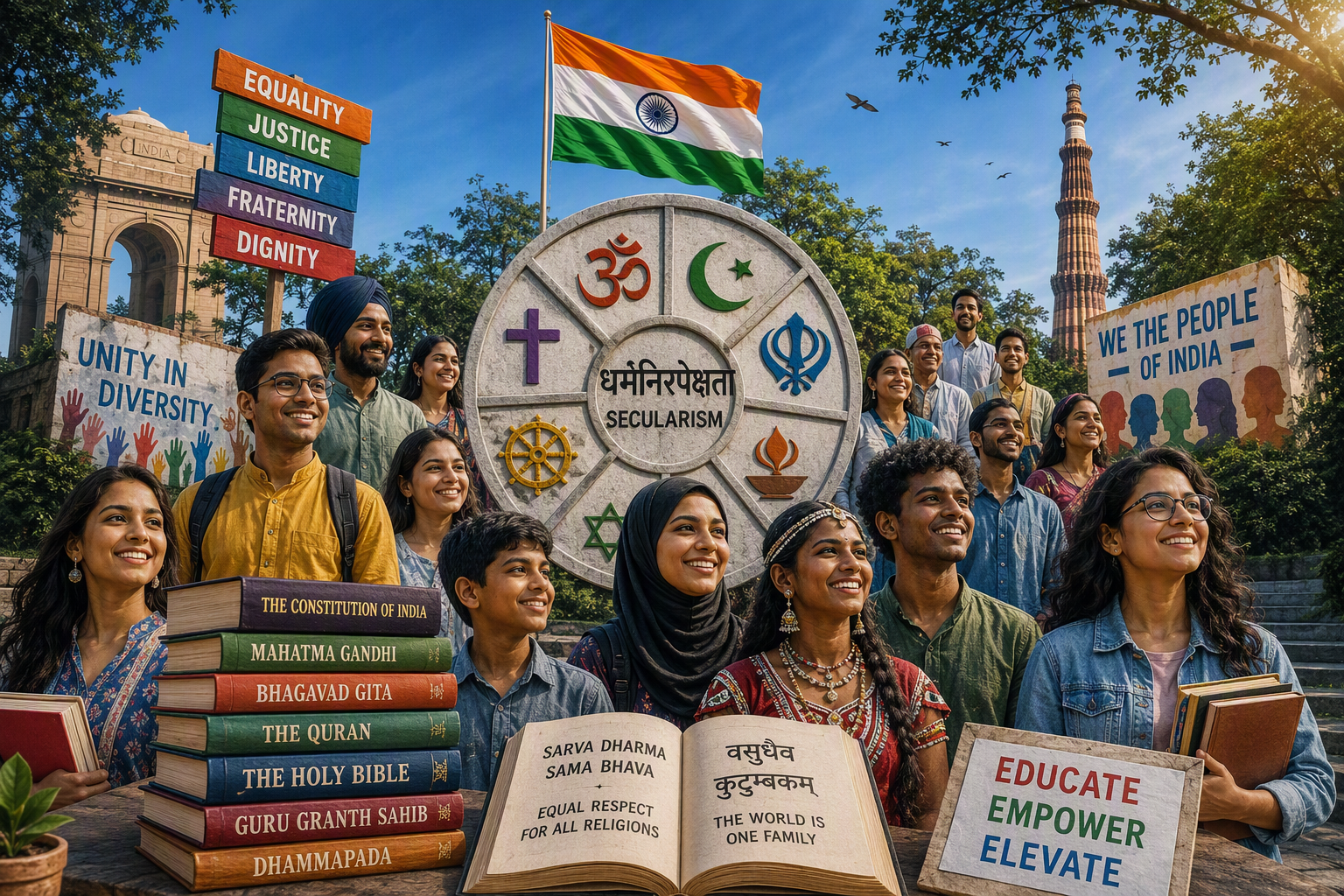
- Secularism in the Indian constitution means the country does not support any state religion. The idea is to give equal respect to all different faiths.
- The constitution gives people religious freedom. This happens due to important constitutional provisions, like Articles 25 to 28. There are also rights for minority groups under Articles 29 and 30.
- The Indian model of secularism goes with a principled distance. The state does not fully keep away from religion, but it does not favor any religion over the other.
- Secularism is in the basic structure of the constitution. No one can take it out.
- The UPSC will ask questions on this topic in polity, society, governance, and essay papers.
- Right now, the debates are about personal laws, the Uniform Civil Code (UCC), minority rights, and judicial interpretations.
Table of Contents
Introduction
Secularism is a big idea that you need to know for UPSC. It is important because it is tied to the constitution of India. This idea comes up in topics about public order, Indian society, and news you read now. India has many different religions, so secularism means the state has to talk about minority rights, public order, and treat people equally. You can find this topic in both GS Paper I and GS Paper II. It is there in essays. You will see it in the ethics paper too. So, if you keep good notes about secularism, it will help you think better and make your answers good to read.
Defining Secularism for UPSC Aspirants
For UPSC, secularism in Indian polity means the state stays out of religious matters. The state protects the freedom of conscience and the freedom of religion for all. It does not choose any particular religion as the official religion.
In India, the model of secularism means equal respect for different faiths. The state steps in to help when there is need for social reform. Secularism is part of the basic structure of the country. So, your UPSC notes should show it as a key value in the constitution. It is more than just a political slogan.
Meaning and Scope of Secularism in Indian Polity
Secularism means there is a separation of religion from politics, the government, and things related to the state. But in India, the idea is even bigger. The constitution of india does not remove religion from all of public life. The constitution wants state neutrality. This says the government must be fair to all religious communities.
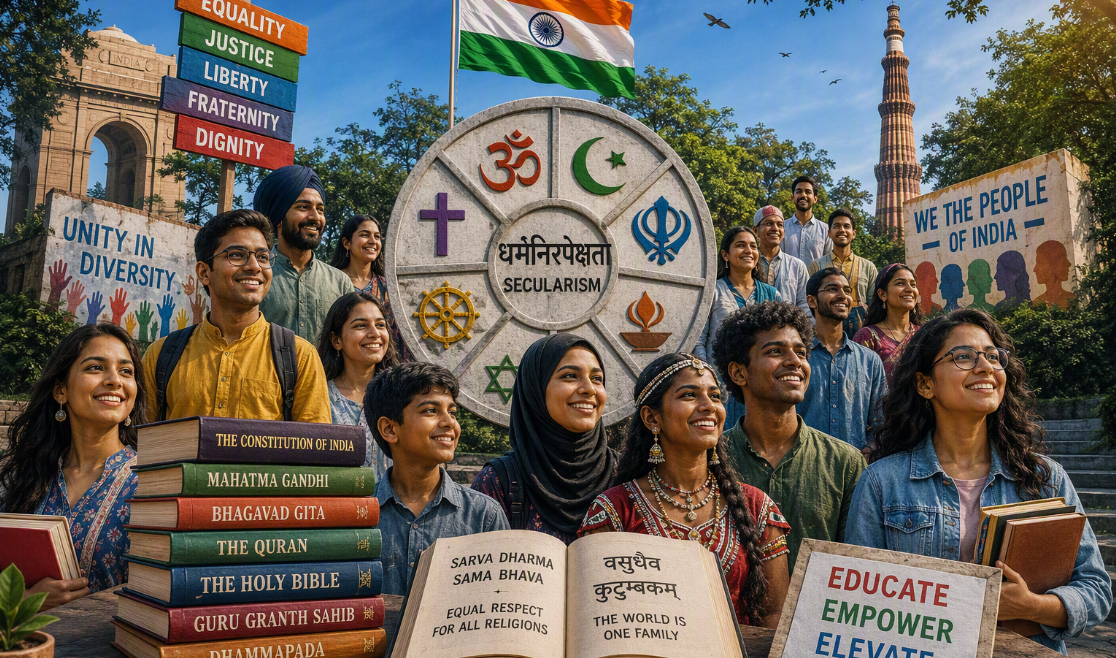
You can see what Indian secularism is by looking at two big ideas. The first is Dharm Nirpekshta, which is about being fair in matters of religion. The second is Sarva Dharma Samabhava, which means giving equal respect to all religions. The Indian state does not pick an official religion. Still, the state can step in on matters of religion. But it will be fair and treat all religions the same.
The law covers a lot. It helps keep freedom of conscience safe for people. The law lets people show, practice, and talk about their religion. It stops groups from trying to control other groups. The law also lets groups change their ways if their religious practices go against fairness, respect, or what is right in the constitution.
Relevance of Secularism UPSC Notes for Exam Preparation
If you are working hard on your UPSC prep, you need to add secularism to your key notes. This is important for some good reasons. You will come across it in polity, society topics, governance, ethics, and even in essays. It will help you know how big ideas in the Constitution show up in public life and how they connect with what is happening now.
In exam preparation, this topic is good for answering fact and think questions. You need to know definitions and constitutional provisions. It’s important to read about court rulings, personal laws, minority rights, and social reform. This topic covers a lot. It helps you for both Prelims and Mains.
Focus on these areas:
- In India, the meaning of secularism in public life is not just about the split between the state and religion. It is also about making sure that every group, if it is big or small, gets to follow its own beliefs. The Indian model of secularism tries to bring in all religions and gives everyone the chance to practice their faith out in the open.
- The Constitution gives important safeguards to help keep secularism strong in India. The basic structure of the Constitution cannot be changed by any law. This is to make sure the main parts, like the rights of all people and secularism, never go away. The basic structure idea helps keep the Indian model of secularism safe, so that no one can take away these key ideals.
- The Indian model of secularism is not the same as western secularism. In western secularism, the state and religion are kept apart and the state does not give help to any religion. In the Indian model, the state can step in when there is unfairness between religious groups. The state is not supposed to favor anyone. This model tries to let all the religions feel welcome in public life and treats everyone in a fair way.
- There have been recent problems and several judicial interpretations about secularism in the country. The courts have given different decisions to show what the law really means for practice. They work to keep the basic structure strong. From time to time, these talks and the court cases help change how people look at and discuss secular
Good notes help you give answers that are clear and fair. You can add good examples when you answer because you have this. This helps make your answers feel more complete and better in every way.
Historical Evolution of Secularism in India
Secularism in India did not begin in 1950. This idea goes way back to ancient India. Back then, leaders like Ashoka told people to be kind and show respect to all faiths. They wanted everyone to get along with others, no matter which faith they followed.
Later times brought in more pieces to the idea. Akbar talked with people who had different faiths. After that, there were efforts for social reform and talks about the constitution. The idea changed over time. When the country got independence, secularism was made a rule in the constitution. This choice shaped how the state deals with religious practices, minority rights, and equality. The next parts will show this journey in a simple way.
Journey from Pre-Independence to Post-Independence
Before India became independent, people started to think about what secularism should mean. This was because there were many religions, and the way colonial politics worked also played a part. Ashoka and Akbar both showed ways to tolerate others’ beliefs. These thoughts later became part of how people looked at society. The national leaders talked about the role of religion in public life.
Mahatma Gandhi always said people should give equal respect to all faiths. Jawaharlal Nehru wanted India to be a modern country and a secular state. He did not want any one religion to rule over the others. The ideas of both Gandhi and Nehru guided the people in the constituent assembly in their work. The first Preamble did not use the word “secular,” but their thoughts about equal respect and a secular state still shaped what happened.
After India got independence, the constitution turned these ideas into law. It gave people fundamental rights. It also brought in protections for minorities. Later, some court decisions made this rule stronger. By the time people saw secularism as a part of the basic structure, it was already a key piece of Indian democracy and the way the country is run.
Major Milestones and Changes in the Concept
The idea of secularism in India comes from the way the constitution was created, changes in politics, and how the courts read the law. At first, the constitution let people have religious freedom, but did not use the word “secular” in its main parts. Later, the Indian state made its views more clear by adding the word secular to its identity.
Some major milestones are easy to track:
| Year/Period | Major milestones | Significance for secularism |
|---|---|---|
| Ancient India | Ashoka’s policy of tolerance | Respect toward different faiths |
| Medieval period | Akbar’s interfaith approach | Wider acceptance of plural traditions |
| 1950 | Constitution came into force | Articles 25-28 gave religious freedom |
| 1973 | Kesavananda Bharati | Secularism treated as basic structure |
| 1976 | 42nd Amendment | Added “secular” to the Preamble |
| 1994 | S.R. Bommai | Reaffirmed secular character of the Constitution |
The idea of secularism has changed. It used to mean people should be morally tolerant. Now, it has become a strong rule in the constitution. This is important for UPSC. It shows how the law, the government, and the courts can make these values work in real life.
Constitutional Provisions Supporting Secularism
Secularism in the Indian constitution comes from several main constitutional provisions. These help make sure there is equality, religious freedom, and protect minority rights. They also keep the state neutral in matters of religion. The rules are not used alone. All of them work together to build a strong set of guidelines in the constitution.
You need to know that secularism is a basic feature of the constitution. This means that Parliament cannot take it away. For UPSC, this is important because it links the Preamble, fundamental rights, protections for minorities, and what citizens should do. It brings all of these parts together in one main idea.
Key Articles and Amendments Related to Secularism
The Constitution makes sure that the state does not push people to follow only one particular religion. It lets people practice their own beliefs without any problem. The 42nd amendment act put the word ‘secular’ in the Preamble. But this idea was in the Constitution before the 42nd amendment added it.
You should know the main rules for exam use. These rules come up a lot in Prelims. They also help you make clear Mains answers about religious freedom and freedom of religion.
Important points include:
- Article 14: All people will be treated the same when it comes to the law.
- Article 15: A person will not be treated unfairly because of their religion.
- Articles 25-28: The constitution gives the freedom of conscience and worship. But there are some rules about how to teach religion.
- Articles 29-30: Minorities have the right to practice their culture and get an education linked to it.
- 42nd Amendment Act, 1976: This 42nd amendment added the word “secular” to the start of the constitution.
The Supreme Court later said that secularism is part of the basic structure. This is why these articles are more than just legal text. They help to show what makes up the constitutional identity of India.
How Secularism Is Reflected in Indian Governance Structures
You can see the separation of religion in Indian governance when you look at how laws and leaders deal with faith. The state does not have an official religion. People in power need to do their jobs without favoring one faith. This shows that religion and state power are kept apart. But this does not mean religion is gone from public life.
In India, the state sometimes gets involved with religion. The state can make rules when something touches public order, health, or what is right and wrong. The state can help educational institutions that are run by minorities. It can also act if there is a need for social reform or if what is in the constitution is at risk.
Another good example is found in places paid for by the state. In some state educational institutions, you cannot make people join in religious instruction. You also cannot use taxes to make one religion more important than the others. These things show how a secular state works. It tries to stay neutral, help with change, protect those who may be in the minority, and give equal respect to all people.
Key Features of Secularism – UPSC Notes Focus
For UPSC notes, you do not need a long meaning of secularism. It is good to know what secularism means with a few main features. These features help you see how the state should act with religious communities. They also show how people are kept safe in a diverse society.
The key ideas are state neutrality, equal respect, freedom of conscience, making sure that minorities feel safe, and stopping unfair treatment. These ideas help show what the Indian way stands for. The next sections will talk about these ideas in two ways. First, they look at how all religions get treated the same. Second, they talk about finding a balance between rights for the person and rights for the group.
Equal Treatment of All Religions
One main idea of Indian secularism is that the state treats every religion the same. The state does not choose one as its state religion. It does not help just one faith more than others. This way, things stay fair between people and different religious groups. It is about keeping everyone equal.
The Indian idea is often shown by the words Sarva Dharma Sambhava. This means that there should be equal respect for all, and not just staying away or being cold to different religions. In India, the state can talk to and work with different religions. But it must always be fair and follow the rules set by the constitution. This way is not the same as having a rigid separation between different religions.
Key takeaways are:
- The Indian state does not name any official religion.
- All religious groups get equal respect from the state.
- Everyone in the country is guarded by the freedom of religion.
Secularism is important because it gives all people the same rights. It puts being a citizen above following any one religion. This idea is part of the law in the country. It helps people get along with each other.
Individual and Community Rights Under Secular Principles
Indian secularism keeps safe the rights of every person and also the rights of groups. This is one of the main strong points of how the law works. A person can have freedom of conscience and practice any religion they want. At the same time, religious groups and smaller communities get legal safety for their spaces, ways, and culture.
This balance matters to Indian society because there are many groups and views in the country. Articles 25 and 26 let people have their own beliefs and allow religious communities to make choices in matters of religion. Articles 29 and 30 protect minority rights. These are mostly about education and culture. All these rights are linked to bigger human rights values.
Even so, these rights do not go as far as some people might think. The constitution has rules to keep public order, and look after health and morals. Sometimes things can change if equality or respect for people is not kept. This means that secular ideas in India are not only about putting up with others. The goal is to make sure there is justice for people in every group, and also between different groups.
Indian vs Western Secularism – A Comparative Analysis
Many UPSC questions want you to look at indian secularism and western secularism side by side. This matter a lot. Both okay to stop one group from ruling over all other groups. But, they use different ways to get this done.
In the western model, the big idea is to keep church and state away from each other. The indian model is not that strict. The state does not give support to any faith, but the state can work with them to keep public order and help with social reform. This more flexible way is what makes the indian model stand out. It is also important to know this when you write exam answers.
Fundamental Differences in Approach
The western model is all about strict separation. In this, people see religion as a private thing. The state does not mix with it. In the United States and France, these ideas started after fights between church power and the government.
The indian model is different from others because religion is still a part of public life. Instead of putting up a wall between the state and religion, india uses something called principled distance. The state can help, change, or improve religious institutions if the values in the constitution need it. That is why many people call indian secularism positive secularism.
Main differences include:
- The western model wants to keep a strong and rigid separation of church and state.
- The indian model puts more focus on equal respect for all religions.
- In western systems, you will see there is more focus on individual rights.
- Indian secularism works to protect both the rights of each person and the rights of groups.
- India lets the state take action to help social reform and make things more fair for everyone.
This comparison will help you get answers for one of the most common UPSC topics. It gives you clear and simple points.
Implications for UPSC Society Topics and Governance
This idea is not just words. It helps you write about things like governance, public life, social justice, and issues for minorities. India is a diverse society, and you can not keep religion out of public life. The constitution gives a way for people to live together in peace.
That is why secularism is important in how a country is run. The state has to keep all groups safe. It cannot show favoritism. The state must act if religious practices go against equality or dignity. When you know this, it is easier to talk about personal laws, educational rights, and reform.
For UPSC society topics, the indian model shows how public institutions can both control and protect religion at different times. This is important for the way secularism works in India. It helps the country manage many types of people and religions. The constitution uses this method to deal with differences. So, it is more than just something people talk about. It is something people practice in real life.
Challenges and Criticisms of Secularism in India
Secularism is in the constitution, but it can be hard to put into practice. There are some big problems that get in the way. Communal violence happens, and some people bring religion into politics. Many people feel that the state does not treat everyone the same. There are also issues about personal laws and minority rights.
Many people have things to say against this. Some feel that the state gets too involved in religion. There are others who think the state does not help enough with social reform and making things equal for everyone. If you are getting ready for the UPSC exam, it is good to read about these criticisms. They often come up in questions where you have to look at the issue with more care.
Threats from Political and Social Dynamics
Many problems with secularism come from the way politics works. Politicians often use religion to win votes or run for office. They sometimes try to divide people so they can get ahead. When leaders focus on people’s identity, it gets harder for everyone to be treated the same, even if the law says all of us should.
Social factors also matter here. When there is communal violence and hate speech, there is often more people not trusting each other. This can make it hard for people from different faiths to live together. People who are from religious minorities can feel left out when they try to get jobs, homes, or join schools. If this happens, the whole society will feel the effects, not just one group. Social media can make things worse because it can spread upsetting material fast to a large number of people.
Another problem is that people do not feel the same way about state intervention. Some say reform laws are important for justice. Others say these laws only pick on religious matters. The crash between reform, the right to make choices, and political talk makes it hard to keep up secularism for a long time in a big and mixed democracy like this.
Recent Issues Highlighted in UPSC Mains and PYQ
Recent events have turned secularism into a hot topic in the upsc mains. Questions now ask you to do more than just tell what it means. You are asked to link the idea from the constitution with what is going on in the world today. This is why you should use good and real-life examples to make your answers better and get a high score.
Many talks often cover personal laws, minority rights, and how courts see religious matters. They also watch to see if the state is fair and follows what the constitution says is right. You should think about these as big themes about issues, not just single facts.
Important recent issues include:
- The Uttarakhand UCC has started a lot of discussion about the uniform civil code. Many people in the state and across the country are talking about what it could mean for them. Some people hope this new law will bring one set of rules for everyone. Others feel it might not respect every group’s customs or ways of life.
- The Waqf Amendment Act 2025 has also led to talk about Article 26. Some people feel worried if these changes will let them look after their own places of worship like before and as the law says. A few feel their way of practice and belief might be put in danger.
- There are issues with the Places of Worship Act, too. Some say the rules are not clear. This has led to fights or questions about who uses or owns certain places. A lot of people point to survey results and say there could be fresh court cases or new trouble soon.
- Anti-conversion laws also get a lot of attention when people talk about Article 25, which lets people follow the faith they want. Many feel that these laws could keep people from following their beliefs freely. People feel strongly about both sides of this topic.
These topics show that secularism is a big thing right now. People talk about it a lot, and it is also important if you have to write for an exam today.
Implementation of Secularism in Indian Society
Secularism in Indian society is seen in the law, offices, and in how people do things every day. It is not just written in the Preamble. You can see it in the rules that make everyone equal. Freedom of religion is also given to all. The law helps keep people in the minority safe. There are rules to make sure public order is kept, too.
This topic comes up in things like rules in schools, using taxes for religion, and stopping forced religious instruction. The courts and the government both help with this. The next two parts will talk about how official actions do this. You will also see how to use examples about religious instruction in your UPSC answers.
Government Actions and Judicial Interventions
You can see the constitution of India at work when the government and the courts take action together. The constitution is there to set the rules. But, how places use it in their daily work is what matters a lot. The Supreme Court has a crucial role. It helps show all of us what secularism is and how it should be in the country.
Several court rulings show this clearly. Courts help protect religious freedom. They have said the Constitution is not linked to only one faith. The courts also let things change if everyone does not get equal treatment. Governments take care of public order, taxes, schools, and places for smaller groups.
Key examples include:
- Kesavananda Bharati: secularism is a part of the basic structure.
- S.R. Bommai: no state government can do anything that is not secular.
- Shayara Bano and Sabarimala debates: equality can be more important than some unfair ways.
These examples show how secularism works in India. The constitution keeps an eye on things. It is not just for show. It is not only a symbol.
Real-World Examples for UPSC Answers
When you write answers for the Mains exam, real-world examples can make your points stronger. Use some examples that show what the constitution hopes for and some that show problems people face in real life. This lets your answer have more balance and depth.
Here are some ways to use this in practice. You can talk about the supreme court’s part in cases like triple talaq, Sabarimala, and S.R. Bommai. You can also bring up the talk about the Places of Worship Act, new changes in UCC in Uttarakhand, and fights over Waqf. Every example shows how the idea of secularism is tested by law and rules in the country.
You can talk about events of communal violence to show that there is often a big gap between what the constitution says and what happens in real life. This gap is important. It helps the examiner see that secularism in India goes beyond just religious practices. It is about how institutions work, justice, and the way people live together in peace.
Significance of Secularism for UPSC Mains and Essay Preparation
Secularism is important for upsc mains because it connects the law in the constitution to things that happen in real life. You will see this topic in questions about society, how things work, essay writing, ethics, and news. If you know this well, you can think about it in more ways than just what is written in your books.
When you give answers on this topic, you can use articles, cases, debates, and examples together. This will help make your answers better and more clear. If you want to get good marks in polity and society-based questions, you need to know that secularism is something that you cannot leave out.
Answer Writing Tips for Secularism UPSC Society Questions
A good way to write answers can help you with this topic. For UPSC society questions, start with a short meaning of the topic. Then add support from the constitution. Give examples to show your point. End your answer with a balanced view at the end. Keep your plan clear and simple.
Do not see secularism as only a good thing. Think about how it works with different religions and how a country tries to be neutral. This is also about making sure all people are treated the same. It helps keep public order.
If you get a question that asks you to compare, talk about Indian and western models one by one. Explain each of them before you say which one is better.
Useful steps include:
- Secularism in India means the government does not show special favor to any religion. All religions have equal respect under the law.
- The Preamble of the Indian Constitution says the country will be secular. Articles 14 and 15 work to make sure there is equality. They also stop discrimination because of religion. Articles 25 to 30 allow people to practice, share, and run their own religion freely.
- The Supreme Court has often talked about secularism. In the S.R. Bommai case, the court said that being secular is the main part of the constitution. In recent news, the supreme court has looked at cases about temple entries and religious practices. This shows how important equal rights are for everyone.
- In the end, secularism helps keep peace. It protects every person’s rights and gives us all a chance for change and fairness in society.
This way helps you make answers that are simple to read and easy for people to understand. At the same time, they still look smart and well-made.
Frequently Asked UPSC PYQ Themes on Secularism
PYQ trends tell us that UPSC likes to ask about secularism from many angles. It does not just ask you about the meaning. The questions often join what the constitution says and what people in society say. So, it is good to go over repeating patterns and read them with care.
A second trend is about comparing things. UPSC likes to link secularism with religious diversity, minority rights, UCC, and the debate between Indian and western ideas. It also looks at how the values in our constitution work if there is a real conflict. So, you have to be ready to think about these ideas and also review different issues.
Common UPSC themes include:
- The Indian model and western secularism are not the same. In India, secularism means the country gives equal respect to all religions. The Indian model lets people practice any faith they want, while western secularism usually keeps religion out of public life. So, India and the west handle religion and the country in different ways.
- Secularism is part of the basic structure of India’s constitution. This means no new law can change or remove it. This rule protects everyone and helps stop discrimination. Because of this strong base, all people in India get equal respect for their religion.
- Minority rights, like educational rights, are important in the Indian system. These rights let groups with fewer people, like some religious and language groups, run their own schools and colleges. This keeps their way of life and their way of learning alive. It helps these groups feel included.
- In India, issues like UCC (Uniform Civil Code), personal laws, and gender justice are always in the news. The UCC wants the same rules for every person in the country. But, personal laws let different groups follow their own religion’s rules. The talk about gender justice tries to make sure men and women get the same rights, no matter what set of rules they follow. These things all show how the Indian model works to balance different ideas, from basic structure, western secularism, personal laws, to the Uniform Civil Code.
If you take time to get these themes, you will be ready for any questions on government, society, and essays that are about secularism. This will help you feel good when these topics come up.
Conclusion
To sum up, knowing about secularism is a must if you want to clear the UPSC exam. This is a big part of Indian society and has a role in how the country is run. When you read about the history, look at the constitutional provisions, and learn about the problems around secularism, you get good ideas to use for your test. The way indian secularism works is not the same as the Western kind. Seeing this difference helps you get a better feel for the topic. All this lets you write strong answers for essays and papers. A good grip on these topics gets you ready to handle issues that are important to us all. If you want to know more about secularism or how this fits with your UPSC plans, feel free to ask for a free consultation!
Why is understanding secularism important for UPSC preparation?
Knowing about secularism is important if you are getting ready for UPSC. The topic is in many questions about the polity, society, essays, and governance. It helps you talk about the indian constitution, minority rights, public policy, and news all at once. When you know this well, you can write better answers and be ready for the exam.
How does secularism help in ensuring equality among citizens in India?
Secularism lets all be treated the same. The state is neutral to every religion. It does not choose one faith over another. It keeps your fundamental rights safe. It also gives you freedom of conscience. The law sees people as equals, not just as members of different religious communities.
What distinguishes Indian secularism from the Western model for UPSC?
ndian secularism is quite different from the western model. In the western model, you see a rigid separation between religion and the state. This means the state does not get involved in religion at all. In India, the state follows what is called principled distance. The idea is that the state can work with religion when it needs to, like when it is about bringing in reform, making things more equal, or keeping public order. Indian secularism tries to be neutral and fair while also handling real responsibilities set by the constitution.
Why is understanding secularism important for UPSC preparation?
Knowing about secularism is important if you are getting ready for UPSC. The topic is in many questions about the polity, society, essays, and governance. It helps you talk about the indian constitution, minority rights, public policy, and news all at once. When you know this well, you can write better answers and be ready for the exam.
How does secularism help in ensuring equality among citizens in India?
Secularism lets all be treated the same. The state is neutral to every religion. It does not choose one faith over another. It keeps your fundamental rights safe. It also gives you freedom of conscience. The law sees people as equals, not just as members of different religious communities.
What distinguishes Indian secularism from the Western model for UPSC?
Indian secularism is quite different from the western model. In the western model, you see a rigid separation between religion and the state. This means the state does not get involved in religion at all. In India, the state follows what is called principled distance. The idea is that the state can work with religion when it needs to, like when it is about bringing in reform, making things more equal, or keeping public order. Indian secularism tries to be neutral and fair while also handling real responsibilities set by the constitution.