Key Highlights
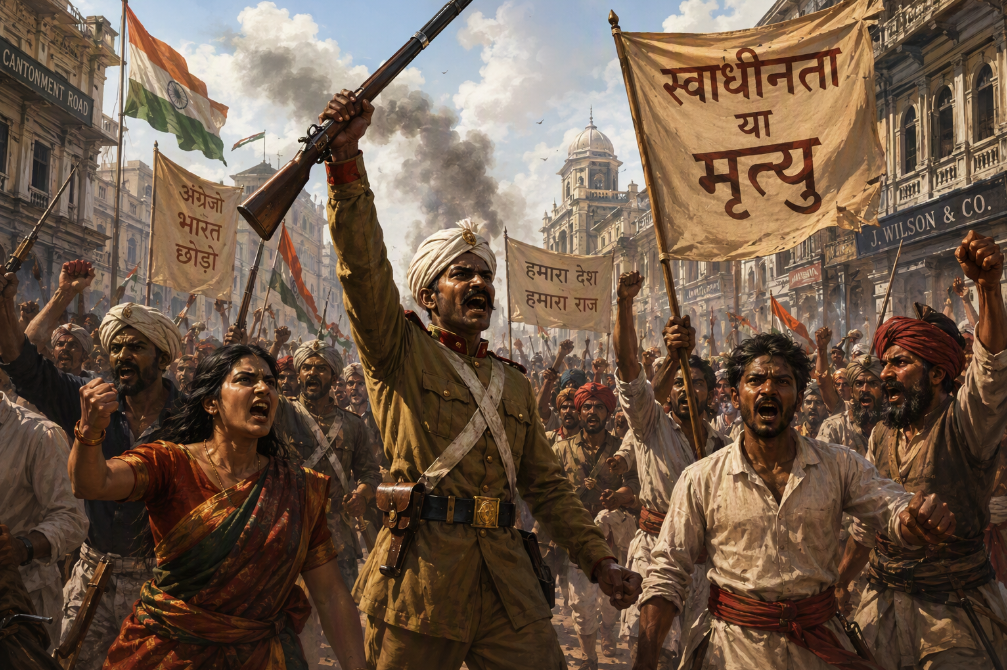
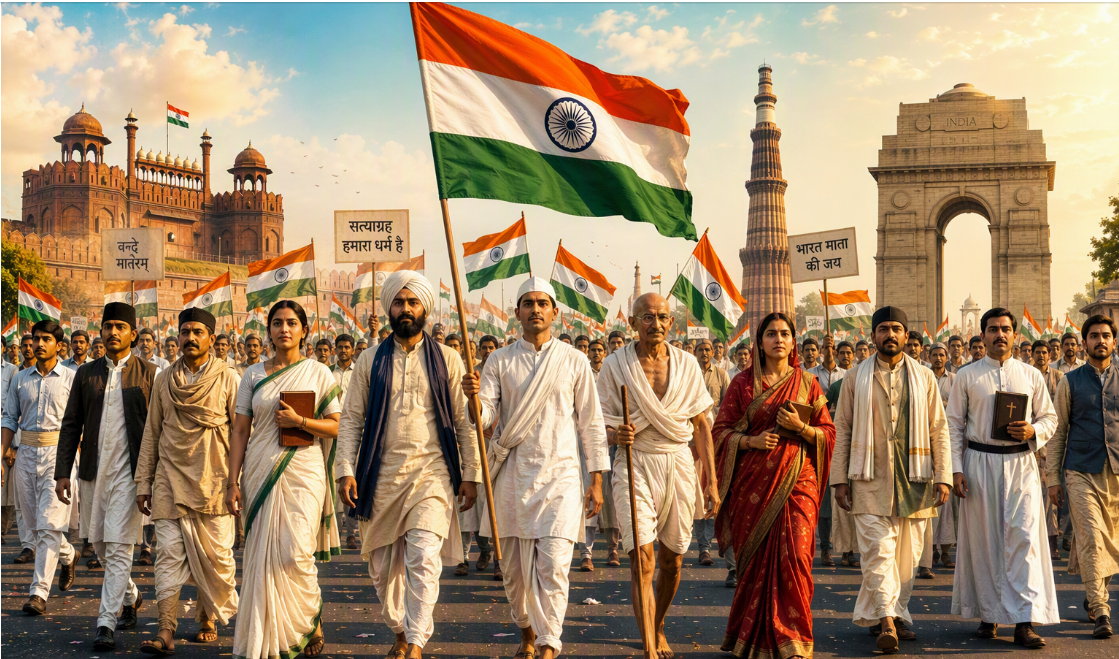
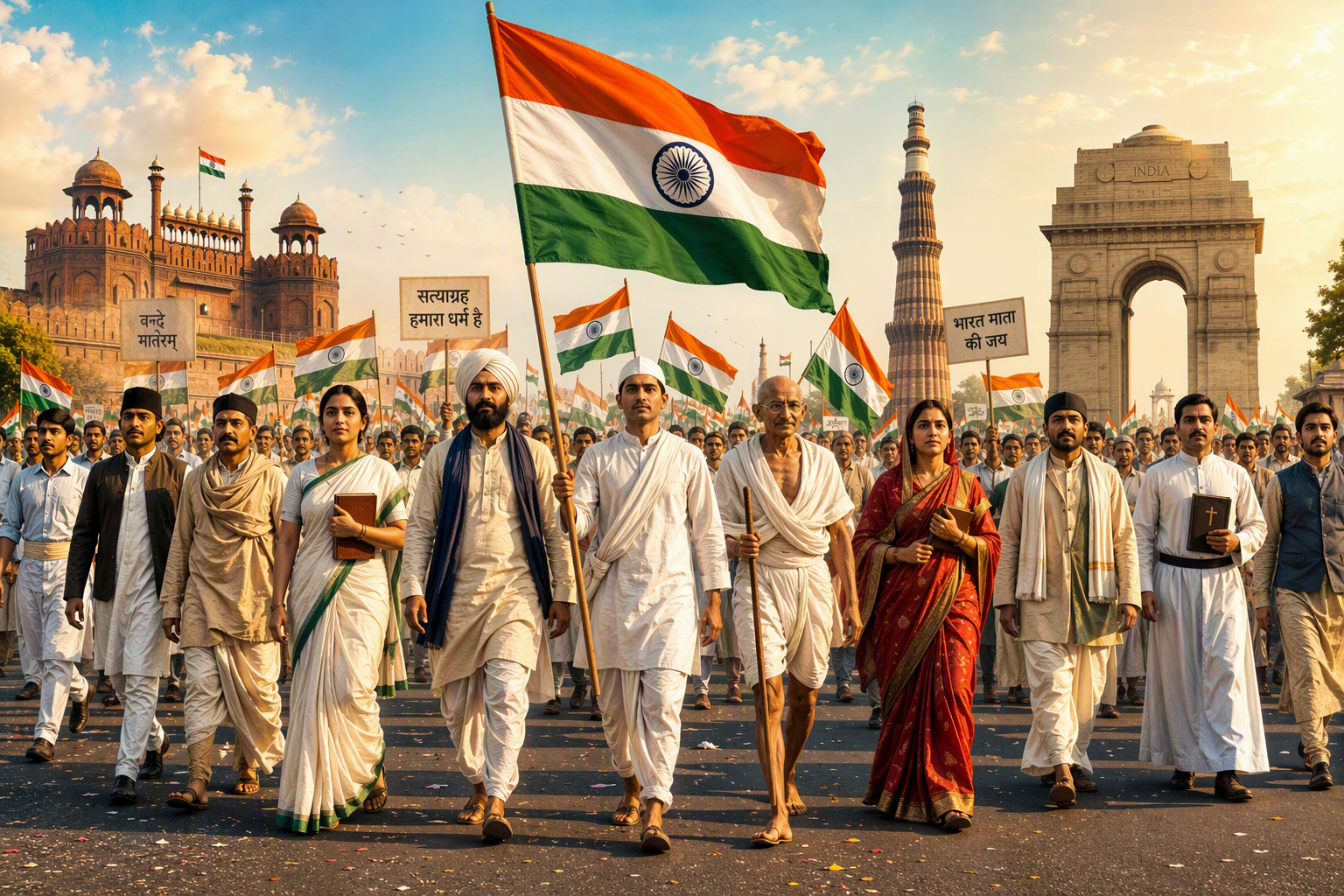
- The indian national movement started with early fights and grew to become a big indian freedom struggle against colonial rule.
- The revolt of 1857 was the first major turning point in modern indian history.
- The movement had different phases such as Moderate, Extremist, and Gandhian. Each phase had its own ways and goals.
- Mahatma gandhi made a big change by turning the india movement into mass movements. He used non-violence and civil disobedience to fight.
- Important events like the Swadeshi campaign, Dandi march, and quit india movement helped shape the path to freedom.
- Leaders, women, workers, peasants, and revolutionaries all worked together. They made the national movement, indian national movement, and indian freedom struggle stronger.
Table of Contents
Introduction
The indian national movement is one of the most important topics in indian history for UPSC. It tells how people from all over India and from different groups came together to fight against british rule and colonial rule. They used protests, asked for changes, did boycotts, and took part in mass actions.
You should know about the main parts of the india movement for your study. The main steps are the Revolt of 1857, the Moderate Phase, the Extremist Phase, and the Gandhian era. Knowing these steps can help you go over the national movement in a simple way, understand their order, and see how they link with each other.
Phases of the Indian National Movement (1857–1947)
You can get a better idea of the indian national movement if you look at it in different stages. Each stage had its own leaders, its ways, and what it wanted to do. This is what makes the national movement stand out in indian history. Doing this will also help you answer UPSC questions about modern indian history in a good way.
In the beginning, the freedom struggle started with small groups in different places. Sometimes these groups had weapons. After that, some of the early leaders in Congress asked for things with the help of the constitution. Over time, people across the country felt more sure. They began to stop buying goods from certain places as a way of protest.
In the last part, Gandhi changed the freedom movement in a big way. He brought in satyagraha and civil disobedience. These ideas made more people join the movement, leading to mass participation. There were more and more campaigns for complete independence too. Now, let’s see what each of these important steps in the freedom struggle were.
Early Resistance and Revolt of 1857
The revolt of 1857 was the first big battle against the east india company. It started in Meerut. In no time, the fight spread to Delhi, Kanpur, Lucknow, and Jhansi. A lot of people say it was the first war of independence. This is because soldiers, rulers, peasants, and local leaders all came together to take part in it.
The causes of the event were big and hard to miss. It all began with the problems that the sepoys had to deal with. One bigger reason was the anger that came from economic exploitation, political control, and worries about religion. The British kept taking more land and had strict tax laws. Because of this, many people were already upset in different areas even before 1857.
Some key names from this time are Mangal Pandey, Rani Lakshmibai, Nana Sahib, and bahadur shah zafar. bahadur shah zafar became the main leader that people looked up to. The revolt did not win, but it made big changes happen. In 1858, the rule of the Company ended because of this event. It also helped new ideas about the country to grow. Because of these things, the events of 1857 are seen as the first big step on the way to 1947.
Moderate Phase (1885–1905)
The Moderate Phase started when the Indian National Congress began in 1885. During this time, the leaders thought that change could happen if they talked, turned in petitions, and gave reasoned criticism. They trusted constitutional methods. They wanted to change how the British thought by using these ways.
Dadabhai Naoroji and Gopal Krishna Gokhale were important during this time. Dadabhai Naoroji talked about the country’s money problems with his Drain Theory. Gopal Krishna Gokhale wanted to see slow change and wanted people to know more about politics. Some other leaders asked that more Indian people be part of the government and the legislative councils.
This time was very important for modern Indian history. It helped people in India feel proud of their country in a strong and organized way. People became more aware of what was happening in politics. A lot of new leaders started to work during this time. Educated people who lived in cities such as Bombay, Calcutta, Madras, and Allahabad began to work with each other. In the beginning, they did not ask for complete freedom. But they gave the freedom movement a voice and made it feel bigger across the country. These early actions were the first steps, and they meant a lot for what happened next in indian history.
Extremist Phase (1905–1919)
The Extremist Phase began after the partition of Bengal in 1905. This time made many feel angry. People started to do more than just write letters. The nationalists called for swaraj in a strong voice. They wanted to take direct action against british policies.
Bal Gangadhar Tilak, Bipin Chandra Pal, and Lala Lajpat Rai were in charge of this new way forward. They talked a lot about self-reliance, boycott, and getting people to work together. The swadeshi movement asked people to say no to things made in other countries. It wanted them to use goods made in India. This made the idea of nationalism something people felt every day.
The extremist phase was known for its strong and bold way of speaking. It played a big part in growing the political movement. A lot of people joined in from Bengal, Maharashtra, Punjab, and other places. When the partition of bengal protests and boycott plans happened, it showed that people from all parts of life were now part of the fight. The movement was not only for rich or upper-class groups anymore. It now had a lot of feeling, was open to the public, and was all about taking action.
Gandhian Era and Mass Movements (1919–1947)
Mahatma Gandhi made the Indian national movement something for all people. He brought in new ideas like satyagraha, not using violence, and staying disciplined. Thanks to him, peasants, workers, students, and women started to take part in the national movement and politics in ways never seen before.
This time saw many big india movements. People got together and joined mass movements. The Non-Cooperation Movement fought back against British steps. The Civil Disobedience campaign and the well-known Dandi March went against unfair rules like the salt tax. Later on, the quit india movement told the British to leave at once. It made people feel a strong sense of national unity.
Gandhi was more than just a leader in politics. He helped the common people take part in the india movement. He brought their problems together with the country’s goals. From Champaran and Kheda to the Quit India movement, civil disobedience started to be a tool for both what is right and for politics. This changed things a lot. Now, the quit india movement wanted not just to make a change, but to get complete independence.
Timeline of Major Events and Milestones
For UPSC, looking at a timeline helps you see how events, people, and results are linked. In the national movement, big steps moved from revolt and change, to boycott, to peaceful protest, and last, the transfer of power. Try to read about these events in the order they happened. Do not read them as single facts.
Start with the year 1857. Then, in 1885, the Congress was formed. After this, the partition of Bengal happened in 1905. The home rule movement started in 1916. In 1919, the jallianwala bagh massacre took place. There were many Gandhian campaigns in the 1920s and 1930s. In 1942, the quit india movement began. Then, in 1947, India got its independence. The next parts will talk more about these events like the india movement, quit india, partition of bengal, and the home rule movement.
Key Uprisings and Movements (1857–1915)
The first years of the freedom struggle had political groups and new social ideas at work. There was the big Revolt of 1857. People started the Congress. Farmers had protests, and tribal people fought too. New reform movements rose up at this time. All these things helped indian nationalism get stronger. This time set the stage for bigger moves in the country later.
You should know that changes in the way people think and live were important too. Groups like Arya Samaj wanted people to have self-respect and bring change. There were secret groups like Anushilan Samiti that started working in secret. The Rowlatt Act was passed in 1919. Remembering the rowlatt act helps us see how the first signs of trouble led to the bigger anger from people after that.
Focus on these milestones:
- The Revolt of 1857 was the first big fight by the people against the people who ruled from outside the country.
- The indian national congress started in 1885. This was when the people began to come together and ask for some changes.
- The partition of bengal took place in 1905. People answered by starting the swadeshi movement. This swadeshi movement grew and more people joined in.
Transformative Movements of the 20th Century
The twentieth century was a time when the freedom struggle got stronger in the country. Many surprises and large groups working as one made people look at british rule in a new light. The jallianwala bagh massacre made most people stop believing in slow changes. After that, getting everyone to join became the main goal in politics.
Gandhi’s leadership helped bring people together. The Khilafat Movement made Hindus and Muslims feel close, but only for a short time. The Non-Cooperation movement and other campaigns got more people from many places and groups to join in. The civil disobedience movement and the Dandi March showed the world what was happening in India. These actions made protest not just a symbol, but something that everyone in the nation could do.
Keep these events in order:
- In 1919, the Jallianwala Bagh Massacre happened. A lot of people protested against the government’s harsh rules.
- In 1930, the Dandi March took place. This event started the Civil Disobedience Movement as people began to fight the salt tax.
- In 1942, the Quit India Movement began. This was the last big india movement before India got independence.
Last Years Leading to Independence
The last years before indian independence were shaped by several things. There were changes in the constitution, the world war, and growing impatience from people. The Government of India Act 1935 gave some freedom to the provinces. But it did not give the full independence that people wanted. During World War II, the british government wanted support from India. But the british government did not give any real power to the government of india. This made people feel even more upset.
This gap made a big problem. Congress did not accept weak plans. Then, the Quit India Movement started in 1942. At that time, Subhas Chandra Bose and the Indian National Army gave a military side to the india movement. These years were different from when the partition of bengal happened before. Now, the fight was not just about change. It was about getting full power in our hands.
| Year | Event | Significance |
|---|---|---|
| 1935 | Government of India Act | Granted provincial autonomy and partial self-rule |
| 1942 | Quit India Movement | Demanded immediate British withdrawal |
| 1942 | INA formed under Bose | Encouraged armed challenge to British rule |
| 1947 | Independence | End of British colonial rule |
Important Leaders in the Indian National Movement
The indian national movement had many leaders. They all helped shape the national movement. It was not the work of just one person. Some leaders tried to bring change by asking for new laws. Some helped by bringing people together. A few took part in armed struggle. UPSC wants you to know the different ways the national movement grew.
Mahatma Gandhi led peaceful mass movements. Subhas Chandra Bose worked hard to get the military to stand up and fight with the INA. Sarojini Naidu showed how women could lead people by what they did. Along with them, there were early starters, moderate leaders, strong fighters, and people ready to revolt. Each group helped in a special way.
The next parts will help you remember all of them in a simple and clear way.
Early Pioneers – Rani Lakshmibai, Bahadur Shah Zafar, Mangal Pandey
These early leaders were part of the freedom struggle. They took part in the first war of independence in 1857. They did not lead any modern party for the national rights of the people. But what they did at that time was strong. Their actions became a sign for others who joined the fight for freedom later.
Rani Lakshmibai was brave. She led people in the army in Jhansi. Bahadur Shah Zafar did not have a lot of power. But he was the head of the fight. He helped make it bigger and clearer for people. Mangal Pandey is known as the first to show how unhappy the sepoys were with the east india company.
They gave people hope and also took action. The armed struggle was not only about fighting foreign control. Even when they lost, people still remembered what they did. Their fight helped grow a spirit and idea of resistance.
For the UPSC, remember that they played a big role in building the feeling and political base for organized nationalism that grew later.
Moderates – Dadabhai Naoroji, Gopal Krishna Gokhale
Dadabhai Naoroji and Gopal Krishna Gokhale were two of the most respected moderate leaders in the early days of Congress. They thought that India would get better if people had more political education. These leaders also said it was good to use reasoned criticism and work with constitutional methods, instead of starting direct fights.
Naoroji showed people how the colonial rule took away India’s wealth. He talked about how the british rule was not good for Indian people but instead used them. Gokhale wanted slow change. He looked for better public service and taught others how to be good and responsible in politics. Both of them asked for political rights. They also wanted more Indian people to take part in running their own country.
They were important not only when they lived. They gave the indian national movement a strong way to think and a clear plan for how to do politics. In modern indian history, people look back at them for starting the first organized opposition. They helped shape what people talked about in public. They set the scene for the next leaders to ask for swaraj and complete independence.
Extremists – Bal Gangadhar Tilak, Lala Lajpat Rai, Bipin Chandra Pal
Bal Gangadhar Tilak, Lala Lajpat Rai, and Bipin Chandra Pal were called the famous Lal-Bal-Pal group. They stood up against british policies, especially after the partition of bengal. The way they did politics made people move toward public action. They also showed strong nationalism in their actions.
Tilak worked hard to make the call for swaraj popular. He used the power of journalism and held big public festivals. These events helped many people feel strong about politics. Lala Lajpat Rai became a key leader in Punjab. He spoke out against the tough rules made by the colonial rulers. Bipin Chandra Pal gave power to the swadeshi movement. He did this through his words, his writing, and by joining fully in political campaigning.
They helped change how the struggle looked. They told people to stop using British goods. They said that people should make use of the things they have. These leaders also got everyone to protest together. This made the movement bigger. It was not only about asking for change by law. For UPSC, you need to know these leaders pushed people to do more. They moved people from only asking and waiting for change to taking real steps against the British.
Gandhian Leadership – Mahatma Gandhi, Sardar Patel, Jawaharlal Nehru
Mahatma Gandhi brought a new way and higher morale to the movement. He used non-violence and satyagraha. He showed everyone that standing strong with morals is important. This made people from all walks of life take part in the fight against colonial rule. This is why his work is so important when you prepare for the UPSC.
Jawaharlal Nehru worked with Gandhi and became one of the top leaders for the nation. He was important, especially in the last years when the country was fighting for freedom. Sardar Patel was skilled. He led local actions like Bardoli in a good way. Together, they joined these local problems with the bigger fight for the country.
Their leadership was very important in big campaigns like civil disobedience and the quit india movement. Gandhi helped give direction to the group. Nehru talked about what freedom for india should look like. Patel made sure everyone stayed together and worked as one team. They helped turn the indian national movement into a strong force. Their work was for complete independence for all.
Revolutionaries – Bhagat Singh, Chandrashekhar Azad, Subhas Chandra Bose
Not all leaders thought that signing petitions or using peaceful protest would be enough to stop colonial rule. Bhagat Singh, Chandrashekhar Azad, and Subhas Chandra Bose chose another way to fight. The things they did gave people hope and courage. They helped many feel proud of the country. Because of them, people were ready to stand up and fight for freedom.
Bhagat Singh is seen as a symbol for young people who want to stand up and fight back. He did not fear anyone at any time. Chandrashekhar Azad worked with secret groups and stayed strong with arms in the fight. Both Bhagat Singh and Azad were part of groups that thought the rulers needed to face a direct fight. They believed in armed struggle.
Subhas Chandra Bose made this movement stronger by building the Indian National Army. From 1942 onward, the INA worked to fight against british rule. They formed a strong group and got people from other countries to join them. For UPSC, remember that these leaders did not always lead the main Congress group. But still, they had a big impact on how people thought and on their will to stand up against british rule.
Contributions of Women in the Indian Freedom Struggle
Women did not stay on the side during the indian freedom struggle. They led many protests. Women helped people know what was going on. A lot of them took part in satyagraha. They challenged the limits set by society. They took action in public for freedom. Their part in the indian freedom struggle is important in indian history and modern indian history. It should not be seen as a small thing.
Sarojini Naidu, Aruna Asaf Ali, Annie Besant, Kasturba Gandhi, and other women showed everyone the power that comes when women work together. They led big campaigns and also did a lot of work in the background. Because of their work, many more people joined the fight. In the next parts, you will read about how each woman made a change. It will also show how groups of women, like those led by Sarojini Naidu, Aruna Asaf Ali, and Annie Besant, took charge in important movements.
Key Female Leaders and Their Roles
Many women got known all over the country during the freedom struggle. They did work that was political and easy to see. These actions helped make groups of people strong. They showed everyone that women in the freedom struggle were not just in the background. The women stood in front and took the lead in all the work that people saw.
Sarojini Naidu was a part of Civil Disobedience. Later, she also joined some big national movements. Aruna Asaf Ali became well known during Quit India. People remember her because of her courage and the work she did in secret. Annie Besant was active in the Home Rule League. She helped many people in India learn more about politics and home rule.
Remember these roles clearly:
- Sarojini Naidu led in taking part in public campaigns. She also was the first woman to be the president of the Indian National Congress.
- Aruna Asaf Ali raised the national flag during the Quit India Movement. She became a symbol of not giving up in the India movement.
- Annie Besant brought change, promoted education, and got people to take part in politics through the Home Rule Movement.
Significant Women-led Movements and Participation
Women began to join Gandhian campaigns in large numbers. When the movement spread from just the leaders to common people, more women joined in. They took part in protests, picketing, and marches. Some even went to jail. This made big changes in both nationalism and social life in modern history.
The Civil Disobedience Movement and the Dandi March brought more women into the fight for India. Women gave strong support during the Quit India movement as well. When many leaders got arrested or were in trouble, women kept moving forward and took charge. The active role of women gave the India movement, including the Quit India movement and the Civil Disobedience movement, more power and made it feel more real. People saw the struggle in a new and deeper way because women were so involved.
You need to connect women’s movements with the important moments below:
- During the Civil Disobedience Movement, there were many women who went out and joined big protests in public.
- In the time of the Dandi March, women started to take a bigger part in fighting against the colonial rule.
- In the Quit India Movement, women helped keep the protest groups together. They did this even when there was a lot of pressure put on them.
These things show how important women were in the civil disobedience movement, dandi march, and quit india movement in India.
Role of Organizations and Associations
Organizations built the base for the national movement. They brought together people’s anger from many places and turned it into one plan. These groups chose leaders and made ways for people to talk, protest, and make deals. If you are studying for the UPSC, you need to know about the leaders and also the groups where they worked in the national movement.
The Indian National Congress was the main group leading the fight during that time. The Home Rule League, Muslim League, and a few other groups also tried to bring change in their ways. Changes made by the British, such as the Government of India Act, helped shape how these groups acted. The next sections will talk about the most important events and use easy words to help you understand them better.
Formation and Impact of the Indian National Congress
The Indian National Congress started in 1885. It quickly became the main group for the national movement in India. At first, the party brought many educated people from different parts of India together. It gave these people a space to talk about colonial rule and why the country needed change. The Indian National Congress played a big part in bringing people together during this time.
The first demands were for more political rights and civil liberties. People wanted more Indians to help run things. Leaders sent petitions to the British Parliament. They also passed resolutions and tried to change minds in Britain. A main goal was to get more Indian members in legislative councils. They called out bad rule and showed where the laws were wrong.
The Congress changed things in a big way in the freedom struggle. It did not just talk about politics—it took real steps everywhere in the country. At first, it asked for small changes. After that, it started bigger protests. Later, it became a group where everyone got involved, especially when Gandhi led it. For UPSC, you need to know that the Congress is the main group that ties most of the important events in the freedom struggle together.
Other Influential Groups – Home Rule League, Hindustan Socialist Republican Association
The national movement did not only have the Congress. There were other groups too, like the Home Rule League and some strong groups that used force. These groups brought new ideas, ways, and people to the fight. That is why modern indian history talks not just about legal groups, but also about strong networks. The home rule league and other groups were very important in indian history.
The Home Rule movement was started by Annie Besant and Bal Gangadhar Tilak. This group asked for self-government while still being part of the Empire. Because of this, more people joined the home rule movement from 1916 onward. The home rule idea helped link the different parts of nationalism. It also made more people in the country ready to be part of the cause.
Groups such as the Hindustan Socialist Republican Association played a big role in revolutionary movements. These secret societies and some others wanted more people to act in quiet ways. They got the youth to feel excited and to give support for the fight against the people in charge. Their methods were not always the same as Congress, but they helped keep the fight against colonial rule important and strong.
Conclusion
The Indian national movement is made up of many things like events, people, and ideas. These all helped India fight for its freedom. It started in 1857, with the early uprisings, and had many big changes in the 20th century. Each part of the national movement helped people stand up against colonial rule. To really know this story, you need to learn who the most important people were and what they did. This means you should look at both men and women who took part. When you do this, you will see how rich and deep the story of the indian national movement is. If you are getting ready for the UPSC exams, knowing these key things will help you learn more and think in different ways. If you feel stuck when you read about this topic, you can always ask for help.
Which leaders are most important for UPSC Indian National Movement preparation?
For the UPSC exam, you need to read about Mahatma Gandhi, Subhas Chandra Bose, Lala Lajpat Rai, Dadabhai Naoroji, and Sarojini Naidu. These people each took part in the freedom struggle in their own way. Some worked with mass politics. Some took up armed fighting. A few brought out stronger ideas of nationalism. There were also new ways to think about money. There were women who showed they could lead too. When you read about these people, you get to know the main points of India’s fight for freedom.
What distinguishes the phases of the Indian National Movement?
The moderate phase of the freedom struggle saw people write petitions. They tried to change things through the law. After that, the next phase became more bold. Leaders then started calling for boycotts, swadeshi, and a stronger sense of nationalism. When Gandhi came in, there was mass participation. People took part in satyagraha and civil disobedience.
At each step of the freedom struggle, people acted in a new way. Different leaders guided them. What they wanted to get also changed each time. This is how modern Indian history is divided into different phases. It is marked by these things: mass participation, civil disobedience, and the aims of the people in each period.
How can candidates cover the Indian National Movement efficiently for UPSC?
Study the indian national movement by splitting it into different phases. For each phase, make short notes about the leaders, main events, reasons, and results. A timeline will help you see how all things link together from the year 1857 to 1947. If you want to get ready for the UPSC exam, this is a good way to read modern indian history in an easy way later. It will also help you answer questions that need facts and those where you must think deeply about indian history, the national movement, and the indian national movement.