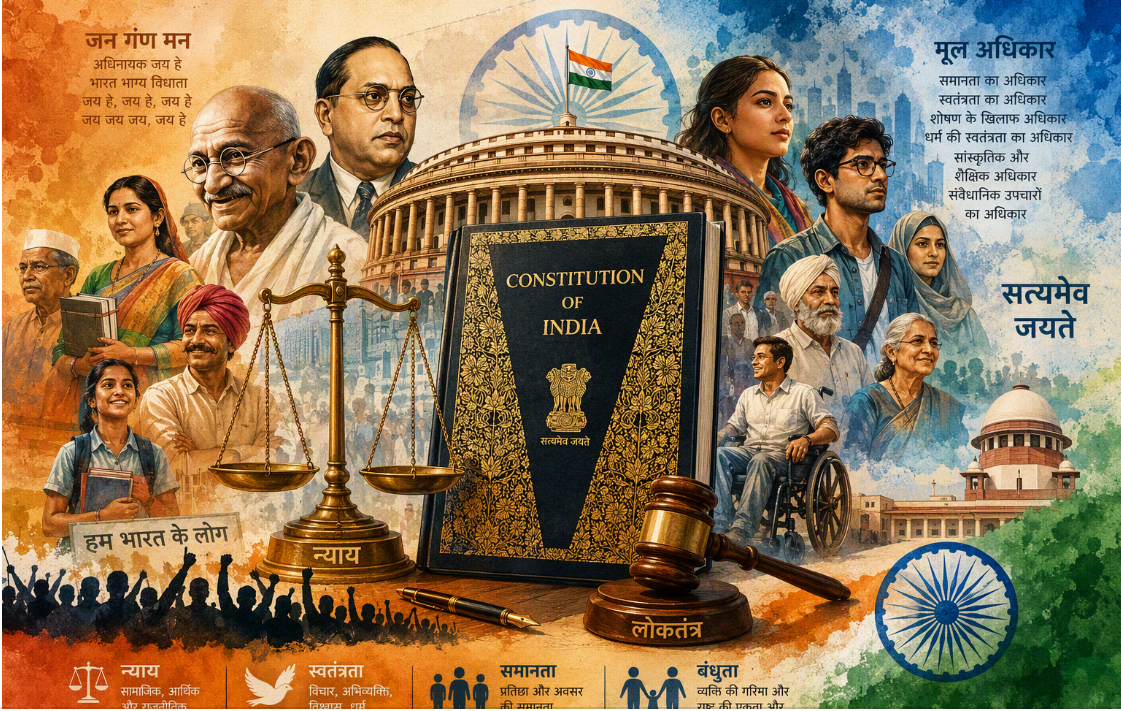
Key Highlights
- This guide helps you know about the indian constitution in a simple way. It is great for your upsc polity syllabus practice.
- You will read about fundamental rights, Directive Principles, and duties. These parts help make the government of india what it is.
- This guide talks about the supreme court, Parliament, and some other important spots that you will see in exams.
- You will also get details about federalism, local governance, and how politics works in india.
- The blog tells you about important topics, gives study material, and shows you how to revise. This helps you feel ready.
- It also tells you how to link static polity to current affairs and exam questions.
Table of Contents
Introduction
Indian polity is very important in the civil services examination. It helps you understand how the Indian constitution works in practice. This subject covers the political system, the main bodies, the rights people have, and how things in India are run. It also talks about the way power is given to different groups. You will see indian polity questions in the Prelims, the Mains, and the interview stages. So, you need to have a clear plan and not lose your focus. A solid base in indian polity can help you get more questions right in the objective part. It also lets you write better and know more in the descriptive answers.
Understanding Indian Polity for UPSC
For UPSC, indian polity is about learning the constitution of india, its main parts, and how the political system works. It is not just about trying to remember all the Articles. You need to know how the government runs, what rights people have, how the Parliament works, how the judiciary does its job, and how the centre and states are linked. This is important for the study of the constitution.
This part of the UPSC polity syllabus is a vital area of study. It is important for both Prelims and the General Studies Paper in Mains. Many competitive exams often ask questions about these same topics. Understanding polity helps you get a good feel for the constitutional framework. It will make your preparation better.
What is Indian Polity in the Context of UPSC?
In the UPSC exam, indian polity is all about the constitution of india and everything that comes from it. You get to know how the indian political system works. This covers the legislature, executive, judiciary, and all constitutional bodies. Because of this, many people think of polity as the study of the constitution while they get ready for the exam.
In your polity syllabus, you will read about the Preamble, Fundamental Rights, DPSP, and Fundamental Duties. You will also read about the Parliament, President, Prime Minister, Supreme Court, and High Courts. These are the main parts that tell you what the subject is about. The syllabus will also teach you about local government, how the centre and states work together, and emergency provisions. You should also read about constitutional amendments and learn about elections.
What makes this topic important is how you can use it in real life. The UPSC does not ask just about theory. You need to know how ideas from Indian polity are used in governance issues. It also helps in public administration and in current affairs. This is the real meaning of Indian polity in the realm of exams.
Differences Between Polity and Political Science for UPSC
Many people mix up polity and political science, but these two are not the same. For UPSC, polity is focused on India’s constitutional framework, how the country is run, and the main government bodies. Political science is bigger as it talks about different theories, ideas, comparing politics in different places, and international relations.
Polity is for people who want to study for General Studies exams. Political science is about a lot more and is for people who want to know the subject in a deeper way. You can see this difference here very clearly.
- Polity syllabus is about the Constitution, Parliament, courts, election system, and public administration.
- Political science teaches ideas, writers, political theory, and talks about the bigger political system.
- Polity is more direct for upsc prelims and GS Paper II.
So, if you want to get ready for General Studies, you need to put more focus on polity. Political science can help you see things from a new angle, but it is polity that gives you what you need for competitive exams.
Importance of Indian Polity Section in the UPSC Exam
Indian polity is an important part of the UPSC Prelims. It is known as one of the scoring sections in the test. Many questions here are based on simple ideas. You can often guess what type will come. In recent years, indian polity has had good weight in the UPSC Prelims. You may see from 12 to 18 questions about this part in the exam. So, if you are getting ready for the UPSC Prelims, you cannot ignore this section.
For Mains, polity is a big part of General Studies Paper II. You have to write about governance issues, social justice, the judiciary, federalism, elections, and the comparison of the Indian constitutional scheme with those in other countries. This part is also important for the interview. Many questions will ask how you look at governance issues and constitutional debates.
You have to look at some important topics for your study. Some of the key points are fundamental rights, DPSP, Parliament, President, Prime Minister, Governor, constitutional bodies, the judiciary, and judicial review. Topics like centre-state relations, any changes made to the constitution, panchayati raj, changes that were made in elections, Anti-Defection Law, and the basic structure are also very important. You will find that these important topics come up again and again in your work.
Overview of the Indian Constitution
The Indian Constitution is the base for how laws and politics happen in India. For UPSC, you need to know what the indian constitution says. It also shapes how groups, rights, and power work, and how the people are ruled. This is why the indian constitution is at the center when you study polity.
The Constitution of India is made up of different parts. It starts with the Preamble. Then, there are Parts, Articles, and Schedules. You can also see there is a way to make changes through an amendment. The basic structure is important because it keeps the Constitution of India strong. These parts help you get ready to read about more topics that come next.
Structure and Key Features of the Indian Constitution
The Constitution of India is a long legal paper. It explains how the political system works in the country. It tells you what powers every group has, what rights people have, and what the state must do. If you want to prepare for UPSC, you have to know how it is organized. This will help you answer fact questions and other types, too. Do not just remember the names of the parts. You need to understand what each part does with the constitution of india and the political system.
A good way to look at this is to check its main parts:
| Component | What it covers |
|---|---|
| Preamble | The aims and values of the Constitution |
| Parts and Articles | Rights, institutions, powers, citizenship, emergency provisions |
| Schedules | Administrative and legal details |
| Amendments | Process for constitutional change |
| Basic structure | Core principles that cannot be destroyed |
| Federal structure | Division of power between Union and States |
This system helps the Indian Constitution support many big ideas. These are things like having a parliamentary government, separation of powers, and judicial review. It also gives India a federal system where the center is strong. This is why the Indian Constitution is very important in the polity syllabus.
Salient Features Every UPSC Aspirant Should Know
When you read UPSC polity notes, the first thing you need to know is the main points of the Indian Constitution. These points show how the political system works in India. They also help you see why the Indian Constitution is made this way.
Some topics come up often in the Prelims. The same topics can also help you when you write answers in the Mains exam.
- The Union and the States both have a parliamentary system for how things are run.
- The country follows a federal set-up, but some things feel like there is one strong center in control.
- People in the country have fundamental rights. There are rules for how leaders should run things (DPSP), and every citizen has duties of citizens they must do.
- The courts use judicial review. They work on cases and do not feel pressure from outside people.
- The idea behind basic structure shows that some parts of the system can’t be changed very easily.
These points are closely tied to governance issues, the things that change in the constitution, and current affairs. If you know the main points in these areas, you will feel more sure of yourself when you talk about important topics in the civil services exam. You will also be able to explain them in a clear way.
Constitutional Amendments Relevant for UPSC
Constitutional amendments are important for UPSC. They show how the Constitution can change with time and still follow the basic structure. You may get questions on simple facts or on how changes in the Constitution change the way the government and offices work.
The new syllabus has a few changes. It is important for you to know about these updates.
- 1st Amendment
- 7th Amendment
- 24th Amendment
- 38th Amendment
- 42nd Amendment
- 44th Amendment
- 69th Amendment
- 86th Amendment
- 73rd and 74th Amendments
You should try to connect changes in the Constitution, like amendments, to topics such as panchayati raj, emergency provisions, tribunals, and fundamental rights. The UPSC wants people who understand the ideas behind these topics, not just those who remember facts. Try to know why each amendment happened and what change it brought to the Constitution.
Evolution and Making of the Indian Constitution
The Constitution did not appear right after Indian independence. There is a long story behind it. The British rule in India, many old laws, and the country’s own national movement all helped make it what it is. This is the reason why it plays a big role in your polity preparation.
The constituent assembly played a big part in this process. It talked about how things should work, what people feel is right and fair, and where the Republic should go next. If you want to know the Constitution well, you need to look at where it all came from and how it was made.
Historical Background and Sources
The story of the constitution of India begins when the country was under British rule. During this period, the British Crown made many laws and rules to manage the land and the people. These early changes had a big impact on ideas that ended up shaping the constitution of India later on. So, when you read about the constitution these days, you can also see how the rules for people living here changed, even before India was free.
The Constitution got many of its ideas when India was under British rule. It is also shaped by a comparison of the Indian constitutional scheme with those in other countries. The UPSC checks how well you know this topic. This is because it helps you understand why the Constitution is long and that it works well. The people who made it took good parts from other places too. Then they changed them to suit India.
This idea is also tied to how the Government of India started after the country got its freedom. When you know the history, it helps you see why India chose a parliamentary system. You can also understand why people’s rights have been kept safe. This lets you see why things like federal style, safeguards, and social justice turned into the main aims for the constitution.
Constituent Assembly – Roles and Functions
The Constituent Assembly made the constitution of india. This was not only a group who wrote laws. People in the assembly talked about how the political system should be. They spoke about rights and made plans for new institutions. They also set the main rules to guide india after it got freedom.
We can now see what it does and what the main jobs are more clearly.
- It looked over and set up the parts of the constitution about how the country will run and the rights people get.
- It picked how different offices and groups will work at both the Union and State level.
- It showed the idea behind the constitution using the Preamble and shared values.
This topic is important. Many people talk about the constitution and start with what the Constituent Assembly did. If you know what the Constituent Assembly wanted to get, you can better understand things like social justice, separation of powers, and federalism. When you know what the people in the Assembly aimed for, it helps you see why these ideas still matter today.
Philosophy of the Preamble and Its Significance
The Preamble gives you a clear view of what the constitution of india is about. It explains the main ideas and goals behind the constitution. You can see what the constitution wants for people and why there is a constitutional framework. For UPSC, the Preamble is more than just the start of a text. It helps you know the heart and main spirit of the constitution of india.
It is easy to see how important this is when you look at the values it shows.
- It shows the goals and aims of the Constitution.
- It helps people know what the Constitution means.
- It supports ideas like social justice and letting people take part in the government.
When you get ready for exams, the Preamble helps you write answers that are clear and to the point. It is connected to the fundamental rights, DPSP, and the basic structure. If you know the Preamble well, you will find it easier to understand the other topics, like fundamental rights and basic structure. All these start to make more sense and fit together.
Fundamental Rights, Duties, and Directive Principles
This part talks about the main ideas that shape our Constitution. The fundamental rights help people get freedom. The rules called directive principles show the state how it should make its laws. The duties of citizens tell people what they need to do in public life. All these parts work together so there is a balance between having rights and taking care of duties.
For UPSC, this part has facts and ideas. You need to know the rules in the constitution. You should also learn why these rules matter. See how they link to the way people are governed, human rights, and social justice. The next parts are made so you can read and study each point with ease.
Fundamental Rights and Their Relevance in Exams
Fundamental Rights are an important part of indian polity. They help people feel free, safe, and respected by law. These rights are much like human rights. For UPSC, fundamental rights are very important. They show up in many types of questions. You can get them in direct questions, concept questions, and in long writing for Mains.
People want to do well. They should feel good about the main ideas.
- Fundamental rights are found in Articles 12 to 35.
- These rights give people protection for equality, freedom, and freedom of religion.
- People can ask to enforce these rights, and courts can look at them through judicial review.
- Equal protection is a key idea when you read about constitutional equality.
In exams, rights are not only about court judgments or rules. They are also linked to new problems in society. So, you should not read them as single parts. You need to look at how these rights work with the constitutional framework. See how they shape the way India is run.
Directive Principles of State Policy (DPSP)
The Directive Principles of State Policy are not enforced like the fundamental rights. However, they are still very important. They show what the state wants to do. They guide state policy and help the Government of India to work toward welfare, development, and social justice.
For UPSC, the DPSP are important. They show the way for how a country should be run.
- They help show the way policy is made and to gets done.
- They help the good of people, fairness, and social justice.
- People often look at them together with fundamental rights.
When you read about this topic, try to focus on the role of Directive Principles. Do not just learn their names. UPSC wants you to notice how these ideas change the laws. They also push for new things and can shape governance issues in the country. Because of this, they be useful for both Prelims and Mains exams.
Fundamental Duties and Contemporary Application
Fundamental Duties tell us that the Constitution of India is not just about the rights people have. It also tells people to do good things and act in a responsible way. For the UPSC, you will see this topic is short. But this is important. It often comes in questions to check what you understand and also in new things people talk about.
You should prepare them with a practical view:
- They say what the main duties of citizens are in public life.
- They help people know about civic responsibility and the values in the constitution.
- They are important when people talk about how to live together in a good way.
In recent years, people see duties as an important part of social awareness and how we act in public. Even though these duties are not as strong as rights under the law, they still matter when you talk or write about ethics, being a good citizen, and the constitutional framework. You need to study these duties well and see that now they are truly a part of the constitutional framework.
Structure of the Government: Key Institutions
The government of india has many groups. Each one has its own job to do. For UPSC, you need to know what the executive, legislature, and judiciary do. You also need to know how they share their work. This is what people call separation of powers in the government of india.
From the Prime Minister and the President, to the Lok Sabha, Rajya Sabha, Supreme Court, and state jobs like the Chief Minister, each body has its own job to do. The next parts talk more about these bodies. This could be good for your exam.
The Union Executive and Its Powers
The Union Executive is a key part of the government of India. It is made up of the President, the Vice-President, the Prime Minister, and the Council of Ministers. If you are getting ready for UPSC, this is important. There can be many questions about what the constitution says and how leaders such as the prime minister do their job in real life.
You should focus on the key offices and powers:
- The President is the main head of the Union according to the constitution.
- The prime minister is the leader of the government. He or she leads the Council of Ministers.
- The President can do things like make ordinances and pardon people.
- It is also good to know about things like taking action to remove someone from office and saying yes to bills.
This part is also connected to financial emergency, national emergency, and the way the executive has power over the work of the government. When you read about the Union Executive, think about both what the rules say and what happens in real life. Keeping this balance in your mind will help you do well in both Prelims and Mains.
Parliament and State Legislatures
Parliament is the main group that makes laws for the whole country. State Legislatures make laws for each State. If you are getting ready for UPSC, you need to know about lok sabha and rajya sabha. It is also important to learn about the legislative assembly. In some States, there is also a legislative council. All of these groups have an important role in making laws at the Union and State levels.
The most useful areas to prepare include:
- The Lok Sabha is called the house of the people. The Rajya Sabha is known as the council of states. People choose Lok Sabha members by voting in an election. The Rajya Sabha members are picked by the legislative assemblies of the states. The Lok Sabha has more members than the Rajya Sabha. Both are very important for making laws in India.
- A legislative assembly is one part of the state lawmaking system. The people of each state choose its members. The legislative council is the other house, but not all states have it. Members of the legislative council can be chosen in several ways. These may include being picked by teachers, graduates, and those in local bodies.
- A bill can be passed in the Lok Sabha, Rajya Sabha, legislative council, and legislative assembly. A Money Bill and a Finance Bill are special kinds of bills. A Money Bill can only start in the Lok Sabha. A Finance Bill is about things like money, taxes, or payments. A bill must pass both the Lok Sabha and Rajya Sabha before becoming law. Sometimes, bills do not pass in the Lok Sabha and if the house ends, these bills might lapse and do not move ahead.
You should read about the Speaker, parliamentary committees, and sessions. These are all important topics in the polity syllabus. Learn about the different tools used in meetings, the rights that are given, and the types of majority, like simple majority, special majority, effective majority, and absolute majority. It is also good to know when each of these majorities is used. These things come up often in the polity syllabus and can help you do well.
Judiciary: Supreme Court, High Courts, and Subordinate Courts
The judiciary in India is set up in a clear way that can help if you are studying for the UPSC. The supreme court is the highest court in the country. Under it, there are high courts for all states. Below them, you will find subordinate courts. This way, the system protects the Constitution. It also checks if laws are followed all over the country.
The basic structure of the judiciary is simple to remember.
- The Supreme Court is at the national level.
- The High Courts are on the State level.
- Subordinate courts are below the Supreme Court and High Courts.
- Chief Justices and judges get their roles from the constitution.
You should also get ready for topics like judicial review, judicial activism, judicial overreach, PIL, appointments, and judicial reforms. In exams, you will see that the judiciary is not only a legal body. The judiciary acts as a guardian of the constitutional framework. It has a big role in governance issues all over the country.
Centre-State Relations and Local Governance
Centre-state relations are important for how India’s federal system works. The UPSC wants you to learn how the centre and states share power. You also need to understand how both of them work together. Money management and the way things are done by both can change how the country works. This part also includes the role of union territories and special areas.
Local government is important because it makes people feel more a part of how democracy works. Panchayats and municipalities show how things can get done in a small area. These topics link the main ideas from the constitution to what happens every day in life. This is why local government is a big part of what you read in the syllabus.
Federal Structure and Distribution of Powers
India is set up as a federal country. But, there are some things that make the Union strong. For UPSC, it is important to look at federalism as it is used in practice, not just read about it in a book. You need to see how the center and the states work with laws. You also have to know the way they manage things and share money.
The main areas to focus on are:
- The sharing of powers is between Union and State institutions.
- Centre-state relations focus on how they make laws, run tasks, and handle money.
- Inter-state ties show how they work together. This is also known as cooperative federalism.
This topic is linked to things like competitive federalism, asymmetric federalism, emergency provisions, and the way power or money are shared. When the UPSC talks about federalism, they want you to match what is written in the rules with what actually happens. So, it is important that you know what these words mean.
Local Self-Government – Panchayats and Municipalities
Local self-government is very important in Indian democracy. The main reason is that it helps take decisions near the people. In the UPSC syllabus, you will read about both rural and urban groups and how things are managed near to the people. This topic is important for polity because it lets you know how work happens at the local level. It also shows how people get to be a part of the country’s way of making things happen.
You should prepare the following areas carefully:
- Panchayati Raj institutions help make sure things work well in the villages. They are a key part of panchayati raj and how the villages are run.
- Municipalities take care of city places. They play a main role in how things are done in towns and cities.
- The 73rd and 74th Constitutional Amendments say what rules to follow for panchayati raj in villages and for governing cities.
- The PESA Act, 1996, gives panchayati raj groups some powers and rights in certain areas.
This topic is important for more than just the facts. It deals with key governance issues and social justice. Local government helps power move down to people, and this lets more people take part. This can make the services work better. It also helps keep those in charge of these things responsible for their work. This is why UPSC thinks local government is important and not just a small part of managing things.
Union Territories and Special Areas
Union Territories and some special areas are a key part of the Indian constitutional framework. If you are preparing for UPSC, you should know that these places are not run in the same way as States. The Government of India has more power in their rule. Their setup is also different as per the constitutional framework.
This area usually includes:
- Union Territories are a type of area in the Constitution.
- Scheduled and Tribal Areas have their own set of rules.
- Some groups and places follow special rules too.
You may get questions from this topic in a clear way or in a way where you have to say why something is done. It shows how the Constitution is made, and how it is used to run things. There are also parts in this topic about federalism and how the country works. If you know this part well, you get to see why India’s political system uses many ways for different areas.
Political Dynamics in India
Indian polity is not just about the rules in the constitution. It is also about the people and different groups who shape the political system we have. This is why topics like caste, class, elections, political parties, and pressure groups are important for anyone who wants to get ready for UPSC.
These themes help you look at power, social justice, and how people are shown in real life. They also connect rules with today’s governance issues. The next parts will show how these political forces shape groups, policy, and what happens in a democracy.
Caste, Class, and Their Impact on Indian Politics
Caste and class are big factors in the Indian political system. They help decide who gets a chance to speak, how people vote, who gets to lead, and what kind of welfare people want. For the UPSC, you should understand how caste and class work in the social life of India. These are the things that really matter in the political system. They are not just words you read in books.
Here are some common themes that help us see how important these are:
- Caste can change the way people come together to vote and choose who they support in politics.
- Class can change what people ask for when it comes to development and welfare.
- Both caste and class have an effect on what people say about social justice.
- They also help decide what things get done first and who gets power.
When you write answers for an exam, you should not make bold claims. A fair and balanced view is usually better. Caste can be a big factor in politics. But there are also things like class, region, parties, and governance issues that play an important role. If you look at the bigger picture, it shows that you can answer well and that you have a feel for the constitution.
Electoral System and Election Commission
The electoral system is a big part of India’s democracy. The UPSC exam often asks questions about this. You should know how people vote, what rules there are, and how groups help keep things fair. This topic is also tied to governance issues and how well democracy does its job in the country.
The core preparation areas include:
- The Election Commission of India plays an important role. It makes sure the voting is fair for all. The commission looks after who can vote and how the voting day works. The Election Commission talks with people, helps them know their rights, and checks everything to keep the election safe and honest.
- In India, there are election laws. The main laws come from the Representation of the People Acts. These rules say who can vote, who can take part in the election, how to count the votes, and what to do if a problem comes up during voting.
- There have also been several big changes to make elections better. These changes are called electoral reforms. A main area is campaign money and where it comes from. The Model Code of Conduct lists rules for parties and leaders. It tells them what they can do and what they must not do before and during the vote. These rules help everyone feel the process is fair.
This part helps you more when you link it with current affairs. People often talk about voting, how money is used, and what happens when rules change. If you learn about the electoral system as it is in the constitution and see how it works day to day, your answers will be better. They will also fit with what is going on now.
Role of Political Parties and Pressure Groups
Political parties have a big part in how parliamentary democracy works in India. They guide things such as elections, how the government is formed, law-making, and public talks. Pressure groups are also important. They can change policy, but they do not make their own governments. Knowing about political parties and pressure groups helps us understand governance issues in Indian polity.
Focus on these broad points during preparation:
- Political parties bring people and groups together. They speak for others and try to get power for their ideas.
- Regional parties help decide how people work with each other in a group. They also change how the different parts of the country work together.
- Pressure groups help change how people talk about laws and rules. They also try to change what people do with these laws.
UPSC may connect this topic with the Anti-Defection Law, new ways we pick leaders, or the problems in how things work. So, do not look at parties and pressure groups as separate. They are active parts of how things happen in politics. Thinking like this helps you with quiz-type questions and also when you need to give long answers.
Study Materials and Preparation Strategy for Indian Polity UPSC
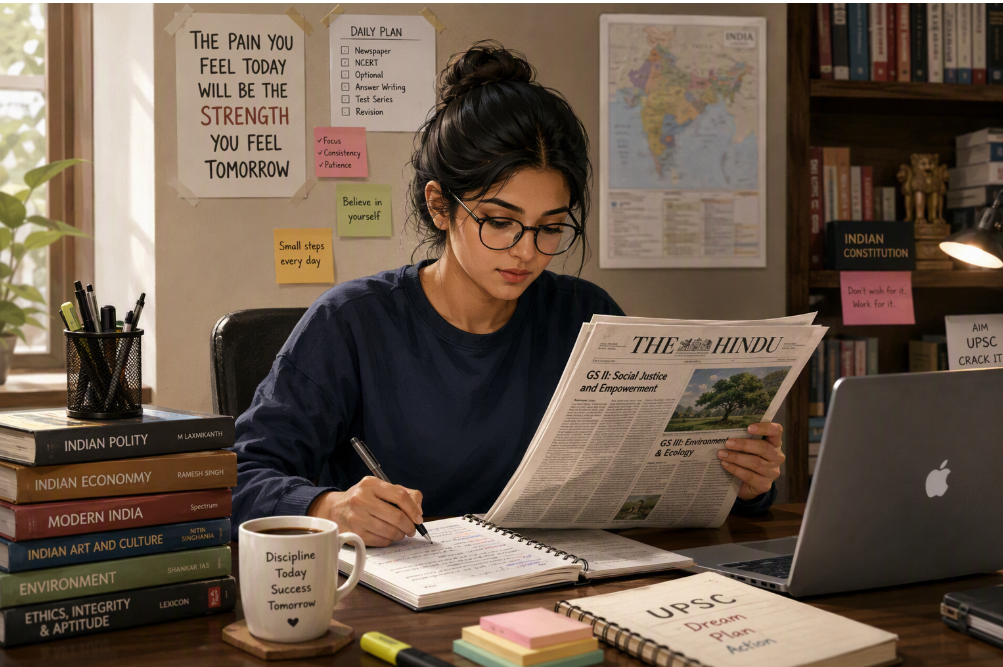
Good preparation begins when you have the right study material and a simple plan. You need UPSC polity notes, standard books, current affairs, and previous year papers. These help you understand topics and remember them well. Polity has many ideas in it, so read your notes again and again. This will help you improve your score quickly.
You need to start with the basic sources first. Then, go to the harder notes and practice questions. Be sure to read the important topics like fundamental rights, Parliament, the judiciary, constitutional bodies, amendments, and local governance many times. Go back to these again and again so you can understand them better. The next parts will show you how to plan your study in a good way.
Must-Read Books and Sources for Indian Polity
To get ready for the indian polity part, you need to read both easy books and the ones made for the test. The information here says you should start with NCERTs. After you read that, go for books that most people pick for this topic. This way, you will build a good base and read all you need for the polity syllabus.
The best books and sources you need to read are listed below:
- NCERT IX and X Democratic Politics
- NCERT XI Indian Constitution at Work
- NCERT XI Political Theory
- Indian Polity by M. Laxmikanth
- Introduction to the Constitution of India by Durga Das Basu
- UPSC polity notes and previous year questions
These books and notes are good if you want to know more about indian polity, the indian constitution, and the constitution of india. You can read these books or go through upsc polity notes. Try to practice with previous year questions as well. This will help you get ready for your exam.
Do not keep too many books in your study plan. It is better to read a few books that you trust again and again. You should add updates about current affairs, some solved previous year papers, and mock tests. A mix of all these will help you get the main ideas of Indian polity. This will also help you when you answer Indian polity questions in the UPSC exam.
How to Approach Indian Polity in UPSC Prelims and Mains
You need to read in different ways for Prelims and Mains. The syllabus of indian polity is the same for both, but how you learn is not. For Prelims, be clear with the ideas and be sure about the right answers. For Mains, you have to write in order, explain with the law, and connect your answer to governance and current affairs.
A practical method is to work in stages:
- Start with NCERTs and other standard books. This will help you get the basics right.
- Read about important topics like rights, Parliament, the judiciary, federalism, and constitutional bodies.
- Use previous year papers and practice with mock questions. This can help you get ready for Prelims.
- When you work on Mains, use Articles, Supreme Court cases, headings, and give a balanced analysis.
If you want to get ready for polity in UPSC Prelims, read the subject more than once. You should also practice with many questions. For the Mains exam, make your answers short and clear. You can use words from the constitution and try to link your answers to what is in the news. This plan helps with both Prelims and Mains for upsc prelims.
Effective Note-Making and Revision Tips
Polity can get easy if you make short and clear notes that you can read fast later. The UPSC polity syllabus is big. So, if you have small notes, it helps you keep up with things like Articles, any changes to the law, constitutional bodies, and all the main topics that come up many times. This way, you do not have to read long books all the time.
Keep your note-making and revision tips practical:
- Make short notes on the most important Articles and changes in law.
- Use clear headings, and give some examples with each topic. You can also add mind maps to help you.
- Try to link main topics with current affairs and any new actions from the Supreme Court.
- Solve previous year papers often. This will help you see what is repeated and what to focus on.
Retention matters a lot in polity. This is why it is better to rewrite and revise, not just read. If your notes are simple and in good order, you can read them again much faster before the Prelims. You can also use that same material to help you with Mains answers.
Conclusion
To sum up, learning about Indian politics is needed for all UPSC aspirants. The study of this topic is important for both the prelims and mains exams. You need to know the Indian Constitution, how the government is made, and how politics works in India. This is a good start for your studies in this area. Use the right study material, make notes, and read about current affairs to do well.
When you have a strong grip on these topics, the exams will feel easier to handle. You will also get to know more about how India works. If you want to get more help, you can book a free consultation with us for tips and study plans made just for you.
Is Laxmikant Enough for Indian Polity in UPSC?
Laxmikant is a top book for the polity syllabus and many people read it. But you should not read only this book. To get ready for your competitive exams, read NCERTs, UPSC polity notes, and stay updated with current affairs. Go over previous year papers too. This will help you cover all the important topics in a better way.
How Can I Memorize Key Articles and Amendments?
Use short notes to help you read the Indian Constitution. Go over the text more than once. Group topics together so you can link things. For example, you can join Articles with themes like fundamental rights, emergency provisions, and basic structure. Add previous year papers in your reading tips. This will help you get used to the kind of questions that can come up. When you read the text several times, it becomes easier to remember big changes in the Indian Constitution.
What is the Best Way to Link Current Affairs with Indian Polity?
Start by picking a fixed topic from the polity syllabus. Then, connect it to a recent court judgment, bill, reform, or any big issue in governance that is in the current affairs news. This method helps you get better at answering indian polity questions, especially in Prelims. It will also help you give clear answers in the general studies paper. You can also cover all parts of the upsc polity syllabus and different indian polity topics this way. Using current affairs with what you read in the polity syllabus is a good way to stay preparation.