Key Highlights
- India’s secular identity is closely linked to its many languages and many religions.
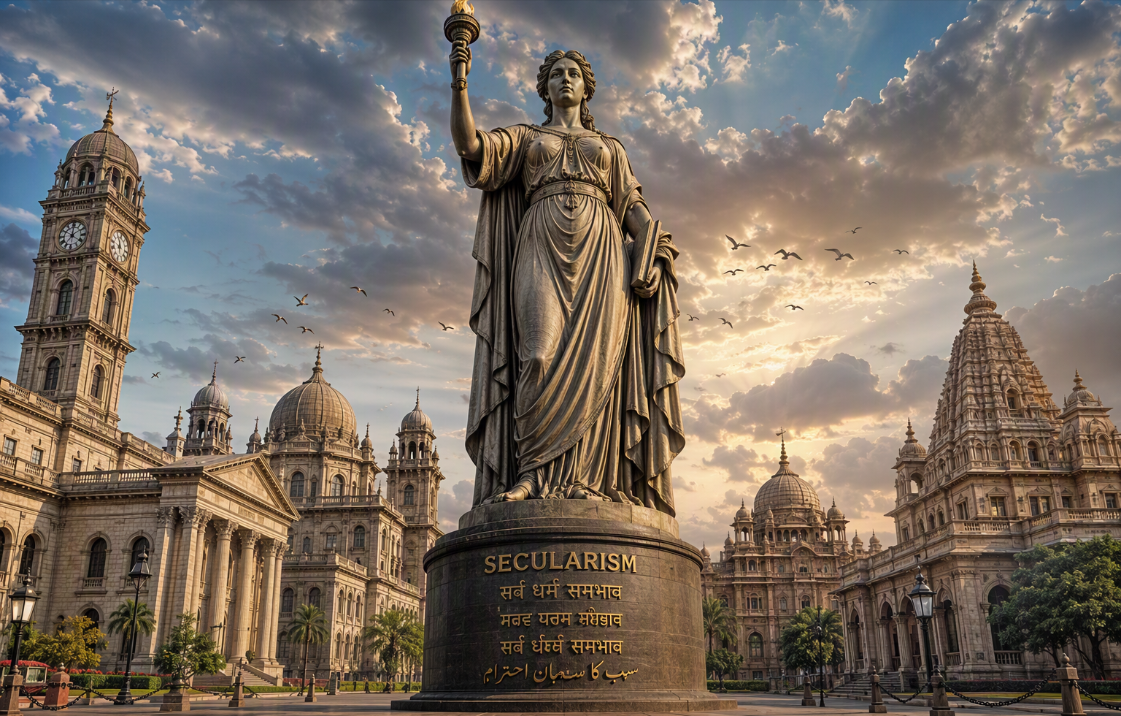
- Indian secularism is based on an inclusive model. In this model, the state and religion are not fully separate, and both can have a place.
- The Constitution gives strong constitutional foundations to protect both religious freedom and language.
- Hindi is the official language of the Union, but India does not have a national language.
- States can choose their own official language, depending on what people need and the local culture.
- Recent identity politics and fights over language show that it is important to use more inclusive policies.
Table of Contents
Introduction
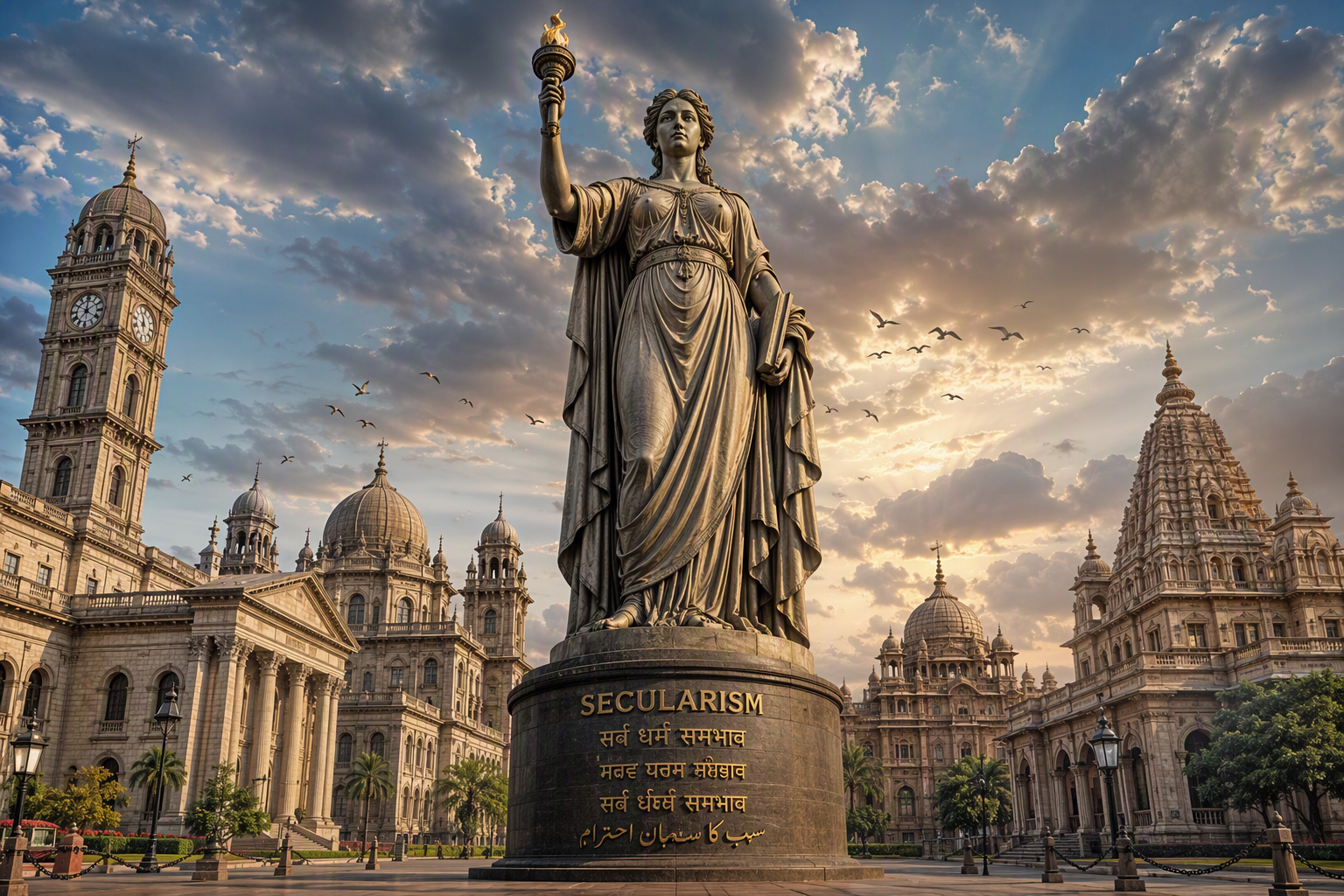
Secularism in India is shaped by India’s diversity. It is not just about religion. Language and culture play a big role in the secular framework in India. This framework must keep people safe from both religious bias and language bias. India’s diversity means everyone should feel included.
For people getting ready for UPSC, this topic is key. Recent events, like language violence in Maharashtra, show that accepting differences is not enough. People must work to protect pluralism in India. When you read Machiavelli, try to compare Western ideas with the more open and practical approach that India uses.
Machiavelli’s Concept of Secularism Explained
Machiavelli is linked with western secularism. In this, politics and religion stay apart. This idea asks for a strict separation of state power from religion, especially for public matters.
In India, linguistic secularism means giving equal respect to all languages. This lets every group feel their language matters and is part of a bigger, shared secular identity. India does not have complete separation like the West. The system tries to keep diversity safe. The state can step in if there is exclusion, domination, or tense times between groups. Knowing this difference is important for your UPSC answer writing.
Key Features and Context of Machiavellian Secularism
The western model uses Machiavellian thought. It keeps political power above religious rule. The separation of state from religion is there to stop religious groups from having power over public choices. This makes sure the nation shows a secular character in many western countries.
In India, complete separation is not what you find in daily life. The country’s secular fabric brings the union together with its mix of religion, language, and culture. It is important to keep linguistic pluralism safe, as language is a big part of a person’s dignity. Language is also tied to regional identity and helps people feel they belong, especially in the union of states where you see so much diversity.
Key features include:
- A western model is that there be a clear line between government and religion.
- The state does not use much religious authority when it makes decisions for people.
- The main goal be to keep civic order and make sure that conflicts between groups do not get out of hand.
Relevance of Machiavellian Ideas in Modern Indian Society
Today, Machiavellian ideas matter because they are not the same as what we have in India. They help us see why India did not make a firm wall between the state and society. Instead, Indian secularism uses an inclusive model. This model lets people have many different identities and accepts them all.
This is important when we talk about identity politics, like those tied to religion or language. In recent years, there have been fights between groups and trouble over language. We have seen people in Maharashtra attack others who do not speak Marathi. These things show that public peace suffers when people use cultural protection to keep others out. That is why we need to keep linguistic secularism in the real world every day. It should not just be in books or in talk.
For India, political responsibility matters a lot today. Political leaders and political parties need to stop using words that split people. They should support inclusive policies and respect all languages. It is good to push for civic engagement. This helps people feel proud of their culture. It does not let pride turn into linguistic domination or fear among people.
Machiavellian Secularism and the Indian Constitution
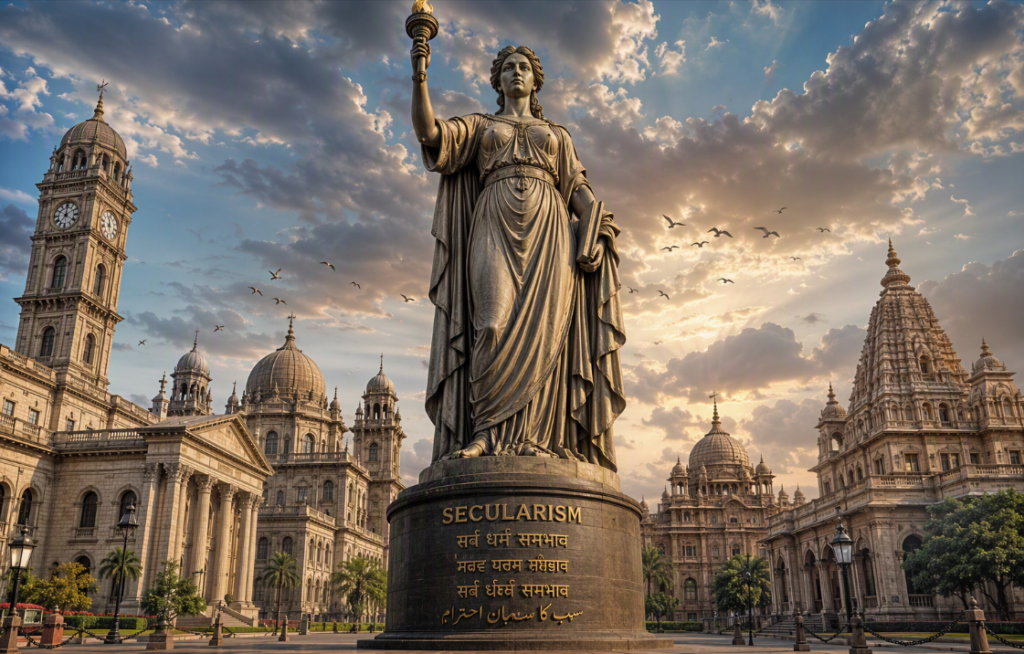
India’s secular framework is in the Constitution. You can see it working every day. This system is open and fair. It gives constitutional recognition to religious freedom and language rights. So, india’s secular framework covers more things than what the West means by secular. This means a lot in the union of states. People here find their identity in their faith, in their region, and in the way they speak.
The Constitution does not say there should be only one national language. It lets each state have the right to use its own language. The laws also help keep minority groups and their ways of life safe. This means people do not need to worry about just one group taking over. This choice helps make things fair for all the people in the country, with all the different groups. This way, linguistic secularism is part of the system in India’s diversity. The next parts will talk about the rules and how these rules affect people and the country.
Constitutional Provisions Related to Secularism
India’s constitution supports a secular and plural way of life. It gives several rights. Articles 25 to 28 let people have freedom of conscience. These articles also protect religious freedom. Article 343 talks about language. It says that Hindi in Devanagari script is the official language of the union for official purposes. English is also used according to the law. This shows the absence of a national language. Only Hindi written in Devanagari script is the official language of the union. It is not the national language.
Language protection gets stronger in India because of federal flexibility and minority rights. Article 345 lets states have their own official languages that work best for them. Article 29 says every citizen can keep their distinct language, script, and culture safe. The Eighth Schedule of the Constitution gives constitutional recognition to 22 languages in the country. This helps to keep many languages and cultures safe.
| Provision | What it does |
|---|---|
| Articles 25-28 | Protect freedom of conscience and religion |
| Article 343 | Declares Hindi in Devanagari script as the official language of the Union, not a national language |
| Article 345 | Allows states to adopt their own official languages |
| Article 29 | Protects distinct language, script, and culture |
| Eighth Schedule of the Constitution | Gives constitutional recognition to 22 languages |
Impact on India’s Linguistic and Cultural Unity
Linguistic secularism means that people feel safe when it comes to their mother tongues. In India, there are many people, and they speak different languages. The 2011 Census says there are 121 languages and 270 mother tongues in the country. It is important for everyone to feel sure that their language will not be lost. When there is equal respect for every language, it makes people feel good about their own tongue. It also brings trust and peace between people who come from other places.
It also helps make sure linguistic minorities are not left out. When people in a place can keep using their own way of speaking, writing, and living, they feel more connected to the country. They do not feel pushed by the imposition of Hindi or any other big language. This helps india’s linguistic diversity grow stronger. People feel less pressure, and it lowers the chance of arguments about language. In this way, linguistic diversity is good for all of us.
Its contribution can be seen in three ways:
- it helps the union feel equal respect in every region and group
- it lets linguistic minorities feel safe in the union
- it takes the diversity the union has and changes it into cultural unity so people do not feel they must compete
Conclusion
To sum up, knowing about Machiavelli’s idea of being secular is key for your UPSC exam. It helps you see the different sides of how people run a country and put rules in place. His ideas show the tough parts of leading a state and still feel fresh with the problems we have in India now. When you learn how Machiavelli’s way of thinking ties to the Indian Constitution, you understand the main rules for the secular framework. This lets you read news and court steps in a better way, using the same ideas. As you start your UPSC prep, think about how Machiavelli’s views can help you know more about how politics work. If you want tips made just for you, feel free to ask for a free consultation!
Why is Machiavellian secularism significant for UPSC preparation?
This idea matters because it lets you see Western theory and compare it to how things are in India. For UPSC, you will get to understand things like secular identity, debates on the official language, policy safeguards, and how inclusive policies are used. You will also see why people need to join in civic engagement, especially when language and religion are main issues in politics.
How does Machiavellian secularism differ from Indian secularism?
Western secularism tries to keep politics and religion apart. Indian secularism is different. It grows inside a union of states and makes space for religion. It also lets each area keep its own distinct language and identity. India has no national language. This tells us the constitutional design is for all people and is open to many ways of life.
Are there examples of Machiavellian influence on Indian legal judgments?
The text doesn’t give names of any legal judgments. But it says that the constitution in public law helps with the protection of India. It does this by making rules so one language does not take over the others. It also looks after the rights of minority groups. The text points out that there is religious diversity and all people get equal treatment under a secular framework. All these things work together to protect India.