Key Highlights
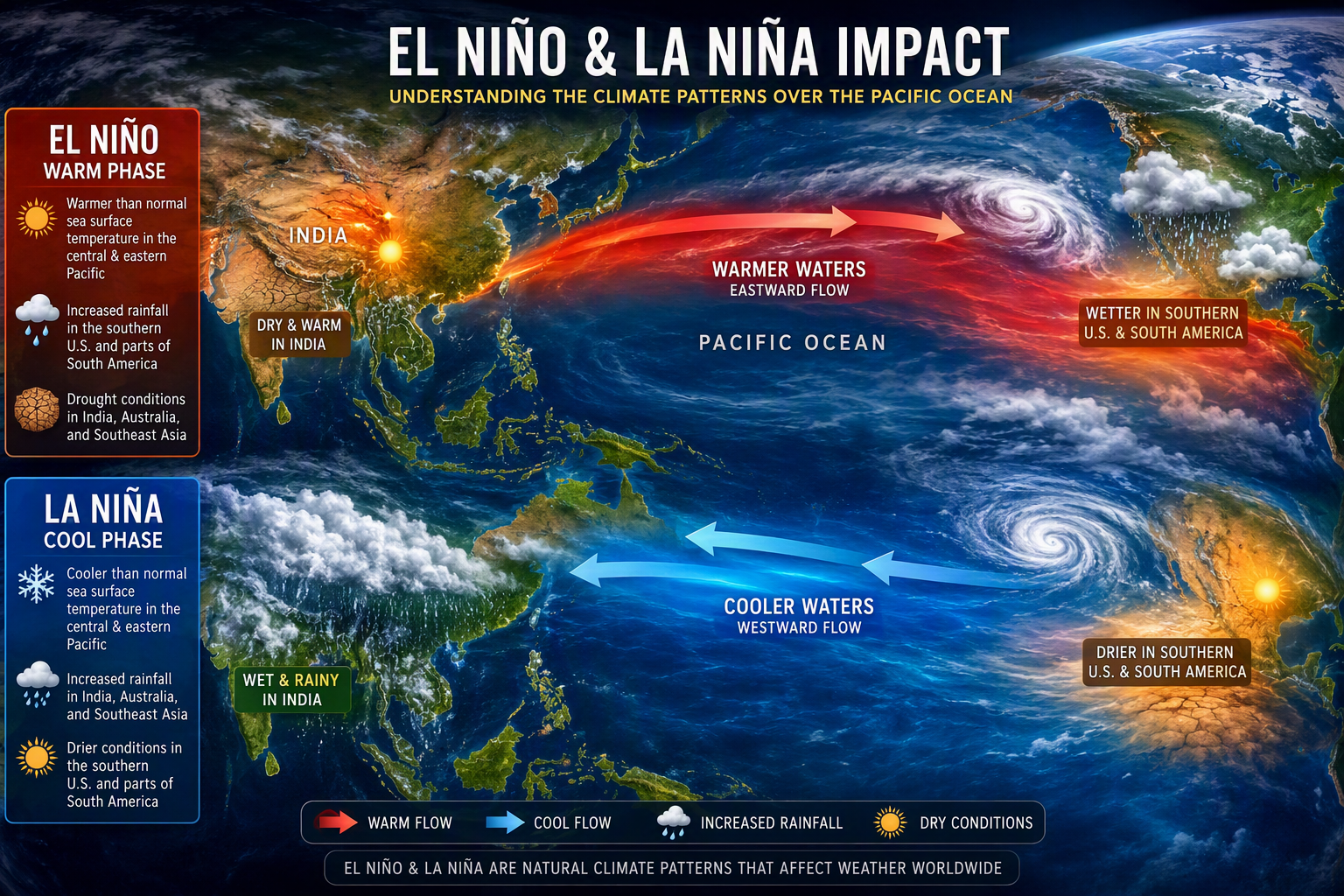
- El Niño is the warm phase of sea surface temperature change in the pacific ocean. La Niña is the cold phase.
- Changes in the sea surface can shift atmospheric circulation, and this can have a big effect on the indian monsoon and how much rain there is at that time.
- When El Niño happens, the monsoon is often not strong. This may make drought more likely, bring down reservoir levels, and lower crop yields.
- With La Niña, there can be more rain, but this also means there could be more risk of floods and cyclones.
- If people know well about these events, it can help in disaster management. It also helps indian farmers to make good plans and use water resources in a better way.
Table of Contents
Introduction
It is good to know how the ocean and the air work together. This helps us see how the weather and the climate change in places like India. The El Niño-Southern Oscillation and the Indian Ocean Dipole are very important parts of how the weather moves across the Indian subcontinent. How these events come together can change monsoon rainfall in a big way. It can affect crop yields and the water resources that people use. These changes can also lead to a need for disaster management.
When we watch the southern oscillation and the Indian Ocean Dipole, we can get ready for what comes next. People who deal with land, water, or the weather can plan in a good way. That helps farmers, saves water, and can make disaster management better for everyone who lives in the area.
Understanding El Niño and La Niña in the Global Climate System
El Niño and La Niña are two kinds of the southern oscillation system, also known as ENSO. The whole thing begins across the equatorial pacific ocean. It starts when the sea surface temperature and pressure in the pacific ocean change.
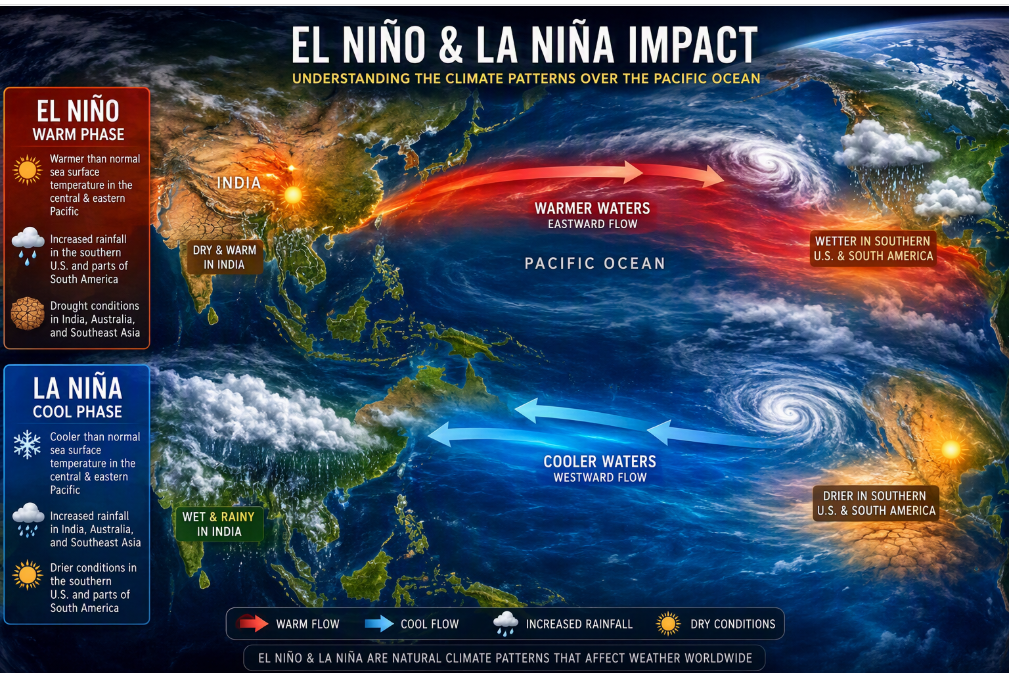
El Niño happens when the sea surface in the central and eastern pacific ocean gets warmer than usual. La Niña is there when the sea surface in the same parts of the pacific ocean gets cooler than normal.
The southern oscillation is about how air moves in this process. When there is a change in pressure between the western and eastern pacific, wind and rain will shift, too. These changes happen in both the ocean and the air. They can change weather in many places, all over the world. The weather in India, including the monsoon, is also linked to this. To see how this works, it helps to look at both phases of the southern oscillation at the same time.
Key Differences Between El Niño and La Niña
El Niño is the warm phase of ENSO, and La Niña is the cold phase. Both of them begin in the tropical pacific, mainly in the eastern pacific ocean. They move weather in different ways. So, India may get less monsoon rainfall during one phase and more rain in the other.
| Feature | El Niño | La Niña |
|---|---|---|
| Phase | Warm phase | Cold phase |
| Sea conditions | Warmer than normal waters in central and eastern Pacific | Cooler than normal waters in central and eastern Pacific |
| Winds | Trade winds weaken | Trade winds strengthen |
| The atmosphere | Convection shifts eastward | Convection strengthens in the western Pacific |
| Atmospheric pressure | Higher near Indonesia, lower in eastern Pacific | Lower near Indonesia, higher in eastern Pacific |
| India impact | Often weaker monsoon | Often stronger monsoon |
For India, this change is very important. El Niño can make the weather dry and may lead to less water for us. La Niña may bring more rain, but it may also cause floods if there is too much rain. The next step is to learn how ENSO really works.
Mechanisms of the El Niño-Southern Oscillation (ENSO)
The El Niño-Southern Oscillation, known as ENSO, matters a lot for the global climate. ENSO helps balance warmth and coolness all over the globe. When the warm phase, called El Niño, happens, the sea surface in the central and eastern Pacific gets a lot warmer. This change in the sea surface affects the southern oscillation, atmospheric circulation, and the jet stream. Trade winds slow down. With these changes, weather patterns in many places around the world shift.
When La Niña happens, the sea surface in the eastern Pacific gets cooler. The Walker circulation comes back and goes the other way compared to El Niño. These changes in the eastern Pacific make weather patterns shift in several places, and this is seen most in the Indian subcontinent.
Normal Climate Patterns Versus ENSO Events
In normal conditions, the equatorial pacific ocean keeps a steady pattern. Trade winds push warm water to the west. Cold water comes up in the east part. Rain is heavier in the western pacific. This balance helps bring more moisture to the wider Asian region.
During ENSO, things move around. El Niño sends more warmth and rain to the east. La Niña makes it hotter and brings more rising air in the west. This changes monsoon rainfall over the indian subcontinent. To know how India reacts, you need to look at what happens in a normal year first.
What Happens During Normal Years in the Pacific and India
In a normal year, the pacific ocean does not look the same in the east and in the west. Trade winds always blow and move warm water to the western pacific. This is near Indonesia and Australia. At that time, cold water comes up by the South American coast. This cold water has lots of nutrients. The sea level in the west is higher than in the east.
Because of the way things are set up, rising air and rain gather in the western Pacific. The thermocline is deeper there, but not as deep in the east. This keeps the ocean and sky working together like they usually do. It also helps tropical air and water move the normal way.
For the indian subcontinent, normal conditions are good for everyone. The monsoon is steady during this time. It brings rain that people can count on each year. Water resources like big tanks, rivers, and water found below the ground refill well. This points out why ENSO years feel so different from each other.
Changes During El Niño and La Niña Years
When ENSO moves away from neutral conditions, things in the Pacific change fast. In the warm phase, El Niño makes sea surface temperature go up in the central and eastern Pacific. The wind flow gets weak then. In the cold phase, called La Niña, the sea surface in the central and eastern Pacific gets cooler. The wind moves stronger during this time.
These changes can change how air moves in the sky. They also change global weather patterns. Because of this, rain and extreme weather in India can shift. The system that changes the coast of Peru or the weather in Southeast Asia can also change the Indian monsoon.
- El Niño can slow down how much moisture gets to India. It can make it easier for a drought to happen in this area.
- La Niña can help the monsoon be stronger. But, it can also cause more heavy rainfall and lead to flooding.
- Both El Niño and La Niña can change the temperature, bring more storms, and change the time when rain comes each year in this area.
How El Niño and La Niña Affect the Indian Monsoon
The indian monsoon depends on big changes in air pressure, ocean temperatures, and how water moves in the air. ENSO can change all these things. This is why it has a big effect on the southwest monsoon. When El Niño happens, the wind drops, so the rain is less. But when La Niña comes, there is more rain in many parts of India.
But, this does not always give the same result in every place. Monsoon rainfall can change in when it starts, how strong it is and where it falls. Climate change makes this a bigger problem because farming and water can feel more stress when ENSO plays a part. Now, let us see each phase one at a time.
Impact of El Niño on Monsoon Onset and Rainfall Distribution
In el nino years, the southwest monsoon may be weak. The heat and air go into the Pacific. Because of this, moist air does not get to India as easily. The monsoon can begin late. Many places may get less monsoon rainfall.
The southern oscillation affects the area because changes in air pressure across the Pacific make winds go a different way. When the normal weather pattern gets weaker, India may get rain that does not reach all places in the season. This makes it hard for farming and puts more pressure on water resources.
- When there is less rain than usual, there can be drought conditions in many states.
- Water in the reservoirs, rivers, and the ground may not get full enough.
- Rain may not fall on every place, so some areas get much less water than they need.
Effects of La Niña on Indian Monsoon Patterns
La Nina is the cold phase of ENSO. In India, it is often connected to a stronger monsoon. When winds over the Pacific are stronger, the Indian region gets more moisture. This makes the monsoon season bring normal or even more rain than usual.
Better rainfall is good news for farming. It can help crop yields go up. This is very helpful for rain-fed crops like rice, cotton, and sugarcane. When reservoirs are full and there is more groundwater, it helps with irrigation. It also helps with power generation. In many years, this gives a break to rural livelihoods.
But, strong monsoon weather is not always safe. Heavy rainfall can hurt crops where there is a lot of flooding. Too much rain may cause big problems in some places. La Niña can make the winter feel colder. There can be more cold days in northern India. So, there is good, but there is risk too.
Consequences of El Niño Events in India
El Niño can be hard for many people in India. It often brings less rain during the main monsoon, and this makes drought conditions happen. Reservoir levels go down. Farms will not get as much water, so they do not make enough crops. A lot of people in India work in farms. If the monsoon is weak, even for one year, it can cause big trouble for the country’s money and for most people.
These effects do not stay only at farms. Food prices may get higher. Hydropower can make less power. People living in the countryside might spend less. When it is hot and dry, there can be more bad storms. The next parts will show what happens to farms and weather because of these changes.
Economic and Agricultural Challenges
When El Niño makes the monsoon slow down, farms feel it right away. The land does not stay wet for long, and there is less water for the fields. There are long dry times, so crop yields go down a lot. Kharif crops like rice, pulses, maize, and oilseeds feel it the most. The farmers who count on rain see this happen on their land before anyone else.
The economy also gets hit. If farms make less food, prices can rise. A lot of people who live in the countryside may earn less. Other businesses feel the slowdown. Water resources have more strain because there is less water to fill reservoirs or seep into the ground. In places where a big share of money comes from farming, these losses can spread quickly.
- Drought conditions make it hard to grow crops. They also put stress on the crops.
- When the water in reservoirs goes down, there is less water for farming and making hydro power.
- The vulnerable districts will need stronger plans for disaster management.
India had some dry years. These years were 2002, 2009, 2014, and 2015. El Niño was there in all of these years.
Extreme Weather Events Associated With El Niño
El Niño is not only about less rain. It can change weather patterns and bring many extremes at the same time. There may be a weaker monsoon. It can also bring hotter days and long dry times. Rain can be very different in each area, which makes it hard for people to plan for the season.
Changes in atmospheric pressure in the Pacific can affect the whole weather system. In India, this can lead to late rains and uneven monsoon rainfall. It can also make the heat feel worse. Some places get drought conditions. Other places may get short, heavy rain, but this does not help farming much.
Climate change brings more problems. When there is heat with El Niño, it can feel worse. There will be more heat and less water to use. This affects farming, health, energy, and money in many spots. People who need rain for crops and work feel the impact most.
Consequences of La Niña Events in India
La Niña is often good for India. It helps the country with stronger monsoon rainfall. Because of this, crop yields can get better. But this cold event is not always easy for people. Sometimes, there is too much rain. This can bring flooding. Waterlogging and crop loss can also happen in some states.
La Niña does more than shift the weather when it’s the monsoon. It can also raise or lower the temperature in winter. The thing makes storms more likely in nearby seas. Most of the time, it helps farming a lot when there is a lot of land. But, it can cause some tough weather, too. You must pay close attention to the weather and think ahead to stay safe.
Influence on Agriculture, Flooding, and Temperature
The cold phase of ENSO may bring more rain to India. This extra rain makes the soil wet, which helps farmers grow plants. Farms that get water from rain will see the most help from this. When there is more water for the crops, crop yields get better. This is good for crops like rice, cotton, and sugarcane.
At the same time, not everyone gets the same benefits. Heavy rainfall can flood the fields. It can hurt the crops that are still growing. It can stop transport in districts that are more open to these problems. A good monsoon can bring hard times if water stays too long in low areas. Water resources do get better most of the time. But too much water can also be a problem.
- Better rainfall can help farms. It can lower the need to water crops.
- Too much water from floods can hurt plants. Even if the year is good for growing, flooding will not be good.
- La Niña can also cause lower heat. It may bring cold days to northern India.
Changes in Cyclone Formation and Severity
La Niña can change how storms start near India. It affects atmospheric circulation in the oceans close to the country. Because of this, there could be more storms in the Bay of Bengal. The eastern coastal states will have higher risk when these changes come.
Storms form when the wind, warm surface water, and moisture mix. During this time of year, stormy weather gets stronger. This is bad for coastal buildings and farming. After the heaviest rains, more monsoon rainfall can come. Then, for some people, things get tougher in these places.
For India, it is good to put the main focus on disaster management. States such as Odisha, Andhra Pradesh, and Tamil Nadu should get better ready, since La Niña can bring extra storms. The people there need to watch the weather forecast. They have to make a clear plan in case they need to leave their area. It is also important to have good roads and buildings that can help keep people safe during these times.
The Role of the Indian Ocean Dipole (IOD) in Modulating El Niño and La Niña
The Indian Ocean Dipole is important for changing weather patterns in the Indian subcontinent. This is true during times when El Niño or La Niña happen. The Indian Ocean Dipole can change ocean temperatures and also affects atmospheric circulation. Because of this, monsoon rainfall and water resources are often different each year. A positive Indian Ocean Dipole usually brings more monsoon rainfall. A negative phase can lead to drought conditions that last with time.
When the Indian Ocean Dipole mixes with the southern oscillation known as El Niño-Southern Oscillation, the weather patterns in the region can change a lot. These changes can have a big effect on people, their work, their agriculture, and the water resources people use and need every day in the Indian subcontinent.
Interaction Between ENSO and IOD for India
The El Niño-Southern Oscillation and the Indian Ocean Dipole both impact the climate in India. When El Niño happens, warm sea surface in the eastern Pacific moves trade winds and also changes the atmospheric circulation. These shifts can affect monsoon rainfall on the Indian subcontinent.
The Indian Ocean Dipole is also important. A strong positive phase adds more moisture to the Indian Ocean and can help reservoir levels go up. This is good for crops because it improves crop yields. A negative Indian Ocean Dipole phase can lead to drought conditions and this hurts crops during the main farming months.
Examples of Recent Years with Strong IOD Influence
In the last few years, people can see why the IOD matters when talking about ENSO. The information says El Niño changes its results based on how strong and how long it goes on. El Niño also connects with the IOD. That means the warming in the Pacific does not always lead to the same monsoon in India each time.
A strong iod may help the indian monsoon to keep going, even when it is warmer in the eastern equatorial pacific. This is important for farming, filling up all reservoirs, and when you plan water resources. People who forecast see this, so they do not give quick or easy predictions only by looking at El Niño.
- The effects of El Niño can be less if the indian ocean conditions are good.
- A positive IOD often helps the monsoon be better.
- Looking at both together gives a clearer view of risk to the economy and nature in India.
Conclusion
To sum up, knowing about El Niño and La Niña helps us see how climate change works in the indian subcontinent. These are big changes in weather. They make the monsoon act in different ways and they affect farming, money, and the weather in india. When we look at how these two are not the same and what they bring here, we can get ready for the things that are coming because of climate change. Staying up to date with this news helps us plan better. It lets us be strong during tough times from climate change. If you want to ask about how these changes can affect you, feel free to reach out for a consultation.
Why is understanding El Niño and La Niña important for UPSC or competitive exams?
This topic connects the pacific ocean with the indian monsoon, farming, the economy, climate change, and disaster management. It is good for those who want to learn more about geography and the environment. You will need to know this well for answer writing practice. This is because it links ideas, news, and life in the real world to one main issue.
Are there recent examples where El Niño significantly impacted India’s climate or economy?
Yes. The data shows that 2002, 2009, 2014, and 2015 were el nino years. In these years, drought conditions in India got worse. The indian monsoon was weak in this time. Crop yields went down during these el nino years. Water resources were also hit. Reservoirs held less water and groundwater did not get enough recharge.
How can students remember key facts about El Niño, La Niña, and their impacts on India?
Use an easy method to compare notes. The warm phase in the Pacific Ocean is called El Niño. In El Niño, the Indian monsoon gets weak. The cold phase is called La Niña. La Niña brings strong rainfall.
When these phases change, the crop yields also change. El Niño can lower crop yields, while La Niña can help them grow better. There will be less water in reservoirs during El Niño and more during La Niña. Floods are more likely during La Niña and less common during El Niño.
Doing it this way makes reading your notes simple. It also helps you practice answer writing when you get a question on a climate pattern.