Key Highlights
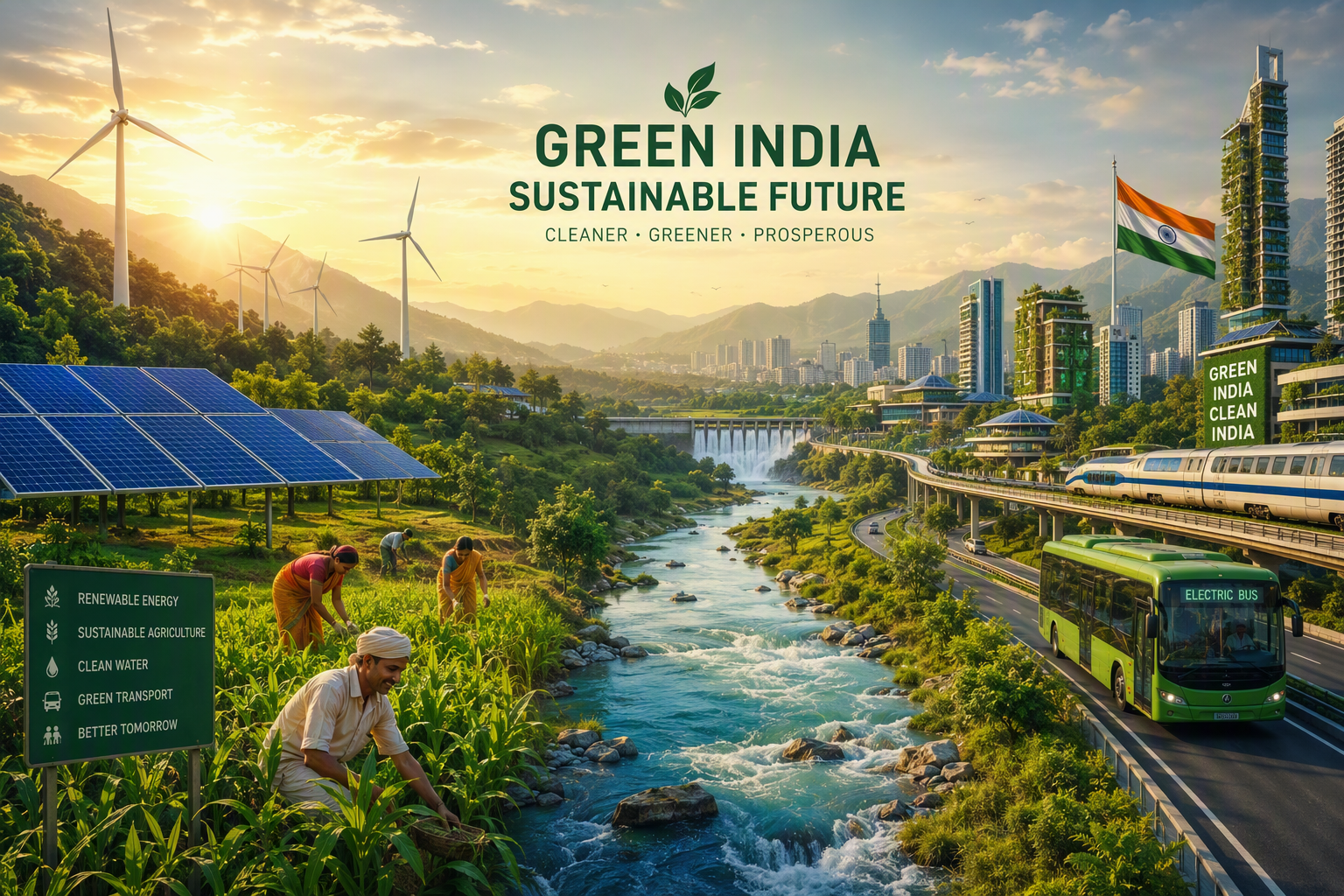
- The green economy is about a low carbon way that helps everyone. It works for sustainable development and helps long-term economic growth.
- For UPSC mains, this one topic brings together economy, environment, climate change, and how governments work.
- India’s way forward has renewable energy, energy efficiency, green technologies, and better resource efficiency.
- This is also tied with circular economy ideas. These include waste management, reuse, and waste recycling.
- Some big problems are policy barriers, green finance gaps, and our continued reliance on fossil fuels.
- A strong way to prepare is to connect to the syllabus, read daily current affairs, and practice answer writing.
Table of Contents
Introduction
The green economy is now a big topic for UPSC. It is important because the green economy connects climate change, sustainable development, and the country’s economic policy in a real and useful way. In short, the green economy is about growing the country with less environmental harm. This is done by using clean technologies, renewable energy, and working on energy efficiency.
If you want to do well in the exam, you should not think of the green economy as just one chapter. See it instead as a link between ecology, the economy, and governance in India. This helps us understand the new development path that the country is taking.
The Meaning of Green Economy in UPSC Context
For UPSC, the green economy concept is about a way of running the economy that cuts down on the use of fossil fuels. It helps push for low carbon development. The idea is to have growth in the economy and also take care of the environment. This is why you can see it in questions about energy, industry, farming, climate rules, and growth that includes all people.
When you write your answer, you can say that this idea is a way to use the natural resources in a smart way. It also keeps the ecosystems safe and helps people who live off the land. This is the main point you need to know for the exam. The next two parts will help make it even more clear for you.
Defining Green Economy for UPSC Aspirants
The green economy is a development model that helps growth and does not harm the environment. It uses clean energy and low carbon methods. It also makes better use of land, water, forests, and minerals. For UPSC, you can remember the green economy as a simple and policy-based idea.
The green economy is built on using resources well. It looks for ways to use fewer materials, make less waste, and cut down on carbon emissions. The green economy also pushes for more sustainable practices in transport, manufacturing, farming, and planning cities.
Another helpful phrase for mains answers is natural capital. This is the forests, soil, water, biodiversity, and other parts of nature that help people live and support the economy. A strong meaning shows that the green economy is not against growth. It helps growth while keeping natural capital safe for the future.
How Green Economy Aligns with UPSC Mains Syllabus
If you read the UPSC mains syllabus closely, you will see that the green economy comes up in many parts. It is in GS Paper 2 because of things like government policies and how countries work together. You also find it in GS Paper 3 in topics about the environment, energy, farming, industry, and disasters.
You can link the topic with:
- There are many risks to our environment. Climate change is one of the biggest problems we face today.
- Renewable energy is important for us. It helps with our energy security and can power our homes and work without causing more harm.
- Waste management plays a big role in taking care of the earth. A circular economy can help by using things again and making less waste each time.
- Green finance is needed to support projects that care for the planet. Jobs and policies in industry should also change to be better for people and the earth.
That is why daily current affairs are so important here. You get questions from the budget, different missions, world meetings, or the changes that India faces. When you read again, do not think of it as only about the environment. Think of daily current affairs as something that helps make your answers better in all parts of the UPSC mains.
Importance of Green Economy for India’s Sustainable Development
India needs the green economy because development is growing fast, but natural resources are limited. A way of growing that uses too much of what we have, or makes too much pollution, will hurt health, jobs, farming, and cities in the long run. A green economy will help India protect its natural resources and support a better future for all.
A greener path helps support sustainable development by mixing environmental care with green growth. It lets India lower stress on nature while still growing production and giving more chances for people. This becomes even more important when we see both conservation and inclusion at the same time.
Role in Environmental Conservation and Resource Management
One big value of the green economy is that it helps with environmental protection. India has problems like pollution, losing forests in some places, and pressure on land and water. A green economy tries to fix these by making the way people produce and use things less harmful to the world.
It makes resource efficiency better by using natural resources in a smart way. It also helps by making waste management work well. This is important because if waste is not handled and if we take too much from nature, it harms the earth. Over time, this can hurt the economy and make it hard for people to have a good life.
Its conservation role includes:
- lowering pressure on forests, water, and raw materials
- supporting biodiversity conservation through programs like Project Tiger and Project Elephant
- encouraging waste recycling and safer handling of plastic waste and toxic waste
- improving land and coastal resilience through restoration efforts such as mangroves and wetlands
For UPSC, this says that a healthy environment helps development itself.
Contribution to Economic Growth and Social Inclusion
The green economy is about more than just taking care of nature. It helps with economic growth by bringing in new places to work like solar, wind power, electric vehicles, energy storage, and ways to build things that last. These areas give people new jobs and help stop more costs to the environment in the future.
Its social value matters just as much. Rural areas can get a lot from green growth. Things like distributed energy, agroforestry, mangrove restoration, and sustainable agriculture can help people there. If the policy is fair for all, green growth can make life better without leaving out the people who need help the most.
You can mention three direct gains:
- There will be more green jobs in green sectors.
- There is support for sustainable lifestyles and local production systems.
- Social inclusion will grow as people in rural areas get more ways to earn a living.
This is why india’s green economy is connected to both fairness and growth.
Principles of Green Economy: Key Concepts for UPSC Mains
The green economy is based on three simple ideas. These are low carbon growth, using resources well, and including everyone. These green economy principles help to lower environmental harm. At the same time, they keep development strong and for all people.
In practice, this means using more renewable energy and making production cleaner. It also means following sustainable practices in every area. For the UPSC mains, you should talk about these ideas as not just ethical choices but also economic ones. The next parts will show the values behind these choices. They will also explain how India is part of the bigger global story.
Core Values Underlying Green Economy
The green economy is built on a few simple ideas. First, growth should not come by using up natural resources without care. Second, the way money moves in this world should help cut pollution and save good places like forests. Third, development in the green economy should help all people, no matter where they live or how much money they have.
This way of looking at sustainable development is about thinking ahead. It is not just about quick results. We see forests, water, biodiversity, and soil as things that help people, business, farming, and life each day. So, caring for the environment is part of the country’s economy, not something separate from it.
For a balanced mains answer, you need to show that the green economy aims for cleaner production. It works to have lower carbon emissions and better use of energy. It also helps people be strong against climate challenges. These ideas shape what the policy is, where investment goes, and how people act in a changing economy.
Global and Indian Perspectives on Green Economy Principles
Across the world, the green economy is tied to climate action, low carbon growth, and making better use of natural capital. Many talks at the United Nations and other big forums say that developing countries need money and technology help. This help is needed so that the move to a green economy can be fair for all.
India’s green economy thinking includes the needs of the Global South. It looks for green finance that includes everyone. India wants people to get clean technologies. They feel that every country needs a fair chance to grow and make its own rules. India’s green economy wants growth, new jobs, and energy for all to happen at the same time.
You can frame the comparison like this:
- Around the world, people talk a lot about net-zero, clean technologies, and how to lower carbon levels.
- Many developing countries talk more about fairness, money to help, and their limits to act.
- India points out the need for a change that includes everyone, for energy security, and to keep jobs.
- India also wants to be a global leader in renewable energy and green manufacturing.
Strategies to Promote Green Economy in India
India’s move to new energy depends on real plans. It is not just about big targets. The key things to look at are help for green technologies, making things at home, using more clean energy, and strong money support for all these clean areas.
Government policies already go this way with budget steps, help for industries, and the Green Energy Corridor. But to make this work, we need stronger action, more people involved in their local areas, and money. The next two parts talk about rules and plans, and about how the community, businesses, and technology play a big part.
Government Policies and Legislative Initiatives
Policy support is key to green industrialization in India. The government uses budget help, support for factories, conservation programs, and missions for each sector to move toward cleaner growth. These steps also help with energy security, keep biodiversity safe, and grow the country’s ability to make things.
Some steps look at better ways to make and use renewable energy. These include using batteries. Other steps are there to help with forest cover, make coasts stronger against storms, and keep wildlife safe. For UPSC, you can show these steps as tools that work for the economy, environment, and how things are run.
| Initiative/Policy | Main Role in Green Economy |
|---|---|
| Budget support for solar PV and batteries | Expands clean energy manufacturing capacity |
| PLI Scheme | Promotes domestic production of green technologies |
| Green India Mission | Improves forest cover and ecological restoration |
| Project Tiger and Project Elephant | Support biodiversity conservation |
| National Coastal Mission | Protects coastal ecosystems and resilience |
These examples help you give a clear and well-ordered answer.
Community, Industry, and Technology Driven Approaches
Policy by itself is not enough. The green transition works best when local communities, private sector, and new ideas move together. People in local communities can help by working with mangrove restoration, composting, and sustainable agriculture. At the same time, the private sector can put money into cleaner production and green sectors.
Technology is also very important. India needs to have better energy storage, strong battery systems, smart grids, and better waste recycling. These things help to cut down on environmental harm and help the country work in a better way for a long time.
Important approaches include:
- getting local communities to help with wetland and mangrove restoration
- having the private sector put more money into clean manufacturing
- bringing in more green technologies for transport and industry
- making waste recycling and treatment systems better
- helping people practice sustainable agriculture and agroforestry
This model uses many actors. It helps to make the green economy more real and open for everyone.
Comparing Green Economy and Traditional Economic Models
A traditional economy uses a lot of fossil fuels and raw materials. People in this system care more about fast growth than the environment. This way of working may help output go up fast. But, it also leads to more pollution, waste generation, and carbon emissions.
The green economy goes in a different way. It puts the focus on resource efficiency, clean energy, and less harm to nature. At the same time, it still wants to grow. This stands out more when we look at how it affects the environment and what good comes from moving to this new system.
Environmental Impact and Resource Use Differences
The main difference is in the way each model deals with nature. Old-fashioned systems often use more raw materials. They also make more waste and rely on ways of making things that use a lot of carbon. Because of this, they cause more environmental harm as time goes on.
The green economy is different because it wants to cut waste generation. It saves inputs and moves to low carbon systems. It tries to use cleaner energy and better transport. It also helps to reuse things when we can. In simple terms, the green economy lowers pressure on nature and helps our long-term work give better results.
A quick comparison helps:
- The traditional model uses a lot of resources. It makes more pollution, and there is not much checking on the effects to the environment.
- The green model works in a way that saves more resources. It makes things in a cleaner way, and there is less pollution in the air and water.
- A traditional model looks at quick results and short-term gains. A green model thinks about the future and tries to keep things good for a long time. It focuses more on long-term sustainability and resource efficiency.
That difference helps in both written answers and during interviews.
Benefits of Transitioning towards a Green Economy
A green economy brings many good things, not just less pollution. It can help make people feel better, gives more people access to energy, makes businesses do better, and helps us deal with changing weather. A green economy also helps green growth. It does this by making new jobs and businesses that use clean tools and make things in a better way.
Another good thing is the protection of ecosystem services. Forests, wetlands, and mangroves help with water, keep soil healthy, and make coastlines stronger. When we protect these systems, there can be fewer money losses from things getting worse.
Key gains include:
- lower carbon emissions by using more green energy
- new jobs in solar, wind, batteries, and electric mobility
- stronger ecosystem services because of restoration and conservation
- less need for imported technologies as domestic manufacturing grows
That is why this move helps the environment and is good for the economy.
Major Challenges in Implementing Green Economy in India
India is moving in a good way, but it is not easy. There are many policy barriers slowing things down. This is even more true when rules are not used in the same way everywhere. Money is also not the same in each state and sector, which makes things harder.
There are big gaps in how institutions work. A lack of incentives makes it hard for the industry to move forward. Problems from outside, like geopolitical tensions, also hurt supply chains for green technologies. These challenges need to be looked at closely. It is important to focus on how we run and carry out plans to fix them.
Policy Barriers and Institutional Gaps
One big problem is weak implementation. India has started key programs, but the control of pollution and rules for the environment do not always work the same way everywhere. There are funding gaps at the state level. There is also poor enforcement. This makes results weaker, even if the goals for the whole country are clear.
A second issue is that there is a lack of incentives for industries to put money into cleaner systems. Complex recycling steps, limits in the supply chain, and unclear signals about the long run make firms feel careful. It gets even harder when green finance is not there at the level that is needed.
Institutional gaps slow down the energy transition in India. This country needs stronger help for energy storage, better renewable infrastructure, and reskilling workers. If ministries, states, and markets do not work together well, India will keep its continued reliance on fossil fuels longer than it wants to. The move away from fossil fuels will not be as quick as planned.
Circular Economy and Its Connection to Green Economy UPSC Mains
The green economy and the circular economy are connected because both work to cut down on the use of natural resources. The circular economy is different, as it looks more at things like how we design products, how we can use things again, recycle them, and create less waste.
For UPSC mains, you can say that circularity helps the green economy. It does this by making resource efficiency and waste management better. It shows a practical way to use materials for a longer time. It also helps cut down environmental damage. The next sections talk about its features and what India is doing to be part of it.
Fundamental Features of Circular Economy
A circular economy is about making sure things last longer. The goal is for products and their materials to be used as long as they can. This system is not like the take-make-dispose way. Instead, in a circular economy, people reuse, fix, remake, and recycle things.
This way of doing things helps get more from the resources we use. It lowers stress on landfills, raw materials, and the environment. The system also helps people use more renewable sources. In the end, it helps cut down the pollution that comes from work and home waste.
Its core features include:
- designing goods that last longer and can be used again
- promoting waste recycling and getting back material from old things
- using the 6 Rs: Reduce, Reuse, Recycle, Refurbishment, Recover, and Repairing
- turning organic waste into compost to help soil and to use less chemical fertilizer
That makes circularity a key part of making things in a way that is better for the planet.
Integration of Circular Economy in India’s Green Economy Strategies
India is taking steps to join green economy and circular economy goals together. This is clear in the way the country works on waste management. India also has scrappage policies and plans to use resources better. There is more focus on companies that support recycling. The goal is to make less waste and still get good value from it. The integration of green economy and resource efficiency helps India move forward in this area.
Mission LiFE helps people act in a better way by taking steps for responsible consumption and living a sustainable life. At the policy level, India backs several policies for resource efficiency. Some of these policies are the Draft National Resource Efficiency Policy, the Steel Scrap Recycling Policy, and the Vehicle Scrapping Policy.
You can see the same way of working together in the green economy areas like sustainable agriculture, composting, agroforestry, and using new technology for recycling. For UPSC answers, just remember this—circular economy tools help india’s green economy. They do this by cutting down waste, keeping things in use for longer, and making sure people use cleaner ways to make things.
Key Government Initiatives for Green Economy in India
India has started many big plans to help make the country more green. These programs focus on bringing back forests, making more things with clean energy, helping save animals, and keeping their coasts safe.
There is now more focus on green energy, green mobility, and working together with many countries. For the UPSC exam, it helps to put these plans into two groups. One group is about what is done inside the country, and the other is about working with other countries. This way, you can remember things better and write better answers.
National Missions and Flagship Programs
India’s main missions and important programs show that the country is taking action for the green economy in many ways. Some of these programs are about protecting forests and all the plants and animals in them. Others are there to make sure that things like moving power, making things, and spreading clean energy get better.
These programs are important. They help connect goals to protect nature with building projects and plans for industries. In your main answers, remember to talk about both ways to save the environment and ways that use new technology. This will help keep your response balanced.
Important examples are:
- Green India Mission works to grow forest cover and brings back forests in the country.
- Green Energy Corridor gives help with sending green energy, making it easier for power from sun and wind energy to reach people.
- National Coastal Mission is here to keep the edges by the sea safe and help life near the coast.
- Money help linked with PLI is there for solar PV, batteries, plus other clean jobs.
- There is a strong push to grow wind power, use more crop left after harvest for energy, and see better energy efficiency in buildings.
These things show a big push for a green policy by many people.
International Collaborations and Policy Examples
India’s green transition also needs help from other countries. When it led the G20, India talked a lot about the need to work together. The country focused on green finance that includes everyone. India also said it is important to give technology support to developing countries. All this shows that India wants to play a big part in climate action and development around the world.
India is also in the Global Alliance on Circular Economy and Resource Efficiency. This kind of teamwork helps share how to make good rules. It helps to make partnerships. It also helps make better support in the world for cleaner ways of making things and using more renewable energy.
These efforts help India and other countries do better in resource efficiency, grow the circular economy, and be a bigger part of the global alliance for a cleaner future.
International policy changes can also put pressure. Rules like the Carbon Border Adjustment Mechanism change trade and the way things are made. For UPSC, it is good to know that india’s green economy is not shaped by only what happens inside the country. The green economy also changes because of global rules, world talks, and market shifts.
Measures to Accelerate Green Economy Transition by 2047
If India wants to make big changes by 2047, it has to do more than just plan. The country needs to raise more money, bring in better technology, and create new jobs. Green finance is very important for this goal. This is because building clean things and making changes for the environment needs a lot of money.
Innovation, skill building, and public participation will shape how far the transition goes. These two sides help each other. Funding helps build capacity. Knowledge and awareness bring lasting change.
Strengthening Green Finance and Investment
A strong green economy needs green finance to be strong too. Things like renewable infrastructure, making batteries, climate adaptation, and cleaning up industrial systems all need big investments. These changes will not happen quickly or easily if there is no support. Without green finance, our low carbon goals will move slow and may not be the same for everyone.
Public funding is important, but it can’t solve everything. India needs money to go into clean energy, better power networks, making things in the country, and using things again instead of throwing them out. These investments matter because not having enough money is still one big reason why people find it hard to move away from fossil fuels and toward clean energy.
Better finance plays a key part in sustainable development. It helps grow solar, wind, energy storage, and local green manufacturing. With good funding, there can be more new ideas. There is also less need to bring in things from outside the country. This makes it easier for communities to stand strong when there are shocks to the climate. In short, investment is what makes a long-term green change possible.
Boosting Innovation, Skill Building, and Public Awareness
Money by itself will not change the economy. India needs new ideas in green technologies, better research, and people who are ready to work in new kinds of jobs. This is very important, as people who work in old industries that use a lot of carbon might find it hard if they do not get training for other jobs.
Public awareness is also important. A focus on sustainable lifestyles and making careful choices can help government policy and bring change in the market. Mission LiFE gives a good example of this. It shows how what people do each day is connected to bigger goals for a better planet.
Useful steps include:
- investing more in new ideas for recycling, batteries, and smart grids
- giving workers more chances to learn new skills for jobs in green sectors
- helping people know more about energy use and how to live sustainable lifestyles
- getting schools and colleges to work on research about waste management
- backing composting and reuse systems led by technology
These steps make the change bigger, more fair, and last longer.
Preparation Tips for Green Economy Topics in UPSC Mains
Green economy topics can help you score well in UPSC mains. You need to get ready for them in a full way. Do not read about them as just being about the environment. Try to link these topics with the economy, governance, agriculture, science, and international relations.
You should put your focus on writing answers, going over topics with some real issues, and using your sources and the daily current affairs with care. When you fully understand the idea behind the topics, you will find it much easier. It will help you with any essay, General Studies answers, and the personality test as well.
Smart Study Strategies and Important Reference Sources
The green economy is about growing the economy in a way that helps people but does not hurt the planet. It makes sure that the use of nature is careful, so its value stays for the coming years.
In India, there are some challenges to building a green economy. A lot of people live here and many depend on things that can harm the planet. There is also not enough money for big green projects. Then, new ideas take time to spread to all.
The government of India has taken several steps to support the green economy. There are schemes for solar power, wind power, clean cars, and turning waste into energy. The government runs big programs like National Solar Mission and has made plans for a hydrogen-based future.
For the upsc prelims, it is good to know some clear examples. India is working on growing forests, cleaning the river Ganga, and making smart cities. There is also help for farmers to use less water and make less pollution.
It is helpful to keep your notes ready. Write important ideas, government schemes, and what is new in the news. This will help not only for the prelims facts but also for your answers in mains.
Your way to study needs to be easy to use and easy to do again. Go over the charts that talk about each issue. Look at green models and compare them with old ways. Keep thinking about how the environment and the economy are connected. This way, you will remember things better and give deeper answers.
Useful reference sources and habits include:
- Get daily current affairs to stay updated on policy and world news.
- Use budget and scheme notes for facts and details.
- Check previous year question analysis to find patterns.
- Read short topic sheets on circular economy, green finance, and renewable energy.
- Do answer writing practice often, and add current examples.
This way, you can stay focused on what you need to do. It also helps you use your time well when you get ready.
Sample Questions and Answer Writing Approaches
When you practice writing answers, you should use questions that check your understanding of definitions, comparisons, problems, and policy fixes. For example, you may get a question to explain what a green economy is. You might be asked to compare the green economy with the old way of doing things. There can also be questions about the things that get in the way of India making this change.
A good UPSC mains answer must have a simple and clear structure. Start with a short meaning. Next, talk about the main issues. Give some examples. End by sharing what can be done next.
Try to use clear words. For example, use words like low carbon, resource efficiency, social inclusion, and circular economy when they fit with the topic.
You can practice with:
- The green economy is very important for India’s sustainable development. It helps the country grow without harming the nature. A green economy lets people and companies use energy, land, and water in a better way. This makes sure that today’s needs are met, but also there is enough for the future. The idea is to use less from the earth and stop too much waste. A good green economy also makes more jobs and brings in new ways for people to earn money. It keeps the air clean, uses less water, and helps stop big problems like climate change. For India to grow in a fair way, there is a need to go for green development.
- A circular economy is key for India’s green transition. A circular economy means nothing goes to waste. Things are reused, fixed, or changed into something new. This way, less gets thrown out, and we use fewer new things from nature. A circular economy lets India keep growing but with less damage to the earth. It gives more time to use things and reduces waste from homes and factories. Having a circular economy is win-win. It helps people, saves money, and cuts down on things that hurt the land or water. A circular economy is a big step toward a strong green economy and adds to India’s sustainable development.
- There are several policy barriers in putting the green economy in place in India. Many rules and older ways of doing things do not match with green development. A green economy needs right laws that help people use clean energy
This style is good for the personality test because being clear is more important than using big words.
Conclusion
To sum up, it is important for UPSC aspirants to know the basics and plans of the green economy. This goes with goals for sustainable development. A green economy can help with economic growth and lets more people feel included in society. As you get ready for your exams, keep in mind that moving to a green economy will have some challenges. But, there will also be many chances to try new things and use resources in a better way.
Get ready by using smart methods to study and by choosing the best sources. The ideas of green economy are important for your tests and also for building India’s future. If you want to learn more about green economy topics, feel free to ask for a free talk to help you get better at your preparation.
Frequently Asked Questions
Why is the green economy significant for UPSC Mains?
The green economy is important for UPSC mains. It connects sustainable development with economic policy, environmental protection, and how things are run. It also helps you write better answers about climate, industry, energy, agriculture, and resource efficiency, by putting everything into one main idea.
What are the key differences between green economy and circular economy?
The green economy aims to lower carbon and support growth that includes everyone. A key part of it is the circular economy. The circular economy works on better waste management, reuse, and recycling. It helps people use materials for a longer time. Both the green economy and the circular economy help use resources better and support more sustainable practices.
Which recent initiatives best illustrate India’s green economy progress?
India is making progress in the green economy in many ways. The country has taken steps with missions like the Green India Mission. There is support for solar PV and batteries. India is also working on the Green Energy Corridor. The government has put policies in place that help with the circular economy. These rules also support renewable energy and green finance. At the same time, there is work on biodiversity conservation. All of these moves show how India’s green economy is growing.