Key Highlights
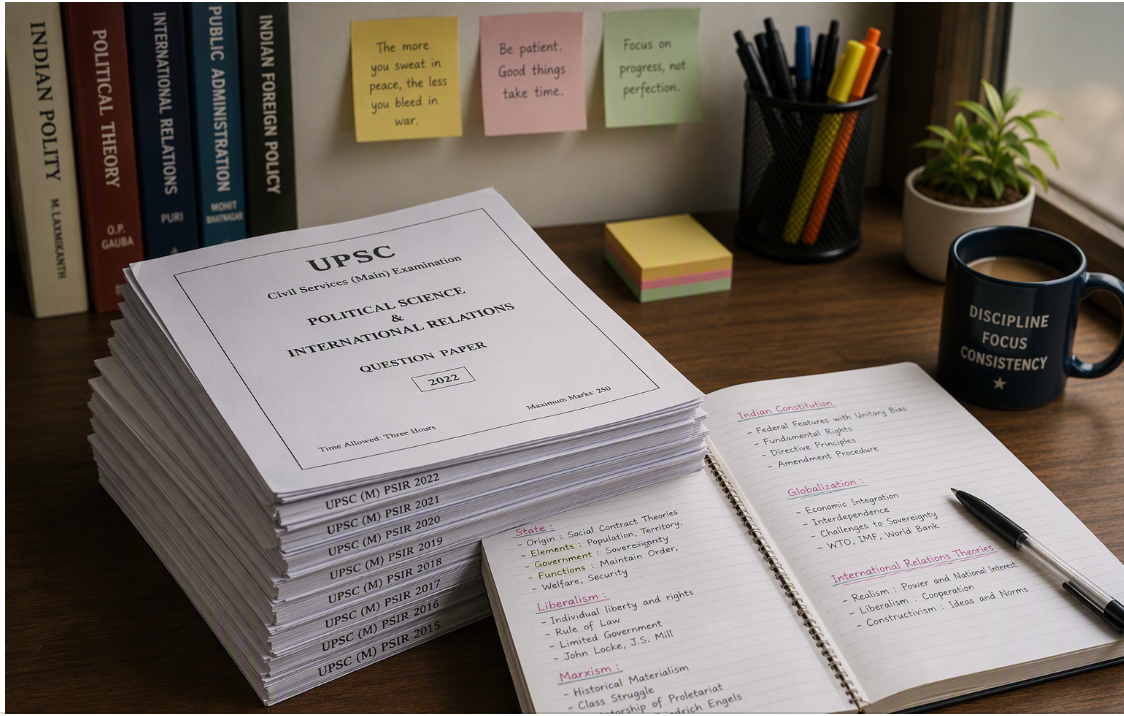
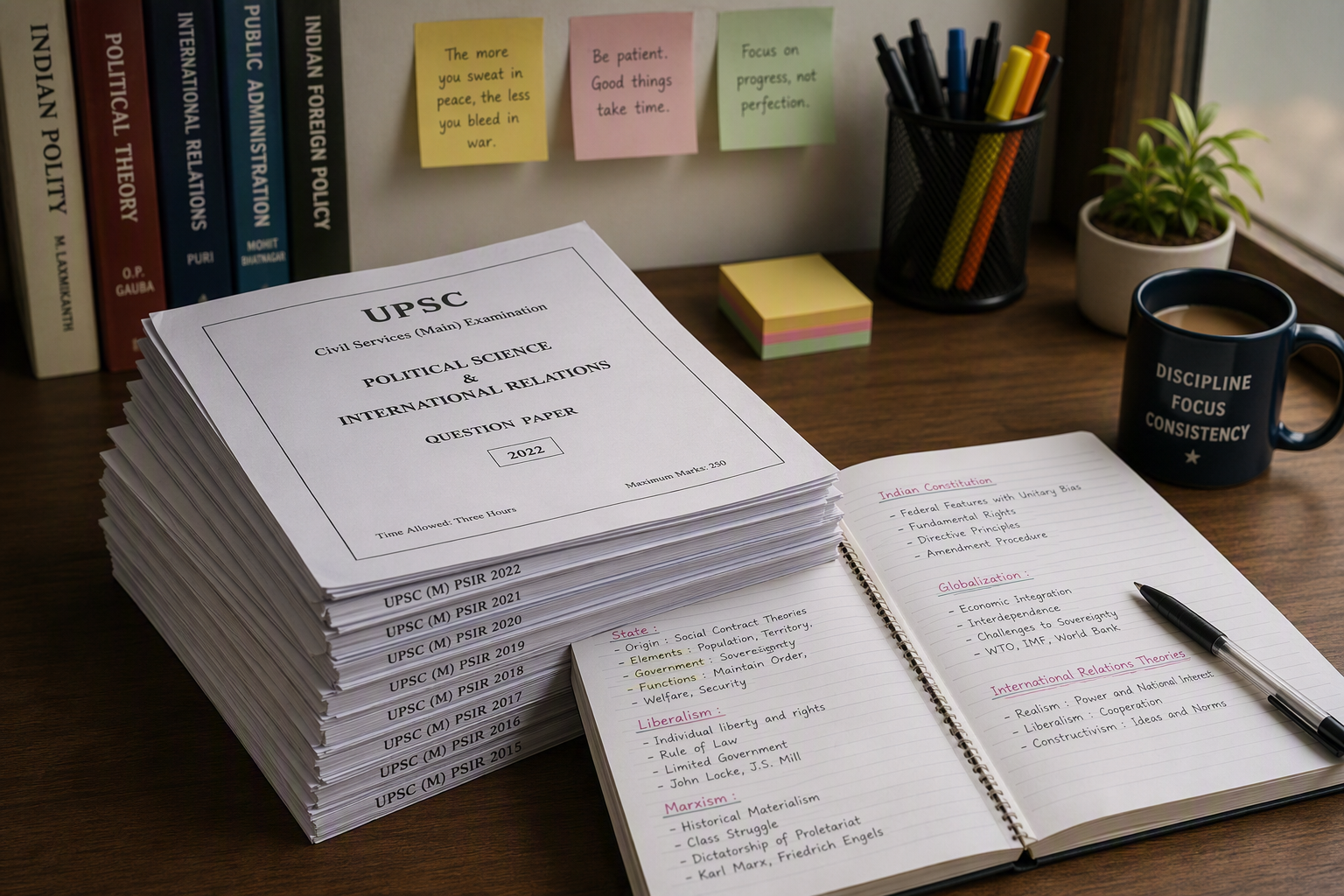
- Previous year papers help you see the exam pattern for the optional subject. You get to know what level is expected in political science and international relations.
- PSIR has two papers in the UPSC mains. One is about political theory. The other covers international relations.
- If you practice answer writing often, you get better at it. It helps you write with more clarity and speed. It also makes your answers well-structured for the real exam.
- Year-wise PDF papers, including the latest ones, are ready to download on official and popular sites for preparation.
- Solved papers show how strong answers for topics in the syllabus are made. This helps you see what a good answer is like.
- Topics usually focus on common areas in political science and international relations.
Table of Contents
Introduction
Political science is one of the top optional subjects in the UPSC mains exam. PSIR has topics like political theory, Indian politics, comparative politics, and international relations. The syllabus is big but it is made in a way that is easy to follow. It can help you get better at answer writing. If you want to know how the paper is set, what topics matter the most, and how to make use of previous year papers, this guide will be good for you to get started.
Structure of the Political Science UPSC Mains Question Paper
The PSIR optional subject in UPSC mains has two papers. Each of these papers gives you 250 marks. So, both papers together have 500 marks. This makes the optional subject a big part of your final score. The exam pattern for this is clear. It helps you plan your study in a simple and focused way.
Paper I in political science is about political theory, Indian political thought, and the Indian government. Paper II covers comparative politics, international relations, and global issues. The UPSC mains question paper in political science clearly sets a part for international relations. You can get year-wise papers, even for 2025, on preparation platforms as a PDF. The next parts will tell you more about this structure.
Paper Format and Time Allocation
If you are thinking about your optional paper, start with knowing the exam pattern. The PSIR optional has two papers in the UPSC mains. Each paper is 250 marks. You will get 3 hours for each paper. That means you have 6 hours for both papers. The optional paper adds up to 500 marks.
Here is the paper format in a simple text table:
| Paper | Topics Covered | Marks | Duration |
|---|---|---|---|
| Paper I | Political Theory, Indian Political Thought, Indian Government and Politics | 250 | 3 Hours |
| Paper II | Comparative Politics, International Relations, Global Issues | 250 | 3 Hours |
| Total | Both papers together form the PSIR Optional subject in UPSC Mains | 500 | 6 Hours |
This way, you see how the syllabus works for you. It helps you understand things better. Many people ask if international relations is a different topic. Yes, Paper II covers that. When you know the pattern, you can plan your time well. Your preparation can be easier and more clear.
Division Between Political Science and International Relations Sections
There is a clear split to the PSIR optional subject. This is a good thing about it. Political science and international relations are joined, but UPSC puts them in separate papers. The exam pattern is easy to get because of this split. You can finish the syllabus in a way that is simple and ordered.
Paper I is mainly about political science. It includes political theory, Indian political thought, and Indian government and politics. Paper II covers comparative politics, international relations, and global issues. If you ask about international relations having its own part, it does. You will find it in the second paper.
This split helps you plan your study time well. You can put the theory part and Indian political groupsin one group. The other group can be for foreign policy, world topics, and things happening in the region.
This mix is what makes PSIR a good optional subject for many aspirants.
Accessing Previous Years’ Political Science UPSC Mains Papers
Finding previous year papers for PSIR can be simple if you know where to look. There are good UPSC websites and official sources on the internet. These sites have year-wise PDF papers for political science and international relations. The papers cover both Paper I and Paper II.
You can get solved papers on coached websites and trusted study sites. These papers do more than give you the questions. They let you see the exam pattern and practice answer writing. You find themes that stay the same over time. The sections after this will show you which sources help best and tell you how to use them.
Best Sources for Downloading PDFs and Solved Papers
When you search for previous year papers, you should look for websites that let you download year-wise PDF files for both PSIR Paper I and Paper II. A lot of these sites have papers from 2009 to 2025. This helps you know how the optional subject and optional pattern have changed with time. Some websites also offer solved papers or discuss the answers. These can be very good for your study.
You do not have to use a lot of websites. A few good ones is all you need if they are set up and easy to work with.
- Official UPSC-linked question paper listings help you get real PDF files.
- Trusted UPSC preparation websites show previous year papers by year.
- Coaching portals let you download question papers and sometimes they have answers as well.
- Topic-wise PSIR pages help sort papers by area if you do not want to look by year.
If you need political science UPSC mains question papers and answers, go to the official sites. For answers and help with answer writing, check trusted coaching or preparation websites. This gives you the right papers and good support for your answer writing practice.
Understanding Answer Formats Through Previous Year Solutions
Previous year solutions help you a lot because they show how answers should look during exams. In PSIR, it is not only about knowing political theory or international relations. A good answer is also about sharing your ideas in a smart way. You must write clearly, stay in the word limit, and answer what the question asks.
You can find detailed solutions on well-known coaching and preparation websites. These are great for people who are new to answer writing. You will not need to guess how a strong answer should be. The guides show you what a good answer is.
- Solved papers help you see the way people begin, cover the main ideas, and finish their answers.
- They show how things about international relations and political theory become easy-to-read answers.
- They let you know the kind of clear thinking the UPSC mains are looking for.
Yes, you can find detailed solutions for political science UPSC mains previous year papers. These papers are good for practice. They show you the right format. You can use them to get better at writing answers for the exam.
Key Topics Frequently Asked in Political Science UPSC Mains
If you look at previous year papers, you can see the same areas come up again and again. In political theory, most of the questions check if you know the ideas well. In Indian politics, questions about the Indian Constitution, its institutions, and social movements show up a lot.
Paper II looks at comparative politics, international relations, and topics linked to current affairs. You may see questions to do with foreign policy, regional security, global groups, and problems about the environment. It is not possible to know the exact questions for sure before the exam, but you can see which areas you need to focus on all the time. Let’s go over these two main groups in more detail.
Core Political Theory and Indian Government Questions
PSIR Paper I usually covers simple topics about political theory and the Indian government. The goal is to check if you can talk about ideas, people, and main parts of the Indian government in a clear way. You have to show that you really understand these things. The 2023 PSIR paper shows that the questions can be broad and go into detail.
Some parts be important in the syllabus. You will see the main ideas come up more than one time. They show up in many ways as time goes on.
- The normative approach in political theory is about thinking what is right or wrong. These ideas started to fade over time.
- Rawls made the theory of justice. Many people, like those in the communitarian school, do not agree with it.
- The Indian Constitution guides how India works. It shows things like federalism and tells everyone the rules to follow.
- Some big topics in the indian government are NITI Aayog, the 74th Constitutional Amendment, and the District Planning Committee.
- Indian nationalism, Satyagraha, the Dalit movement, and the part played by the Supreme Court of India are key things in india’s history and system.
These themes matter a lot. You need to read them many times. The optional uses these themes. You can get good marks if you show how you use the idea in your answer.
Emerging Trends in International Relations Section
The international relations section talks about big ideas and what is going on right now. UPSC wants you to know both important plans and the latest news in countries close to India. You need to understand how India makes decisions in its foreign policy. The 2023 paper showed this mix very well.
Aspirants should look at topics that put together simple ideas and real-life issues from all over the world.
- India’s foreign policy in the 21st century shows that the country wants to be a big part of the Global South. It works with other nations to handle different types of problems. People from all around look to India for help and ideas on world issues.
- The QUAD, India’s ties with Russia, relations with Iran, what happens in Afghanistan, and the West Asia Quad show how India works with well-known partners in the region. It grows these relationships in a way that helps its people and other nations too.
- China has a lot of power in the area, but India keeps things steady in Asia by teaming up with several countries. India tries to be safe while bringing peace to the region. Most of the time, this is a careful act with all countries, including China.
- The world has many big problems today, like environmental damage, human security, talks at the WTO, and how the UN works. India spends time and energy on these problems. The country searches for ways people can come together and find answers. With its strong foreign policy, India always helps shape what happens to us.
These topics matter as they tie international relations theory to things that take place in India. When you use previous year papers in your revision, you begin to see how UPSC presents world politics. It makes everything clear and easy to understand for real life.
Smart Strategies for Using Past Papers During Revision
Past papers are useful when you get ready for exams. Do not use them just as practice at the end. They show you how the syllabus will come in the real questions. You can see if there is any weak part in your prep. This makes previous year papers good to plan and to check your study.
A good way to get better is to go through optional previous year question papers and sort them by topic. Check to see which topics keep showing up in different years. When you find a pattern, start answer writing for each question and use a timer. This connects your revision to how you do in the exam. You will not feel like they are two separate steps anymore.
Analyzing Question Patterns and Commonly Repeated Areas
The best way to spot question types is to read many years of PSIR papers together. You may not see the exact same previous year question again, but you will notice that many topics come back in a new way. This happens because repeated questions are more about repeated themes, not about using the same words.
When you read papers, look for the syllabus topics that are shown again and again. See what type of questions are given for each topic. Some topics will have simple questions. Other topics will need you to think more deeply about them.
- Mark ideas that come up again and again in political theory, Indian government, and international relations.
- Look at how the same topic shows up as a concept or as an issue.
- Find out where UPSC wants you to think more and not just tell what the topic is.
- See which parts need a strong link with what is happening now or need clear answers about thinkers.
So, the UPSC hardly asks the same questions in political science mains papers. But the main ideas show up again and again. That is why it’s good for people to check what comes up most. This helps them read and get ready for the exam.
Effective Answer Writing Techniques for Score Maximization
Good answer writing in PSIR begins with knowing what the question is asking. Using previous year papers makes you better at this compared to practicing with random questions. The papers show the tone, level, and balance that UPSC wants for your optional preparation. When you spot the areas that show up often, you can build your answers around these topics. This helps you work in a more focused way.
previous year papers, answer writing, optional, psir
Use past papers to practice answering questions in the same way and timeframe as the real exam. This helps you feel more ready for test day. It lets you see what you know, and what you still need to work on with your writing.
- Write short answers that stay on topic. Talk about things like the theory of justice and indian nationalism.
- Work on questions that focus on institutions. These can be about the Supreme Court of India and problems in the constitution.
- Go over themes about movements. For example, read old questions about the indian national movement.
- When you finish your writing, look at solved papers and check your structure. Make changes to make your answers clear.
The best way to use previous year papers is to include them in your writing plan. You will see that going over them makes your practice more active. It can help you set your focus on your score, so you know what to work on.
Conclusion
To do well in the UPSC Mains for political science, you need to plan your study and know how the exam is set. Look at old question papers. Notice which topics come up a lot. This will help you get ready in a good way. Use smart revision, so you can spot which questions come up again. This will help you see what you need for answer writing and can boost your score. Remember, you should work hard, but also work smart. If you want special help, you can talk for free with our experts. This can make your preparation even better.
Where can I find detailed solutions and model answers for past Political Science UPSC mains question papers?
You can get PDF previous year papers from trusted UPSC prep websites. For solved papers and model answers, good coaching portals help you more. They show tricks for answer writing and how to set up your answers. You also learn what the question asks for from you. This makes them useful to learn, not just read old papers.
How often are questions repeated in the Political Science UPSC Mains exam?
In PSIR, you may not see the same question show up again and again. But you will often find questions that are about the same themes. If you read previous year question papers, you will notice that the same syllabus topics keep coming up. Still, they might be asked in a new way each time. So, it is better to see how topics are used in the exam, instead of only waiting for the same question from a previous year question to appear.
What’s the best way to use previous year papers to plan my Political Science optional preparation?
Start by sorting previous year papers by topic from the PSIR syllabus. After you do this, check which topics show up more often. Practice answer writing for these topics. Try to watch the clock while you write your answers. This way, your revision becomes active preparation. It can help you get better at going over the syllabus and showing your answers the right way during the exam.