Key Highlights
- This blog tells you how to look at past year questions’ patterns in history for UPSC Mains. It mainly talks about modern history.
- The blog shows that some topics always come up. These are the national movement, British rule, reform movements, and changes after independence.
- The blog connects old question themes to the mains syllabus. This makes your planning better and helps you with answer writing.
- You will see topic-wise and year-wise trends from older papers to new ones.
- The blog gives easy tips to spot key themes. You will read how to do better in the civil services examination.
Table of Contents
Introduction
If you want to study Indian history for UPSC mains, it is good to look at questions from past years. These questions help you save your time and work. They show important topics in modern history that the civil services examination asks again and again. You can also see what kind of answer writing the examiner will want. You don’t need to read everything in the same way. This helps you make a clear plan for your study.
Questions about reformers, the national movement, British rules, and social change show a clear pattern. So, doing PYQ analysis is a good way to study. It is not only useful for revision.
Overview of History UPSC Mains PYQ Trend
If you have a quick look at UPSC mains papers, you will see that modern Indian history is always important. There are many questions about the national movement, social changes, the colonial economy, how the British ruled, and what happened after India got freedom. This tells us that when you get ready for the civil services, you must know a lot about Indian history. But, you also have to go deep into some main topics, such as the national movement and modern Indian history.
To look at earlier questions in a good way, first group the questions by theme. Then, notice if they repeat in how they are written. See which parts ask for you to explain, compare, or give a comment on the topic. This step helps you get better at answer writing. You start to see not just what they ask, but also how upsc mains likes to ask it.
Importance of Analyzing Previous Year History Questions
Looking at previous year questions lets you see what is important for your preparation. For upsc mains, modern history is not just about dates and events. You need to know the causes and effects, and also why these things matter. If you look at the old questions, you will see that the indian renaissance, early nationalism, Gandhian politics, and the freedom movement come up again and again in different ways.
This is important because the paper often repeats the main ideas, but shows them in different ways. One time, you might see a question about the role of moderates. The next time, it may ask how the national movement could get more people involved. Because of this pattern, you can know where you feel strong in answer writing practice.
If you want to get top themes, try to group PYQs into sets. Keep an eye out for command words like discuss, comment, evaluate, and elucidate. This helps you see which topics are simple. You also get to know how upsc mains wants you to write good answers that show things as time goes by.
Sources for Accessing History UPSC Mains PYQ
Finding a good history pyq collection is the first thing you should do for the civil services examination. It helps you study better when the questions are shown year-wise and by topic. This way, you see and compare the patterns. The material puts modern history questions together from many years. You can find them sorted by year, marks, and subject.
You should look for sources that list upsc mains questions under different topics. Some of these topics are the Revolt of 1857, socio-religious reforms, Gandhian movements, new acts during the British rule, and post-independence changes. If you read each topic from its own group, it will help you with answer writing practice. This way, you read and write about one thing at a time.
- You get GS paper collections for each year from 2013 to 2025.
- There are lists of modern history questions, grouped by themes.
- Some platforms give you model answers for answer writing. These help you write clear answers.
- You can find resources that keep GS 1 apart from other papers. This makes it easier to see and review everything.
Syllabus Breakdown for Modern Indian History in UPSC Mains
The list of questions makes the upsc mains’ scope of modern indian history simple for people to know. You can see the syllabus is about the fall of old political groups, how the British came to power, change movements, how nationalism grew, what Gandhi did in mass politics, and events after india’s freedom.
modern indian history and indian history are both key parts of this topic.
It also talks about the civil disobedience movement. There are parts about social and religious changes. The text shares how the constitution changed over time. The emergence of national identity is also one of the topics that you will read about. So, if you want to know what the modern Indian history syllabus is for UPSC mains, just look at past year questions (PYQs) to get a clear idea.
Key Themes and Topics Covered
The main things you need to read for modern UPSC in UPSC Mains GS Paper 1 can be found when you go through past questions. There are many topics to read, but most questions come from a few key ideas. The most important areas mix ideas about social changes, how colonial rule grew, fighting against foreign rule, and how the state came to be.
You will see that british rule is not just about events. It is also about the policies they made, the groups they set up, how the economy was, and how people fought back. At the same time, the freedom struggle is both a social and political process. It is not only about the order of events. Questions about princely states and how the country changed show that the nationalist movement goes on into the making of India.
- The Revolt of 1857 and other local uprisings
- The indian renaissance and changes in society and religion
- Gandhian movements and how people joined mass politics
- Laws that made rules for India and the steps to transfer power
- The joining of princely states and plans for reorganization
Understanding the Weightage of Topics
You do not get a set list about how much weight each modern history topic has. But, you can look at past UPSC questions to find what themes come up more. The national movement is there often in UPSC mains. Questions come up about moderates, Gandhi, the ideas behind the movement, and the transfer of power. The civil disobedience movement and quit india movement also appear in the papers. You will find them in both direct and indirect questions.
Another easy to see area is the growth of the constitution. There are questions about the government of india act, how government of india changed its policy, and the constituent assembly. This shows that how politics grew is just as important as mass struggle. It can help you plan your revision in a better way.
| Topic Area | PYQ Presence Seen in Compiled Material | Likely Preparation Priority |
|---|---|---|
| National movement | Repeated across moderates, Gandhi, ideological strands, transfer of power | Very High |
| Reform movements | Indian renaissance, Brahmo Samaj, Young Bengal, Phule | High |
| Colonial policies | Economic policies, famines, Curzon, Dalhousie, British expansion | High |
| Constitutional change | Government of India Act, 1935, post-1857 changes, Constituent Assembly | High |
| Mass movements | Civil Disobedience Movement, Quit India Movement, naval mutiny | Very High |
Topic-Wise Segregation of History UPSC Mains PYQ
Taking a topic-wise view of indian history makes it easier to revise. You do not need to see modern history as one big story. Break the pyq list into smaller parts. You can group them by movements, policies, people, or what happened after independence. This helps you get through your revision in a better way. It also makes answer writing faster.
The material is made to help with this method. You can get questions grouped by clear topics. These include the Revolt of 1857, reform movements, Gandhian phase, constitutional acts, tribal and women’s movements, and british rule on the economy. In the next parts, you will see how breaking things up like this works in practice.
Revolt of 1857 and Freedom Struggles
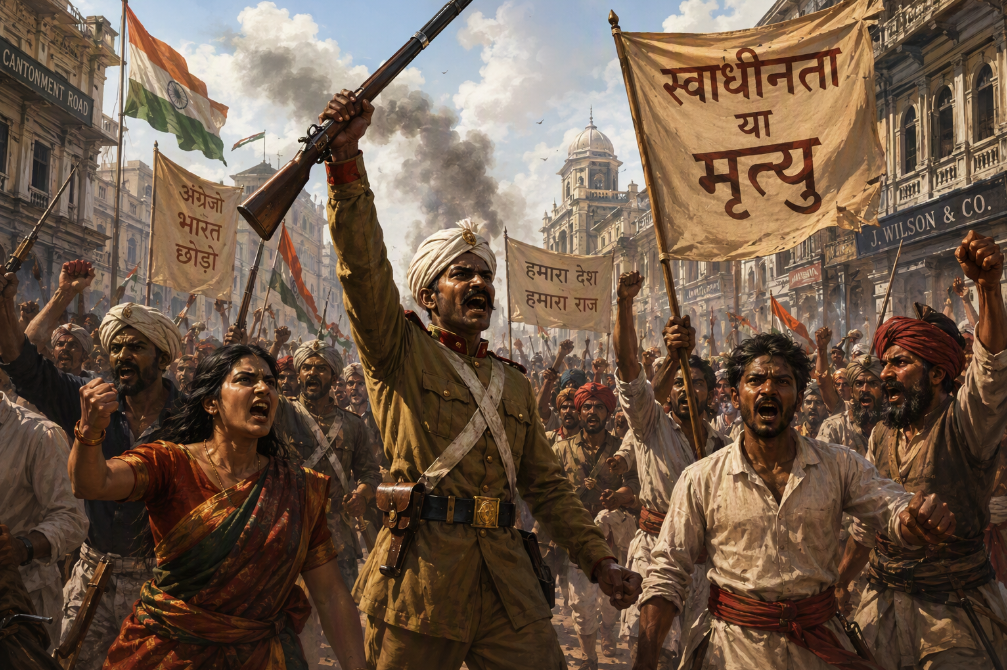
The revolt of 1857 is a common topic in UPSC Mains. They ask if it was a big change in the british rule or if it followed earlier protests. This shows the topic is not just about one moment. It looks at how things moved forward, what made people stand up, and how the british rule changed its evolution of british policies.
The questions collected do not focus only on 1857. One question asks why the east india company armies, made up mostly of indian soldiers, beat bigger Indian forces. This makes you think about the political and military events happening before the freedom struggle started to rise.
These questions help us see how military history, colonial expansion, and national awakening are connected. When you look at this part again, think about the reasons it started, how it moved to other places, what kept it from growing, what happened because of it, and how it sits inside the bigger fight against colonies.
Socio-Religious Reform Movements
Socio-religious reform comes up often in past year questions. Many questions talk about the indian renaissance. They ask how national identity began to grow in that time. Groups like brahmo samaj and Young Bengal come up, too. A new question about mahatma jotirao phule shows that reform is read by seeing both what people thought and what people did.
This area is important because it connects criticism in society with more people knowing about politics. It also links to topics about indian women, changes in caste, education, and ways people make their opinions in public. When you find something about the bhakti movement in questions, it is there to check if you understand bigger ideas about changing and growing in culture.
- There was a strong link between the indian renaissance and how people felt about their national identity. The indian renaissance made everyone feel more proud of their country. It got people to think about their roots and what makes them Indian.
- The brahmo samaj grew fast during this time. Young Bengal also started to do more. Both had a big role in changing how people thought. They brought new ideas and pushed for what was right.
- mahatma jotirao phule worked hard to help many people. He started several reform movements. His work showed people how to fight for better rights and treatment.
- Women, caste, and social change mattered a lot in the indian renaissance. People talked more about giving women rights and respect. The caste system got more attention with calls for change. All this moved the country toward a fairer and better future.
Political Developments and Movements
A big trend in recent years’ questions is that these questions often cover political development. The asked questions start with the broken state of India in the eighteenth century. Then, they talk about how the British East India Company got into India. Later, the focus changes to moderates and extremists in the national movement. After that, the questions talk about Gandhi and then the transfer of power. This setup shows that the national movement has had a long history in India.
You will see again and again that the text talks about the different ways people were part of the freedom struggle. The UPSC sometimes asks questions about what Gandhi and Ambedkar thought, or about Gandhi and Subhash Chandra Bose, or Gandhi and Tagore. These questions ask you to compare these leaders. You need to understand what each one wanted, and know how their debates helped shape the national identity. It is clear that talk and debate played a big role in the emergence of national identity during the freedom struggle.
Another idea that comes up often is about making the constitution. The paper gives questions about the Government of India Act, 1935, and the constituent assembly. This tells us it wants you to find the link between how the British ran the government and how the government of India works now. If you read about political topics every year, you will see these same ideas again and again.
Year-Wise Analysis of Modern History Questions
Looking at each year shows how upsc mains covers both old and new topics in modern indian history. Some years have more questions about the national movement. Other years, the test brings in things like tribal response, famines, state reorganization, and how education or nationalism affected indian history.
This way is good for answer writing. It helps you spot how trends change and still focus on the main topics. The questions from 2012 to 2025 give you a full list of modern history previous year questions for UPSC Mains. You can see how the style of questions has changed over the years.
Recent Trends from 2020–2024
In the last few years, the UPSC mains exam made modern history feel fresh and real. From 2020 to 2024, the questions touched many things. You read about Lord Curzon. You saw the ways people felt during the national movement. Gandhi’s work for good change was there, too. Questions asked how states came together, and about famines and tribal fights. The exam looked at schools and how people learned. Feelings about the country and ideas of nationalism came up, with the Quit India Movement included. All this shows that the topics are mixed, but there is a clear pattern of what matters most.
What stands out is that you need to explain events, not just say what happened. You should show how things connect to social change, changes in how people do things, or arguments about ideas. Even if topics like world history or indian culture are part of GS 1 in other areas, you must be ready to go deeper into each topic about modern history. It is also good to look at past year questions and pay close attention to them.
- 2020: Curzon, and how the national movement’s ideas grew
- 2021: Moderates’ part, changes in society and religion, Gandhi’s development plans
- 2022: Changes in setting up states, hunger issues, east india company’s war wins
- 2023–2024: Tribal people’s thoughts, Gandhi and Tagore, quit india movement
Notable Shifts in Question Patterns Over the Last Decade
In the past ten years, there have been many changes to the paper. Earlier, you saw many direct questions about one event or person. Now, there are still questions on these. But the questions seem larger. They ask you what these questions mean for the national movement. You have to see how leaders and groups were part of the national movement. The paper also asks you to compare people or talk about how some events changed things.
Another way modern Indian history is seen now is different. People do not just ask about Congress politics anymore. There is talk about tribal reactions, famines, education, reorganization, and social reform. These topics are looked at with the nationalist movement. Things that link to the world war and the period when power was handed over are still important. All this makes modern Indian history feel bigger than it was before.
| Period | Pattern Seen | Examples from Compiled Questions |
|---|---|---|
| 2012–2016 | Strong focus on leaders, policies, and key turning points | Bose vs Gandhi, 1857, GOI Act 1935, naval mutiny |
| 2017–2021 | Broader social base of national movement and reform themes | Moderates, Indian Renaissance, ideological strands, Curzon |
| 2022–2024 | More socially layered and analytical framing | Famines, tribal response, education and nationalism, Quit India |
| 2025 | Reform thought through subaltern perspective | Mahatma Jotirao Phule and social reforms |
Strategies for Analyzing and Preparing with History UPSC Mains PYQ
The best way to use PYQs for UPSC mains is to include them in your study plan. In modern Indian history, group the questions by topic. Look at which topics come up often. Practice answer writing for civil services by working on these areas. This will make your Indian history preparation more focused.
You need to look at the way the questions use words each year. The UPSC mains may ask for causes. It may ask you to give your view, to compare, or to talk about what stays the same. When you notice this, you will stop reading with no plan. You will get ready with a goal in mind. The next two parts will show you how you can do this in a simple and clear way.
Identifying Recurring Patterns and Important Themes
Yes, you can see the same ideas and topics again and again in the PYQs. The indian national movement is often there. You will read about moderates, Gandhian mobilization, and how these ideas get bigger over time. There is also talk about the transfer of power and changes in the way the country is run. Reform topics like the indian renaissance also show up many times.
Mass struggle matters a lot and is talked about often. Gandhi played a big part in it. The civil disobedience movement and the quit india movement are still seen as important even now. These movements brought together politics, leaders, and actions of the people who lived in that time.
World war and world war ii are also part of these stories. They show up when we talk about the problems faced in the last years under british rule. They come in at a time when the british were about to leave.
- People often talk about Gandhi and other top leaders.
- Reform movements play a big part in the freedom struggle and national awakening.
- The constitution saw some changes and the colonial rules changed in a few ways.
- There is also more social participation in the freedom struggle now.
Tips for Effective Answer Writing Using PYQ Insights
Good answer writing starts when you read the question in detail and connect it with your practice of old PYQs. In UPSC mains, history answers have to be clean, clear, and written around the main themes. If you get a question on the national movement, do not make it into a long timeline. Stay to the point. Only say what the question wants.
You can use PYQ insights to get the right way to write your answers. For comparison questions, you need to put the things side-by-side. For policy questions, talk about what causes something and what happens because of it. If you get institution-based questions, like the ones on the constituent assembly, you should show how they keep going and why they matter. You will get better if you practice this again and again.
- Begin by stating the answer to the question right away.
- In the main part, split your answer into clear sections or steps.
- When you discuss leaders or ideas, try to compare them. Show how they are different or alike.
- End by saying why this is important, what changed, or what this means for history.
- Practice writing answers using pyq themes, not by picking random topics.
Conclusion
To sum up, looking at old questions for History in the UPSC Mains can be very useful. When you look at how past questions were asked, you get to know what the big topics are. This helps you use your study time in a good way and also get better at answer writing.
Seeing which parts have more marks means you feel ready to answer with more confidence. As you get ready for the UPSC, use all the tools you have. Don’t feel scared to ask for help if you need it.
Make your study plan stronger by using what you learn from old questions. This will bring you closer to what you want. If you want tips made just for you, feel free to reach out for a free chat!
How to best use previous year history questions for UPSC preparation?
Use each pyq to get the main ideas in the subject. Do not use pyq just for practice. Group modern history questions by topic. Mark the areas that you see often. Then do answer writing for these topics. Doing this will make your civil services preparation better. It will help you improve as time goes on.
Are there certain modern history topics that are more frequently asked in UPSC Mains?
Yes. You often see the Indian national movement in the modern history part. The Gandhian phase, social and religious reforms, the freedom struggle, and the government of india act come up many times. In past years’ papers, there are a lot of questions about the national movement and the government of india. Many papers also ask about the wider nationalist movement, groups in society, and things that the colonial government did. These topics all get asked often.
Where can I find a reliable collection of modern history UPSC Mains PYQ?
A good history pyq source gives you UPSC mains questions for modern history. These questions are sorted by year and topic. You should look for collections made by subjects, marks, and themes. It is helpful if these collections come with model answers. This kind of setup is great for your civil services examination revision. It makes answer writing in the civil services exam much more clear and useful.