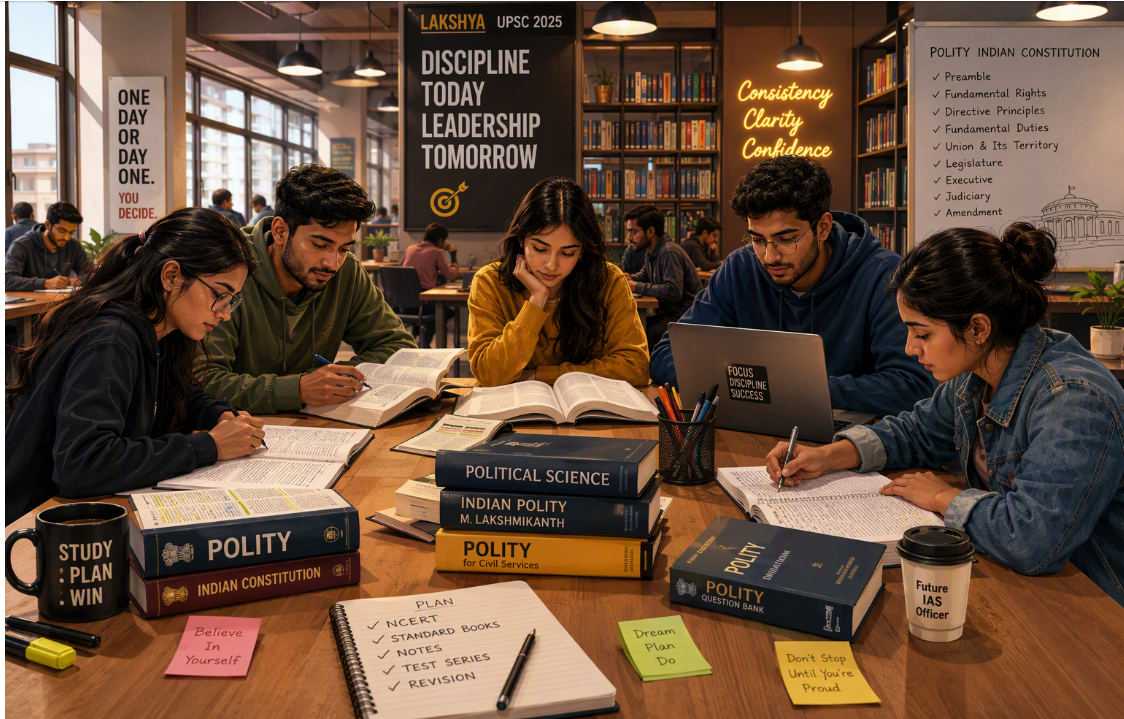
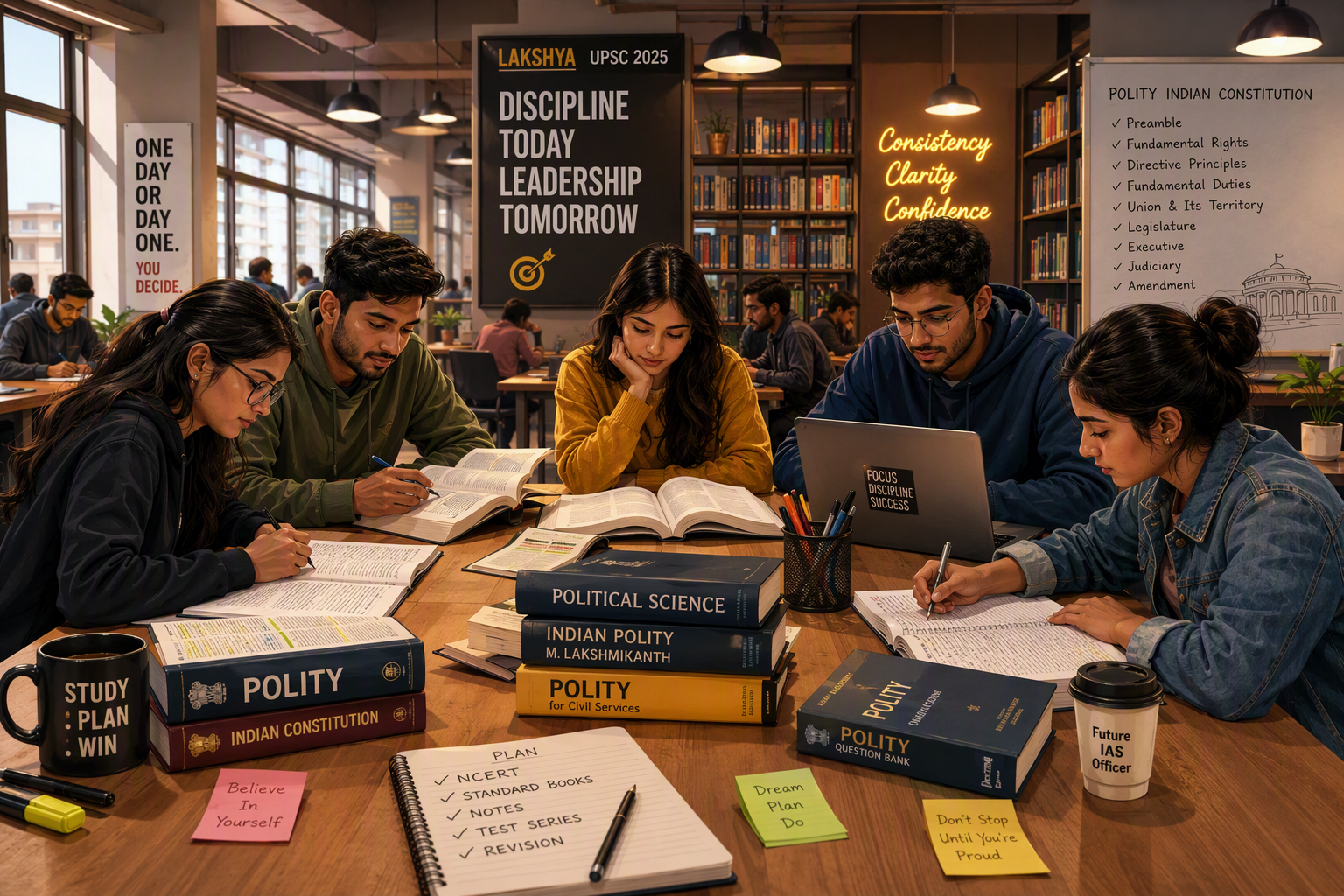
Key Highlights
- Indian polity deals with the system of governance that runs in practice, but political science syllabus looks at politics as a social science.
- For the IAS exam, Indian polity helps with general studies by covering the Indian Constitution and key institutions.
- Political science is more of an academic discipline and a popular optional subject in the civil services exam.
- The key differences are in what they cover, how they are studied, and their main goals.
- UPSC keeps indian polity and political science separate because one tells us about how governance works, while the other studies political ideas, how people behave, and bigger political systems.
Table of Contents
Introduction
Many people who get ready for the UPSC exam use the words indian polity and political science like they are the same thing. This often causes confusion when they study for the civil services exam. Polity is really about the system of government and the way institutions work in the country. On the other hand, political science is a wider subject. It looks at politics, power, and how people run things, not just in India but also in other places. If you want to get a good hold on general studies and your optional paper, you need to know how political science and indian polity meet and where they have clear differences. This will help you feel sure when you read about these topics.
Understanding the Concept of Polity for UPSC
For UPSC, indian polity means the real work and system of the state. It covers the indian constitution, the groups and laws, and also the system of government. These are the things by which power is used and choices are made or put in place.
In the general studies paper, you read about polity in a simple and practice-based way. The main thing is to know the structure, work, and steps of government, not just wide ideas. To get this better, you should know what polity means, what it covers, and why it matters for the exam.
Definition and Scope of Polity
Polity is about how a political group is set up. It is the system of governance in a country, a state, or any organized society. In UPSC, polity deals with things like the organization of a political entity, who has power, what laws are there, and how the political structure works to help people make decisions.
You can think of polity as the practice of governance. It is about what people do when they govern, not just what they think about politics. A polity can be a nation, a sovereign state, a political group, or any group of people that come together for governance. These polity examples show that this word means more than many students think.
For your preparation, indian polity notes usually talk about things like constitutions, rights, groups, and how things get done. So, when you look at political science, it covers more ideas, but indian polity is more about real things that happen in offices. This is why many people feel it is easier and better for exams.
Importance of Polity in Indian Governance and UPSC Exams
When you read about indian polity, you get to know how Indian government works. This is important for the IAS exam, but it also helps you see how power, offices, and laws work in every part of public life. It is one of the most scoring parts you can read when you prepare for the UPSC. People feel good when they read indian polity as they can see its use everywhere.
A big reason why this is important is because it has a clear link with the indian constitution and constitutional law. You need to understand the way these groups work. You also have to know how rights and duties are taken care of in real life.
- It helps you know more about your fundamental rights and the parts of the constitution, and makes them clear.
- It shows you what government bodies look like and how they work.
- It is useful for direct questions in general studies and in all the civil services exam stages.
- You do not have to read a lot of political science to get a basic idea for the UPSC exam.
So yes, political science can help you see things in a different way. But you can still study indian polity well by itself for your exam needs.
Exploring Political Science in the UPSC Context
Political science is bigger than just the idea of polity. It is a social science and also an academic discipline. In this field, people look at politics, power, different ideas, how things are run, and the way people act in many places. For the UPSC exam, political science is most seen in the optional subject. It also comes up in themes that need you to think and write well in the main exam.
Political theory is not completely separate from political science. Both are about how people govern and how public institutions work. Still, political theory helps give political science a wider range to think about. To see this better, you need to know the way it is studied in school and how it helps us look at political systems.
Meaning and Academic Approach of Political Science
Political science is about learning how politics, government systems, and political behavior work. It looks at the practice of governance and everything that goes into running a country or a group. Political science is not just about the way things are set up, like in a polity. It goes deeper and asks big questions. It wants to know about power, if leaders should be in charge, how rules are made, and how political life changes social relations.
The political science syllabus covers more than many students think at first. It is not just about facts. The subject has comparative politics, political economy, international relations, and political methodology. Because of all this, political science is more about analysis and research than just memorizing information.
In UPSC, you learn not just what a government is, but also how and why it works the way it does. Political science looks at different systems. It also studies ideas and checks outcomes like stability, justice, public wealth, and economic growth. This is what makes it strong as a field.
Role of Political Science in Analyzing Political Systems
Political science helps you look at how political systems work, not just what they are. In this field, you learn about how states work, what leaders and people do, and how power moves in and between groups. This helps you give better answers for UPSC mains. You can explain, compare, and understand things in a deeper way.
The role of this subject is clear when you think beyond just how the country is run at home. It also looks at foreign policy, international politics, and the theories of international relations. So, it shows how Indian issues can be linked with bigger global patterns too.
- It looks at political behavior, what people believe, and how policies turn out.
- It compares political systems in different countries.
- It covers foreign policy and international politics in an organized way.
- It helps us understand more by using theories of international relations.
Because there are so many topics in political science, it helps students build a strong base. This is really good for people who pick political science as their optional subject.
Key Differences Between Polity and Political Science for UPSC Aspirants
The main difference is easy to see. Polity is about the practice of governance. This means it looks at how rules and institutions work. On the other hand, political science is an academic discipline. It studies politics in a wider way. It tries to make general principles and give explanations about why things happen.
There is still a difference between the two, but it is not a big one. Both of them deal with how people run a state, the rules people follow, and how to make choices for the public. If you are getting ready for the UPSC, you need to know how to read about each one in its own way. The next parts will show how you can do that with different ways of learning and several topic examples.
Focus Areas and Methods of Study
If you study general studies, you learn polity mostly through facts, how things are set up, what is there in the constitution, and the real ways the government works. The main goal is to understand the groups and the steps they follow to get things done. But if you choose political science optional, it is different. Then, you need to read about what the ideas mean, learn the theory, and do comparative political analysis. You get to know how systems work not just in your country, but in other places, too. It is about more than just remembering points—it’s also about thinking on a deeper level and comparing different ideas in political science.
That change means you need to get ready in a new way. Polity is something you read to know the facts, rules, and remember them. But with political science optional, you have to make points, build ideas, and show how thinkers, systems, and what happens are linked. You also have to bring these together, compare, and use them with examples.
| Aspect | Polity | Political Science |
|---|---|---|
| Core focus | Constitution, institutions, laws, processes of government | |
| Nature | Practical and governance-centered | |
| UPSC use | General studies and direct exam application | |
| Core focus in political science | Ideas, behavior, systems, theories, comparison | |
| Nature in political science | Analytical and research-based | |
| UPSC use in political science | Optional syllabus and deeper mains analysis |
So, the way you look at things is not the same. Polity looks at how the different parts work. But political science is about what they mean, how you study them, and the big patterns you see.
Examples of Topics Covered in UPSC under Polity vs Political Science
A good way to know the difference between the two is to look at what topics they cover. In polity, UPSC wants you to know about the institutions, how things are run, and how the constitution works. In political science, question are more about theory, comparing things, why people act a certain way, and a wider look at politics.
There is some overlap in these topics. This often happens when public policies and institutions link with big debates. This is why current affairs can help bring these areas together when you get ready to study. Still, each topic has its own focus and feel.
- Polity topics cover panchayati raj, constitutional bodies, fundamental rights, and processes of government.
- Political science topics have subjects such as pressure groups, political behavior, comparative politics, and international relations.
- Polity is about practice of governance and how the constitution is made.
- Political science includes indian foreign policy, public policies, and also looks at concepts in a wider way.
Yes, the same topics show up, but the way we look at them is not the same. Polity is about what is out there and how things go. Political science is about why things go that way and what that means.
Conclusion
It is important for people preparing for UPSC to know the key differences between polity and political science. When you see the difference between the two, you can make your study plan better. Polity is about the practical aspects of governance and how things work in practice. Political science looks more at the theory and ways to study political systems. If you learn both, you get all you need to do well in your UPSC exams. A good plan should give time to both of these subjects. If you have questions or need help with your study plan, feel free to ask for a consultation!
Is studying political science necessary to understand Indian polity for UPSC?
No, you do not need to study political science for basic indian polity preparation in the IAS exam or the civil services exam. You can read about institutions, constitutional rules, and governance from indian polity notes. But, political science can help you get better ideas and a wider view of how politics works.
Do polity and political science overlap in the UPSC syllabus?
Yes, there is a bit of overlap between the political science syllabus and polity in general studies. Both talk about things like institutions, governance, and how the state works. The main difference is that polity is more about what happens in practice. Political science, as a social science, also looks at these topics, but it goes deeper. It uses comparative political analysis and theory, especially when you get into the optional syllabus.
Which subject is more important for UPSC prelims: polity or political science?
For civil services prelims, Indian polity is very important. The general studies paper asks direct questions about the Indian constitution, institutions, and fundamental rights. Political science helps you get a bigger picture, but Indian polity is much more useful for the general studies paper. It helps you get a better score in the basics for prelims questions.