Key Highlights
- When you do UPSC preparation, you need to focus on the constitution by studying the big ideas, not by trying to remember everything at random.
- Most important articles of the Indian Constitution are often about fundamental rights, directive principles, elections, and emergency steps.
- Some important articles of the Indian Constitution you should know are 14, 21, 32, 51A, 324, 352, 356, and 368. These come up a lot in polity study.
- Current affairs can make articles of the Indian Constitution even more important in the exams.
- A parts-based way of learning will help you revise the constitution faster and it is a good way to remember things.
- This guide gives you a handy shortlist you can use for smart UPSC preparation.
Table of Contents
Introduction
If you are getting ready for the civil services exam, the Constitution of India is something you have to read. The constitution forms the base of Indian polity and many questions in both Prelims and GS-II are about it. A big problem many people face is that the constitution has a lot of articles, but not all of them are as important for upsc preparation. This is why it helps to stay focused. This guide will help you know, arrange, and remember the most important articles for upsc preparation. You will not need to worry about small details that take up time and do not matter as much.
Understanding the Importance of Constitutional Articles for UPSC
The articles of the Indian Constitution are very important for UPSC CSE. They show how the state works. People get to see what rights they have. The articles also tell how power is kept in check. In Indian polity, these articles form the main base for rules, order, and public talks.
Many topics about social justice and current affairs are tied to parts of the Constitution. This is why article 21 and article 32 are so important in the syllabus. If you want to prepare well, you should know the numbers of these articles. You should also know what they do and why they are important for the exam.
Why Constitutional Articles Matter in UPSC Exams
The UPSC CSE looks to check how well you understand how the system works, instead of just testing you on facts. The important articles of the Indian Constitution can help you answer easy polity questions. These articles of the Indian Constitution also make your view better about government, rights, and groups that run things. If you know which article is linked to a subject, you can give a sharper answer.
Think about freedom of speech, equality, or ways to act if the state does something wrong. These are not just big ideas. They come straight from clear rules written in the Constitution. That is why the articles about fundamental rights, especially Articles 14, 19, 21, and 32, are always important when we talk about Indian polity and social justice.
You will see that a lot of the talk right now goes back to these rules. So, if you are asking which parts are the most important for UPSC preparation, begin with rights, directive principles, elections, Parliament, courts, and emergency powers. These topics help you get a good score.
Scope and Coverage in UPSC Syllabus
A good way to get ready for the UPSC is to read the constitution step by step. Part III is important as it talks about fundamental rights. Part V is also key, as it shows how the Union works, including the executive, Parliament, and the supreme court. These topics often come up in the exam and be helpful in your upsc preparation.
You should read about directive principles in Part IV and fundamental duties in Part IVA. The UPSC often puts questions that join these topics with ideas like governance, ethics, and social welfare. Articles 36 to 51 and Article 51A are important. Go over them well. These parts help you give better answers in GS-II.
Keep up with current affairs while you read static subjects. If you see a topic about rights, federal relations, public institutions, or constitutional amendments, read the related article right away. The UPSC often asks about key articles. These usually be about rights, the structure between Union and State, elections, emergencies, and how amendments happen.
Organization of the Indian Constitution for UPSC Study
The articles of the Constitution are simple to read if you follow how they are set up. They are put into parts. Each part talks about a big idea like citizenship, Part III, rights, the federal structure, elections, or how to change things in the constitution. This makes it faster to read and helps you look back at topics when you need to.
You need to know the schedules of the Indian Constitution. You also need to know the commencement of the Constitution because these topics often come up in standard polity study. When you understand the framework of the constitution, the next thing to do is break it down into parts, articles, and schedules in a simple way.
Structure: Parts, Chapters, Articles, and Schedules Explained
The Constitution now has 448 articles. When it was first made, it had 395 articles. For UPSC, you do not need to read every part with the same amount of detail. You just need to know how the articles of the Indian Constitution are sorted and where the main themes are. This will help you get the main ideas about the articles of the Indian Constitution.
The most tested sections of the indian constitution are Part III, Part V, and Part IX. Part III is about rights. Part V is about the Union. Part IX talks about Panchayats. The schedules of the indian constitution are important too. They link to some articles and tell about other details.
| Section | What you should know for UPSC |
|---|---|
| Part III | Fundamental Rights, Articles 12-35 |
| Part IV | Directive Principles, Articles 36-51 |
| Part IVA | Fundamental Duties, Article 51A |
| Part V | The Union, Articles 52-151 |
| Part VI | The States, Articles 152-237 |
| Part IX | Panchayats, Articles 243-243O |
| Part XV | Elections, Articles 324-329A |
| Part XVIII | Emergency Provisions, Articles 352-360 |
| Part XX | Amendment of the Constitution, Article 368 |
| Schedules | 12 schedules linked to key articles like 1, 4, 80, 244, 246, 351, 243G, and 243W |
Tips to Categorize Key Articles Efficiently
You do not need to make one long list. Try to group the important articles of the Indian Constitution by themes. This helps a lot with UPSC preparation. When you study this way, your work will feel lighter and revision gets easier. You will also find it helps you remember all the important articles of the Indian Constitution, as each one is a part of a bigger idea.
Another good way is to link news stories to topics from the constitution. If there is a news item about rights, elections, federal power, or social justice, add that article to your notes. This lets you go over the old and new things at the same time.
- Put rights-based articles, for example 14, 15, 16, 19, 21, and 32, in the same group.
- Keep all governance articles like 52, 74, 79, 124, and 148 on one sheet.
- Put federal and local rules such as 1, 3, 243A, and 243B in another group.
- Use 324, 352, 356, and 368 together as a main set for your main revision.
Fundamental Rights – Must-Know Articles
For most people who prepare for exams, fundamental rights are the first things you need to understand well. You will see questions about them in the Prelims, the Mains, and even in the interview. This is because these rights affect how the state and people work with each other. Articles that talk about equality, freedom, ways to get help, and how to keep people safe from being used are the most important in this part.
You need to keep an eye on important articles about equality of opportunity, public employment, freedom of religion, and educational rights. These topics are very useful when the aim is UPSC preparation. The most important articles to read are from 14 to 21, 25 to 30, and 32. These parts will help you get a good start, and you can trust them the most to cover what you need. Now, let’s get into two of the main points.
Article 14: Equality Before Law
Article 14 is about equality before law and equal protection of laws. For UPSC CSE, this is a simple idea but very important. This article helps you answer many questions about fairness, actions taken by the state, and what is right and wrong in the eyes of the law. It is one of the best ways to show rule-based governance happens in the country.
In practice, Article 14 is linked to equality of opportunity, reservations, and the big idea of social justice. This part of the constitution shows how there can be different rules without unfair treatment. This is why it is so important in any matter of laws where the state makes groups or creates public policy.
If you are writing GS-II answers, Article 14 helps to make your point strong by giving it a good constitutional base. It is useful when you talk about discrimination, public places, and treating people the same way. That is why Article 14 is important in the UPSC syllabus. It means more than just a simple meaning.
Article 21: Protection of Life and Personal Liberty
Article 21 gives people the right to life and personal liberty. In the UPSC CSE exam, this is a key part of fundamental rights. The reason for this is that Article 21 is wide in its meaning, gets talked about often, and is linked to how the government works and how rights are given to us.
This idea is important because it covers many things. It is not just about people staying alive. In classrooms, it matters when we talk about respect, freedom, and what the government should do. It also connects with things like public health, jail, fair treatment, and keeping people safe.
When you read Article 21, don’t just think of it as a fact you need to remember. See it as a guide to read things in the constitution. It can help you look at rights issues in current affairs and make your answers better in Indian polity. This is why Article 21 is so important when you study for the UPSC syllabus.
Directive Principles and Fundamental Duties
After looking at fundamental rights, you need to check Part IV and Part IVA. Directive principles help set state policy. They also point out the welfare aims of the government. You cannot enforce them in court. However, they are key to understanding social justice and where the constitution leads us.
Fundamental duties are given in Article 51A. These are about what people in the country should do. They help balance the rules of the Constitution by showing what the people’s role is. For UPSC, you need to know the basic ideas behind directive principles. You should also learn why these duties are important in the lives of people. Both topics often come up when talking about how the country is run and about values in public life. We will now talk more about these points.
Core Directive Principles (Articles 36-51)
The directive principles found in Articles 36 to 51 show the state what policy steps to take. For UPSC preparation, you should know that these rules help build a system where the state looks after the people. The directive principles are often asked about in topics to do with development, equal rights, and the main values of the constitution.
Some articles stand out because you see them a lot in answers that involve discussion. Article 39A talks about equal justice and giving free legal help. Article 40 is about village panchayats. Article 44 speaks about a uniform civil code. Article 46 helps the education and working chances of weaker groups.
You should also remember Article 47 on nutrition and public health. Article 50 is about keeping the judiciary and executive apart. Article 51 is about international peace. These directive principles in the constitution help guide state policy. They work together to push the state toward social justice and good balance in how things are run.
Fundamental Duties (Article 51A) Significance
Article 51A talks about the fundamental duties of citizens. In total, there are 11 duties. The first ten came from the 42nd Amendment Act in 1976. One more duty was added later by the 86th Amendment Act in 2002. This simple fact is important to know for UPSC CSE.
You don’t need to make this part too hard when you get ready. What’s important is to know why each duty is there. They help put rights and civic responsibility together. These duties also help with the bigger constitutional ideas of discipline, unity, and social justice in daily life with people.
You may also find Article 51A talked about when you read about education or when people talk about being a good citizen. The Constitution adds these duties to help guide how we live. Because of this, people go back to read this article often. For UPSC, the value of Article 51A is in simple facts and in how it helps us understand what the Constitution stands for.
The Union and State Structure – Relevant Articles
The constitution says that India is a union of states. This makes the federal structure very important for UPSC preparation. You need to know how power is shared between the Union and the states. It is also important to know which institutions work at each level.
This list has the President, Parliament, judiciary, Governor, state legislature, and council of ministers. You may get questions about how these are set up and how they compare. So, it is good to read about Union rules first. Then, match them with the state rules. This way, going back over the notes will be easier and clearer for you.
The Union (Articles 52-151): Executive, Parliament, Judiciary
Part V is one of the best parts for scoring in polity. It talks about the President of India, the council of ministers, Parliament, and the Supreme Court. If you want to know which articles are most important in this section, start looking at the basic rules about these groups.
Article 52 sets up the office of the president of india. Article 53 is about the executive power of the union. Article 54 explains how the election of president is done. Article 74 says the council of ministers has to help and guide the president of india. These bring together the main rules for the executive power.
For Parliament, you need to know Articles 79, 80, and 81. These talk about how Parliament, Rajya Sabha, and Lok Sabha are set up. Article 110 shows what a Money Bill is. Article 123 is about the rules for ordinances. On the court side, Article 124 sets up the Supreme Court. Articles 136, 137, and 141 talk about appeals, how to review decisions, and the rules all courts must follow.
States (Articles 152-237): State Legislature & High Courts
Part VI is much like many Union rules but at the state level. Because of this, it is simple to study when you look at both side by side. In this part, you will read about the Governor, state legislature, High Courts, and other related groups. For UPSC, the high courts and state legislature parts often get a lot of direct and detailed questions.
Start with Article 153, which talks about Governors. Article 154 explains the executive powers that a Governor has. Article 161 talks about the power the Governor has to give pardons. Article 165 says there will be an Advocate-General. Article 213 is about the Governor’s power to give out ordinances. This part often comes up when people talk about polity.
For state courts, be sure to look at Article 214, which tells about High Courts. Article 215 says High Courts are courts of record. Article 226 is key because the High Courts can issue writs with it. Also, read Articles 233 and 235 to know about district judges and subordinate courts. These parts help show how state policy and public service work. They keep things clear between High Courts, subordinate courts, and union territories.
Elections, Amendments, and Emergency Provisions
Some topics in the constitution can be more important for exams. This is because you need to know facts and how to use them. Elections, constitutional amendments, and emergency rules are in this group. For these, you must know the articles, what they do, and why people talk about them in public.
This section also has to do with how the government works, federal issues, and how things change during tough times. There are articles about elections, national emergency, president’s rule, and how to change laws. These are very important. The ideas of alteration of areas and how states change their setup also matter a lot when you look at the way the rules are made in the constitution.
Elections (Articles 324-329): Key Considerations for UPSC
Elections are talked about mostly in Part XV. For UPSC, the key place to start is Article 324. This article gives the Election Commission the power to run, guide, and handle elections. When people talk about how elections are managed, this article is the main point.
Article 325 says that no one can be left out of the voter list just because of their religion, race, caste, or sex. Article 326 says there will be elections for the House of the People and state legislative assemblies, and all adults can vote. These are important rules for India.
You should also remember:
- Article 324 is about how the Election Commission manages elections.
- Article 325 says there should be no discrimination in the electoral rolls.
- Article 326 is for adult suffrage in elections.
In this study, go over Article 54. This article is about the election of President. Look at Article 80 too. This one deals with the council of states or Rajya Sabha. Check Article 243A as well. This article is about the gram sabha. All these are part of a bigger plan for democracy.
Emergency Provisions (Articles 352-360): Frequently Asked UPSC Topics
Emergency provisions are often asked about the most in UPSC CSE. You need to learn three main articles well.
Article 352 talks about national emergency. Article 356 is about president’s rule in states. Article 360 is about financial emergency. All of these are important and come up often.
Article 352 is very important when people talk about security or special powers. Article 356 is even more important because it is a key point in talks about how the country is run by both the centre and the states. If you are getting ready for the UPSC, you should know what Article 356 says and how it affects the relationship between the Union and the states.
You should also link the emergency study with constitutional amendments and things that protect institutions. This will help you get a full picture. When you write answers about issues, topics like stress in governance, money problems, or public health worries can make these rules important. This is true, especially if the exam asks how the rules are tied to today’s administration.
Strategies to Remember Important Constitutional Articles for UPSC
Memorizing all 448 articles of the Indian Constitution is not needed for good UPSC preparation, and most people do not do that. It is better to remember only the important articles of the Indian Constitution that keep coming up in indian polity, governance, rights, elections, and federal topics. First, focus on these. Learn the big themes, compare the related points, and read them again in short periods. This way, there will be less confusion, and you will be able to remember more over time.
Another strong way to learn is to link news with the articles you read. If a problem is about social justice, government jobs, voting, or the rules in the constitution, you can go back to the right article in your notes. This helps you know the content with a real-life example. The next two sections will give you easy tools. These include putting things in groups you can see, memory tricks, and practice that starts with changes in the law.
Visual Mapping and Mnemonic Techniques
Visual mapping helps in UPSC preparation because the articles of the Constitution become much easier to remember. When you see them as part of a pattern, they make more sense. Instead of going through a simple list, try to make single-page maps for things like rights, Union institutions, states, elections, and emergencies. This will help the Indian polity be more clear in your mind.
Mnemonic techniques can help you remember key parts of the constitution. The material gives you a way to remember things in order. You use the first letters for Union, Citizenship, Fundamental Rights, Directive Principles, Fundamental Duties, States, Union Territories, Panchayats, Municipalities, Scheduled Areas, and Union-state relations.
You can make going over your notes simpler with tools like these:
- Make separate charts for Part III, Part V, Part IX, Part XV, and Part XVIII.
- Match center and state articles like 72 with 161, and 123 with 213.
- Try using memory tricks that use the first letters to help you with the parts of the constitution.
- Connect article numbers with current affairs topics to help you remember them faster.
Recent Amendments & Schedules to Know for UPSC Aspirants
For the UPSC CSE, you can make a small list of amendments and rules that are linked to the schedule. These often show up in basic polity topics. The list shows some key ones. The 44th Amendment took out the Right to Property from fundamental rights. Now, it is a legal right under Article 300A.
You need to know that the 42nd Amendment put in 10 fundamental duties. The 86th Amendment added one more duty. The 7th Amendment took away Part VII. These constitutional amendments show why the current structure is not the same as the first design. They help when you answer both factual and analytical questions.
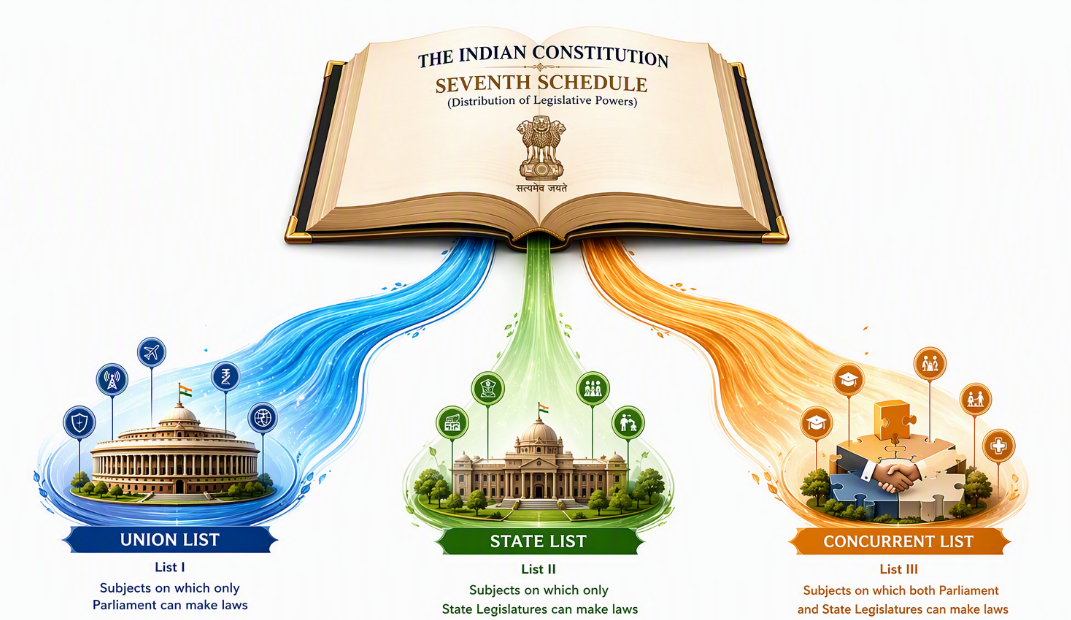
Do not overlook the schedules of the Indian Constitution. The First Schedule connects with Articles 1 and 4. The Seventh Schedule links with Article 246. The Tenth Schedule links with Articles 102 and 191. Because current affairs can bring up these topics again, always keep a short revision sheet ready. This sheet should include links to public employment and local governance if they matter.
Conclusion
To sum up, knowing the important articles of the Indian Constitution is very important if you want to do well in the UPSC exams. When you get to know these articles of the Indian Constitution, you add to your knowledge and prepare for the hard parts of the test. You can use ways like making mind maps or using simple tricks to remember things. These tips can help you hold on to what you read and make your study time better. Remember, the articles of the Indian Constitution are not just there to read; they are the base of how India is run and the rights people have. So, start your study the right way and get the ideas you need to be good at the UPSC exams. If you want to know more about the most important articles, feel free to ask for a free talk!
Frequently Asked Questions
Which articles are most frequently asked in UPSC exams?
The important articles of the Indian Constitution often appear in UPSC CSE questions. A lot of these questions are about Indian polity and current affairs. The articles of the Indian Constitution that you should read a lot are Articles 14, 19, 21, 32, 51A, 52, 74, 79, 124, 324, 352, 356, and 368. These important articles need to be read again and again to help you get ready for your exam.
Is there a suggested way to remember constitutional articles for UPSC?
Yes. For better UPSC preparation, it helps to group the articles of the Constitution by topic. You should compare the center and state rules. Mnemonic techniques for parts and groups of key articles can make it easier. Try to connect the articles with current affairs as well. This way, you will remember things better and Indian polity will feel less overwhelming during revision.
How can I find updated lists of important articles for UPSC?
For UPSC preparation, make your own short notes on the important articles of the Indian Constitution. Keep your notes updated with the latest current affairs. When you revise, use the part-wise structure of the Constitution. This will help you go through the articles of the Indian Constitution in a clear way. You get a simple list for Indian polity that is good for the exam and does not feel overloaded with extra details.