Key Highlights
- Newspaper reading helps when you turn it into short UPSC notes.
- Stick to current affairs that fit the UPSC syllabus, not every news story.
- Good notes can make your answer writing better by adding facts, examples, and giving balanced views.
- The right newspaper is good for UPSC preparation because it gives comprehensive coverage.
- When you write in your own words and use bullet points, you make revision easy and fast.
- Keep your notes up to date and well-organized so they stay helpful till the exam.
Table of Contents
Introduction
Starting your UPSC preparation, reading the newspaper can feel like too much because there is so much daily news to read and not much time. It is hard to know which news is important for the UPSC exam. That is where making good notes comes in. If you learn to make the newspaper into short and helpful points, your work stays focused. It is also easier to read again later. Instead of noting everything, you build a way to learn current affairs, practice answers, and do better in your preparation for the UPSC exam.
Why Newspaper Reading Matters for UPSC Preparation
For the civil services examination, newspaper reading is not just something extra to do. It is one main way to get current affairs, learn about government policies, and stay up-to-date with major national and international events. If you read the newspaper with purpose, it will be a powerful tool and not feel like a big burden.
They also help you link daily current affairs with the UPSC exam and main subjects. This can make your UPSC preparation more real and focused on the exam. To see why this is so important, let’s look at current affairs, how you think about questions, and answer writing.
Role of Current Affairs in UPSC Exams
Current affairs are very important for the UPSC exam. Newspapers help you keep up with changes in the economy, government, science, international relations, and more. You get to know what is going on and why it is important for the bigger picture of upsc current affairs. With this, you can better understand how events can shape our world.
The best way to turn your daily newspaper reading into short and clear UPSC notes is simple. Start by using the UPSC syllabus to filter out news that is not important. After that, choose key points from things like new policies, government schemes, social issues, and international events. Write all notes in your own words. Do not copy full sentences from the newspaper. This method helps you remember what you read and stay ready for the exam.
This way, you save time and there is less clutter. Your notes are easy to read. You can update them fast. They are also better for gs papers. If you focus on what matters, your current affairs study gets better. It also becomes more simple and easy to do.
How Newspapers Help Develop Analytical Skills
Newspaper reading gives you more than facts. It helps build analytical thinking. This is very important for upsc preparation. When you read editorials and opinion pieces, you get to see many sides of an issue. This helps you go past just remembering facts.
To find key topics in newspapers for UPSC note-making, first see if the topic is part of the UPSC syllabus. After that, think if it is about governance, the economy, science and technology, the environment, international relations, or any big topic that matters over time. You can also look at previous year questions to know what should get your focus.
When you find an issue that can help you, put it down using your own words. This helps you know it better and keeps it in your mind for a long time. As you keep doing this, you will see patterns and notice what causes things and what happens after. You may also see how to fix problems. The exam wants you to show this kind of thinking.
Enhancing Answer Writing with Newspaper Insights
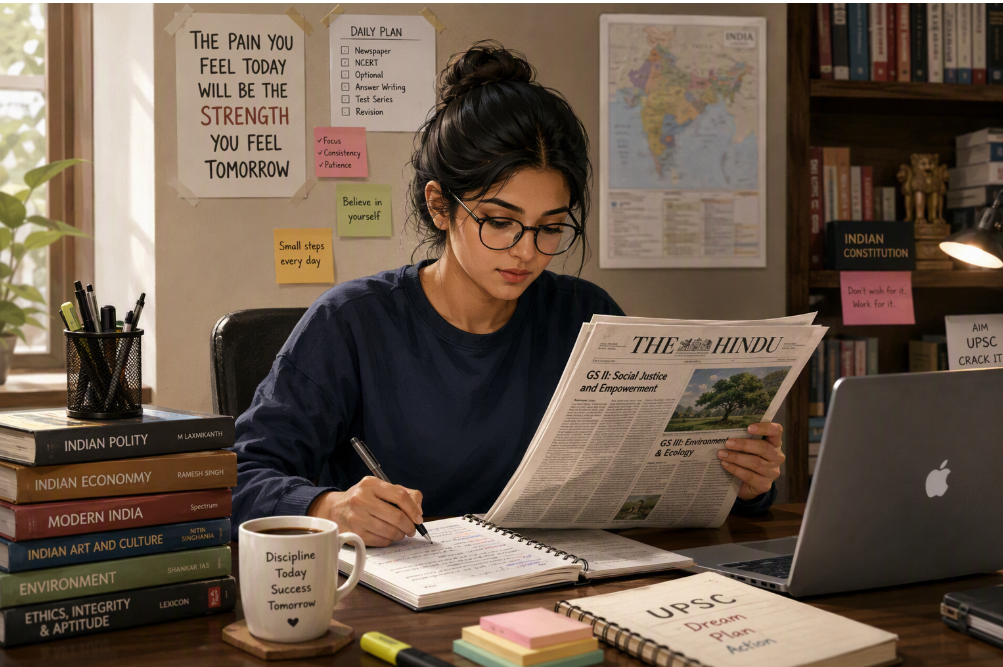
For the mains exam, newspaper notes can help a lot in answer writing. They give you fresh examples, facts, data, and case studies. These things make your answers feel more solid. With newspaper notes, your mains answer writing will feel up-to-date and not just like any other answer.
Many people ask if they should sum up editorials or stick to facts. The best way is to use both, but in a smart way. Editorials show you the many sides of an issue. These help you see arguments and answers that to the case. But, news stories give you true details that back up those arguments. Using both will make your mains answers more complete and fair.
The most important thing is to keep your newspaper notes short. Do not make long summaries. Write down the issue, the main points, important facts, and a practical tip. This way, your notes help with answer writing and are easy to read again later.
Choosing the Right Newspaper and Resources for UPSC
Choosing the right newspaper should be your first step. A good daily newspaper gives you comprehensive coverage. It also gives you right and clear news. You also get exam-relevant analysis. Without the right newspaper, your reading can be random and not helpful. A daily newspaper with comprehensive coverage will help you the most.
For upsc preparation, it is good to use one or two trusted sources. You do not need to read from many books or websites. The main thing is to stay clear, not read too much. A newspaper and a few other resources can help make your daily news routine simple and focused.
Top Recommended Newspapers for UPSC Aspirants
Many UPSC aspirants want to know which are the best newspapers to read. The Hindu and Indian Express are good if you need to understand the main issues around us. For news on the economy, Economic Times and Business Standard are helpful. The most important thing is to pick trusted newspapers and read them on a regular basis.
Here is a simple text table to compare them:
| Newspaper | Best Use for UPSC |
|---|---|
| The Hindu | In-depth coverage of current affairs, editorials, and major issues |
| Indian Express | Strong analysis, explained news, and useful national coverage |
| Economic Times | Helpful for economy, budget, RBI, SEBI, and financial developments |
| Business Standard | Good for business, policy, and economy-related understanding |
When you want to take notes fast and keep them organized, digital notes work well. They are simple to update, too. If you want to remember things better, writing your notes by hand might help. Try to use the way that lets you go over your notes often and keep them short.
Useful Supplements and Online Platforms for Daily News
Along with reading a daily newspaper, you can use some support tools to make your current affairs preparation easier. Digital tools help you sort topics, keep updates, and find them again quickly. Doing daily news analysis and joining live newspaper analysis sessions can also help you understand tough issues in a clear way.
A simple way to make UPSC notes from newspapers is to do this:
- Topic or issue name linked to the UPSC syllabus
- What happened, where it happened, and why it matters
- Key facts, government policies, or institutions involved
- Short takeaway for answer writing or revision
This format helps you keep your daily news notes simple and easy to read. You will not end up with a pile of random facts. When you follow this way every day, it gets easier to go back and read your notes again. You will save time and not feel lost when you look at them later.
Beginner’s Guide to Making UPSC Notes from Newspapers
If you are new to making newspaper notes, do not try to make your notes perfect right away. The first step is to make a simple plan that you can use each day. This is more important than making fancy pages.
Start by reading every day. Make sure you read only the current affairs that matter most. When you keep up this habit, your UPSC notes get better by themselves. To help you even more, let’s go over what you need for this and look at some beginner problems that you may face.
What You Need to Get Started (Stationery, Apps, Syllabus Copy)
The first step does not have to be hard. You need a few simple things and a clear plan. Before you read any newspaper, keep the upsc syllabus near you. This one habit will help you see what is useful and not waste time.
You can start with:
- A printed or digital copy of the upsc syllabus
- A notebook or some loose sheets to write notes for each topic
- Digital tools like Evernote, OneNote, or Notion
- A pen, highlighter, or an easy color system to help sort topics
Keep your notes short and useful. Write the topic first. Add 3-5 bullet points. Put the issue in your own words, and say how it links to the subject area. This way works well with both digital tools and notebooks. It makes your notes easy to read and ready for when you need to go back and revise.
Common Challenges Faced by Beginners and How to Overcome Them
Many people feel lost when they begin because of information overload. They read a lot and write down everything. This does not help. The right way is to know that not all current issues will help you in the exam. UPSC looks for what is important, not how much you read.
Common mistakes to avoid include:
- Taking lots of notes for each article in the paper can use up time. It is better to keep the notes short and simple.
- It is not good to pick news without looking at the UPSC syllabus. The syllabus should guide what you read.
- Copying big parts from the news instead of making small notes is not the best way. Use short and easy notes to help you.
- A person should not waste time on local gossip, political fights, or crime news. These stories are not asked in the UPSC exam, so focus on news that fits the UPSC syllabus.
To solve these problems, look at current affairs that match the syllabus. Write in bullet points and use short summaries. If a topic is not about policy, governance, economy, science, environment, or has no international importance, skip that topic. This simple rule helps many people new to this work.
Step-by-Step Guide: Converting Newspaper Reading into UPSC Notes
Turning newspaper reading into effective notes shows to be easier when you follow a set process. Without a system, current affairs preparation can feel messy, with things repeated and no feel of enough time. If you have a process, your work is in line with the UPSC syllabus.
Think about note-making in steps. First, scan what you read. Then, filter the important parts. After that, summarize the main ideas. Organize them, and revise later. Each step helps you reach your goal. If you stick to the steps, your notes will be short, useful, and simple to review as you get ready.
Step 1: Scan Headlines and Filter Relevant News
Start by looking at just headlines and not reading every line in the paper. This will save time. You can spot the important headline without much effort. Many toppers do this with The Hindu or other trustworthy papers. They check the front page and key parts first. Then, they read more if they feel they need to know about something.
While filtering current events, give priority to:
- The government puts rules, plans, and programs in place.
- There are things about money, the planet, science, and how countries deal with each other.
- Stories and opinions focus on big issues in the country and problems that affect the people.
- Key events or changes happen that matter to the country or the world.
Do not get caught up by everything you see on the front page. News like local crime, updates on stars, drama in politics, and simple ups and downs in the market are often not helpful. The main goal is not to read more. You need to know what is worth your time for the UPSC.
Step 2: Identify Important Topics and Cross-Check with UPSC Syllabus
When you see a good article, stop and think before you write anything down. Ask yourself one thing: does this link to the upsc syllabus? This is the key idea for smart note-making. If a topic does not fall under any important section in the syllabus, then you do not need to put it in your notes.
This is also where previous year questions can help a lot. They show what issues UPSC likes to ask about the most. These questions also show how much you have to understand these topics. News about polity, economy, governance, environment, science and technology, internal security, and international relations is often important for this exam.
How can you find important topics? Look for the ones that have long-term value. A topic can be important if it affects policy, talks about the constitution, or matters to many people. If you see that a topic keeps showing up in previous year questions, you should focus on it. This way, you do not read at random. Instead, you pick things that will help you do well in the exam.
Step 3: Summarize Editorials, Opinions, and Factual News
Now is the time to start the real work. When you pick an article that is helpful, make sure to put the main ideas in your own words. The editorial page is very useful because it talks about why things happen, what comes from them, and what different people think. There are also factual reports that help make things clear. You do not need to choose only one. You can use both the editorial page and reports together for balance.
A simple summary can include:
- What the issue is
- Why it matters for governance, economy, or social issues
- Key facts, institutions, or policy angles
- Possible way forward or broader takeaway
- Keep your summary short with bullet points.
- Use editorials to see arguments and shape your point of view.
- Factual news helps support your arguments.
- With both, you get strong material for revision and mains answers.
- This way, your notes stay clear and not too long.
Step 4: Organize Notes – Digital vs Handwritten Methods
Once you have your summaries, you should put them in order. If notes are not organized, it is hard to read them later. Even good notes can feel confusing if the order is not right. That’s the reason many people look at digital notes and handwritten notes before they decide what to use.
Digital notes are good to use because you can sort, update, and search them easily. Handwritten notes may help some people with memory retention. A good way is to pick one system. Keep all your notes by topic instead of by date. This way, revision is easier later.
You can organize notes by:
- Subject area: Polity, Economy, Environment, or International Relations
- Issue type: government policies, case studies, or current issues
- Short bullet points with clear headings and subheadings
Are digital notes better? Digital notes are good for speed. It’s easy to update them. Handwritten notes feel more personal. Pick the format that you can use often and does not lose clarity.
Step 5: Revise and Update Your Notes Regularly
Notes help you only if you read them again. If you keep on getting things from the daily newspaper but never read them again, it will not do much for you. You need to go back and read your notes. This is what makes things you read stay in your mind. It also helps you use them later for your exam.
To keep your current affairs notes up-to-date, set a regular time to look back at them. Add new points under the same topic. Don’t make a new page each time something happens. This way, your current affairs notes stay short and linked to the main issue.
A simple revision habit can be:
- Look at your notes each day or every other day.
- Pick one day in the week to go over and fix big things.
- Add any new facts, examples, or changes in policy to the notes you already have.
This way, you do not end up with the same notes written twice. Your notes stay up-to-date and clear. When it is time for exams, you will have less to read. The notes will be easy to follow. You will not feel lost when you read them again.
Conclusion
To sum up, changing the way you read the newspaper and making good UPSC notes can really help you with your preparation plan. Focus on finding relevant current affairs during your newspaper reading and practice using your analytical skills. Try to keep your notes simple and sorted in a way that works for you. This will help you get more out of your daily reading time. Stick to this practice, revise often, and make sure your notes are always up to date with the latest parts of the UPSC syllabus and what the exam expects. By doing this, you’re not just getting ready for the test. You’re also learning more about the world we live in. If you feel ready for the next step in your UPSC path, you can ask for a free talk to find more tips and help that fit you best!
How much time should I spend daily on newspaper reading for UPSC notes?
For upsc exam preparation, you need to be smart with newspaper reading. Focus your daily reading on current affairs that matter for the upsc exam. You do not have to read the whole paper. A good way to manage your time is to look at the headlines, choose what is useful, and write short notes about it. Make a routine and follow it, instead of reading for many hours every day.
Should I focus on editorials or facts while making UPSC notes?
Use both the editorial page and factual news. The editorial page gives you many views and shows you how people form arguments. It helps you get better at answer writing. Factual news gives you correct facts for support. The best upsc notes use these together in your own words. Make short points so you can read them fast before the exam.
Are digital notes better than handwritten notes for UPSC newspaper preparation?
Digital notes make it easier to organize, find, and keep up with daily news. Some upsc aspirants feel that writing notes by hand helps them remember things better. There is not one method that works for everyone. Choose the way that you can use every day, because revision and clear notes are more important than how you make them.
What mistakes should I avoid when making UPSC notes from newspapers?
Do not write down every article, or you will get too much information. You need to look at the UPSC syllabus when you choose current affairs. Leave out local news, small crime stories, and political problems that do not matter. Make short notes by topic, and keep only the relevant current affairs. This will help with answer writing and make a good use of your time for review.