Key Highlights
- The Revolt of 1857 started because people had long anger against the east india company and british rule in India.
- Moves like the doctrine of lapse and the annexation of awadh made many indian rulers feel upset.
- Heavy taxes and unfair economic rules made life hard for farmers, peasants, and craftspeople living in british india.
- Social dreams and worries went up as people felt colonial rule would hurt their tradition.
- The issue with the enfield rifle and its cartridges became the main thing that turned people’s anger into the indian mutiny.
- The revolt did not win but many see it as a war of independence and feel it was a real turning point for india.
Table of Contents
Introduction
The Revolt of 1857 is very important in Indian history. This is because it was the first big fight against British rule. Some people call it the first war of independence. Others know it as the Indian rebellion or the sepoy mutiny. No matter what name you use, the event came from many problems. There were political, economic, social, and even military reasons behind it. If you want to know why it started, you have to look at more than one thing. There was pressure building up all over India that led to the war of independence.
Overview of the Revolt of 1857 and its Historical Context
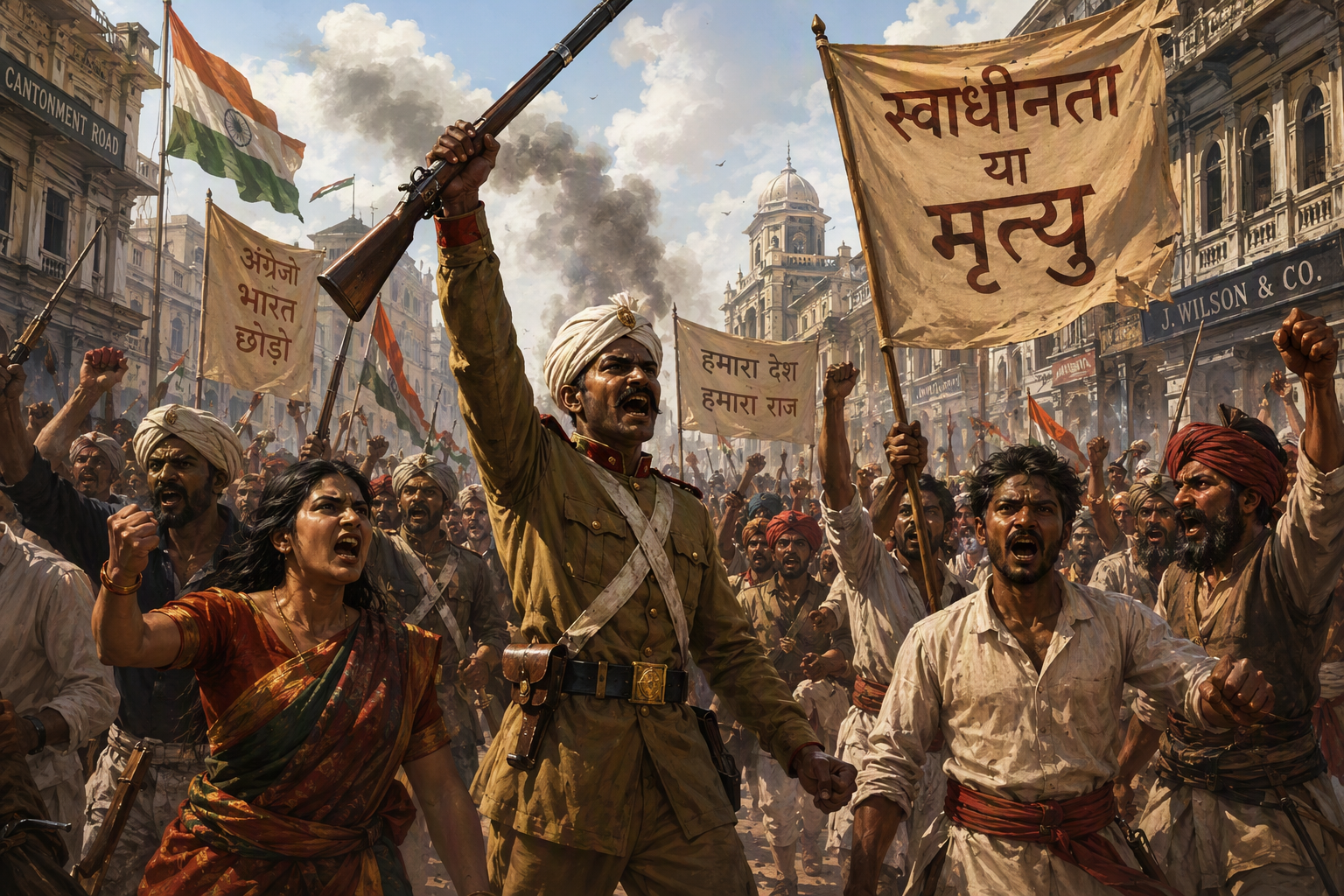
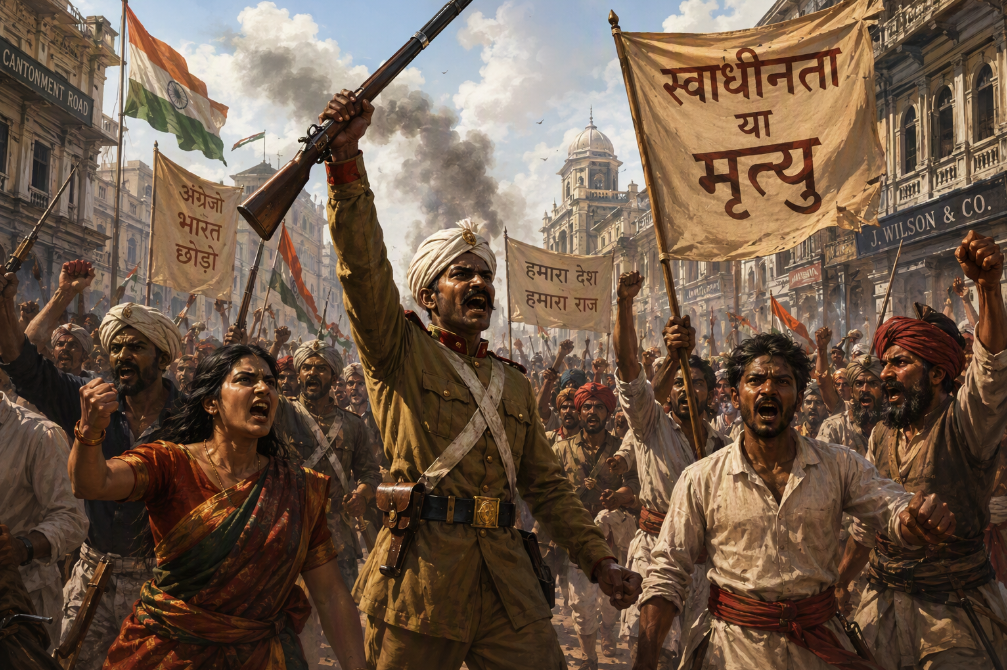
The Indian mutiny started in Meerut on May 10, 1857. On this day, a group of Indian soldiers stood up to the British officers who worked for the British East India Company. At first, it was just a military uprising. But very soon, this event grew bigger, and people in northern and central India joined in.
Soon, Bahadur Shah was seen as the face of the fight in Delhi. This made the war feel more important in political terms. The main causes of the revolt were anger about new land being taken, people feeling used for money, worries about how society was changing, fears about their religion, and problems in the army. All these reasons made what started as a sepoy revolt turn into a big war of independence.
Early British Expansion and Policy Changes
The East India Company started as a group for trade. Soon, after winning fights like the Battle of Plassey, and moving into areas like Bengal, Bihar, southern India, and Punjab, the East India Company began to be the real power in those places. That steady growth helped set up British colonial rule.
As control grew, the company made new rules that caused problems. It took control in choosing leaders and gave less power to the princely states. They used annexation to take over more land. The annexation of Awadh in 1856 was very important. It was tough on local leaders. It also raised trouble for men in the british army, since many of them came from that area.
This text shows how the rules and ways of the British East India Company led to the Revolt of 1857. The east india company kept getting bigger, and this made many people feel upset. The new rules made some groups feel left out. These things together started the anger. Soon, all that anger came out in a big way.
Transformations in Indian Society Under Colonial Rule
Life under british rule changed more than who was in charge. Indian society got new laws and new ways of doing things. People also felt more pressure because of western methods of education. Many said these changes were not just about rules. They believed british officials did not respect Indian customs or values.
Older roles that used to have power grew weaker at the same time. Religious leaders, old elites, and people who got their authority from family lost much of their social status. This loss made many feel less secure, and this feeling did not stay just with judges or soldiers, it spread among more people.
Social problems made people feel unhappy, and this set the stage for change. This happened because:
- People felt afraid that old customs were changing too fast.
- there was worry about the missionaries having more say.
- some felt uneasy about new laws and schools.
- many disliked the way british officials looked at their race.
Political Causes Behind the Revolt
Political causes played a big part in the start of 1857. Lord Dalhousie used the doctrine of lapse to let the British take over states where rulers did not have their own child to inherit. This rule put many princely states in danger.
The annexation of Awadh made people feel even more angry. It was clear that the British wanted to take over big areas and have the real power, even when old rulers were still there. This made the rulers, nobles, and local leaders feel cut off. The next two sections will show how the annexation of Awadh and the loss of power made many people start to fight back.
Doctrine of Lapse and Annexation Policies
The doctrine of lapse was one of the main reasons for the revolt. Lord Dalhousie started this rule in several princely states. A ruler could not give his throne to an adopted child. If he had no real son, british officials would not let the next ruler take over. Instead, they took the land for themselves.
This rule was not only about law. It attacked the right to lead, pride, and the way things go on. The rulers and rich people in the court felt that the East India Company wanted to take over everything. They did not want to work with others. The east india company was seen by them as trying to get power, not share it.
| Policy or Action | Effect on Indian States |
|---|---|
| Doctrine of lapse | Allowed annexation of states without a natural heir |
| Rejection of adopted heirs | Undermined accepted succession practices |
| Annexation of states like Satara, Jhansi, and Nagpur | Increased fear among other princely states |
| Expansion under Lord Dalhousie | Convinced many that no Indian throne was secure |
These rules made many people feel upset. That anger showed up in 1857.
Erosion of Power Among Indian Princes and Rulers
Many Indian rulers were not only stripped of their power but also felt hurt. The British made kings, nawabs, and chiefs only symbols, and took real control themselves. Local rulers who once led in how things were run and in justice saw their own say become less and less.
This was not just about politics. It was about people, too. Their social status went down. They lost their land and homes. They did not play a strong part in society anymore. Even Emperor Bahadur Shah was made to feel ashamed. The Mughal family did not get the same respect as before.
That unhappiness was very important. When the revolt got bigger, some indian rulers and leaders in the region saw a way to fight back against the system that had pushed them away. Their anger helped the uprising feel right and gave it leaders. This made it grow and spread outside the army camps.
Economic Factors Leading to the Revolt
Economic distress was a part of daily life in British India. The land revenue set by the rulers was high. People who worked on land found it hard just to get by and take care of their needs. At the same time, the economic policies put in place helped British interests. These changes made local people lose their wealth.
Traditional workers had a tough time too. People who made things by hand lost jobs as imported items made by machines took over. This hurt old businesses and caused money problems in their towns. Many areas went through hard times because of this. These problems were not just in shops or small villages. They made people feel angry and upset, and that helped make rebellion happen. The next parts talk more about land rules, and how farmers and craftspeople suffered.
Exploitative Land Revenue Systems
One of the main problems during british rule was the land revenue system. The settlements put high taxes on farmers. These taxes had to be paid, even if the harvest was bad. Many peasants could not pay. This made them get into debt. They had to give up their land. It made their lives feel unsafe and insecure.
These economic policies did not focus on helping local people. They were made to make sure the colonial state got steady money. Because of this, farming was hard for many and did not bring peace. More and more, people in the countryside faced problems every year.
The annexation of Awadh made people more upset. It changed how landholders, peasants, and the local leaders worked together. In places where the British stepped in and changed who was in charge and how much tax people had to pay, things got worse. Many felt the government took their money but did not look after them or their way of life.
Financial Hardships for Farmers and Craftspeople
The hurt from the economy did not stay only in the countryside. During british colonial rule, farmers and artisans both lost a lot. Cash crops, big taxes, and trade that was not fair made the old way of earning money weaker. In towns and villages, people watched their jobs go away.
People who make things by hand were hurt by goods made in factories outside the country. Old ways of making things slowly went away. A lot of people lost what they needed to take care of their families. In northern India and central India, this made people feel upset for a long time.
Key economic factors included:
- The taxes for farm land were high.
- Local crafts went down because the British brought in their own goods.
- More people, both in cities and countryside, had less money.
When a lot of groups went through hard times at the same time, money problems started to be a big part of the whole fight back.
Social and Religious Causes of the Revolt
Social causes and worries about religion played a real part in the revolt. A lot of people thought british rule would harm old ways, beliefs, and their way of life. This fear moved through indian society because there were new rules and missionary groups, and it made people feel suspicious.
British officers were often seen as not caring about local ways. This hurt trust even more. Religious beliefs were very important in daily life, so even talk or rumors could make people feel scared. These worries were not the only issue, but they gave more reason for people to rise up. The next parts will show how British officers’ actions changed life for both Hindu and Muslim groups.
British Interference in Local Customs and Traditions
Many people in India thought that british rule was going beyond limits that it did not know about. When there were changes in law, education, and public policy, people began to feel that the government wanted to force changes on how they lived. These worries grew even more when these new ideas and rules affected faith or family life.
British officers and administrators seemed far away and did not really care. Their actions, along with western methods of education, made it feel like Indian values were being looked down on and pushed aside. This caused even good changes to feel risky.
Local customs were important. They helped build who people were, make them feel pride, and keep things working in the community. When people saw these customs being attacked, they got upset. Some of the reasons for the revolt came from religion. Religion was not the only cause, but it was part of a bigger problem where people started losing trust.
Impacts on Hindu and Muslim Communities
The revolt got help from both Hindus and Muslims who felt worried about their religion. In british india, people often thought that the British might change how they practice their faith. This worry was strongest when the army did things that went against what people saw as holy.
For Hindu communities, the thought of cow fat on cartridges was very upsetting. It was the same for Muslims, but with pig fat instead. In many indian states, this made people feel that colonial power did not respect their religious beliefs. That feeling brought groups together, even when they did not usually work with each other in politics.
Important impacts included:
- Many people worried about forced changes to their culture when under foreign rule.
- There was a fear that their religion and caste would not be strong anymore.
- A lot of people were angry about the cartridge issue because it was linked to cow fat.
This is why the things people feel about their religion became an important part of the unrest.
Administrative Reasons and Military Discontent
Administrative failure and unhappiness among the troops gave the revolt its point. The East India Company needed to rely on Indian soldiers, mostly in the Bengal Army. Many sepoys in the british army did not feel respected or treated well by the east india company.
This gap between depending on indian soldiers and giving them respect led to problems. Indian soldiers did not get good treatment. They had few chances to move up. They started to not trust british forces or the rules of the british. Their work mattered a lot in the army. They were well-trained. They got arms, and could take action when needed. The next few sections will show how the ways soldiers were hired and treated upset them. These things turned anger in the army into a full rebellion.
East India Company’s Military Recruitment Practices
The East India Company got most of its strength from the Indian army. A big part of this force was the Bengal Army, which had many sepoys from places like Awadh. This made it important for rulers and recruits to trust each other so the military would stay loyal.
Recruitment caused problems in the british army. Indian troops joined in big numbers. But, they were not treated the same as british soldiers. The british still made decisions and kept the top jobs. Indian troops helped the army grow, but higher roles in the british army stayed with british people.
That gap in power was important in 1857. The Bengal Army was a set up group, so it was where anger showed itself first. Indian soldiers played a key part in the causes of the revolt of 1857. The military joined together dislike, order, and the way to fight back.
Unequal Treatment of Indian Soldiers
Indian soldiers worked in the British army. But they had reasons to feel frustrated. British officers got more respect, and they were the ones in charge. Indian sepoys did not get the same chance. They could not move up or lead like the British officers. Indian soldiers saw that all they had to do was follow orders to be trusted. Indian sepoys knew things were not fair.
The problem was not just a single event. It was a lasting feeling of being left out. The soldiers felt that the people in charge did not care about their religion, their pride, or what they gave to the army. Because of this, soldiers were not happy. Soon, this unhappiness turned into real anger about the way things were run. That is the big reason why the revolt started with the sepoys.
Their grievances included:
- There be no equal chance for all to get promoted or move up in rank.
- British officers often use harsh discipline on people and treat them badly.
- Many feel more and more worried about new rules that may hurt their religion and honor.
These problems show why indian soldiers were right at the center of the uprising.
The Immediate Triggers of the Revolt
Yes, the Revolt of 1857 started because of some things that happened fast. The main reason was the introduction of the Enfield rifle. Soldiers had to bite open greased cartridges to use this new rifle.
That rumor mixed with anger that was already there. At Barrackpore, Mangal Pandey went after british officers in March 1857. This showed how tense things were. A short while later, things in Meerut made the indian mutiny turn into a big fight. The next parts will tell you about the cartridge problem and the first big conflicts.
The Enfield Rifle Cartridge Controversy
The Enfield rifle was the main reason that started the revolt. Indian soldiers had to bite the cartridge to load the gun. A rumor went around that the grease on the cartridge had cow fat and pig lard in it. This was hurtful to the beliefs of both Hindu and Muslim people.
Whether the rumor was true or not, the damage was there. Sepoys did not trust what the British wanted. Many thought this showed the government wanted to harm their religion. One practice in the army became about their society and beliefs.
The rifle had been connected to changes in the military after the Crimean War. In India, though, it had a big political effect. People started hearing rumors about the cartridges. These rumors turned people’s fear into something they acted on. Quiet anger grew, and soon, people began to fight openly.
Outbreak at Barrackpore and Meerut
The first big warning happened at Barrackpore. On March 29, 1857, Mangal Pandey attacked british officers. Later, they had him executed. His action did not start the whole rebellion right away. But, it showed that the army was close to revolt.
The big outbreak of the indian mutiny started in Meerut. Sepoys did not take the cartridges they were given. So, they were punished and put in jail. On May 10, their friends got angry. They started to fight, killed some officers, let the prisoners out, and went to Delhi. This action made the indian mutiny stronger and gave it a main place.
Key trigger events included:
- Mangal Pandey started the attack at Barrackpore.
- The sepoys were punished at Meerut because they did not take the cartridges.
- After the uprising at Meerut, the march went from Meerut to Delhi.
These things made people feel angry. It turned that anger into a big fight against others.
Role of Rumors and Communication in Spreading Unrest
Rumors were strong in 1857 because not many people trusted the government. The indian soldiers heard stories about cartridges, religion, and secret things the British wanted to do. These stories spread fast and made people feel even more afraid.
Communication played a big part in how dissent moved across northern India. When rebellion started, news about uprisings, punishments, and wins spread fast from one place to another. This helped local anger feel like it was part of something bigger. The next sections will show how rumors changed what sepoys did and how unrest traveled through the main areas of northern India.
Impact of Rumors Among Sepoys
Rumors were important because they took up the space left by doubt and mistrust. The indian sepoys thought that the problem with the cartridges was part of a big plan to upset their religion and way of life. In that time, even things that were not proven could seem true.
Inside the british army, soldiers talked with each other. They compared what they went through. They watched how officers acted. When someone got punished for saying no, many sepoys felt afraid. Their fear became sure. They felt like no one cared about what worried them. Their concerns were not listened to, only pushed away.
This helped more people feel upset. Rumors did not cause every problem, but they made old complaints feel new by tying them to a new sign of disrespect. When sepoys started to think that the, their beliefs and pride were at risk, it became harder for them to follow orders. This change in the way the felt was one reason why so many joined the revolt so fast.
Spread of Dissent Across Key Regions
Once Delhi turned into a center for rebels, the indian rebellion grew bigger in northern india and central india. Each region took its own way, but the rising dissent made the movement larger. Many local leaders came up, and more people started to support the cause in several places.
Delhi had Bakht Khan come from Bareilly and take real power. In Kanpur, Nana Sahib was the one to lead the fight. In Lucknow, Begum Hazrat Mahal was very important. People remember Jhansi and Gwalior for the courage shown by the Rani of Jhansi and Tantia Tope. In Bihar, Kunwar Singh was the leader.
Major centers and leaders included:
- Delhi was led by Bahadur Shah and Bakht Khan.
- Kanpur was led by Nana Sahib.
- Lucknow, Jhansi, and Bihar were led by Begum Hazrat Mahal, Rani Lakshmi Bai, and Kunwar Singh.
Conclusion
To sum up, the Revolt of 1857 was a big mix of many things. There were political, economic, social, and military reasons behind it. Knowing these main points helps us see the history of the revolt more clearly. It also shows the strong effect this event had on India’s push for freedom. The unhappiness among indian soldiers and the lots of stories going around led to more people getting upset. Each part was important in making this event what it was. When we look at why it happened, we get to see how strong and brave people were when they stood up for their rights. If you want to learn more about this big moment in history, feel free to ask for more details!
What were the primary causes of the Revolt of 1857?
The main reasons were anger toward british rule and high land revenue taxes. Political hate also grew because of the doctrine of lapse. Local rulers lost their power and peasants had money problems. The enfield rifle issue was the trigger that made many sepoys feel their beliefs were not safe.
Did Indian rulers actively participate in the Revolt?
Yes, several Indian rulers and local leaders took part in the revolt. Emperor Bahadur Shah was the main figure in Delhi. Rani Lakshmi Bai, Kunwar Singh, and Begum Hazrat Mahal each led their people to stand against British power in their own areas. All of them played a big role in the fight, and their names are remembered.
How did the cartridge rumor influence the uprising?
The talk about the enfield rifle cartridge was the trigger for the sepoy mutiny. Many indian soldiers thought that the cartridges were covered with cow fat and pig lard. This was an insult for both Hindus and Muslims. There was already a lot of mistrust, and this rumor made their anger grow stronger. It turned their unhappiness into a rebellion.