Key Highlights
- Disaster management is an important topic for the UPSC Mains exam. It is linked with governance, development, and security.
- When you answer questions on this, try to connect disaster risk reduction with current affairs. You should also use some practical examples from India.
- The disaster management authority system works at different levels. It is managed by government agencies at the national, state, and district levels.
- The Disaster Management Act set up the legal framework for how to get ready before disasters, what to do when they happen, and how to recover after.
- India does not use the earlier reactive approach now. The country uses a wider disaster management approach.
- A good way to prepare is to learn about the phases, the institutions, important laws, and how to write structured answers. This helps you cover all parts of disaster management.
Table of Contents
Introduction
Disaster management is a topic in UPSC Mains that may seem easy first. But when you read more, it can feel bigger and more detailed. You need to know concepts, groups, laws, and how to use all these in cases. In India, disaster management is important because there are many hazards. So, you need strong risk management and disaster risk reduction.
If you understand the disaster management approach and its parts, it becomes easy to write clear answers. A good grip of the framework will help you handle questions in the exam. This guide will share everything in a simple way, so you can build an effective disaster management plan. It also helps you practice risk reduction and manage disaster risk better for UPSC Mains.
Relevance of Disaster Management for UPSC Mains
For UPSC Mains, disaster management is more than just one topic. It links with things like current affairs, how the government works, safety, the environment, and public policy. This is why you will find questions on disaster management often. They check how well you know India’s disaster management approach.
Recent UPSC Mains questions now often bring together disaster situations, risk assessment, sustainable development, and disaster resilience. You need to talk about national disaster management and national disaster response in a clear and practical way. This text will help you see how this topic is important and how to write about it.
Importance in GS Paper 3 Syllabus
In the UPSC Mains exam, GS Paper 3 puts clear focus on disaster management. The paper checks if you know more than just the basic meaning. You need to show how India gets ready for, handles, and comes back from disaster situations. If you have a good understanding and can link it to real life, you will do well in this part of the syllabus.
You should connect plain ideas with current affairs. For example, if you get a question about disaster preparedness, do not talk only about the theory. Bring in disaster risk, show which regions are in danger, mention what the government does, and talk about risk reduction. This makes your answer better and more useful.
A simple structure is the best way to write answers in GS Paper 3. Start with a short definition or give some background. Next, explain the issue with clear points. At the end, suggest a practical way forward. If you follow this, your disaster management answers will be clear. They will be more focused on what the exam wants and easier for the examiner to read and grade well.
Recent Trends in UPSC Questions on Disaster Management
Recent UPSC Mains questions on disaster management are not just about facts now. They look for you to make links between ideas, past events, and rules. You need to know the disaster management cycle. It helps to know the laws and how the government agencies work when there is a problem. You should also see how these things all join together in disaster management.
A clear trend that you can see now is about real use of ideas. Many questions want you to explain how the Disaster Management Act helps with risk management. They ask you to talk about how teams and groups do work in a disaster risk time. You should also show how being ready is not the same as just helping during or after a disaster.
- More questions now mix the static syllabus with current affairs.
- UPSC likes to see answers that explain the phases: mitigation, response, and recovery.
- The role of government agencies and how they work together is becoming more important.
So, when you get ready for this, do not just try to remember single facts. You need to make links between the law, policy, current events, and things that are done by those in charge.
Approach to Writing Disaster Management Answers
A good disaster management answer in UPSC Mains should feel clear right from the first line. The way you put your answer together is as important as what you write. Begin with a short and direct introduction. After that, talk about the main points like the phases of disaster management or the problems in how it’s set up. End your answer with a short part that gives a solution.
This way, your disaster management answer for UPSC Mains will stand out and feel easy to read.
You should also use current affairs when they fit in. This will help show the reader that you know disaster management is a real and active field, not just something you read in a book. Try to use terms like risk assessment, disaster risk, disaster response, and disaster risk governance in a natural way. Keep the language simple so it is easy for all to read and understand.
- Start with some background, a short meaning, or what problem there is.
- Talk about steps for being ready, dealing with things when they happen, fixing things after, or groups that help.
- Finish with a line about how we can be stronger and make things run better in the future.
If you follow this way, your answers will look balanced. They will be clear, easy to read, and good for exams.
Understanding Disaster Management in the Indian Context
India’s disaster management works through a system with several layers. It deals with disaster situations by planning, coordinating, and taking action. At the top, national disaster management gets guidance from the highest institutions made by law. The National Executive Committee also supports and helps out with this work.
In simple words, the Indian model joins the disaster management authority, planning groups, and on-ground response teams. The main goal is to lower disaster risk. It does this by using a disaster management approach that stops disasters before they happen. To get this, you need to know the basic ideas and types of disasters.
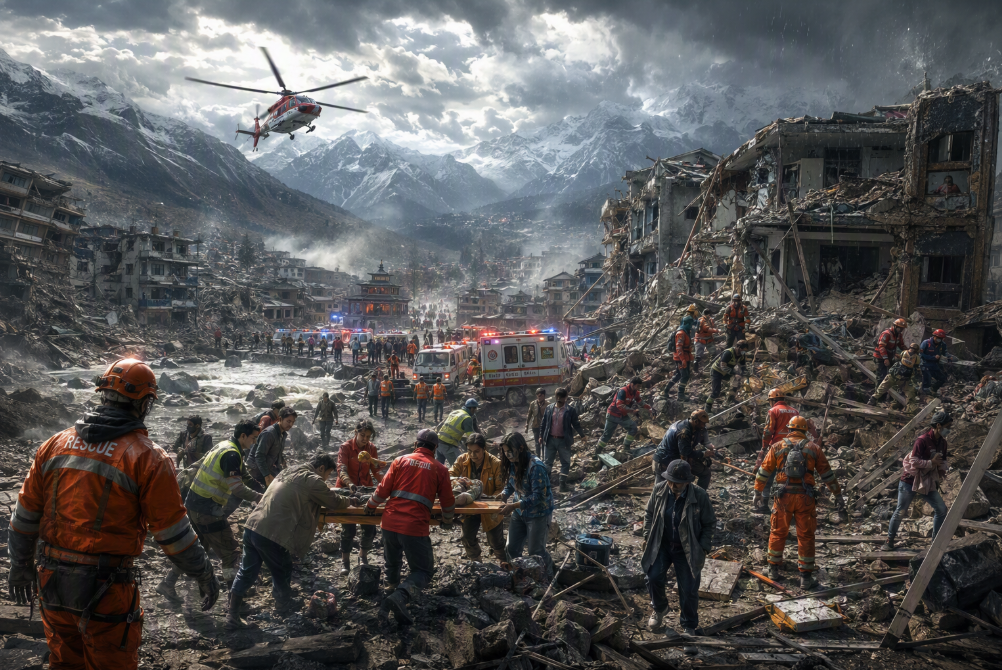
Defining Disaster and Types of Disasters
In disaster management, a disaster is an event that leads to great harm to life, things we own, jobs, or systems. It needs people to act together in an organized way. For UPSC, you need to know that disaster risk is not just about the event. It also depends on how much people are exposed and how ready they are for the event.
India has to deal with many types of disasters. This is because of its land, weather, and how cities grow. There are both natural disasters and problems caused by people. The impact of disasters is worse in places where roads, buildings, and other things are not strong. It also gets bad when there are many people there who can get hurt easily.
- Natural disasters are things like floods, earthquakes, cyclones, droughts, landslides, and heat waves.
- Industrial accidents are listed under man-made disasters.
- Glacial lake outburst floods and coastal problems also matter in India.
When you know what types of disasters there are, the next thing to do is look at why India is more at risk for these.
India’s Vulnerability: Geographic and Societal Factors
India’s weakness to disasters comes from both nature and people. The indian subcontinent has the Himalayas, long beaches, river flatlands, and dry areas. Because of this, each place in the country can face different dangers like earthquakes, floods, cyclones, landslides, and heat waves.
But where people live is just one piece of the puzzle. Risk assessment gets more important when there are a lot of people, people who do not have much money, not enough roads, or buildings, and cities that grow without good plans. Disaster risk goes up even more when the land and air get worse in many places.
That is why disaster management in India should not focus only on help after a disaster happens. It needs to protect development sectors and people before there is any crisis. Building disaster resilience is important. A weak society will have bigger losses and need more time to recover.
Key Concepts: Risk, Hazard, and Vulnerability
These three terms often come up together in UPSC questions, so you need to keep them clear. A hazard is an event that can cause damage, like a cyclone or earthquake. Vulnerability is the weakness in people, systems, or places which makes them likely to get hurt.
Risk is the chance of losing something when a hazard connects with things or people that are open to it. This means that risk reduction is not only about stopping hazards. It also means lowering what can be harmed by planning, getting people to know more, and building things better.
- Risk assessment helps you see who is at the most risk and where there should be action.
- Government agencies use risk assessment in every part of the disaster management cycle.
When you use these ideas the right way in your answers, what you say gets more clear. Now, let’s go to the steps that help people in the real world to do disaster management.
Disaster Management Cycle: Key Phases Explained
The disaster management cycle is a key idea you must know for UPSC Mains. It shows that disaster management is not just a single response. It is a continuous process. The cycle brings together risk reduction, planning, action, and recovery. Each part follows in order, making it a clear path for dealing with disasters.
The main parts of disaster management are pre-disaster action, disaster response, and post-disaster recovery. In answer writing, using this plan lets you show how disaster preparedness, disaster mitigation, and effective response all fit under one clear disaster risk management way.
Pre-Disaster Phase: Preparedness and Mitigation
The pre-disaster phase is the time to act before any damage happens. At this point, disaster preparedness and mitigation measures are very important. In recent years, India’s national disaster management has put a lot of focus on this stage. This helps lower losses and makes the response better when disasters hit.
Preparedness means to plan ahead, train, practice drills, gather key supplies, and make sure to set up ways to communicate. Mitigation is done to make future harm less bad. Good risk management starts with a proper risk assessment. It is important to find out local risks before a hazard becomes a big crisis.
- Enforcing building codes makes sure buildings be safer when people build them.
- Early warning systems let people know when trouble is coming, so they can act on time.
- Land-use planning and awareness campaigns help with disaster risk reduction.
If you talk about this phase well, you show that prevention and being ready come first when you want to stay safe.
Disaster Response Phase: Rescue and Relief
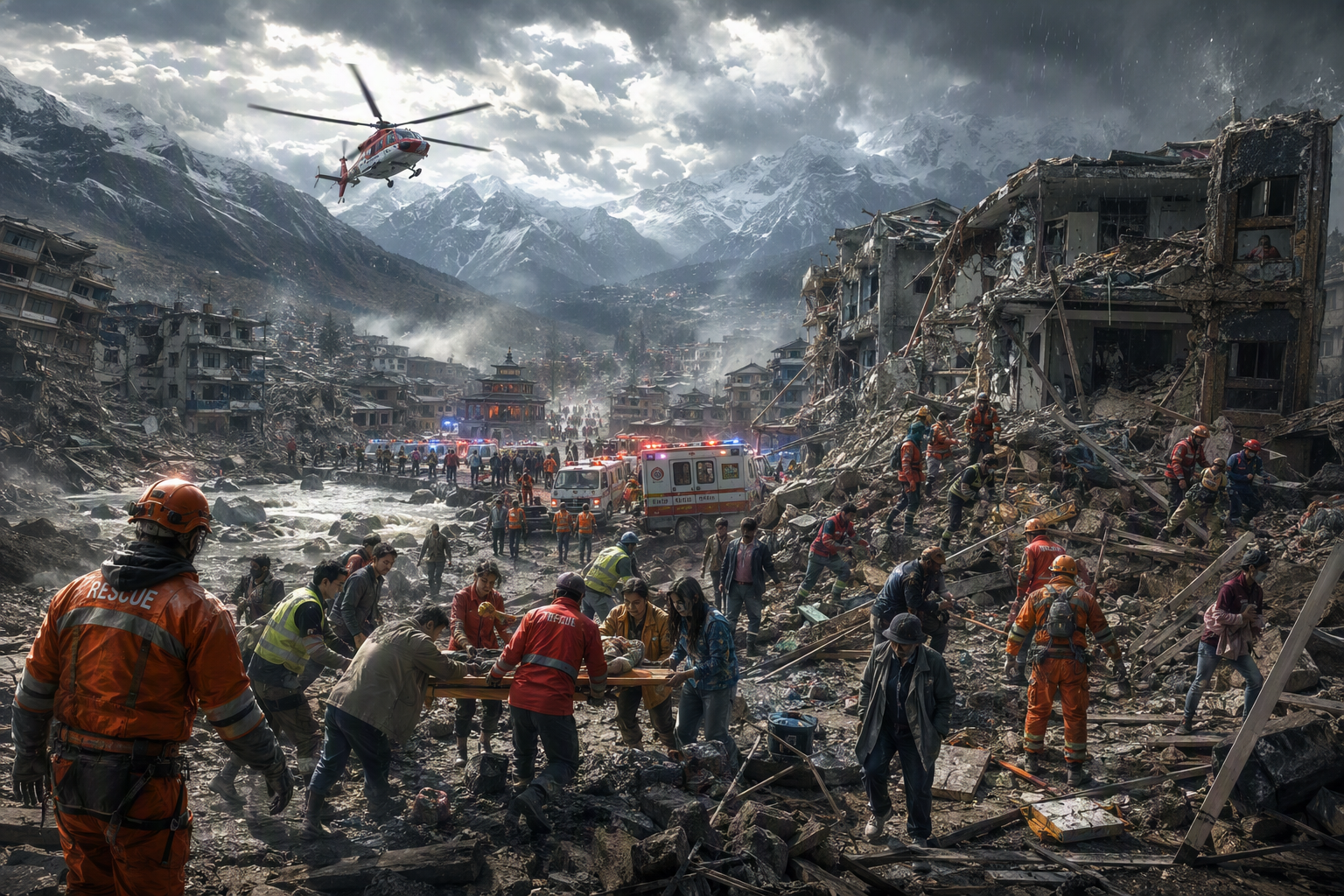
When a disaster happens, the disaster response starts right away. The goal at this time is to save lives, ease pain, and stop more damage from happening. Good disaster response depends a lot on plans made before this. But the real test is how well people work together and how fast they act when the disaster comes.
Rescue and relief mean getting people out of danger, giving first aid, helping with medical care, offering a safe place, food, water, and keeping everyone safe. The National Disaster Response Force has a special job when rescue operations get hard. At the same time, government agencies and local communities need to work as one during disaster response. They have to help and support people together on the ground. A good national disaster response needs rescue operations done by the disaster response force, with support from government agencies and local communities.
- In the first few hours, search and rescue are the main jobs.
- Help needs to get to people who need it fast and in a fair way.
For UPSC, keep in mind that an effective response is not just about sending in force. It is also about good teamwork, smooth supply planning, and making sure things happen at the right time.
Post-Disaster Phase: Recovery and Rehabilitation
After the first help ends, there is a longer part that comes next. This is called the post-disaster phase. In this time, disaster risk management works on recovery, fixing what is broken, and building things back. The goal of risk management is not just to bring things back to normal. It is also to make sure people are less at risk in the future and to help stop damage next time.
Recovery means to fix things like roads and buildings, to bring back key services, and to help people get their jobs back. Rehabilitation does more than that. It looks after the body and mind too, with medical help, talking to experts, and family or group support.
In many disaster situations, things get better only if the right groups make sure to let the people who got hit by the problem help plan and carry out what needs to be done.
These days, people who make rules put a lot of value on both community participation and disaster resilience. This is important because if you rebuild in the same way as before, the same problems and risks will come back. A recovery that connects with sustainable development can help people come back stronger. They will also be better prepared for anything that might happen later.
Institutional Framework for Disaster Management in India
India uses a system with many levels for disaster management. There are groups at the national, state, district, and local levels. Each one has its own job to do. The National Disaster Management Authority is the top group. Other government agencies and committees help with the planning and the work needed.
This framework makes sure all levels, from national to local bodies, play their part in disaster management. The national disaster management authority leads as the apex body, but government agencies and the disaster management authority in states and districts also get to be involved.
Along with the National Executive Committee, the National Institute of Disaster Management, and all response forces, this structure shows a coordinated disaster management approach. For the UPSC, you need to know who does what at each level. Let us begin with the national-level authority.
National Disaster Management Authority (NDMA): Role and Structure
The National Disaster Management Authority, or NDMA, is the main disaster management authority in India. The Prime Minister leads the NDMA. It gives the nation policy direction, does planning, and handles coordination for national disaster management. If you are preparing for the UPSC, you must remember this body.
NDMA has many jobs to do. It makes rules, gives the okay to the national plan, and shares advice with other ministries. It helps different groups work together during big disaster situations. NDMA is not the only one that does this work.
The national executive committee helps to carry out these jobs. State leaders, with the chief minister in charge, do their work at the state level. Each group has a part to play when things go wrong.
| Institution | Head | Core Role |
|---|---|---|
| NDMA | Prime Minister | Lays down policies, plans, and guidelines |
| National Executive Committee | Union Home Secretary | Assists NDMA and implements the National Plan |
| SDMA | Chief Minister | Leads disaster management at the state level |
State Disaster Management Authorities and Their Functions
At the state level, the State Disaster Management Authority takes care of planning and teamwork. It is led by the Chief Minister. This group uses the Disaster Management Act and makes sure it fits the needs of the state. The disaster management authority works to handle all disaster management issues at the state level.
Its role matters because disaster risk is not the same in every state. A coastal state needs to get ready in a different way than a Himalayan state does. So, the state level authority uses its own disaster management plan. This helps turn policy into action and makes disaster risk governance stronger for each state.
- It makes plans for each state and works with the district offices.
- It looks after how ready everyone is, response strength, giving help, and risk reduction.
You should also remember the State Executive Committee. The Chief Secretary leads this executive committee. The committee helps to put the state plan in place and makes sure that all parts of the government work together.
District Level and Local Bodies in Disaster Management
At the district level, disaster management is put into action. The District Disaster Management Authority, led by the district collector or district magistrate, is in charge here. This is where plans are used, and people work together fast in emergencies. The team also helps after the emergency to make things better.
District institutions are important because they are close to the people who need help. They work with local bodies, field teams, and local communities. They also do most of the district planning, risk assessment, and basic steps to get ready in places where problems often happen.
- The district authority makes plans for disaster management in the district.
- It works with field groups to handle relief and rescue operations.
- It teams up with the disaster response force when there is an emergency.
For the UPSC, remember that local delivery is what often makes a response good or bad. This is why the district administration is very important in carrying out plans.
Important Laws and Policies Shaping Disaster Response
India’s way of handling disasters does not depend only on its institutions. The country also follows big laws and plans that help with risk reduction, being ready for problems, giving relief, and working on recovery. If you are preparing for the UPSC, you need to know about three key papers. These are the Disaster Management Act, the National Policy on Disaster Management, and the National Disaster Management Plan. These shape disaster management and national disaster management in India.
These changes show how the Government of India moved away from giving just relief when a disaster happened. Now, they use a bigger disaster risk management method. This new way is in line with how people think about disaster risk across the world. The Hyogo Framework and later plans also guide this change.
Disaster Management Act, 2005: Highlights for UPSC
The Disaster Management Act, 2005 is very important for how disaster management works in India. The Act made the government of India change how they deal with disasters. Before this, they mostly focused on helping only after a disaster took place. Now, they also work on prevention, being ready, stopping more harm, reacting when things go wrong, and helping things get better after the event.
This law set up the main system for disaster management. It created the National Disaster Management Authority, as well as state and district authorities. It also formed key groups like the Executive Committee. In your answers, you should say that this Act made disaster risk governance stronger. It helped make planning for disasters more orderly and clear.
- The law made it a rule to set up disaster groups at the national, state, and district levels.
- It put focus on cutting down disaster risk, lessening damage, money plans, and getting people involved.
So, how does the Act help in being ready and acting in the right way? It gives power by law. It helps decide who does what in a clear way. It also builds a set plan to follow, not just a quick fix or random action.
National Policy on Disaster Management, 2009
The National Policy on Disaster Management, 2009 built on the law made in 2005. This new policy gave India a wider direction on how to handle disasters. It pushed for a disaster management approach that looks at all parts of the disaster cycle. It was not just about help after the event.
One big strength of the policy is how it highlights risk reduction for disasters. It puts focus on disaster risk and uses several mitigation measures. These include land-use planning, early warning, and capacity building. The policy also asks government agencies to bring disaster risk concerns into development plans. So, disasters get handled as part of development and not just as one-time events.
For UPSC, the phrase “culture of prevention” is very important here. The policy helps India move closer to this by asking for preparedness at every stage. This is why it works as a key link between law and how things are done in practice.
National Disaster Management Plan, 2019
The National Disaster Management Plan, 2019 is the guide people use when there is a need to act in a disaster. The law and policy set up the rules. The plan changes those rules into something that can be used for real disaster risk management. It uses an all-hazards disaster management approach.
The plan shows the roles and duties of each group and person. It has clear steps to follow in the face of different dangers. For UPSC, this helps connect disaster management at the national level with the way things are done and links it to current affairs too.
- The plan looks at both natural disasters and ones made by people. It does this by using an all-hazards way to get ready.
- The plan puts focus on disaster resilient infrastructure and early warning systems.
You can use this plan in your answers to show that the disaster framework of India is not just about laws and ideas. It also works in practice and helps get things done.
Integration with International Disaster Management Standards
India’s disaster management approach is influenced by both its own laws and global standards. International cooperation also plays a big role in how this approach works. This matters for UPSC, because you often get questions asking how Indian policy links with bigger frameworks and ideas.
The move toward disaster risk reduction and sustainable development shows the strong global influence on India. At first, India worked with ideas from the Hyogo Framework. Later, India joined in even more with the Sendai Framework. The next parts will explain how these are linked. The focus will be simple so it is easy for you to read and use while preparing for exams.
Alignment with Sendai Framework for Disaster Risk Reduction
The Sendai Framework for Disaster Risk Reduction is a global plan to lower damage and risks from disasters. India agreed to it and the government of india has put many steps in place that match its main ideas. Knowing about the sendai framework and how it ties with our country is important. That is because, in exams like UPSC, showing knowledge of both risk reduction at home and also globally helps you give a strong answer.
Sendai focuses on knowing risk and making sure to manage it well. It puts stress on building better rules and governance for safety. Sendai also says it is important to put money into strong plans and be well prepared for problems. A big part of this is learning how to recover better after things go wrong.
These ideas match with the way India started to handle disaster management after the Disaster Management Act was put in place. The changes in policy that came after fit with these themes, showing that India moved to a new style of disaster risk management and risk management.
- India is getting better at knowing about risks with better data and study.
- It is also making leadership and planning stronger to match the main goals of Sendai.
So, the Disaster Management Act gave the legal support for disaster management in the country. The Sendai Framework worked to set the main goal, which is to build strength and stop disasters before they happen. Both the Disaster Management Act and the Sendai Framework play a big part in this.
India’s Commitment to the Prime Minister’s 10-Point Agenda
India’s strong stand on disaster resilience can be seen in the Prime Minister’s 10-Point Agenda on disaster risk reduction. This agenda helps the country focus on being ready and taking action early in the disaster management cycle. It also gives clear steps for making and reaching policy goals on disaster risk reduction.
The agenda tells development sectors to think about risk when they make plans. It also points out how important local capacity is. The use of technology, strong infrastructure, and warning systems that put people first should be there too. The agenda says young people should join in, and everyone should learn from good ideas that work. With these steps, everyone works together for resilience. It is not just something the government has to do alone.
- It says that disaster risk reduction should be part of every development plan.
- It talks about how building up local capacity is important. It also says people should focus on “Build Back Better” after disasters.
For UPSC, this agenda helps because it shows why being strong is now key in Indian policy thinking.
Other Global Agreements Impacting Indian Policy
Before Sendai, the Hyogo Framework played a big role in how people across the world saw disaster preparedness and risk reduction. In India, we see this shift in policy too. India moved from just giving relief after a disaster to planning ahead and being ready. So, policies now focus on prevention, preparedness, and good planning in the system. This background can help make your Mains answers stronger.
Global agreements are important because losses from disasters can hurt growth, jobs, and how people live. This is why disaster risk reduction is now often connected with sustainable development. In simple words, development cannot last if risk management is not in place. Risk reduction and disaster risk efforts play a big part in this process.
International cooperation is important for learning from others and sharing what works best. It helps us make better plans. For the UPSC, you do not need to go deep into details about this. You just need to show that Indian policy changes by talking with global groups. India also works with common resilience goals.
Role of Government Agencies and Stakeholders
No disaster management system can work with just one group. To have effective disaster management in India, there must be teamwork between government agencies, the disaster management authority, special groups, and people in society. These groups work together at the national, state, and district levels.
The National Disaster Response Force helps with the most difficult rescue operations. But, good results need work from different groups. These groups include people who run things, the armed forces, civil society groups, and local communities. For UPSC, you should know this shared way of acting before you write about each part by itself. It is important to understand how national disaster response works with many people all working together.
Central and State Agencies: Collaboration and Coordination
India’s disaster system needs the central and the state agencies to work together. The institutional framework is strong when both planning, rules, and practice happen at the same time, not alone or apart from each other. This is an important thing to write in your UPSC answers.
Central institutions set rules, give advice, help with skills, and organize what needs to be done during big disasters. Groups at the state level change these plans to fit their own areas and take charge of planning and help in their state. In this way, the disaster management authority at each level does a different job, but all are linked with each other in disaster management.
- The central agencies help with planning, give advice, and work on national coordination.
- The state agencies look after how things are done in their area and lead in daily operations.
This teamwork makes disaster risk management and risk rules stronger. If one part is weak, then the whole response plan does not work well. That is why it is so important for the government and other groups to work together.
Role of Armed Forces and NDRF in Disaster Response
In big disaster situations, the Armed Forces and the National Disaster Response Force are very important to help save lives fast. The National Disaster Response Force gets special training and the tools it needs for tough rescue operations. This makes it a key part of India’s professional national disaster response.
The Armed Forces help a lot when big disasters happen. They bring size, speed, supplies, and order to help things move fast. This is important when there is a flood, an earthquake, or some other big emergency. When disaster preparedness is done before, everyone knows who gives orders and how to communicate. This makes it possible to have an effective response.
- NDRF is there to help in disaster situations with special search work, rescue jobs, and quick support when there is an emergency.
- The Armed Forces help too when disaster situations need fast help on a big scale.
Still, only sending in the force will not be enough. To get a good result, people must also work with the civil administration. Local planning and strong communication systems are also needed. All these things together help make everything work well.
Civil Society, NGOs, and Community Participation
Civil society and NGOs have a big part in the way disasters are managed in India. These groups often help with making people aware, getting relief to people, giving training, and helping with support after a disaster. In a lot of areas, they work as a go-between for the groups in charge and the people who need help.
Community participation matters even more. Local communities deal with danger first, and they are also the first ones to help out. That is why disaster risk reduction needs local capacity and trust from people to work well. Current policy now puts a stronger focus on being ready at the grassroots level.
These changes help with disaster risk, make risk reduction better, and support local communities and their local capacity.
When we look at the disaster management cycle, building capacity in the community is important. It helps people talk better with each other. There is early action, and things get better faster after something bad happens. For those preparing for the UPSC, this is a good point to include when writing about disaster resilience and making sure everyone is part of governing.
Building Disaster Resilience: Strategies and Current Policies
Building disaster resilience is about taking steps to lower losses before a disaster and then to help people recover well after it. In India, this is now a very important goal. That is because many disasters impact people, roads, buildings, and other development sectors.
A good disaster management approach today uses disaster risk reduction, risk assessment, mitigation measures, technology, and early warning systems. For UPSC, this part helps you connect current affairs to real-life answers. Let us look at capacity building, digital tools, and lessons learned from different cases.
Capacity Building and Community Awareness Initiatives
Capacity building is one of the best ways to make disaster resilience stronger. It gives the people and groups in a place what they need to be ready before something bad happens. In disaster management, people knowing what to do and getting practice can be the thing that stops a hazard from becoming a big crisis.
Community awareness is important because people have to know what to do, where to go, and how to act in times like these. This is why today’s policy puts strong focus on local capacity and disaster preparedness. When people in a place know what is happening, they can act faster than others from outside.
- Training, drills, and planning help people get ready.
- Community awareness helps lower disaster risk by reaching people where they live.
For UPSC, keep in mind that being strong comes from more than just buildings. It also comes from people who know what to do and local groups that are ready to act.
Technology Use: GIS, Early Warning Systems, and Social Media
Technology now plays a big role in disaster management. It helps people who are in charge to spot problem areas, plan before a disaster happens, and act fast when something goes wrong. For UPSC, using this in your answers for disaster management and risk management can show you understand real-world uses.
GIS helps make maps that show dangers and where people might be at risk, while early warning systems can give them and administrations time to get ready or move. Social media is also there to help people share news, send alerts, and give new updates to everyone during disaster response. These tools can work best when they connect with local planning and when there are people trained to use them.
- GIS helps make planning better and makes it easier to see risk areas on a map.
- Early warning systems and social media help people get ready and share fast messages when something happens.
So, technology does not take the place of governance. It works well when you match it with institutions, public awareness, and local delivery systems.
Case Studies Illustrating Best Practices
Case studies help make your UPSC answers better. They show how you can use theory in real-life situations. The material that is put together says you should bring up recent floods, earthquakes, cyclones, and other big events in India. This helps you connect what you read with what happened. It is a good way to deal with current affairs when you answer disaster questions.
You do not have to use long details every time. A short example can show how disaster risk management works in places like schools or offices. You can see what was good, what did not help, and what was missing. This shows that disaster risk and risk management are real parts of running things, not just ideas. You get to know how people deal with problems and what they need to do better.
- Use examples from recent disasters in India to show how people be ready, act during, and bounce back after a disaster.
- Point out good ways to do things, like giving quick warning, working together, and making things even better when you fix them.
When you pick case studies wisely, you can show how well disaster management works. It helps others see that you know the policies and their importance. You also show you have a strong understanding of disaster resilience.
Major Challenges Facing India’s Disaster Management
India has made its disaster management system better. But, there are still some issues that need to be fixed. In UPSC answers, you should talk about both the good things and the problems. This shows that your analysis of disaster management is balanced and real.
Some big concerns are gaps in how ready people are, differences in how the risk is looked at, and problems with working together when a disaster happens. There are also limits in how people run and manage disaster risk. A lack of money, weak buildings, and not having enough workers make it tough to act on plans. The next part will take a close look at one of the main trouble spots for disaster risk.
Gaps in Implementation and Preparedness
One big problem with disaster management in India is that what is written in the rules is often not what really happens. The plan sounds good and covers the main points on paper. But when you look closer, disaster preparedness is not the same in every area. It changes from place to place and from department to department. Local groups also handle things in their own way.
This shows that moving away from the earlier reactive approach to using proactive measures is not fully done yet. Some places have better planning. There is stronger awareness, and a good way to respond when needed. But other places have a weak risk assessment. Their teams get delayed when working together, and local people are not ready to act.
- There may be plans, but practice, training, and being ready out in the field are not the same everywhere.
- The wish to act inside the group is strong, but doing it right is not always smooth, so it does not do as much as it could.
For the UPSC, this is an important thing to know. India is going in the right way. But, the country still needs to work better to make sure everything is ready and works well.
Funding, Infrastructure, and Human Resource Bottlenecks
Not having enough money is a big problem for disaster management. It makes it hard to get important things done like risk checks and disaster preparedness training. There is also a need to make critical infrastructure stronger, so it can handle different disasters in a better way. This will help people react faster in an emergency.
There are other problems too. Many people in local communities do not have enough training or support. Human resource issues slow down progress. To build a good culture of prevention, you need local capacity. It is also important for different groups to work together.
Many stakeholders have to take part in disaster management, like government agencies and the disaster management authority. The national disaster management authority should also help. When they all work as one, it is possible to have an effective disaster management approach that keeps people safer in the face of various disasters.
Conclusion
Effective disaster management is very important in India to lower the problems of natural disasters. A comprehensive approach helps, using plans like the Sendai Framework and rules from the National Disaster Management Authority. These focus on proactive measures and building strong infrastructure. The National Disaster Management Authority works with local communities and various stakeholders. This makes sure people are ready and can give an effective response when a disaster happens.
With climate change making things worse, there is a need for the culture of prevention. This helps to reduce damage and losses. If India uses better strategies, improves the disaster management authority, and makes the institutional framework stronger, it can move towards sustainable development. This way, people and their lives stay safer when new challenges come up.
How should UPSC candidates structure answers on disaster management for Mains?
UPSC candidates need to shape their disaster management answers in a simple way. First, they should point out the problem. Then, talk about what caused it and how it affects people. Look at the rules and steps that are already in use. After that, share some ideas on how things can get better. Using real-life cases will make your answer strong. At the end, give a short closing that puts all the key points together for a strong finish.
Which current affairs examples are useful for disaster management questions in UPSC?
Recent events like India’s actions during the COVID-19 pandemic, the Kerala floods, and Cyclone Amphan show us a lot about disaster management. These events teach us about how resources are used, how strong the country’s buildings and roads are, and how well the government works together. They give important points to learn for the UPSC exam. They help us know more about plans and rules for disaster management.