Key Highlights
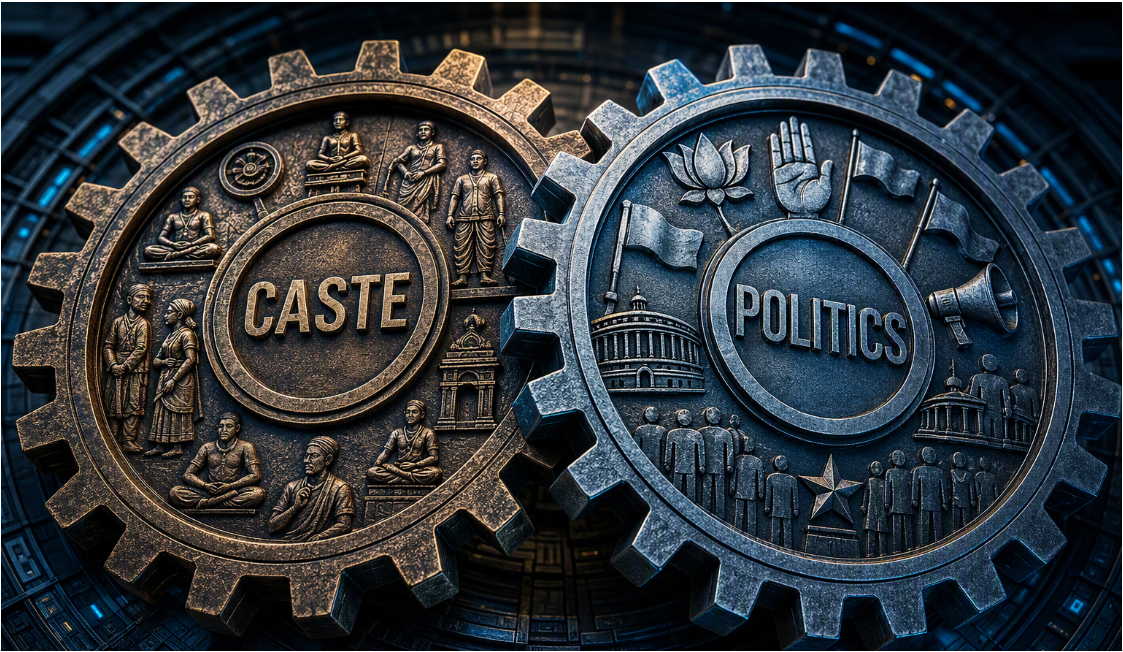
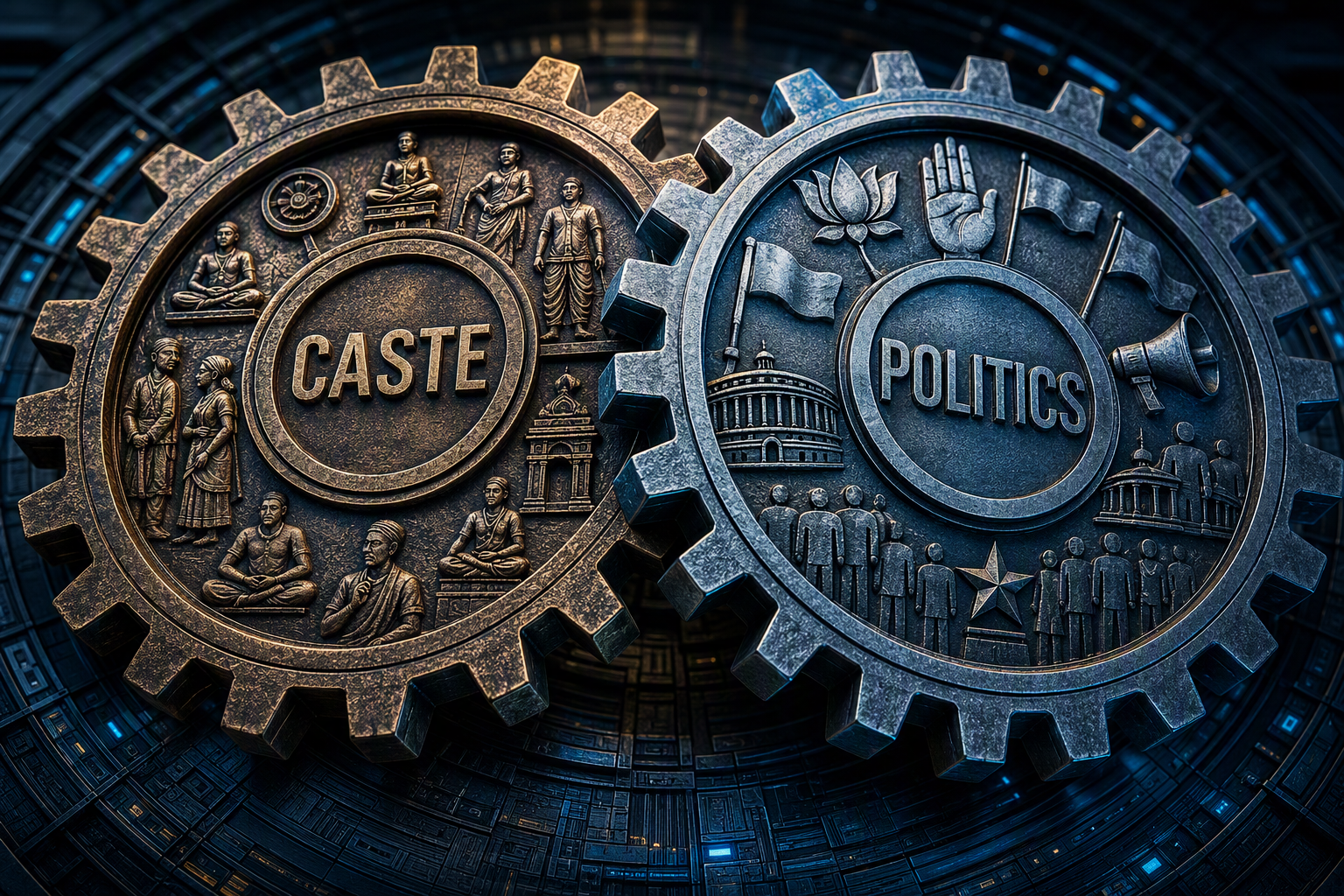
- The caste system still impacts caste identities and caste groups in Indian politics. It also shapes who gets political power.
- When there is politicisation of caste, it can help lower castes more than others. It brings more political mobilization and gives these groups better chances for representation. This can mean more social justice.
- The casteisation of politics happens when political parties use caste arithmetic. They do this mainly to win votes and move ahead in elections.
- Rajni Kothari talked about how caste politics and the political sphere affect each other. His views show they both change and shape each other.
- Right now, debates about reservation, the caste census, and sub-classification show the caste system still matters in Indian politics.
- In a democracy, caste assertion can help caste groups get more representation. But when identity politics gets stronger, it can harm social harmony and make divisions bigger.
Table of Contents
Introduction
In India, the caste system is not just a way the people are put into groups. It has a strong role in indian politics and political mobilization. The caste system shapes much of daily life. This is why you may hear people talk about the politicisation of caste and the casteisation of politics. Some people say that it helps groups who have been left out for a long time to take part in politics. Others feel that politicians often use caste mainly to get more votes. If you want to understand more about elections, how people are represented, and social justice, you need to look at how the caste system and politics work with each other.
Understanding Caste in India: Foundations and Features
The caste system is a way to sort people by birth in Indian society. The caste system puts caste groups in a social hierarchy. This ranking is based on things like ritual purity, who people can marry, what jobs they do, and who their family is. All these things make sure that caste identities stay strong in the lives of people every day.
In political science, the caste system plays a big role. People can use stable social structures to gain political power. Social norms, the caste hierarchy, and different caste associations help turn the identity of a group into action. This is why the caste system can be influenced so much by politics.
Jati, Varna, and the Structure of the Caste System
To get what the caste system is, you need to see the difference between varna and jati. Varna is an old thought. It puts people into four big groups. These are Brahmin, Kshatriya, Vaishya, and Shudra. The people once known as untouchables are not inside these groups. The varna way shows the ritual hierarchy. But it does not show how people live their day-to-day life in the caste system.
Jati is something real that people feel in their lives. In India, there are thousands of jati groups. These groups decide things like who people can marry, what food they eat, what jobs they do, and how they speak with each other. In daily life, jati is more important than varna. Jati creates a social hierarchy that is more detailed, and you can see it in many different forms in parts of the country.
This way of doing things changes how people behave in politics. Jati groups work together, stay together for many years, and be noticed in the society. People often marry in their own group. A person’s place in jati comes from their family. Also, the gap between the upper castes and lower castes makes people feel they belong to a strong group. This strong group feeling helps them speak up for what they feel is right. But, it can hurt social harmony if politics makes the line between upper castes and lower castes even deeper.
Sociological Features that Enable Political Influence
There are many reasons why caste groups get into politics so easily. A caste is a group that you are born in. People in a caste often marry others from the same group. A caste is tied to your place in the society and this usually stays the same over time. Because of this, caste groups help people build strong networks. With these social structures, they can work to get political power, make deals, and help new leaders rise up.
You can see how this works in social mobilization.
- People feel proud or feel hurt because they are aware of their caste.
- The dominant castes use their numbers, land, and social standing to get more power in their area.
- When people already have strong ties with each other, it is easier for them to come together and push for collective political action.
There is a close link between identity politics and social movements. When people do not have a fair chance at jobs, school, or respect, their caste identity can pull them together. So, caste is not just a social label. It can grow into a strong group that stands together in public, especially when there is competition in a democracy.
Defining Politicisation of Caste and Casteisation of Politics
Politicisation of caste means that caste groups use political mobilization to get rights, be seen, and have a voice in the political system. In the Indian political system, this helps people feel political empowerment. It brings those who were left out before into the political sphere. It also talks about the unfair power structure.
Casteisation of politics means most of politics is about caste and how groups want power. In this way of working, leaders use identity politics and caste dynamics to get votes and win elections. When this happens, it can sometimes help more people feel a part of things, but casteisation can also make people see things only from the point of their own group. This often turns public life into a race between castes and brings more division.
Origin and Evolution of Both Concepts
In political science, rajni kothari is the main person behind the idea of politicisation of caste. He did not say that caste only makes politics worse. He said that in indian democracy, caste and politics mix in many ways. Politics does not just copy social structures, but it can also change them.
At the first stage, more people got to vote because there was adult franchise. There were many groups that did not have much voice before. They started to get together in new ways. As time went by, this change made caste become something people use in politics instead of something fixed that people just follow. Now, caste is not only a tradition. It is a tool people use in political competition.
| Concept | Meaning | Broad effect |
|---|---|---|
| Politicisation of caste | Caste used by marginalized groups for representation and rights | Can deepen democracy |
| Casteisation of politics | Politics driven by caste appeal and electoral calculation | Can harden divisions |
| Kothari’s view | Caste and politics reshape each other | Neither fully separate nor identical |
Key Differences and Interrelations Explained
The main difference between politicisation of caste and casteisation of politics is about what leads to each and why they happen. In politicisation of caste, caste comes into public life so that people can stand up if they feel left out because of social hierarchy. In casteisation of politics, the political system uses caste mostly to get votes, but the real problems of social hierarchy do not get better.
The difference is clear when you see the outcomes.
- When there is politicisation of caste, more people can take part in politics. The power structure can change because of this.
- When politics is all about caste, the debate may focus only on caste politics. People may vote in groups based on their caste.
- One way can help more people get their say. The other way can make identity lines stay strong.
Still, the two are tied together. The Indian political system mixes both at the same time. A move for justice often starts with real needs. Then, it turns into normal talks about voting. This is why caste is in democratic action and is still a problem in politics.
Politicisation of Caste: Roots and Influences
The politicisation of caste got stronger when democratic politics started to let lower castes enter the political system. Political mobilization helped caste identities be used for collective political action. These caste identities were not just about who has status. They now let more people talk, vote, join together, and ask for power.
Rajni Kothari saw this as a big shift for democracy. There was now more political participation. Because of this, the hold that dominant castes had in many places began to go down. People from other groups got a chance to join politics. They could speak up and share what they feel and need. The politicisation of caste helped bring social justice talks into politics. This has changed the way we think about public representation now.
Theoretical Perspectives (Kothari, Rudolph & Rudolph, M.N. Srinivas)
Rajni Kothari was a big name in political science. He had an idea that said caste and politics work together. He did not look at caste as something only from the past. He showed that caste identities have a large role in the way people live in a democracy. People use these caste identities when they fight for votes, talk to each other, and also during political mobilization.
Rudolph and Rudolph said that old social groups can change to fit new systems. This idea helps us see how caste stayed, even after elections, parties, and government came in. Caste did not go away. Instead, it became a way for political actors to get support and work for power.
M. N. Srinivas brought up the ideas of dominant castes and Sanskritisation. He believed that ritual hierarchy by itself cannot show who is in power. A caste that has a lot of people, owns a lot of land, and is well-known in the local area can often lead collective political action more strongly than one that is higher in rituals. When you look at the views of these thinkers together, you see why caste is still a big part of modern politics.
Impact on Social Mobilisation and Representation
One big effect of the politicisation of caste is that there has been a social movement among lower castes and backward classes. These groups once had few chances, but now they use their words to talk about what they want and need. They speak up for their rights and for being treated in a good way. Now, instead of being left out, the lower castes and backward classes have come into the political sphere. They say what they need and ask for change.
This change let more people get into politics. Now, every adult could vote. So, the number of votes mattered a lot. Bigger groups got to have a say in who would win. Because of this, more leaders from backward classes and Dalit groups took part in state politics. The old elites were not the only ones to represent the people anymore.
The big change was that people got more say in politics with social justice. Many started to talk more about things like having a spot in school or work, getting help from the government, and having a chance to work in public jobs. It was now hard for others to not see these things. This did not make all people the same. But it did help people notice who gets left out. Now, people talk about who has a hard time because of caste, and it is something real in our democracy.
Casteisation of Politics: Modern Scenarios
The casteisation of politics means political parties focus more on caste arithmetic in electoral politics. They do not pay much attention to public policy. In this way, parties keep looking at which groups will vote for them. They choose candidates, plan alliances, and create campaign messages by thinking about the voting patterns of these groups. The attention is on getting more votes from certain groups, not on what plans or ideas will help all the people.
You can see identity politics play a big part in the political system. It comes up when leaders talk about caste in their area plans and when they talk with local people. This does not mean that caste is the only thing that matters in elections. But it does show that identity politics is used a lot in campaigns. So, talks about how people are ruled or get help do not get as much focus.
Caste-Based Party Strategies and Electoral Campaigns
In Indian politics, political parties always look at caste dynamics before they choose a person to run in the election or pick who to join hands with. They try to know which caste groups are strong in each area. They also watch for local leaders who matter for people and find out how caste associations can help to get more votes or change what people feel.
Political parties use this way because caste groups and caste associations have a big role in Indian politics. These drive most things that happen in elections.
The use of caste on purpose is clear in a few ways.
- choosing people from caste groups that have strong support in the area
- making groups or teams based on which social blocs they think will be with them
- making promises that are for communities who want to get benefits or want people to see them
Campaigns use numbers often in electoral politics. Political actors talk to people using what they see in the community, trusted local groups, and easy-to-understand talking points. This can help some people feel seen, especially those who are not always heard. But it can also make what people choose in democracy feel limited. When caste gets most of the focus in a campaign, some other big ideas do not get the attention they need.
Case Studies from Recent Indian Elections
Recent elections show that caste politics does not work in the same way in every state. In uttar pradesh, parties often try to get support from groups like Yadav-Muslim or Dalit-Brahmin who come together. In tamil nadu, backward classes have been taking part in politics for many years. Their role comes from movements against Brahmins and Dravidian actions. The way people feel about caste politics in tamil nadu is not the same as in uttar pradesh.
These examples show that caste arithmetic is not random. People use it on purpose when they plan campaigns, choose leaders, and hand out tickets in the party. A party’s electoral success can depend on how well they connect social groups with what each area needs.
| State | Example of caste politics | What it shows |
|---|---|---|
| Uttar Pradesh | Yadav-based and Dalit-centered alliances shaped competition | Voting patterns often reflect strong caste blocs |
| Tamil Nadu | Dravidian parties mobilized backward classes against earlier dominance | Caste can drive long-term changes in the political system |
| Maharashtra/Gujarat/Haryana | Maratha, Patidar, and Jat reservation demands stayed politically influential | Reservation system debates feed electoral strategy |
Implications for Democracy, Policy, and Social Justice
Caste politics in Indian democracy can have good and bad sides. It has helped give more political representation to many people. People now talk more about exclusion when it comes to laws and policy-making. The Indian Constitution uses affirmative action and the reservation system to bring social justice. It knows that there is still inequality, so it tries to fix it.
But when there are a lot of talks about caste, it can cause stress for social integration and social harmony. A democracy grows strong when people who feel left out get a voice. But if leaders and people keep fighting about issues for small groups, this can make it weak. We need to think about both justice and staying together as one.
Effect on Indian Democracy and Governance
The politicisation of caste has helped more people join Indian democracy. In the past, some groups could not take part in the political system. Now, these groups get a chance to speak up and tell others what they want. This is good for everyone. Democracy is not just about who gets to vote. It is also about who can talk and be listened to.
Governing gets tough when people look at every issue through the idea of caste. When people do this, public talks do not focus on running things, development, or changes in groups or systems. In these cases, leaders may use short-term plans to get votes. Good, long-term ideas for rules often get left out.
It is important to have a balanced approach. Democracy should make room for social justice. At the same time, we need to keep social harmony strong. We cannot look away from the truth about caste. We should find ways for people to have their say. But we also need to talk about these issues without turning every topic into a fight about caste.
Influence on Policy-Making and Social Justice Initiatives
Caste mobilization has changed how rules are made in India. It helps put social justice at the front when talking about schools, work, welfare, and who can speak up. When people join hands to call for change, it makes others notice the problems in old social structures. Many things might be missed if not for this. This way, everyone gets to know about the gaps, and there is a chance to work on them.
Its policy influence is visible in several areas:
- There should be more help and growth for affirmative action.
- People are now talking about a caste census. They want welfare that is focused on different groups.
- There are calls for better sharing in the reservation system.
Recent events show this clearly. The Supreme Court’s 2024 decision now lets SC/ST groups be broken into smaller parts. This may help the poorest people in these groups get more support. Social movements and calls for reservation from different groups tell us that rules do not happen in isolation. They respond to strong social pressure, what different groups want, and the need for social integration.
Contemporary Challenges and the Road Ahead
Today, caste politics is still strong. This is because caste identities still shape who gets respect, who has chances, and who gets a name in society. The caste system has changed over time. But the caste system still affects the political sphere in a big way. You can see this in fights about getting a spot, acts of harm, people being left out, and the wish for a fair say in the political sphere.
So, what will happen next in India? The answer is that people should not be quiet about caste. The country needs to work for better social justice for all. India also needs stronger social integration, so the people feel like one group. There should be political reform. This can help make the work of collective political action focus on equality instead of keeping people apart forever.
Current Issues in Caste-Politics Intersection
Problems with caste politics today are about more than just elections. There is still violence and unfair treatment. Not everyone gets the help they need from the state. Even though rules about ritual purity are now weaker, the social gap is still there. You can see this in how people choose who to marry, what kind of work they do, and who gets power in their community.
Some issues stand out sharply:
- Caste consciousness can help people speak up in a democracy. But it can also make conflict between them worse.
- The reservation system debates often make different communities compete with each other.
- Historical injustices still affect who gets dignity, safety, and a chance in life.
You can see the tension in what is going on now. There are still many bad cases out there. People are still being made to do manual scavenging, even though the law says it is not allowed. More people want to be seen as part of backward groups. This shows that the political system is not just talking about who people are, but is also dealing with many old unfair problems too. To really fix this, we need to stand up for justice while we also try to keep the society from splitting up even more as time goes on.
Pathways to Political and Social Reform
A real way ahead asks for change in groups and in how people act. The Indian Constitution has rules that give equal rights and stop unfair treatment. It also gives help to groups that need it. Now, the main things are action, being fair, and making sure people care about respect for all.
Useful directions include:
- There needs to be stronger enforcement of anti-discrimination and atrocity laws.
- Politics should be more inclusive. It should go beyond just asking certain groups for votes.
- Welfare and reforms should use data to be more effective. Caste counting should be used in a careful way for this work.
Legal reform is not the only thing that helps. People need to learn more, meet and mix with others, and feel safe around different castes. It is important to support people from all groups. The main goal is still what Ambedkar called the annihilation of caste. A balanced approach is needed. This means helping people now who face unequal treatment, but also working so everyone will have the same rights, no matter what caste they are in.
Conclusion
To sum up, the link between caste and politics in India is not simple. It has many sides. When you look at the politicisation of caste and how much castes shape politics, you get a new way to see how society works now. You also understand the problems leaders deal with every day. If you read stories from the past, keep the big ideas in mind, and look at what happens today, you will notice how these things guide how people vote, how social movements grow, and how new rules are made.
As you work with this topic that has many layers, it is important for all of us to talk more about it. We should help people see what this means for both democracy and social justice. If you want to know more, feel free to check out our resources or share what you feel about this topic.
What makes caste so central to Indian political strategies?
The caste system helps people come together to form stable social groups. Because of this, caste identities matter a lot when it comes to political mobilization. Political parties depend on these groups, as they shape who votes, who leads, and local support. In many places, the caste system is still a good way for people to get political power and support from others.
How does caste mobilisation affect social justice policies?
Caste mobilisation can push the state to work on fixing unfair social structures with actions for social justice. It helps more people ask for their right to welfare, better representation, and a fair share under the reservation system. When people come together and speak out, this can also lead to more political empowerment for those who usually do not get equal chances.
Why is understanding caste-politics important for UPSC and general awareness?
Knowing about caste politics helps you see how political science connects to the real problems people deal with. It shows why people behave the way they do in politics. You learn why people talk about reservation, who gets to have their say, and how the Indian Constitution tries to solve issues with unfairness. This knowledge is important for UPSC and for just knowing more about the world. Caste politics shapes the country, helps democracy run better, and supports social harmony in India.