Key Highlights
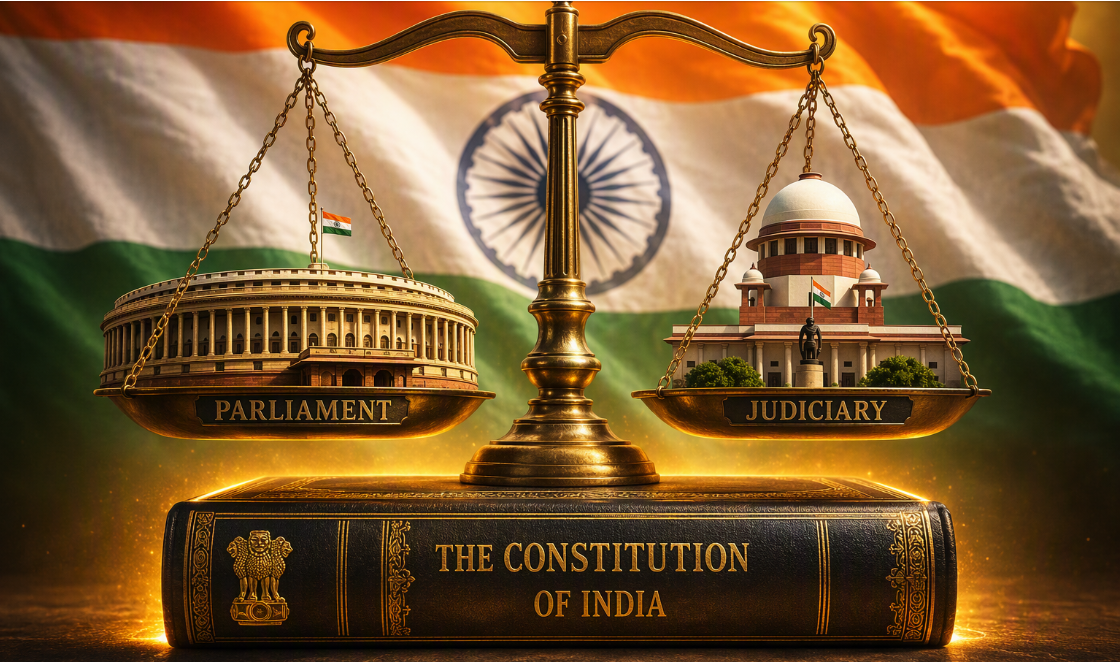
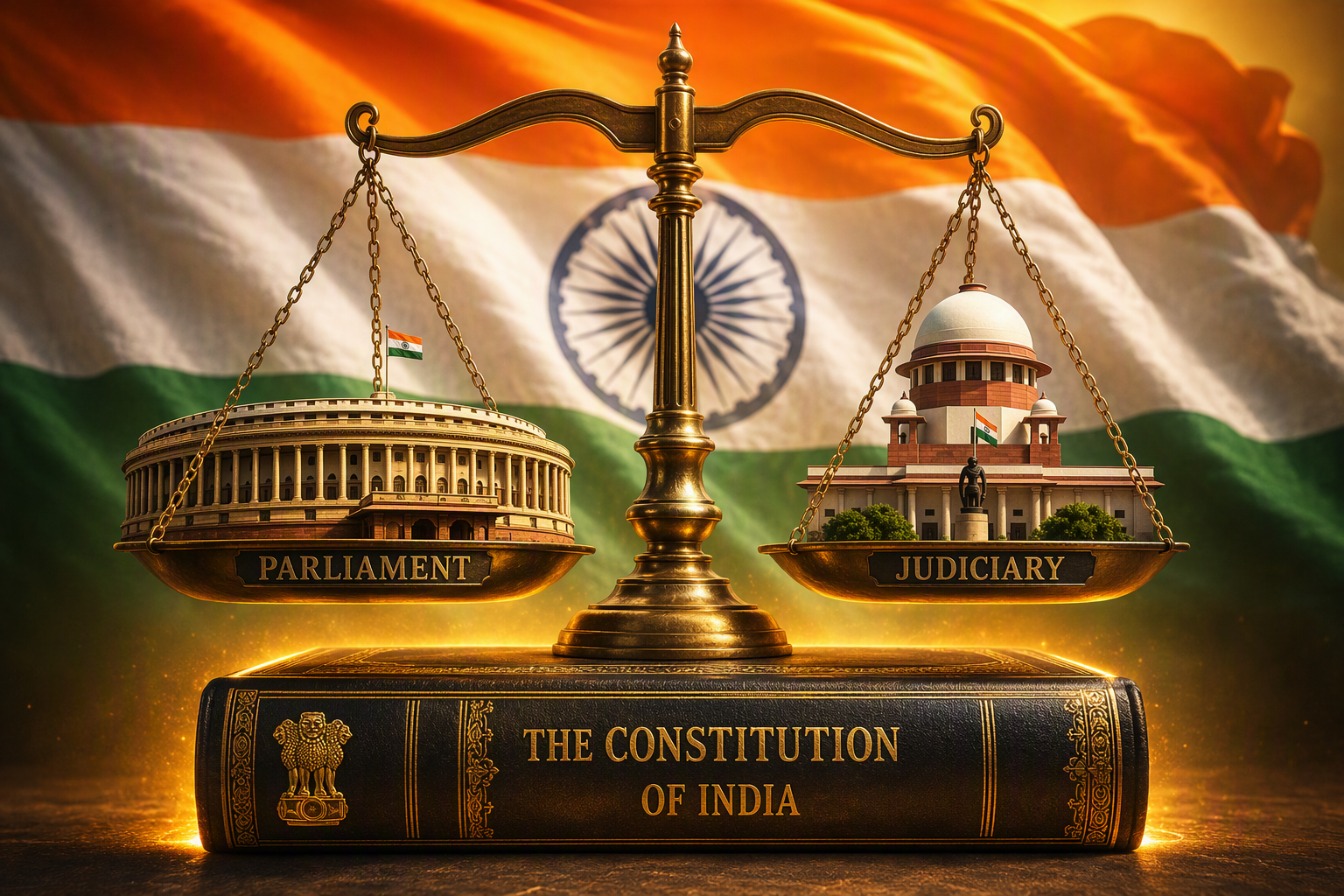
- For UPSC mains, it is important to know how the Parliament and the Supreme Court do their work. This is done through the idea of separation of powers.
- The Lok Sabha has say over the Council of Ministers. The ministers stay to work only if they get support from Lok Sabha.
- The Supreme Court uses judicial review. It checks if laws follow constitutional provisions and fundamental rights.
- India does not have full parliamentary sovereignty. The courts can undo laws that do not match the Constitution.
- The Constitution keeps a balance. It puts checks, limits, and states what work each group should do.
- The Kesavananda Bharati case helps the people see why separation of powers and judicial review matter when writing answers about polity.
Table of Contents
Introduction
For upsc mains, it is good to write in a clear way when you talk about Parliament and the judiciary. You did not need to remember long definitions. In India, Parliament and the judiciary both do their own tasks, but they often work with each other. Parliament makes the laws. Parliament also checks if the executive is doing its work. The judiciary shows what the laws mean and keeps the Constitution safe. You need to know how these two can check each other and hold their power. Do not just talk about them always staying apart. The real point is about balance and how they work together. This balance is what most questions on polity in upsc mains are really about.
Key Concepts of Parliament and Judiciary for UPSC
The Constitution of India gives Parliament the power to make laws. But, this power has limits. Parliament must follow the rules in the Constitution of India. That is why judicial independence is so important. Courts look to see if laws or actions go against fundamental rights or change the basic structure.
For UPSC mains, you must keep this balance clear in your mind. Parliament keeps a watch on the government since it is answerable to the Lok Sabha. Members ask questions, raise motions, and control spending. But parliament does not fully control the courts. It can respond by passing laws and making a constitutional amendment. However, this must stay within the basic structure rule.
Understanding the Structure of Indian Parliament
India has a parliamentary form of government. In this system, Parliament is very important because it makes laws and makes sure the government listens to the people. There are two houses in Parliament. These are the Lok Sabha and the Rajya Sabha. Both houses use their legislative powers to make laws and talk about what is best for the country.
The Lok Sabha is key because the government must answer to it. If it does not have the backing of most members of parliament, it might lose its power. This shows that members of parliament do more than just make laws. They must check that the council of ministers still has trust from the house.
The doctrine of separation of powers has an effect on Parliament. This means there are some things that Parliament cannot do. For example, Parliament cannot do what the courts do. Parliament’s job is to make laws and watch over things. The courts say what the law means, and the executive puts the law into practice. In India, these jobs are kept separate, but they do not stand alone from each other. The idea of separation of powers shows this clear system.
Overview of the Indian Judiciary System
The judiciary in India includes the Supreme Court of India, several high courts, and many courts that work under them. The main role of these courts is to read the law, settle problems between people, and give justice for all. The Supreme Court of India is known as the guardian of the constitution. It makes sure that the limits in the constitution are kept safe and that everyone follows the law.
The Supreme Court is at the highest point in the country. The Chief Justice is the head in the court. A big thing the court can do is called judicial review. This lets the court stop any laws or actions that do not follow the constitution. The court uses this when laws or actions go against Fundamental Rights. Also, it uses this when anything breaks other rules in the constitution.
Parliament does not have the power to stop a court’s decision just like that. But it can create new laws or pass a constitutional amendment. Even when doing this, Parliament has to respect judicial independence and follow the basic structure. Right now, there is much talk about judicial activism, which means this issue is still important and active.
Importance of Separation of Powers in India
Separation of powers helps stop all the power from being in one spot. When the organs of government each do their main job, the rule of law gets stronger. This helps people be safe from unfair acts.
In India, this rule is not followed as strictly. Instead, it goes with a doctrine of checks. The Parliament makes the laws. The executive works to put these laws into practice. The courts say what these laws mean. The basic structure doctrine helps to keep this balance strong. It stops changes that might harm the main parts of the Constitution. Now, it is important to look at how this idea started in the Constitution in a careful way.
Constitutional Basis and Relevance
The Indian system does not talk about separation of powers in just one article. But, you will find several constitutional provisions that show it. India has a written constitution. It gives clear powers and duties to different parts of government. This helps keep the rule of law in place.
The constituent assembly made choices without set rules. There were two main reasons for this. The Constitution was already written by then. Also, India chose the parliamentary model. So, people in the country felt that dividing power in the American way would not fit this system.
Even now, this idea is still important in practice. Article 50 says the judiciary should be apart from the executive. Articles 121 and 211 say people cannot speak about how judges act, unless there is impeachment. The courts see this setup as a part of the basic structure. This keeps a balance between the different parts.
Doctrine of Separation of Powers Explained
The doctrine of separation of powers stops abuse of power. This idea is simple to get. If one group or person gets all the power, there is no safety for freedom. So, the organs of government have to work in their own areas. Sometimes, there can be a bit of overlap. But each should do its main job. The doctrine of separation of powers is important because it helps keep us safe.
In India, the idea is meant to keep everything running smoothly. It is not about full separation. Each group has its own main job. There is also a system set up so they can watch over each other. This brings down the concentration of power. It helps the way democracy works in the country.
Key features of the doctrine include:
- Each organ in the system has to do its own job.
- One organ should not take over another.
- A main job should not be done by a different branch so easily.
- The key goal is to stop random control and keep people’s freedom safe.
Role of Parliament in Checks and Balances
Parliament has a big role in making sure things stay fair. It does this by making laws and watching over politics. Its legislative authority lets it make new rules, speak on policies, and ask the government to say why it did something.
Indian parliamentary sovereignty is known, but it is not as complete as in Britain. Parliament can do many things, but it has to follow the constitution and listen to what judges say in courts. For those who lead the government, parliament uses trust votes, checks by committees, asking questions, motions, and money checks. These tools make the government work well and let us see how leaders answer for their actions each day.
Legislative Control Over Executive Action
In the parliamentary form of government, leaders come from lawmakers. They have to answer to them. In the Union of India, this is important. The Council of Ministers can stay in power only if most people in the Lok Sabha support them.
That is why legislative authority is about more than just making laws. A parliament also checks how the rules are used. A confidence motion, or losing confidence, can decide if there is a government or not. This keeps executive accountability quick and important in politics, and not just in court.
Parliament cannot choose what the courts decide. The lawmakers can answer by making new laws or changing old laws that the courts use. Still, they must stay within the rules given by the constitution. Parliament can watch the work of the executive more closely, but it does not hold as much power over the courts.
Committee System and Executive Accountability
Parliamentary committees are important in how things run. They look at what the government does in detail, more than what happens in the main hall. These committees help keep the executive responsible for its actions. They read papers, check spending, and see how tasks are done. This helps Parliament to watch over what the government does, even if it is not as open or loud.
One big example is the public accounts committee. This group looks at how public money gets used. It helps the Parliament see if leaders do things that match with money choices that have been okayed. When these committees do this, they make the legislative powers stronger. They do more than just talk on the floor.
Their role can be understood through a few points:
- They keep a close eye on what the executives say and do.
- They help with money and look at how things be run.
- They help Parliament know if the plans they said yes to were done right.
- They make sure people answer for what they do at all times, not just in big meetings.
Parliament’s Mechanisms to Control the Executive
Parliament looks after the executive in more ways than big votes. There are also regular steps. One main step is question hour. In this hour, ministers need to answer for their actions. They tell the House why things may take time and talk about the government’s plans. This helps everyone in the House know what the government is doing. It gives members a chance to ask about things and talk if they feel something should be said.
Parliamentary motions are used to make sure government actions are checked. They can show if there is support, if people do not agree, or if trust is gone. Directive principles of state policy cannot be forced in court, but they still guide how laws are made and shape what people think. In India, parliamentary sovereignty works inside the rules written in the constitution. All of these tools make things more balanced and clear.
Question Hour and Various Parliamentary Motions
Question hour is a good way for the government to be open. At this time, members of parliament ask questions to ministers. They ask about the work the government does, the rules, and what people feel is important. This makes leaders tell everyone what they do. It also helps to stop any hidden mistakes or wrong actions.
Parliamentary motions help the House say if it is for, against, or does not support something. A confidence motion is very important in the Lok Sabha. It shows if most members still back the government.
These devices matter because they:
- ask ministers for clear answers,
- point out when policies do not work and show if there is abuse of power,
- let people give planned criticism by using motions in parliament,
- check if there is enough support in parliament by using a confidence motion,
- make sure the executive stays accountable in politics every day.
Parliamentary Oversight in Budget and Financial Control
Money is a key tool for Parliament. The executive needs to ask Parliament before it can tax people or spend money. This happens with the budget process. Parliament gets real control over money choices. Spending is not only up to the executive. Parliament has a say in what is done with money.
In practice, the government must ask Parliament before it spends public money. A debate happens about grants, money that will be given, and what is key for policy. This lets members see if the spending fits the law and what the public needs. The Public Accounts Committee checks the spending after the money is used, too.
| Area | How Parliament Controls the Executive |
|---|---|
| Budget presentation | The executive places financial proposals before Parliament for approval |
| Debate and voting | Members examine spending demands and question priorities |
| Financial control | Public money can be spent only through authorized procedures |
| Public Accounts Committee | Reviews whether approved funds were used properly and lawfully |
Interaction Between Parliament and Judiciary
Parliament and the courts both help make and use laws. They also follow what the Constitution says should be allowed. The Supreme Court can use judicial review. This means it can check laws from Parliament. So, Parliament does not always get the final word if a law goes against the Constitution or against Fundamental Rights.
Parliament still has power. It can make a constitutional amendment or bring a new law to change how a ruling works. But it must not touch judicial independence or the basic structure. This relationship is tense. There is some restraint. A constitutional dialogue goes on between them.
Judicial Review of Parliamentary Laws
Judicial review is a way for the Supreme Court to see if laws made by parliament fit with the Constitution. If a law is not in line with fundamental rights or goes against what the Constitution says, the court can take away the law. This power helps keep the rule of law strong.
A huge shift came with Kesavananda Bharati. The court said that Parliament can add or change things. But it can’t get rid of everything. The basic structure has to stay. The basic structure doctrine helps keep the main parts safe. It stops the constitution from being broken down.
Parliament is not able to simply ignore what the courts have decided. It cannot say a court’s ruling does not matter. It also cannot overrule courts in that way. But Parliament can make new laws or change the Constitution as long as it follows the rules. Judicial review helps keep Parliament strong. At the same time, it makes sure Parliament does not have all the power.
Parliament’s Role in Reviewing Judicial Actions
Parliament does not be a bigger court that can check what other courts do. This is good to know. The courts have the job of judicial review. Judicial independence helps to keep court decisions free from everyday politics and outside meddling.
Parliament can reply by following what the constitution allows. If the court finds a law not valid, parliament can make a new law. It can also use a constitutional amendment to change the reason the court gave, but it must stay within the constitutional provisions. Parliament cannot simply ignore what the court says.
There is a main concern with judicial activism. Sometimes Parliament is not happy when the courts look like they are making policy. The constitution says Parliament cannot go and cancel court decisions just like that. Parliament can bring in new laws to fix what needs to be fixed. But they must stay within given limits. This lets Parliament keep an eye on what the courts do, but it also protects judicial independence.
How the Constitution Maintains Balance Among Three Organs
The constitution of india lets the organs of government have their own jobs. The division of powers makes every organ work well on its own. Still, it ties them together, so they must answer for what they do. This keeps things fair and stops any group from having all the power. The constitution of india sets a balance between all the organs of government.
The rule of law is what this setup is all about. Parliament makes the laws. The executive makes sure these laws are followed. Courts check that these actions follow the laws and are right. The basic structure keeps the system safe. It stops big changes that could hurt it. When you look at how each part keeps an eye on the others, you can see how it works.
Checks and Balances Among Parliament, Executive, and Judiciary
India’s constitutional system uses checks and balances. The organs of government each do their own work. At the same time, they watch over each other. This help power go to more people. This also stops one person from making choices alone.
Parliament makes the executive answer to it by asking for support in the Lok Sabha. The government has to be backed there to not lose power. People can ask questions, bring up motions, debate, and agree on the budget. All of these let the executive tell what they do. In our country, parliamentary sovereignty happens in a limited way. It does not mean full power without any borders.
The courts use judicial review to keep a check on power. Judicial independence is safe, so judges make their own choices. Parliament makes the laws for the country. The executive handles the country’s day-to-day work. Both must stay inside the constitutional limits. The mix of all these parts working together makes the Indian model strong.
Landmark Constitutional Provisions Shaping Interactions
Some rules in the Indian Constitution and decisions from the courts show how the Parliament and the courts work together. These rules make it clear that India does not have a complete divide between the two groups. But, India makes sure to protect the limits that are given by the Constitution in a strong way.
The connection between Parliament and the court became more clear after some big steps. In the Kesavananda Bharati v State of Kerala case, the court said that Parliament can change the law, but there is a limit. The court brought in the basic structure idea for this. When the Indira Gandhi case came up, the court said that Parliament can not act like a court or decide a special fight by itself.
Important shaping points include:
- Article 50 says there needs to be a clear wall between what judges do and what the government does.
- Articles 121 and 211 say people cannot talk about the work judges do, unless they are talking about taking them out of their job.
- The kesavananda bharati v state of kerala case showed that there are limits to what you can change in the constitution using a constitutional amendment.
- The indira gandhi v raj narain case proved the work of judges must stay with them. Lawmakers should not take over their work.
Conclusion
To sum up, it is good to know how the Parliament and the Judiciary work together, mostly if you are getting ready for the UPSC exams. The separation of powers, checks and balances, and how to keep people in power responsible are key parts that help India’s democracy. When they learn these ideas, people build up their knowledge and get ready to face exam questions about them. Remember, knowing more about these topics can make you feel sure and help you do well in the test. If you want to learn more or have any doubts, feel free to ask for a free consultation.
How does Parliament check the powers of the executive and judiciary in India?
Parliament watches the executive. It asks questions. It uses motions. It checks the budget. It also makes sure the lok sabha has most of the seats. Parliament does not help the judiciary as much. According to constitutional provisions, Parliament cannot change judgments by itself. But it can make new laws or change them, as long as it follows the rules in these constitutional provisions.
Can Parliament limit or review the judiciary’s decisions in the Indian system?
Parliament is not the same as a court. It cannot reverse what the courts decide. The courts use judicial review to look at laws and acts. But Parliament can change the law behind a court’s ruling. This can be done by passing a constitutional amendment or making a new law. Still, it cannot break the basic structure doctrine.
What role do parliamentary committees play in ensuring accountability?
Parliamentary committees help make sure there is more executive accountability. They check how money is spent, how things are managed, and how rules are followed. This helps Parliament use its legislative authority in a good way. The Public Accounts Committee looks closely at how public money was used after Parliament gave approval. Parliamentary committees like the Public Accounts Committee make sure money is used well and rules are not broken.