Key Highlights
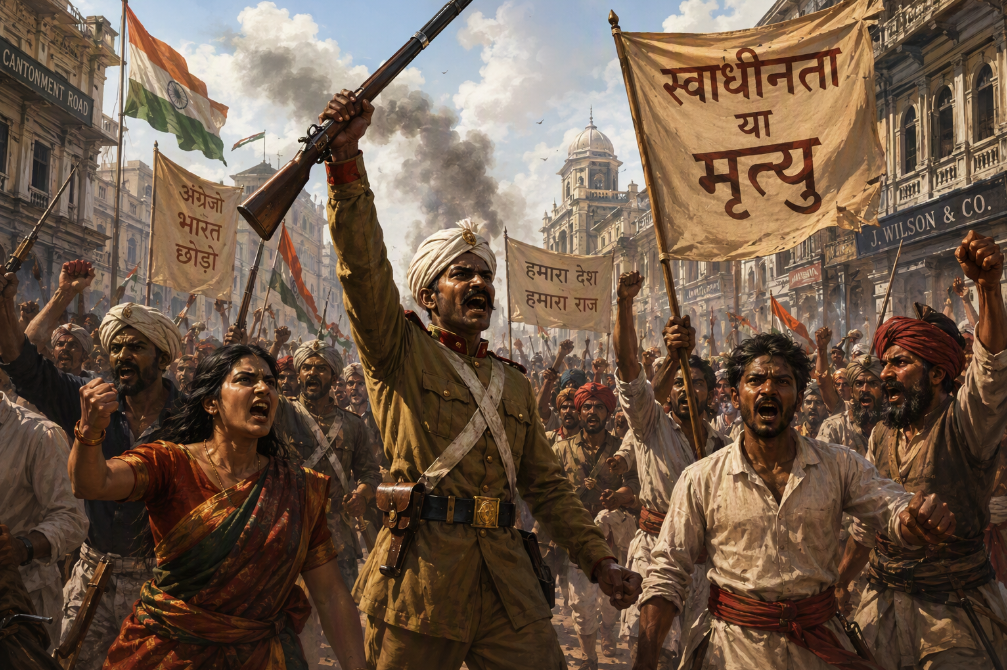
- Indian independence came after many years of people standing up to british rule and not being able to share power with the british.
- The partition of bengal and the making of separate electorates made political and communal divisions grow much more early in the process.
- World war ii changed the british’ goals, and demands from many political groups got stronger.
- The indian national congress wanted freedom, while the muslim league asked for a separate pakistan.
- The lahore resolution, the failure of the cabinet mission, and direct action day all made the partition move faster.
- There was a lot of communal violence, a huge movement of people, and choices were made in a hurry. The year 1947 became a sad and major time for all.
Table of Contents
Introduction
India saw many big changes during the time of independence and partition. This was a hard time for the people who wanted to build a new nation. There were many things that made it tough, like the effects of colonial rule and strong political movements. The Indian National Congress and the Muslim League played major roles in this period. Each group had its own way of thinking about how the country should move forward. People from different groups lived together, but life became tense during this time. Rising nationalism and communal tensions also helped lead to the splitting up of the country. For anyone getting ready for the UPSC, it is important to know about these points. This will help people understand the hopes and struggles from the Indian freedom struggle.
Colonial India on the Eve of Independence
Right before India got its freedom, the country saw many big social and political changes. People from different groups started to come together. They wanted to fight as one against british rule. The Indian National Congress and the muslim league became the main political groups. The muslim league and the Indian National Congress had many problems to handle. There were a lot of communal tensions that both groups had to deal with, and everyone wanted to be heard about how things should go.
The British used a divide and rule policy. This made different groups feel even further apart. At that time, the economy was bad for most people. A lot of people lived in poverty because of british rule and the way the country was run. When India was getting closer to being free, nobody knew what would happen next. People worried a lot about the unity of all the different groups in the country.
Socio-Political Structure Before 1947
The time in India before 1947 was full of changes and new ideas. There was strong British rule in the country. Political parties, like the Indian National Congress and the Muslim League, tried hard to support people from many groups. The wish for dominion status became loud as many wanted to have self-rule.
But, at this time, there were also bigger issues with the different religious communities. The reason was things like separate electorates. This made the gap between groups even bigger and increased communal tensions. A lot of groups and places wanted more power for themselves and tried to get it.
People’s demand for independence became very strong. All these events started to shape Indian history in a new way. The people wanted unity, and they wanted to rule themselves without British rule.
Economic Landscape Under British Rule
During the time of economic exploitation in India, many important changes took place. There was a period when most things worked a certain way. First, there was a self-sufficient economy. This later changed. People started to work under the british empire.
The British made new rules for farming. They set up how crops would be sold and grown. Food became less easy to get for some people, as shortages happened. A lot of families began to live in poverty. Some people left their villages. Others stayed and tried to keep going with the work they knew.
Some towns built new roads and railways. A few towns even added new buildings and started to use telegraphs. Still, the main reason for all these changes was to make life better for those in charge, not those doing the work.
Resources were sent out of India. This made the people in power feel good, but most local people did not feel the same. Fewer jobs were made. There was not much new work around. A lot of people became unhappy with this way of life.
Factory work, business jobs, and farming did not grow. Instead, only those in charge saw any real gains. This is why many people later wanted India to have its own independence and why people talked about ending british rule. This is what we mean by the indian independence movement under the british empire.
Communal Relations Before Partition
There was tension between the religious communities in India before the partition. Hindus and Muslims lived in the same area. They shared some things in their culture. The British brought in a “divide and rule” plan. This made the gap between these groups get bigger. When the muslim league started to get more support, people felt even more apart. This was when the call for a new country began.
The Lahore Resolution was very important in this time. It showed that each community wanted something different. A lot of leaders talked about the role of religion in life, trying to win people over. This made things harder for everyone.
The way these religious communities moved away from each other before the partition made it clear there needed to be peace and understanding. The story from pre-partition India reminds us how we need to bring people together and not let differences become too big, especially when things feel hard.
Rise of Nationalist Movements
In the early 20th century, the way people saw politics in India began to shift. Leaders from the Indian National Congress, the Muslim League, and other political parties worked to bring people together for freedom from British rule. These leaders set up protests and events. They called on the people to not follow unfair laws. The voice of many religious communities joined as one. A lot of people took part in the Quit India Movement and other big events. This showed how much the people wanted to have their own country. What they did was more than just fighting against the colonizers. It also helped lead to the split of India and Pakistan and made a lasting mark on these two countries.
Early Factors Shaping Independence
Many things stand out from the early days of the fight for independence in India. The Indian National Congress became a strong group. It helped bring people together against british rule. At the same time, people started to feel closer to their own group. This feeling led to the start of the muslim league. The muslim league helped give a voice to muslims in the country’s politics. The british used a divide-and-rule way to make these groups feel more apart from each other. Mahatma gandhi brought fresh protest ideas. His actions helped many groups join together to fight for freedom. The role of political parties and these strong movements made the way for India’s independence. These things also show just how complicated that time was.
Role of INC (Indian National Congress)
The Indian National Congress (INC) played a big role in ending british rule. The INC turned into a main group in politics. It brought together people from many areas to fight for self-rule and freedom. Leaders like mahatma gandhi and jawaharlal nehru guided the INC during that time. They led important steps, and one of them was the Quit India Movement. This made people from all over british india take part. What they did helped people feel close to one another. It gave hope and also strength during hard times. The INC helped everyone feel like one group that could push for change. It set a strong base for india, which shaped the way the country grew after it became free.
Evolution of Communalism
The rise of communalism in India before independence made big changes in the social and political life of the country. During british rule, people became more aware of their group or community. Political parties like the muslim league and indian national congress started to get more support by focusing on religion. When the lahore resolution happened, it made the gap between different groups wider. This idea led many to feel that there could be distinct nations.
The british government used their divide-and-rule plan to make these communal tensions even worse. As people fought for freedom, these problems became a major part of the country’s story. With time, communalism changed many things and played a big role in what happened next, ending with partition.
Emergence of Muslim League
The muslim league had a big part in the way to India’s independence. The muslim league started in 1906 in British India. It was made to speak for Muslims who felt they did not get enough say in the Indian National Congress. Leaders like Muhammad Ali Jinnah talked for a new path. He wanted separate seats so muslim voices could be clear.
As the trouble between groups grew, the muslim league changed. At first, it wanted change, but later it wanted a new country for Muslims. This shift came together in the Lahore Resolution in 1940. The muslim league’s dream for Pakistan got stronger after this. It all happened during tough years after colonial rule, with many ideas and views being shared.
British Divide and Rule Policy
The British had a way of ruling by divide and rule. They did this to keep their control over India. British officials brought in things like separate electorates. That means one group would vote for their own group. This made people feel even more different from each other.
This change made communal tensions in India much stronger than before. Because of divide and rule, people did not feel close to each other. The policy also helped political fights grow. It stopped people from coming together to stand against colonial rule.
Because of all this, the muslim league and other groups became stronger. The muslim league started to ask for a separate pakistan. Over time, this split people in the country even more. In the end, this policy made people feel less as one. It led to partition and changed life in south asia for many years.
Gandhi’s Influence on Mass Movements
Gandhi changed the path of indian independence in a big way. He showed people that it was possible to fight against british rule without using violence. Because of him, many came together and joined the movement. In 1930, the Salt March was a large event for civil disobedience. It brought many groups together and showed that when people join hands, they can do good things.
He wanted people to live in peace and stand up for what is right. Gandhi gave new hope to the indian national congress and many people in the public. His way of leading gave hope to people from all religious communities. People began to feel proud of the country, which helped a lot in the fight for freedom.
Key Personalities in India’s Independence and Partition
Many important people had a big role in India’s fight for freedom and what came after. Mahatma Gandhi stood for non-violence and became a well-known leader in the movement. He got many different groups to work together for independence. Jawaharlal Nehru wanted the country to not be about religion. He played a big part in the Indian National Congress and helped shape how the country would run later.
Muhammad Ali Jinnah wanted there to be a separate Pakistan. This brought a lot of talk and debate among the political leaders of that time. Sardar Vallabhbhai Patel helped to bring the princely states together as one country. Lord Mountbatten, who led British India, played a key part in moving the country out of british rule and towards freedom.
All these people—from Mahatma Gandhi and Jawaharlal Nehru to Muhammad Ali Jinnah, Sardar Vallabhbhai Patel, and Lord Mountbatten—had a special role in the story of India’s independence and partition.
Mahatma Gandhi’s Leadership
Mahatma Gandhi was the main leader of the Indian independence movement. He is well known for using peace, not violence, in his fight. Gandhi used his peaceful ways to help many people in India say no to the British colonial rule. He also had a gift for bringing together different religious communities. This was a big reason why the people could rise above the communal tensions that often came up between groups.
Gandhi led big actions, like the Salt March and the Quit India Movement. These steps made many get up and support the fight for Indian independence. People from every part of Indian society came together. The work he did changed India in a big way, and it still helps other rights movements around the globe today. Gandhi has shown the world that staying peaceful can help people stand strong against wrongs.
Jawaharlal Nehru’s Vision
Jawaharlal Nehru wanted India to be modern. He wanted the country to grow and for people to be together, even though they are different in many ways. He thought it was important for the people to have power and for the country to be free. He worked hard to bring big changes for every community during british rule. Nehru wanted everyone to feel that they belong, no matter their religion. He focused on secularism, to help people feel together.
Nehru worked in the indian national congress because he wanted everyone to understand why being one country mattered. He wanted people to know why being free from outside control was so important. After world war ii, he wanted India to be free and to do well in the world. He hoped other countries would also know and respect India.
Muhammad Ali Jinnah’s Demands
The idea to build a separate state for Muslims in British India mostly came from Muhammad Ali Jinnah. He led the muslim league in this big move. Jinnah wanted the Muslims to have their own rights and a voice in the government. He saw Muslims not as a small group, but as many people in India who should look after their own matters. His thoughts became very well-known after the lahore resolution. This made more people talk about a separate state called Pakistan.
As fights between groups got worse under british rule, more people started to support Jinnah. He stood out as the main leader for the muslim league. He was a big part in the dream for freedom and a new future for Muslims in British India.
Sardar Vallabhbhai Patel’s Role
Sardar Vallabhbhai Patel is called the Iron Man of India. He had a big role in shaping the country after it got free from british rule. He worked hard to bring over 500 princely states together to make the indian union. This helped India stay as one country.
He was one of the top leaders in the indian national congress, and he stood up for all of them to fight against british rule. He worked very closely with mahatma gandhi and jawaharlal nehru.
When communal tensions were high during the time of partition, his way of thinking helped people during those tough years. He was there when India became free and started its new journey. His ideas helped the nation stay together.
Lord Mountbatten as the Last Viceroy
Lord Mountbatten was an important leader when India was about to be free. He was the last Viceroy of British India. After World War II, the call for freedom became strong, and he had to handle this change. His job was to help with the transfer of power from the British to the people in India.
He made the Mountbatten Plan to help fix problems between the Indian National Congress and the Muslim League. But there were still many issues at this time. Communal riots happened, and both the Muslim League and the Indian National Congress made strong demands.
Even with these problems, Lord Mountbatten played a big part in this time. Because of his work, the history of South Asia changed, and two new countries were made.
The Road to Partition: Timeline of Events
Many big events helped shape the road to the partition of British India. The story starts with the Lahore Resolution in 1940. At that event, people first asked for a separate Pakistan. After this, the Cripps Mission happened in 1942 during World War II. It tried to get support from India, but many felt let down.
Later in 1942, the Quit India Movement began. This movement made a lot of people stand against British rule. In 1946, the Cabinet Mission Plan tried to make a new way for India to govern itself. But the leaders did not agree with each other. That summer, Direct Action Day happened in August. This caused a lot of communal violence. People saw then how deep their problems really were. All these events led up to the partition of British India in 1947.
Demand for Pakistan and Lahore Resolution
The Lahore Resolution was passed in March 1940. This was a big time for asking about a separate Pakistan. The Resolution showed that Muslims in British India wanted their own country. The Lahore Resolution helped people talk more about the rights of the Muslim group. It spoke about the need for different nations. This made it easier for the Muslim League to work with the British government and other political parties.
Muhammad Ali Jinnah and the Muslim League used the Lahore Resolution to ask for a separate Pakistan. They did this because there was more tension between groups and new rules from the British government. This event made a big change in the Indian independence movement. It showed how important the Lahore Resolution and the Muslim League were for what would come next in British India.
Cripps Mission and Its Impact
The Cripps Mission started in early 1942. The goal was to get help from India for the British war during world war ii. Sir Stafford Cripps made a plan. He offered dominion status and more control for british india. A lot of people thought this plan would let Indians have more say over how things worked.
But the plan did not give the indian national congress and the muslim league what they wanted. This made many people unhappy. Because of this, people in India started to feel proud of their own country. The mission even made the Quit India Movement stronger in 1942.
At the end, the Cripps Mission showed that the people of india really wanted to be free. A big gap started to grow between what the british and the indians wanted. The call for being free got even louder after world war ii. Both the indian national congress and the muslim league made it clear that they would not just sit and wait for things to change.
Quit India Movement
The Quit India Movement was a big moment in the Indian freedom struggle. It made people take strong action against british rule. The indian national congress started this movement in August 1942. They wanted the british to leave as soon as possible. The leaders gave the message “Do or Die” to get more people to help. They tried to bring together all religious communities for the same cause.
The british rule answered in a tough way. A lot of people were put in jail. Leaders like mahatma gandhi and jawaharlal nehru were taken by the police. Even with all the violence and fear, this movement made the people of India feel brave and more active. It helped start talks that gave India its freedom in 1947.
Cabinet Mission Plan
The Cabinet Mission Plan came in 1946 to help fix problems with running British India. The mission plan gave a way for the British to move power to the people while keeping India together as one country. It said there should be a federal system, where the provinces could make their own choices. This idea tried to let all the main political parties, like the Indian National Congress and the Muslim League, work together.
But there were big fights. People did not agree on who should speak for the people and if there should be separate electorates. This made things more tense. The Muslim League wanted a separate Pakistan. This made it even harder to get everyone to say yes to the plan. In the end, these things helped lead to the split of the country. The cabinet mission plan showed that it was hard for everyone to find a way to move forward with India’s future.
Direct Action Day and Aftermath
Direct Action Day was started by the muslim league on August 16, 1946. This was a big time before the split of India. The main goal was to make people back the idea for a separate pakistan. But, things did not turn out the way they hoped. The call for direct action led to fights and trouble between groups in british india.
After that, people who used to live side by side began to feel hate for one another. They did not live together any more. The call from the muslim league caused pain for many. These fights pointed to the hard times that would follow in indian society. This day showed that there was not much trust left in religious communities. It is also clear that balance between people of different faiths in british india was weak before independence.
Major Causes Behind Partition
Many things led up to the partition of India. At first, there were big fights for power between the new political parties. There was also a lot of anger and trouble between the Hindu and Muslim groups. The british government made these problems even bigger. They did this by trying to split people up, and this is called “divide and rule.”
The british government did not help the groups come together. They also made rules for separate electorates. This just made the groups feel even more apart from each other.
In the 1946 provincial elections, the problems got worse. The Hindu and Muslim groups could no longer stay together. Many people feel that because of high communal tensions and what the british government did, the partition of india seemed like it had to happen after these events.
Political Power Struggles
Fights between political groups in the late colonial era played a big part in how India got its freedom. The Indian National Congress and the Muslim League both worked hard to get more power. Each group wanted the country to be their way.
There were several tries to help the Hindu and Muslim people work together. But these tries often went against the fight for power. This made talks with british officials harder. When the groups fought for control, there was more trouble and distrust. This tension made it feel the only way was to split the country.
If you see these things, you get why India was split in 1947. The fights between the Indian National Congress and the muslim league, and how they spoke and worked with British officials, show how things were not simple during that time.
Religious and Communal Tensions
Religious and communal tensions got much worse in British India before it became free. These problems changed the political scene in a big way. The people who were Hindu and the people who were Muslim had strong differences. Things like separate electorates and the plans of the muslim league often made things worse. Because of this, people felt tense and worried that they would not get fair treatment or that they will be left out.
The Lahore Resolution made these problems feel more real because it asked for a new country for Muslims. When the push for freedom got stronger, the tensions led to many communal riots. All of this ended in 1947 with a big partition, which changed Indian society for all time.
British Administrative Decisions
The big choices made by British officials near the end of their rule had a strong effect on the subcontinent. All these steps, like the idea of separate electorates, made people feel more apart from each other. The new rules helped the Muslim League a lot, and the Muslim League became more powerful in India. This all happened during World War II, a time when British officials wanted to keep holding on to India because things were changing fast and people wanted more rights. These choices by the British changed the country, and also changed the way people thought about each other. Because of this, the subcontinent was set for partition and later the transfer of power.
Provincial Elections of 1946
The provincial elections in 1946 were important for the fight for freedom in British India. These took place at a time when there was a lot of tension between different groups. The Muslim League became strong during this, as they wanted a separate state. A lot of people went out to vote, and you could feel how emotional everyone was about it. The Muslim League won big in places like Punjab and Bengal, which showed how much power they had gained.
Other political parties tried to read these results and understand what could happen next. It became clear that the Indian National Congress was not in full control anymore. These elections made many see that power was shifting, and all sides knew there would be many talks and arguments about the future. The results brought more talks, tough choices, and tension, as every group in British India watched what would happen next.
Breakdown of Hindu-Muslim Unity
During the time before independence, things became very tense in India. There was a lot of political trouble. People saw that unity between Hindus and Muslims was falling apart. For many years, the different religious communities fought together against British rule. But when people began to talk about what the country should look like in the future, this togetherness didn’t last.
The muslim league, led by Muhammad Ali Jinnah, and other political parties started to say that there should be a separate state. This thinking drew new lines between people and created more fights. Later, when separate electorates were put in place, the groups became even more divided. This made things feel even worse.
Now, each group started to follow its own way. This pushed Hindus and Muslims to move apart. In the end, the country found it very hard to come together as one after the British left.
The British Role in Partition
A big part in the partition was the way the british government wanted to move the transfer of power forward fast. Lord mountbatten, who was the last viceroy, came up with the mountbatten plan. He wanted this plan to help finish things quickly. At that time, there were problems and fights going on between religious communities. Because of this, two new countries were made. The boundary commission, led by sir cyril radcliffe, got asked to fix the border between india and the new pakistan. This job led to a lot of communal violence. Many british officials looked more set on doing it fast than thinking about what could come later for south asia. This choice gave way to more troubles, and they lasted for many years.
Mountbatten Plan (June 3 Plan)
The Mountbatten Plan came out on June 3, 1947. It was an important part of Indian independence. The plan was about how British India would be split into two countries—India and Pakistan. This was because the Muslim League said there should be a separate state. Lord Mountbatten, the last Viceroy, worked to make the transfer of power smooth, even though there were growing communal tensions at this time. The plan set important dates for new governments to be made. It started a big change in the region, leading to mass migration and ending colonial rule in British India.
Boundary Commission under Radcliffe
The Boundary Commission had a big job during the partition of British India. Sir Cyril Radcliffe led the group. He had to draw the borders between India and the new Pakistan. This job was tough and very important. Sir Cyril Radcliffe did not know much about the place or the people living there. Because of that, some people liked his work and some did not.
The border they made is called the Radcliffe Line. This line changed a lot for people in the area. A large number of people had to leave their homes because the land was divided. This split led to many problems between different groups. The work by the Boundary Commission did more than just make new land lines. It changed how people feel and act toward each other in South Asia. The Radcliffe Line has caused much trouble and tension between groups. It also changed the history of the whole region.
Transfer of Power Act 1947
The Transfer of Power Act of 1947 was a big point for British India. This act made it possible for India to be free. The law allowed the transfer of power from British officials to Indian leaders. The act helped start the Indian Union so it could be a country by itself.
The muslim league and the Indian National Congress had been asking for this change for some time. The law was a way to give the muslim league and the Indian National Congress what they wanted. A lot of people living under colonial rule had hoped for a change like this.
After the act, South Asia started to see things change in many ways. The area saw new, distinct nations come up. Life for people in the Indian union and also for those living around it was not the same. The transfer of power made things different, and it even changed the way people in South Asia thought about each other.
British Aims and Expediency
The British government was under a lot of pressure after World War II. They had fewer resources and wanted to leave British India soon. This made them feel like they had to hurry and be practical about what they did in those last days. Political parties such as the Muslim League and the Indian National Congress were already not getting along. This made things harder for the British.
The british officials were worried about fights and trouble in the country. To avoid this, they used the Mountbatten Plan to move fast and deal with the transfer of power. They wanted everything to go as well as it could, even if it did not mean there would be peace in the long run. This quick decision made the situation between different groups even worse. It also changed british india’s future. The story of partition was really shaped by how the British responded to problems after world war ii, and by what the muslim league, the indian national congress, and the other political parties did at that time.
Reactions from Global Powers
The world powers showed both support and worry when British India was split. The United States saw that Indian nationalism was getting stronger. The U.S. wanted peace and called for more democracy. The Soviet Union backed the Indian Congress because it hoped communism would spread into a new country. At the same time, some other countries close to British India, like China, watched what happened very closely. They knew that changes in South Asia would also affect their own countries. These different answers from the world show how things shifted after world war and world war ii, as old colonies started to break up.
Mountbatten Plan and Its Implementation
The Mountbatten Plan was very important for breaking up British India. It helped to create new, independent states. The plan showed how the transfer of power from British officials to Indian leaders would happen. It gave a timeline that everyone had to follow.
The Indian National Congress and the Muslim League had strong feelings about the Mountbatten Plan. There was a big split between the two groups, and they did not see things the same way. But both groups had to accept that these changes would take place.
The Radcliffe Line was used to set new borders, and this caused many problems for people who had to manage the work. The whole process was not easy. It needed several steps and many talks between all those involved. Because of the Mountbatten Plan, British India saw big changes. These changes stayed with the people for many years.
Key Provisions of the Plan
The Mountbatten Plan gave several main steps that helped end British rule in British India. One big thing in the plan was to split British India into two new countries: India and Pakistan. The plan said there would be a boundary commission led by Sir Cyril Radcliffe. This group had to draw the border between India and Pakistan. It also said local governments should get power fast. A new group called the constituent assembly would be set up. These steps were made to meet what the Indian National Congress and the Muslim League both wanted. Because of the Mountbatten Plan, the partition of India and Pakistan happened.
Responses in Congress and Muslim League
There were a lot of reactions from both the Indian National Congress and the Muslim League after the Mountbatten Plan was shared. Leaders in the Indian National Congress, like Jawaharlal Nehru, felt some hope. At the same time, they also had big worries about what partition would do to the country and to its unity.
But the Muslim League, led by Muhammad Ali Jinnah, was pleased with the Mountbatten Plan. The muslim league saw it as a way to get a separate Pakistan, which they wanted for a long time. Because of these different views, the gap between the two parties grew wider. Each group wanted to have its own say in how the future of India would look, at a time when communal tensions and old issues were getting stronger.
Finalization of Borders
Trying to decide where the last borders should be during the partition made people feel a lot of worry and talk more about it. The British government picked Sir Cyril Radcliffe to draw the Radcliffe Line. His job was to split British India into two new countries, India and Pakistan. This was not easy, since he had to think about the different religious communities and their money ties with each other. Political leaders wanted to work fast to stop problems, but communal tensions kept getting worse. This brought a lot of trouble and made people upset. In the end, the borders they decided on changed the future for the new independent states in a way that was big and very hard for many.
Princely States Integration Issue
After India got its independence, it was hard to bring all the princely states together. British India had split up into several independent states. There were over 500 princely states at that time. They had to choose if they would join India or Pakistan. This was not an easy thing to do. A lot of people in each place had their own ideas. The political leaders, like Sardar Patel, worked with others to create a united India.
Many rulers did not want to lose their power. So, the Indian Union had to use talks and smart moves. In the end, careful plans and good diplomacy helped bring these princely states into the Indian Union. This changed the political scene of the country and made the government stronger. It also helped make a better system for the new country to work.
Challenges in Administration
The move to independence was very hard for the new leaders in both India and Pakistan. They had to work on big jobs, like bringing the princely states into their countries. A lot of the old rules from the British, like the way they controlled things from the center, did not really match what the new people in every area wanted. This caused many problems for the political parties. Resources and power were not given out in a fair way. Because of this, the government found it tough to do its work. During this time, leaders like Lord Mountbatten faced a lot of strong communal tensions and unrest. They did their best to hold things together in countries that were just divided. They needed new ideas and good choices to handle all these troubles and bring everyone together.
Partition and Its Immediate Execution
The announcement of independence on August 15, 1947, was a big moment for South Asia. This led to a fast creation of West and East Pakistan. The british officials were there to help with this step. After that, the new countries had to split their assets and also move their military forces. That was tough for them. The new borders made things hard for both of them.
People in South Asia felt good about their new freedom, but there was also much pain. A lot of people passed through hard times like communal riots and mass migration. They had to face big changes in their daily life. The way partition happened was not simple. It had a deep effect on the social and political part of the region.
Announcement of Independence Dates
As british rule was ending in India, a big announcement came on August 15, 1947. This was when India got its freedom. It was the end of many years of colonial rule. A new time started for all people in the country. Lord mountbatten, who was the last Viceroy, played a big part in sharing this news. This moment did not just bring a free country. It also started fast and tough changes with the partition. The main event showed that India was ready to take its place in the world. After colonial rule, there would be hope and many new challenges too.
Creation of West and East Pakistan
The split of British India in 1947 made two new independent states. West Pakistan and East Pakistan were born. Today, people call them Pakistan and Bangladesh. The Muslim League worked for a separate state to keep the rights of Muslims safe. Because of this, and as things grew tense, the British government set up the Radcliffe Line. This line made the borders between the countries during a time of strong communal violence. A mass migration started as people crossed these new borders. A lot of people had to leave their homes and move. These changes shaped what people call their identity now. For many, it brought pain. That pain and what happened to their new countries has shaped how South Asia looks today, both in politics and in society.
Division of Assets and Military
The way the assets and military were split between India and Pakistan was a key part of the subcontinent’s story. British officials found it hard to figure out how to give military gear and government assets to both new countries. The army had to be divided, and that led to lots of questions about who belonged in each side. The mix of people in the army showed that there were already problems because of communal tensions. Old deals between the countries also played a part in who got what. This caused more trouble, and both now free countries could not agree. These disagreements shaped their relationship in the early years after they became free.
Changes in Geopolitical Boundaries
The partition of British India in 1947 made a big change to the map of South Asia. The British made two independent states that were called India and Pakistan. A line named the Radcliffe Line was drawn to show the end of one country and the start of the other. This line moved through places like Punjab and Bengal and caused border problems. These problems are still there today. When this new line was made, two different nations came out of it. Many people, political parties, and religious communities had to face this change. The partition gave people new thoughts about their countries. Even now, people talk about who has which place and what unity means for the region.
Official Independence Ceremony
The official independence ceremony was on August 15, 1947. This day was important because it ended the British colonial rule in India. The event was held at the Red Fort in Delhi. A lot of top leaders were there, like Jawaharlal Nehru, who became India’s first Prime Minister. He gave a speech called “Tryst with Destiny.” In this speech, he talked about what the people wanted and how the country worked hard to get here. People all over India felt happy on this day, but there were big problems too. The partition of India made life hard and brought hurt for many people. This was not just a day of freedom. It was also a time of deep changes for South Asia that came with making new countries.
Impact on Population and Society
During the time of independence and partition, there was a mass migration. A lot of people had to leave their homes and move to new countries. This major move left many without a place to stay. Whole families were split, and some communities were pulled apart.
The states of Punjab and Bengal were hit the hardest. A big number of people had to get up and go. This change stayed with them for years. People feel it even now. After that, there were many communal riots. A lot of violence happened between different religious communities. This made people feel even more apart from each other.
These changes did more than just move people. They also changed the way people in indian society think and feel. We can still see the effects when we talk about who we are and how we fit into south asia. The stories from that time shape the way people feel about mass migration and how they live with new people.
Mass Migration and Displacement
The partition of India was a huge event that made many people leave their homes. A lot of families had to move because the borders were now different. People went on long trips to look for safety and feel like they belonged again. Many had to give up their houses and the communities they were from. They lost the cultures they knew well. The pain from the communal violence made things worse for the refugees. This caused big problems for both new countries in South Asia. When people tried to make a new life in a different place, they faced a lot of hard things. These challenges changed how they thought about themselves and their lives in a divided South Asia.
Issues Faced by Refugees
The time of partition was very hard for the refugees. A lot of people had to leave their homes and say goodbye to everything they knew. They did not have enough food. Many of them did not have a safe place to live. There was not much help from doctors or nurses. The problem of communal violence made it all even worse. A lot of people felt scared and did not know what would happen next.
After they left, most of them felt empty inside. They had lost a lot and did not feel like themselves anymore. People tried to get together and make a community just so they could get through each day. But the hard things happening around them made even this feel hard.
Effect on Punjab and Bengal
The partition made life in Punjab and Bengal very different. A lot of people had to leave their houses and move to other places. Punjab was split into two parts, one for India and one for Pakistan. This brought trouble and broke up people who had lived together for a long time. That time was very hard, with much communal violence and unrest.
In Bengal, the split made two areas called East and West. A new border was drawn, which changed how people lived and how they thought about each other. People did not just lose their homes; for many years after, they also struggled with questions about who they are.
Many families had to give up their homes, which hurt the local economies. The pain and suffering from that time did not go away fast. The hurt from the partition stayed with people and shaped how life was in the area for many years.
Social Fabric Disruption
The partition of India changed the borders. This led to big problems in the way people lived with each other. People who had been together for years were suddenly set apart by religion and politics. Because of this, there was a lot of communal violence. Many families lost their homes. Many neighbors did not trust each other anymore. The Indian society that was once colorful and strong broke up into many parts.
After the partition of India, many people had to move away and find new places to live in the new countries. This changed who lived in different areas. It also made people from different groups find it hard to trust each other. These things had a big impact on social life in India. Bringing people together and making trust in Indian society became very hard because of this. Even today, because of the partition of India and by past communal violence, these problems still go on.
Communal Riots and Violence
Communal riots were one of the sad things that happened during the partition time. These riots made things worse after many years of colonial rule. There was a lot of violence, as people from different religious communities fought with each other. A lot of this trouble came from what the british government did and their political plans. Their way to divide people and control the land made things even harder for everyone.
Cities in Punjab and other parts of south asia saw much loss and chaos during those days. Many people got involved in fighting that was pushed by strong feelings for their country and by deep communal tensions. A lot of people had their lives changed forever by the events.
The marks left by these communal riots can still be seen today. The memories from those times show why we need unity and peace. It is very important that all groups in south asia come together so that such problems do not happen again.
Partition’s Effects on Indian States
The partition changed the map of many Indian states in a big way. A lot of people had to move, and there were changes in who had power. Punjab went through a very hard time. Its borders changed, which led to fighting and a lot of communal violence. Many lost their homes and were forced to go somewhere new.
Bengal also saw huge changes. When Bengal was split, the lives of many people were not the same after that. Their culture and daily life changed. A lot of communities could feel these changes.
Sindh and Gujarat changed too. People moved in and out, so the towns and villages there changed as well. A lot of people escaped the violence and moved to Delhi. A large number settled there, which made the city grow fast.
At this time, leaders had to work on getting the princely states into the country. The leaders dealt with new borders and had to think about all the new groups of people now living together. This was hard and there were many problems to solve.
Punjab’s Division and Turmoil
The split of Punjab was a hard time during the partition of British India. When the Radcliffe Line was set, people who had lived together for many years were separated by this line. A lot of communal violence broke out because of this. Many had to leave their homes to feel safe. Refugee camps soon came up to help all those who lost their homes, but these camps were not enough. This problem was big for society. The way politics worked and how people lived together changed a lot in all this. Many lives were changed. Many deep problems started after 1947 and these stayed with Indian society for years.
Bengal’s Demographic Transformation
Bengal saw big changes in its people during the partition. This happened because many moved after that time. A lot of people tried to get away from communal violence and wanted to feel safe in a new place. Many Hindu families left what became East Pakistan. At the same time, many Muslims went the other way. This swap of people changed where people lived in a big way.
There were also problems with money and local politics. This made things even harder for many. Whole groups got split up on both sides of the Radcliffe Line. This move changed life in Bengal at its core. The effects from it can still be seen now, in how people from different faiths feel about each other.
Changes in Sindh and Gujarat
The partition changed Sindh and Gujarat a lot. A big number of people had to move, and life was different after that. In Sindh, many Muslim families lived there. A lot of them felt sad because they had to leave their homes and go to the new country, Pakistan. They lost not just their houses, but also how they used to live.
At the same time, Gujarat saw many new people coming in. This led to more communal tensions. People did not always get along well, and it changed how they worked together.
Many groups started to live together in these areas, and this made things feel new and different. These quick changes also changed the economies of Sindh and Gujarat. They felt like new places with new customs. All these things show how the breaking up of british india led to many big changes for people living there.
Delhi as a Refugee Hub
When partition happened, many people came to Delhi to look for safety and a stable life. A big number of refugees arrived and this changed the city very quickly. A lot of new people made life, work, and money matters in Delhi different overnight. Old parts of the city suddenly had many families who had lost their homes. This made it tough for everyone to find food, houses, and jobs.
So many new people came at once that there was a real need for groups to help out and for everyone to support each other. Even during hard times, people in Delhi often came together and tried to help one another. Their lives showed how big changes, like those in the government and the country, can really affect people each day. This was a major moment in indian history when so many lives were turned around.
Integration of Princely States
The joining of princely states with the Indian Union after the country got its freedom was not simple. At that time, many rulers of princely states did not know if they should come into India or go with Pakistan. This was because there were strong communal tensions, and the political time was also very hard. Sardar Patel worked to speak to these rulers and helped them feel it was good to join India. His talks with them were important, but now and then, he also had to say that the army might step in if needed. This whole process changed the way Indian politics looked. It showed how the country could make so many types of people live together. This step made India stronger for people of every religion. In all of this, the princely states, communal tensions, the Indian Union, and Sardar Patel played a big role.
Aftermath and Long-term Consequences
The partition of India brought big changes that still touch people’s lives today. Hindus and Muslims who stayed together before the split started to face new problems. There was more tension and hard times for all. Trouble with borders, like what happened in Kashmir, kept things hard for both India and Pakistan. This shows that it was not easy to find peace in the area. The partition also made money troubles for both countries as they worked to build something new. A lot of people left their homes and went to other places, and this shaped the way Indian society looks now. The way people now live, mix, and work together changed a lot after the partition of India.
Communal Relations and Minority Rights
Life for groups in pre-partition India was not easy. A shared past and new challenges shaped how people got along. The British government brought in separate electorates. This made rivalries between different religious communities much stronger. Over some years, more people in the muslim league wanted a separate Muslim state. The indian national congress and the muslim league stopped agreeing with each other as much. A big talk was always about rights for minorities. It was important that all groups could live together without trouble after independence. A stable society needed this, even with problems from old times.
Border Issues and Kashmir Conflict
Border issues in Kashmir cause problems between India and Pakistan. Both of these countries say that the land is theirs. This has made things tense for a long time. It started when British India broke up, and the state of Jammu and Kashmir had to decide where to go. There have been several wars. Leaders from both sides have made many moves. British officials have got involved and made things even harder. Because of all these things, the fight between India and Pakistan has not ended. It also leads to more communal tensions. This is a big problem for both countries.
Political Realignment in India and Pakistan
After the split, political parties in India and Pakistan went through big changes. The birth of new, independent states made these parties change the way they acted and start new connections. The Indian National Congress and the Muslim League each faced their own set of new problems. They put in a lot of effort to handle these issues and lead their countries well. During this time, both countries saw new ideas in politics and made their own way of running things. A lot of these changes happened because the groups were feeling stress and worry after the split.
These new ways in politics changed the law and shaped how both nations talked and worked with each other. The results from those days are still seen in life today. The stories and events from that era still play a big part in political life in both India and Pakistan.
Economic Impacts of Partition
The partition of India had big effects on the people and the economies of both India and Pakistan. A lot of industries and farms could not keep working, since trade across the new border stopped quickly. Both sides started arguing about which country would get which resources. This made things hard for everyone and slowed down growth.
There was also a mass migration at this time. Many skilled workers and business owners had to leave their homes and move to another place. It was tough for them to work and start new businesses in new places. A few factories and businesses did end up in Pakistan, but India needed to find new ways to help its economy grow.
Both countries have tried to build up their economies and improve life for their people. But the partition of India and the mass migration still affect India and Pakistan today. These old problems shape what both countries do now and how they try to grow.
Social Integration of Migrants
The social integration of migrants after the partition of India was not easy, but it was very important for the country. Many people from Punjab and Bengal had to leave their homes. They faced a lot of problems as they looked for safety in new places. Local leaders and groups did a lot to bring peace and help these people feel that they belong in their new home.
There were times when people from different religious communities came together. They took part in several group activities. Local programs helped everyone feel welcome and united. The strength and courage of the families and people during the partition of India helped the country build something new. A new, united society grew from this. This has been a big reason for the Indian identity we know today. It is especially true for religious communities that were hurt by the partition of India.
Legacy of Independence and Partition for UPSC Aspirants
It is good for people who want to take the UPSC exam to know the history of independence and partition. This helps us see how modern Indian politics and the constitution started. The things that happened during the partition show how different countries were made in South Asia.
When we read about key people like Mahatma Gandhi and Muhammad Ali Jinnah, we also see the problems faced about group divisions. We get to know why unity matters so much, even when there is a lot of difference between people. These ideas are often in civil services exams. So, people who want to do well in these exams should read and think about this story from the past. Look at the parts about Muhammad Ali, Mahatma Gandhi, Muhammad Ali Jinnah, distinct nations, South Asia, and civil services.
Relevance in Indian Polity and Constitution
Knowing the main ideas of independence and partition helps us see the values in Indian politics and the constitution today. The right for all people to speak up, and for everyone from many groups to take part, comes from what the Indian National Congress did and what the muslim league wanted in the past. When we look back at key events like the lahore resolution, we can see why being open to all, sharing power, and making sure no one is left out matter so much in our constitution.
The old problems of communal tensions and things that happened during british rule also show why it is important to bring different groups together. This history is something people who want to join the civil service must know, as they must be ready to work for a country that has many kinds of people and many ideas.
Partition in Indian Modern History Syllabus
The topic of partition is very important in modern history lessons in India. It helps students see the different reasons that led to the split of British India and brought about two independent states. When you read about this, you will learn about the Lahore Resolution and see how the Muslim League was a big force. The lessons also talk about how communal tensions grew in the country.
Students will get to find out about the Mountbatten Plan as well. When you know what the Mountbatten Plan was at the time, you get a better way to see India’s independence. Looking into old records and learning from many points of view helps build strong thinking skills. This is not just good for anyone who wants to get into civil services, but also for new political leaders who may have to handle the many sides of India’s society.
Important Lessons for Civil Services Exam
Understanding the independence and partition of India is helpful for civil services exam takers. Big events like the Lahore Resolution and the Quit India Movement show that the country needed strong leadership and people had to stay united. These times also teach us that people from many different backgrounds can come together to work on the same goal.
Learning about leaders like Mahatma Gandhi and Muhammad Ali Jinnah lets you see how ideas about nation and group identity can mix or sometimes conflict with each other. This helps you get a clear look at what happened in the past and why it still matters today.
It is also important to see what the British government did during that time, like the Cabinet Mission Plan. By knowing about these actions, you can better understand how India is run now. Studying this history gets you to think hard, and this is a good skill for the civil services.
Historical Analysis and Contemporary Relevance
India’s journey to become free and the way it got divided into different parts is very important to understand society today. These events help us see why there is still trouble and feelings between different groups now, known as communal tensions. When we look at key people and groups like Gandhi, Jinnah, and others, we see they shape what we feel about these issues today. Many people in these religious communities still hold on to their own stories from the past and feel things deeply because of those times. There are still some problems between groups now, but if we look back, we can try to find a way for South Asia to be more peaceful in the future.
It is important for people in civil services to learn from these things. This knowledge can help them bring together different religious communities and work against old trouble. If we understand and remember the past, we can give hope to people and find a new way forward. This can help us and South Asia be better, kinder, and more united.
Documentation, Memory, and Cultural Impact
Looking back at partition shows how much it still touches people’s lives today. Many survivors’ stories help us remember what they faced. These stories show us what life was like during tough times. Books, movies, and art all share different parts of this big event. They let people feel the loss and the bravery shown back then. These tales help us feel and understand what happened during partition. They also help us keep the memories alive. This helps us learn more. By listening to these stories in India now, we learn to respect different people and backgrounds. We see how things that happened in the past help shape who we are today.
Oral Histories of Partition Survivors
I see the text you wanted to rewrite didn’t come through. Please provide the text you want me to rephrase. I’ll make sure to keep the meaning the same and follow all your instructions.
Partition in Literature, Film, and Art
Creative ways of telling stories about partition play a big part in how people think about this time in history. In books, you read about the pain people feel when they move from one place to another and lose their old lives. The stories show how strong people can be, even when things get really hard. Films do this too. They show both the pain and fighting that happened then, but they also show how brave people can be during chaos. Art helps people remember what happened in the past. It turns the hurt into pictures that let people talk about who they are and where they feel they belong. All these creative works keep the memory of partition alive. They also help us understand how partition still touches Indian society and the way people feel about communal violence.
Conclusion
Looking closely at independence and partition, we see that they are part of what made South Asia the way it is now. The hard work and big sacrifices of people like Mahatma Gandhi and Muhammad Ali Jinnah show us that making a country and bringing people together is never easy. Now that we have come to the 75th year since independence, thinking about the events of that time helps us value all the different stories about those years.
For those who want to take the UPSC exam, knowing about these ideas is important. They show us how to be strong, how to work together with people who are not the same as us, and why knowing the past helps us understand how the country works today. The stories of Muhammad Ali Jinnah, Mahatma Gandhi, and others from South Asia help us get a better idea of our world.
Frequently Asked Questions
What were the main causes behind the partition of India in 1947?
The partition of India in 1947 happened because people were fighting for political power. There was also a lot of communal tension at that time. The choices made by the British, what happened during the 1946 elections, and the loss of trust between Hindus and Muslims were also big reasons. All these things came together to make a split in the country that could not be fixed.
How did the partition of India impact society and culture?
The Partition of India brought big changes to people’s lives. A lot of people moved from one place to another. Many of them had to deal with communal violence. This event broke old cultural ties. Groups got split up and many people were forced to live in new places. These memories are still with many people today. The partition of India also changed art, books, and how people live together in India and Pakistan.
Who were the most significant leaders during independence and partition?
Key leaders like Mahatma Gandhi, Jawaharlal Nehru, Muhammad Ali Jinnah, and Sardar Vallabhbhai Patel had big parts in India’s independence and partition. Mahatma Gandhi used non-violent ways in his fight. Jawaharlal Nehru wanted the country to stay together as one. Muhammad Ali Jinnah stood up for Muslims and spoke for their rights. Sardar Vallabhbhai Patel helped join the different states. What they did at that time changed the nation and its future.