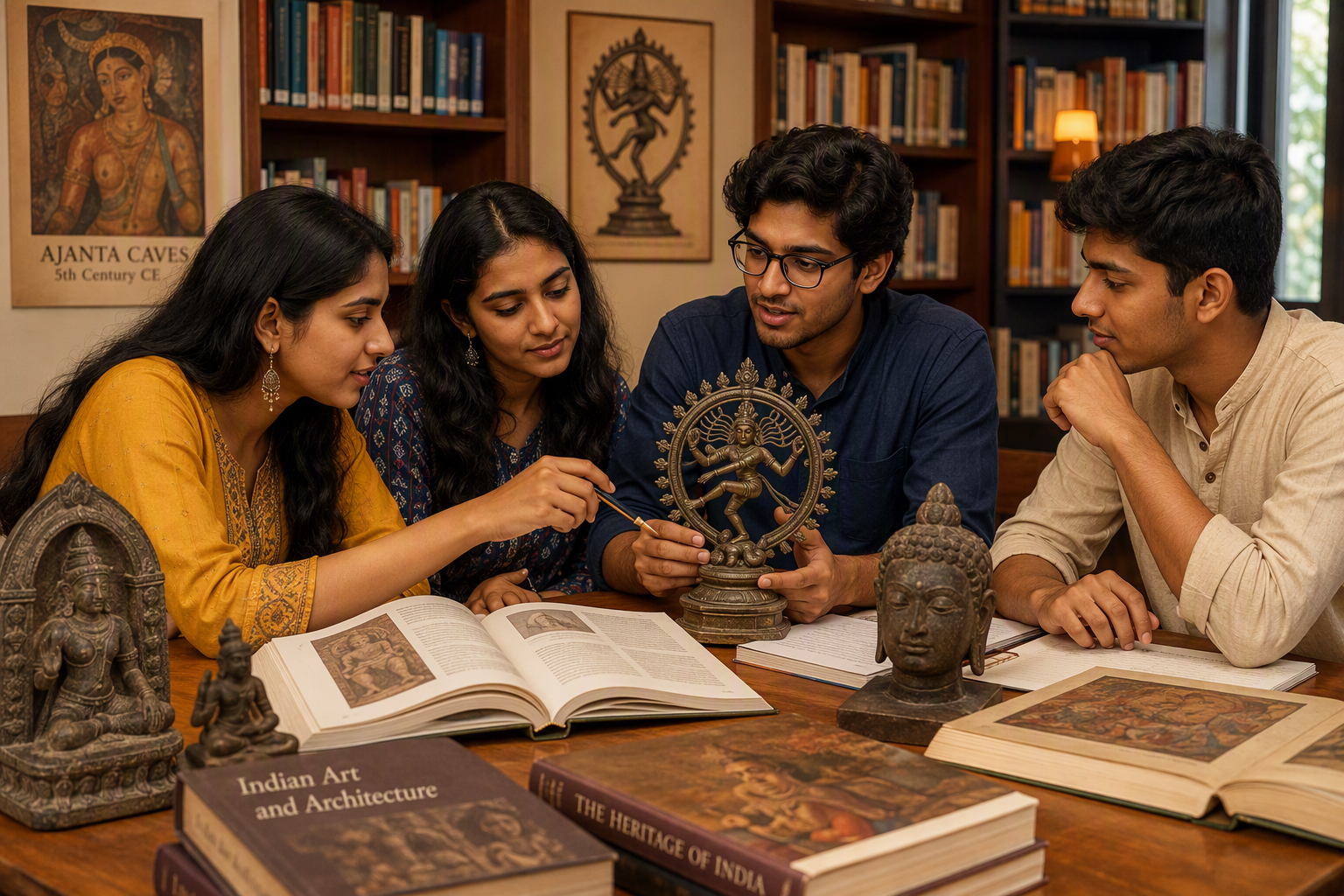
Key Highlights
- Start by going through indian art and indian culture using NCERTs. After that, make short notes on each topic for fast revision.
- Pay attention to areas that the upsc prelims and upsc mains often ask about. These include parts like architecture, painting, music, and dance.
- Study temple architecture, classical dances, folk traditions, UNESCO and world heritage sites first.
- Use books and sources like Nitin Singhania, CCRT, NIOS, and PIB to cover everything and to link topics with current affairs.
- Go through previous year papers. They help you to know how deep you need to study, see the trend, and find out what is needed for answer writing.
- Keep revising your one-page notes often. Try to connect what you read about cultural history with things happening now and with heritage news.
Table of Contents
Introduction
The best way to start getting ready for art and culture for the UPSC GS Paper 1 is to keep things simple. Start by reading the basic NCERT books. After that, make clear notes on indian art and indian culture. You will see questions from this part in both parts of the upsc exam. So, the effort you put in can help you in more than one paper. A lot of civil services students feel lost, not because they do not have books, but because they do not have a plan. A clear plan helps fix this fast.
Understanding the Art and Culture Syllabus for UPSC GS Paper 1
The culture syllabus for UPSC GS covers a lot of things, but it becomes easy to handle if you treat it like a checklist. It has topics like art forms, literature, architecture, religion, music, dance, theatre, and heritage. These are linked from old to modern times. In the civil services examination, you may get questions straight from these topics or from how they connect with indian history.
For this reason, you need to split the important topics by subject. Do not mix them with random reading sources. When you know which topics are for Prelims and which need more details for Mains, it will be easier to focus. The next two sections show this more clearly.
Topic-wise Breakdown for Prelims and Mains
If you want the upsc prelims and upsc mains culture syllabus divided by topic, you can group the content into clusters. For upsc prelims, questions mostly focus on simple things like dance forms, temple styles, different schools of painting, music, religions, gi tags, and entries from UNESCO. For upsc mains, they want you to have a better grip on cultural history and to know about the importance of things and how they compare to one another.
| Topic | What to Prepare |
|---|---|
| Architecture | Nagara, Dravida, Vesara, cave and rock cut architecture, Mughal and Indo-Islamic forms |
| Painting and Sculpture | Gandhara, Mathura, Amaravati, Mughal, Rajput, Pahari, Madhubani, Warli |
| Performing Arts | Classical dance forms, folk dances, Hindustani music, Carnatic music, instruments, theatre, puppetry |
| Heritage | UNESCO World Heritage Sites, GI tags, monuments, cultural institutions, festivals |
Use this table as your main guide for culture notes. If you can talk about each area in your own words, you will be able to cover both stages better.
Weightage and Importance of Art and Culture in UPSC
Art and culture always holds a key place in the UPSC exam. It is not just an extra topic. In Prelims, you will get many direct questions from this area. This makes it one of the scoring parts of the UPSC GS paper. In Mains, the syllabus asks for the main aspects of art forms, literature, and architecture. These go from ancient days all the way to modern times. So, if you know the main aspects of art forms, you can do well in both parts of the exam.
This is important, because the same study also helps with essay ideas and talking points in the civil services examination. If you get ready for it well, you can remember more, put answers in order, and write better answers in all papers of the civil services examination.
- This shows up often in both Prelims and Mains GS Paper 1.
- A lot of questions are based on important topics that repeat or that you can guess.
- If you prepare well, you get a good result because it is much easier to read through the notes again, compared to many other subjects.
- It helps you do better in answer writing when questions ask about the importance, key points, or how things are different.
Building a Solid Foundation with Recommended Books and NCERTs
A good way to begin with culture preparation for the UPSC exam is to use a short and trusted list of books. You do not have to read from a lot of sources for this part. In fact, when you read from too many places, it can slow you down. It also makes things unclear when you try to read it again.
Start with NCERT books to get clear ideas. After you feel good with the basics, read one main book for each subject to understand things better. This helps you learn what you need for the exam. It also covers the basics in a simple way. When you know the main ideas, answer writing practice and revision feel much easier. The following sources are the best to start with.
Essential NCERT Books for Art and Culture Preparation
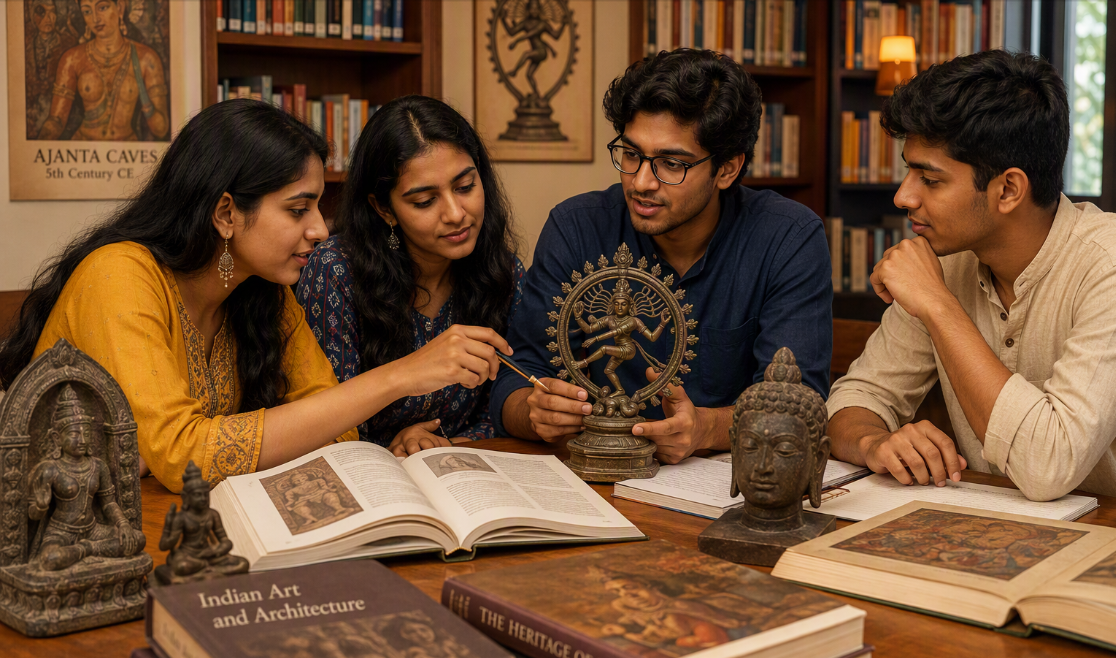
If you want to know which NCERT books are best for indian art and upsc art, start with the most direct one. The main text is for Class XI. Its name is “An Introduction to Indian Art.” This book gives you the basic structure you need. Use it before you read more about culture notes.
You should read the history NCERT textbooks for better context. Art and culture are found in different periods. They also connect with bigger changes. These ncert textbooks help you know how art forms, religion, and buildings fit into a timeline.
- Class XI An Introduction to Indian Art
- Class XI Ancient India by R.S. Sharma
- Class XII Medieval India by Satish Chandra
- Class VI-XII history NCERTs for a broader background and to see how things connect.
These books are good if you want to learn more about indian art and ancient india.
Read these NCERT books first. After that, go back and read them again. These books are helpful because they are clear and simple to use. They also give you a good base for your study. You can make short notes from them. This will help you read and go over your work many times.
Advanced Reference Books and Reliable Notes for UPSC Aspirants
After you read the NCERTs, many people say you should stick to one main book and not pick too many. A lot of people feel that Nitin Singhania is the best full guide for this subject. The book is very good as you can get all the detailed information about art forms, buildings, painting styles, music, and religion in one place.
For good notes or PDFs, it is best to use trusted educational material and the official platforms you find in standard preparation lists. You should use these to help your main reading, not take its place. This way, your notes will be correct and easy to handle.
- Use Nitin Singhania when you need full coverage and help with revision.
- Go to CCRT and NIOS. They give notes you can trust and make things easy to understand.
- Check PIB and the official website for news about GI tags, festivals, and what’s happening now in culture.
Yes, you can find full PDF notes on coaching and study websites. Still, the best way to get good results is to make short notes yourself from these trusted sources.
Must-Prepare Topics in Indian Art and Culture
Not every part of Indian culture needs the same amount of time. Some things come up again and again. That is why it is good to start with the most important topics. This way, you cover the core first before you move on to smaller details.
In indian art, people often look at areas like architecture, painting, dance, music, religion, and heritage. You should also keep an eye on cultural institutions, gi tags, festivals, and things that have to do with UNESCO in modern times. The next parts will talk more about important themes and new trends.
High-Yield Topics from Ancient, Medieval, and Modern Periods
If you want to know the important topics from ancient india and after, start with themes that come up again and again in exams. UPSC will ask questions from different times, but some areas stay at the center because they link art, what people believe, and their society. You should give more time to these first. Move to topics that people do not get asked about a lot only after this.
Across different periods, you should look at indian architecture, sculpture, paintings, literature, and performing traditions. It is easier to read them when the topics are set out by their features. It also helps if you see examples from each area or region. This way, you can remember things quickly.
- Indus Valley Civilization is known for the buildings, seals, and the first city art from that time.
- Temple architecture comes in different types such as Nagara, Dravida, and Vesara. There are examples of these styles in several places.
- Buddhist art and building styles include stupas, chaityas, viharas, and art found in caves.
- There are many classical dance forms. Each one is linked to a certain state, has its own style, and deals with many themes.
- There are several folk dances, painting styles, and key cultural changes that took place during the later period and in medieval times.
These places include both the still parts and the parts where you have to look for meaning.
Frequently Asked Themes in Recent UPSC Prelims and Mains
An easy way to keep up with the culture section is to look at previous year questions. Check these questions and you will find the same topics come up often. In the recent UPSC prelims and UPSC mains, you will see that many questions mix topics from books with things happening now. So, it is not good to just memorize without adding the latest updates.
The main focus is on architecture, dance, religion, heritage sites, and things getting noticed now. When something has both a long history and is talked about in new stories, it gets even more attention. Your revised list should show this truth.
- There are different forms of temple architecture and there are some ways that the main styles are not the same.
- There are several types of classical dances and several folk ways. Music can be put in several groups.
- There are several themes that come from Buddhism, Jainism, Bhakti, and Sufi practices.
- UNESCO World Heritage Sites are places of great value. There are also some new things happening with these heritage sites.
- GI tags, festivals, known monuments, and some new cultural events are now often seen in the news.
This is the place where previous year questions are very helpful. They help you see what the UPSC likes to ask again and again.
Mastering Art and Culture UPSC PYQ for Effective Revision
Previous year papers help you see how art and culture questions will be put in the civil services exam. They let you know how much detail you need, which things the exam asks often, and which topics you have to read again. This helps you save time and keeps you focused.
Along with PYQs, you need to use test series and mock tests to help your recall. For Mains, this practice makes your answer writing better. It helps you show features, make comparisons, and explain the value of what you write in a short way. The next part will tell you how to use PYQs in a smart way, not just read them.
Using Previous Year Questions to Spot Trends and Frame Answers
The best way to use previous year questions is to look for trends. Do not just solve them one time and forget them. Put them together by topic and see what UPSC likes to ask again and again. This helps you know how much you need to study about architecture, painting, religion, music, and heritage. It also helps you see how questions come in both objective and descriptive styles.
For Prelims, the questions are often direct and test facts. For upsc mains and upsc mains gs, questions usually ask you to write short explanations, make a comparison, or talk about cultural significance. This is where short notes help you. They let you revise important features fast and also help you use them in a structured answer.
- Sort the PYQs by theme and highlight the parts that come up again.
- Change these themes that come up again into short notes on one page.
- Use a test series to practice answer writing, recall, timing, and format.
This way, you can use old questions as a tool to help you go over your work and as a guide for writing at the same time.
Conclusion
To sum up, doing well in the Art and Culture section for UPSC GS Paper 1 needs you to plan your study in a clear way. First, you have to know the syllabus well. Use the right books and read about high-scoring areas. All these steps are key to your work for this exam. Go back to practice with older UPSC GS papers again and again. You should read big topics over and over too. This helps you feel good when you sit for the test.
Remember, you should not only learn by heart. You also need to know how parts of art and culture fit with other topics. If you follow these simple study tips, you can make a strong study plan. If you want special one-on-one advice, you can ask for a free chat.