Key Highlights
- The Harappan civilization started and grew along the Indus river. It soon became one of the first city societies in the world.
- The major cities of the indus valley show strong urban planning. They had careful water management. People there made a good drainage system as well.
- People have found famous things from here. The great bath, the indus script, many seals, pottery pieces, and terracotta objects are some of them.
- The indus valley civilization set up busy trade networks both in the area and outside it.
- Their burial practices and the objects they left give us clues about their social and cultural life.
- The decline of the indus valley civilization happened little by little. It was not a fast or sudden change.
Table of Contents
Introduction
The indus valley civilisation, also called the harappan civilization, is an important part to read about for UPSC. It talks about the start of the first urban centers in south asia. You have to know where the indus valley civilisation began, what the land was like, how people did town planning, about their economy, culture, and what happened to end it. The harappan civilization is important because it shows early people could build clean and well-planned cities. They used water well, did trade with other places, and grew their own way of living before big kingdoms came up in India.
If you read about the indus valley and harappan civilization, you will see the first steps of how people brought big changes to this part of the world.
Origin and Discovery of the Indus Valley Civilization
The Indus Valley Civilization started in the northwest part of the Indian subcontinent. The roots of the Indus Valley are found in early villages. Over time, people in that area left village life for well-planned Harappan cities. You need to remember this for the UPSC exam.
Modern discovery changed how people look at ancient history. Daya Ram Sahni found clear evidence of a major civilization when he worked on the dig at Harappa. Soon after, John Marshall also began work. This helped many people know more about the indus valley, the harappan sites, and what life was like for the indus valley people.
Early Evidence and Archaeological Excavations
The history of the indus valley begins with small groups of farmers like those in Mehrgarh. People in that area used to grow crops and make pottery. They also kept animals with them. These early village groups help us know how life became more settled and spread out over time. This is how the indus valley people started and got better through the years.
A big change took place in 1921 when Daya Ram Sahni dug up Harappa. A year later, R.D. Banerjee worked at Mohenjo-daro. He found that it was not only one small town. It was part of more cities and people together. These digs gave strong archaeological evidence. They showed that people built places with plans. They made many things to use in their daily lives and had an organized way to live.
Not long after, John Marshall helped share the findings with many people in the academic world. Since then, more harappan sites were found. All these sites together show that the civilization was big, had ties to many places, and was advanced in its time. This is why it is one of the most important topics in early Indian history.
Timeline of Development
For the UPSC exam, you should see civilization as something that took a lot of time to grow. It did not happen in one day. People first lived in villages. After that, cities began to grow. A slow fall in growth came after some time. When you look at this full story, it will help you remember the harappan phase.
The early harappan phase made way for the cities that grew later. The mature harappan phase was when life in these cities was at its best. In the late harappan phase, people started to move. A lot of cities got smaller during this time, but they did not end all at once.
| Phase | Time Period | Main Features |
|---|---|---|
| Precursor Settlements | 7000 BCE-3300 BCE | Farming communities, pottery, animal domestication |
| Early Harappan Phase | 3300 BCE-2600 BCE | Villages, proto-urban growth, trade beginnings |
| Mature Harappan Phase | 2600 BCE-1900 BCE | Large cities, drainage, seals, script, trade |
| Late Harappan Phase | 1900 BCE-1300 BCE | Urban decline, rural shift, reduced long-distance exchange |
Historical Background and Initial Settlements
The Indus Valley Civilization is important in ancient history. It did not begin right away. The Indus Valley came from early people who lived there. They learned how to farm, save their food, and make pots of different kinds. This let people feel safe and made life better for all.
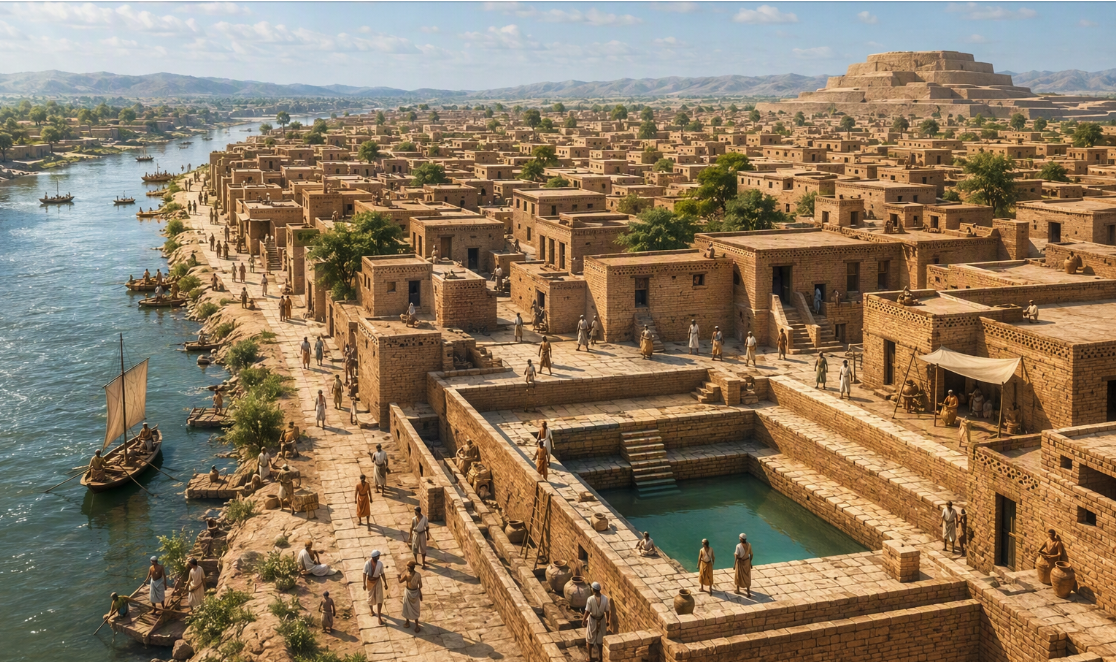
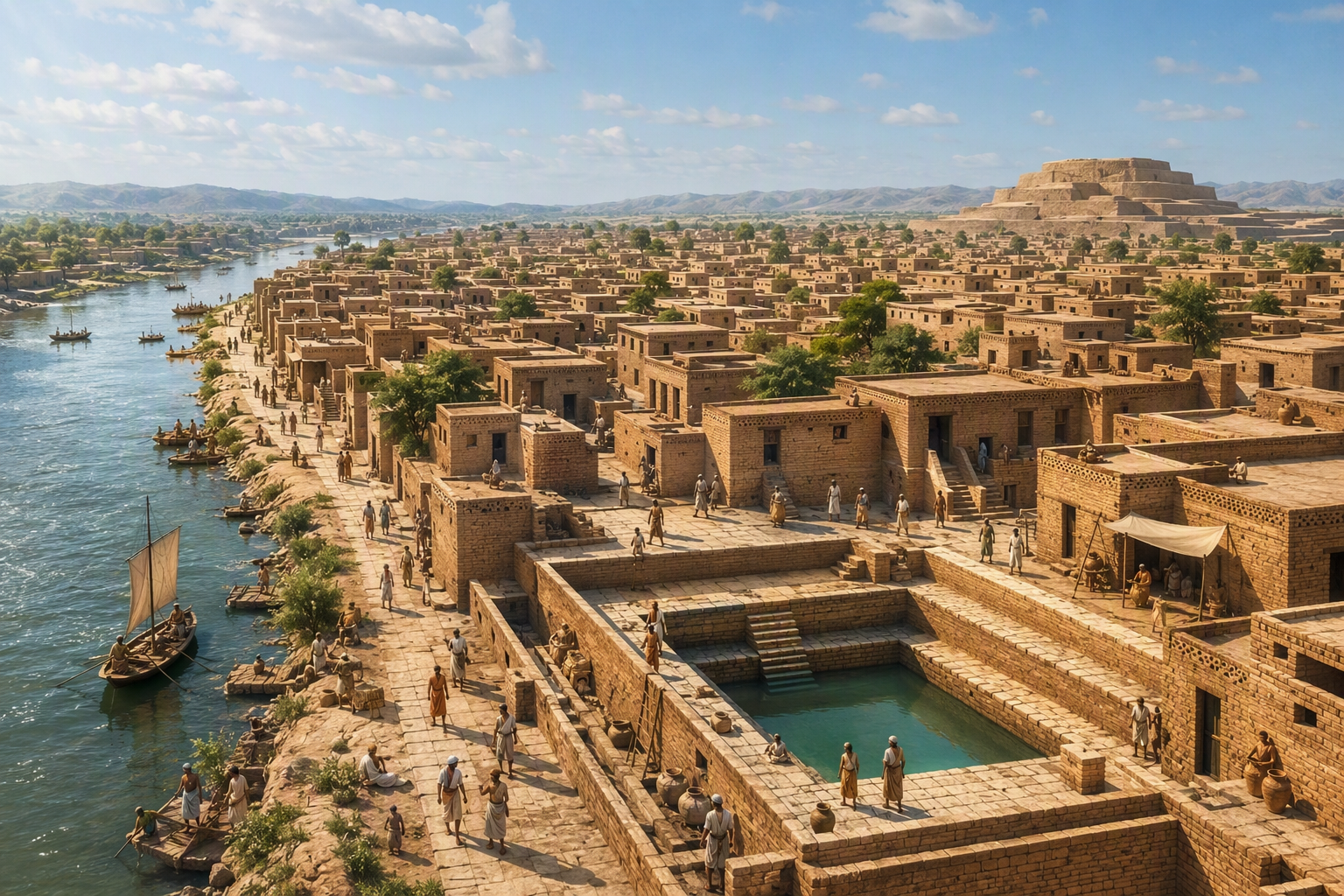
In the early Harappan time, people began to live near the rivers. They built their homes using mud brick. There was also some trade that happened in these areas. People made plans for where to build homes. This is the start of something close to urban culture. These places were not big cities yet. But there was a pattern in the way people lived and worked with each other.
As time went on, the indus valley and harappan culture started to look more the same in many places. The indus valley people made their own pottery, used early signs, and built their towns in the same way. These things show that they began to live in a shared way. This slow change led to the city phase that most people know well today.
Geographical Extent and Major Sites
The civilization was in a big part of the indian subcontinent. It covered northwest india, pakistan, and even some parts of afghanistan. This tells us it was one of the biggest Bronze Age groups. Most people lived close to the indus river and in areas around it.
For the UPSC exam, you have to know the major cities and the main Harappan sites. These include Harappa, Mohenjo-daro, Dholavira, and Lothal. It is also important to keep the eastern and northern limits in mind. So, learn about Alamgirpur in Uttar Pradesh and Shortugai in Afghanistan.
Map and River Basins of the Indus Valley Civilization
If you want to draw a map that’s ready for UPSC, start with the indus river and its smaller rivers. First, put down the wide area in the northwestern part of the indian subcontinent. Then, add the main places in what is now Pakistan and India. This simple way helps you see how the land and where people lived go together.
Next, remember to think about where people went. Shortugai is in the north, in Afghanistan. Alamgirpur is in uttar pradesh, which is in the east. Sutkagen Dor is far to the west, close to the line between Pakistan and Iran. Daimabad shows the south, but it comes later in time.
River-based settlements were very important. They let people use water management for farming, daily life, and trading. Many urban centers were built with big plans in mind. These plans helped with how we use, store, and move water from place to place. Land patterns and where people lived were tied to each other. Because of this, harappan culture grew in lots of places. People in all these places stayed linked by the same ways of doing things.
Prominent Cities: Harappa, Mohenjo-daro, Dholavira
Among the harappan cities, Harappa, Mohenjo-daro, and Dholavira are important for exam study. These major cities help you see how well the civilization was planned. Each city gives you a different look at urban planning, how people lived, and how they used water.
Mohenjo-daro is well known for the Great Bath and how the city was planned. Harappa stands out because of its big storage buildings, good drains, and seals. Dholavira is special for how they save water and for its old written signs. All these Harappan sites share some ways that are the same, but there are differences too.
- Harappa: There were granaries. A citadel area, drains, seals, and terracotta figurines were found at this site.
- Mohenjo-daro: People know this site for the Great Bath. There are also some big public buildings and important finds like bronze and seals.
- Dholavira: At this place, you can see reservoirs for water, water storage, and signs of strong planning.
- All three: These sites show that the indus cities were well-planned, and people there could control things in a good way.
Site Significance and UPSC-Relevant Facts
When you study Harappan sites for UPSC, do not just remember the names. Think about what you learn from each place. Some places tell us about trade. Some show farming. A few tell us about the way people do rituals. Some also talk about urban planning and even advanced urban planning. In this way, all these facts will stay with you for a long time.
Kalibangan is well known for the fire altars and its ploughed fields. Lothal is special because there is a dockyard and it was a place for bead making. Rakhigarhi is the biggest Harappan site that we know so far. Chanhudaro stands out for craft work. Alamgirpur tells us how far east the people from that time spread.
- Kalibangan is known for its ploughed field and fire altars.
- Lothal had a dockyard, a bead factory, and was in contact with other places by sea.
- Rakhigarhi was a very large place. There, houses had many rooms.
- Some sites also show burial practices. These help people learn about differences in different regions.
Phases and Chronology of the Indus Valley Civilization
It’s easy to read about the Indus Valley Civilization when you look at its different phases. The timeline gives you a clear idea of how the indus valley settlements began. It also shows when they were at their biggest and busiest point. After this, you can see what happened and how things changed in the indus valley.
The early harappan phase was where it all began. This phase made the base for the things to come. The mature harappan phase was when life in the city was at its peak. The late harappan phase was when everything started to drop and people left the cities for the countryside.
In the next sections, you will read more about what makes each harappan phase stand out. You will see why the early harappan phase, mature harappan phase, and late harappan phase are important for the UPSC exam.
Early Harappan Phase
The early harappan phase went on from about 3300 BCE to 2600 BCE. At this time, lots of changes were happening. Small groups of people went to live near the rivers. People started to stay in these spots for more time. They worked together and built stronger groups. This time was good because the way people lived and worked with money began to change. All these things helped cities grow later. The early harappan phase was the start of big things in history.
Archaeological evidence from early towns shows that there were mud-brick homes. People used old ways to make pottery. There was also more trading between people. These things show that urban culture was starting to grow, even if there were no big cities at that time. Simple writing symbols started to be used, and people began to make planned places for people to live in.
Many harappan sites from this time show that there was slow growth, not quick change. The indus valley people tried new ways to live. They did different crafts and made links with other places nearby. If you see this time as the base or start, you will find it much easier to get how the cities in indus valley grew later.
Mature Harappan Phase
The mature harappan phase was from 2600 BCE to 1900 BCE. This was the best time of the harappan phase. A lot of UPSC questions are from this time. During the mature harappan phase, big urban centers started in the area. People made a strong civic system. Houses were built in a set way. There is also proof that many people had the same culture in this phase.
What made this phase stand out? There was a lot of advanced urban planning at this time. We can see it in many ways. The cities had streets set in a grid. There were channels for drainage. People even used the same size of bricks. They built many public buildings, too. Careful zoning was also used.
Places like Harappa, Mohenjo-daro, Dholavira, and Lothal show their advanced urban planning clearly. The way they planned and built these cities can be compared to other old and famous societies.
Trade networks got bigger at this time. The Harappans traded goods near their cities and also with far places like Mesopotamia, Persia, Oman, and Central Asia. The way they set up their cities, built big trade networks, and used the same measures made the mature Harappan phase stand out. All of these things help us know what the mature Harappan phase was like.
Late Harappan Phase
The late harappan phase lasted from around 1900 BCE to 1300 BCE. This was a time when things changed for the indus valley civilization. The cities got smaller. Many big cities lost people. There were some places that turned into small villages. This stage is known for the decline of the indus valley civilization. The late harappan phase showed a shift away from city life.
At many harappan sites, people see that long-distance trade became less. The life in cities was not as strong as before. The writing they used was also not seen anymore. All of this shows the decline in these places happened slowly. It did not happen all at once. The city way of living faded over time.
Burial practices and the things people left behind during this time were different in each place. This shows that people changed things to fit their way of life. They did not lose their culture. In the late Harappan period, groups kept some things from the past. But the big cities did not have the same power as before. For UPSC, remember that late Harappan groups held on to old ways, even when some things changed.
Urban Planning and Architecture
One thing people notice about this civilization is its advanced urban planning. The houses were not built in a careless way. The people used a set plan for the city. The streets met at right angles, and there was careful zoning in the area. They made sure to have ways to handle water and waste too.
This good level of town planning helped to build a strong urban culture in many places. The drainage system, public buildings, homes, and water management are parts of why the Indus world gets praise for its smart and solid buildings. Let us look at these things one by one.
City Layout and Streets
The city layout in the indus valley civilization was very well planned. The people in these urban centers set up the streets in a grid pattern. The roads often met at right angles. This did not happen by mistake. It shows there was a plan before they started to build. There were some rules in place. A plan was also shared by all these cities in the indus valley.
This kind of urban planning made it easy for people to get around. It was also good for how the city was run. The streets were straight and there were neat blocks. There were set places for buildings, too. The people who built the city used the same rules everywhere. That is why this group is seen as one of the most advanced urban societies from a long time ago.
For UPSC, you need to look at this feature along with other contemporary civilizations like Mesopotamia and Egypt. These places, too, had important cities. But the Indus system is different from them. There is more order and sameness in the towns, and you can see that when you look at the plans. The even roads show the Harappan way of thinking for the city, and the plan tells us how they liked to live and work in their daily life.
Drainage and Sanitation Systems
One big reason this civilization stands out for people who study history is the drainage system. The area had covered drains, channels, and places where waste would go. This tells us that people saw keeping things clean as important. It was not just something extra for a few places. You could see drainage systems in many urban centers. This shows there was strong civic discipline.
The system is a good example of advanced urban planning. Water management in the city was about more than just saving water. It helped send out wastewater and made sure water moved the right way. This way of handling things made life good for the people. Cities became cleaner, healthier, and worked well each day.
For mains answer writing, this point is good to use. If someone asks how the Indus world was not like other ancient groups, you can say its drainage system was well planned. Not many early groups cared about city cleanliness like they did.
Residential Structures and Granaries
Homes in the Harappan settlements were made in a smart and neat way. People built these homes with a good plan. In many areas, there was the citadel and the lower town. This shows they liked to use space well and keep things in order.
The lower town had many people living there. A lot of these people were just everyday folks, and some worked in the area. There were some bigger homes in a few places. This means that people did not all live the same way. But, the whole lower town was well set up. This shows the lower town was part of an urban culture and not just a mix of random people living anywhere.
Granaries found at Harappa and Mohenjo-daro show that people there used organized storage. These places might have helped with giving out food or collecting it for everyone in the community. When you see these granaries with homes in these cities, you can see there was advanced urban planning. This shows the people there knew how to manage their resources well.
Public Buildings and Social Spaces
Public buildings in Harappan cities tell us a lot about how people lived there. The places were not only for homes or jobs. Some of these buildings were made for people to meet and do things as a group. This shows that the urban centers in Harappan cities were planned to bring people together, and not just for day-to-day life.
The Great Bath at Mohenjo-daro is the best-known example. It stands out because people built it with a lot of care. The Great Bath was important for everyone in the city. It shows that people did not need big temples or large palaces to have a place to meet. The town had common places where people could get together. The Great Bath also shows how good the town planning was back then.
These buildings also make people think about social hierarchy. The people in this civilization used space in a smart and careful way. There are no big signs of kings or royal monuments, though. Because of this, most scholars say that Harappan public buildings show that many people worked together to run the city. There was not just one ruler showing his power over all the others.
Social and Economic Structure
The social and economic setup of this civilization was not simple, but it worked well. The Harappan people lived in places that were planned in advance. There were many jobs that they did. Some worked on farms, some were in trade, and some made things with their hands. This shows that their economy worked with help from things made close by and also from bigger networks.
For mains answer writing, focus on these key points: social hierarchy, agricultural practices, trade networks, and craft production. You can use things like the way houses were built, beadwork, and the use of precious stones such as lapis lazuli. These help to show how people lived and worked. They give us a better idea about trade networks, social hierarchy, and craft production.
Society and Social Stratification
Harappan society looks well-organized. But, there is no clear proof of kings or big family rulers. The items found at old places show that there was a social hierarchy. You can see this in the way houses are different in size. It also shows in who could use private wells and where things were built in their towns.
Bigger and stronger houses may be for people who have more money. Smaller homes, even though they look the same, are likely for the common people. This does not show that there was a strict king in charge. But it does show there were money and social gaps in the urban centers.
Harappan culture tells us that people did many kinds of jobs. There were people who were merchants, some were artisans, some worked as laborers, and some were farmers. These groups made up the layers in their society. So, when you look at Harappan people, you can say there was social stratification. But signs show that this was more about people doing different jobs instead of having strong royal control.
Economic Activities: Agriculture, Trade, and Crafts
The Harappan economy was strong because the people had many good agricultural practices. They were able to settle down as they grew food for themselves. This helped towns grow and made their urban culture better. The Harappan people also traded goods and made many things with their hands. This made it easy for their villages and cities to connect with other places, even those that were far away.
Local and long-distance trade networks helped the Harappans stay in touch with people living in Rajasthan, Gujarat, the Deccan, Mesopotamia, Persia, Oman, and Afghanistan. The Harappans’ craft production gave us things like beads, ornaments, pottery, and metal objects. They used precious stones in their work, including lapis lazuli. This tells us that their trade networks went far and reached many places.
- Agriculture made it possible for people living in one place to have enough food.
- Trade networks linked up different places by both land and sea.
- Craft production made items like beads, shell work, metalwork, and pottery.
- Lapis lazuli and some other valuable items show there was contact with places that were far away.
Occupational Groups and Roles
The Harappan people did more than farming. They had many jobs in their city. There were people who worked as farmers, traders, potters, bead makers, and metal workers. Some did hard jobs. A few helped lead and organize the city too. This was needed because life in a city cannot run well if everyone is only a farmer. All these jobs helped the Harappan people and the city to do well.
Craft production was very important in urban centers. In places like Chanhudaro and Lothal, people made beads and ornaments. This tells us that there were groups in the city who did skilled work. They did not work just on food, but also on making things by hand.
At the same time, the common people were a big part of how things got done. Farmers grew grain. Artisans made things that we use every day. Traders moved these things from one place to another. When you talk about what jobs people had, you should show how each role helped the other in the city. This was how common people worked together in a way that needed all of them.
Artifacts and Material Culture
Artifacts give us more clues about the civilization, mostly because we cannot read the written records yet. Items like indus seals, pottery, jewelry, and tools help us see how people lived and did trade. These things also show us what symbols or ideas mattered to them.
The material culture in Harappan society is full of different things. There are terracotta figurines, human figures, and female figurines. People made jewelry out of precious stones like lapis lazuli. You can also find some items with writing on them. All these things help us see what life was like for people back then. The next parts will be about the script, seals, craftwork, and how things were made in the same way.
Indus Script and Inscriptions
The indus script is still one of the biggest puzzles in ancient history. You can see the script on seals, pottery, and copper items. People have not worked out what it means yet. This makes every object with the indus script on it feel special. These things may help us know more about administration, trade, or what the symbols meant in those days.
These marks can be found at many Harappan sites. This means that people had a common way of writing at that time. We still do not know what language they used. But when the same signs keep showing up, we see that people were using an organized way to share ideas in their urban culture. These signs may be used for trade, show who owned something, or for official reasons.
For your UPSC revision or for a test series, you need to keep two things clear. We do not read the script yet. You can find it on many types of artifacts. This will help you answer short questions. It will also help with bigger questions about what we do not know about the Harappan world.
Seals: Pashupati, Unicorn, and Their Symbolism
Indus seals are some of the most famous things found from the Harappan time. People say these could be used in trade, to show who a person is, or maybe just for how they look. The pictures on the indus seals can give us ideas about social life and religious practices. We do not know everything for sure, because no one has read the writing on them yet.
The pashupati seal found at Mohenjo-daro has a figure sitting in a yoga pose. There are animals around him. Many people say that this looks like an early form of lord shiva. But this is still just an idea and not for sure. The pashupati seal also shows a unicorn sign many times, and it may have meant something important to the people back then.
- The pashupati seal is seen by some people as showing one of the first pictures of Shiva.
- The unicorn seal is found many times on the indus seals.
- Seals and female figurines help experts talk about religious practices. Still, they do this with care.
Pottery, Sculpture, and Jewelry
People living in Harappan times used a lot of pottery. They used these pots to keep things, cook food, and maybe for some birth or death rituals. The pots were made of terracotta. Many of them had lines or shapes painted on them. These styles did not happen by chance. They show that craft production in Harappa was not just about what people needed. It was also about what they found nice. This helps us know more about the way they worked and what they liked.
Terracotta figurines and sculptural pieces add more depth to Harappan art. There are animal toys, human figures, and many female figurines. A lot of people think that female figurines are tied to beliefs about fertility. The well-known Dancing Girl bronze figure and the Priest-King made from steatite show that people in Harappan times used different materials and skills in their work. There is a lot to see in the things they made.
Jewelry made by the Harappans tells us what they liked and traded. They used gold, silver, carnelian, agate, and precious stones like lapis lazuli. People in that time made things like necklaces, bangles, and earrings. You can see their skill in these pieces. This shows that making ornaments was an important way to work for them.
Metalwork and Standardized Weights
Harappan metalwork shows that people had skill in craft production. They used copper, bronze, tin, lead, gold, and silver for making things. People made tools, things to wear, and art from these metals. The bronze Dancing Girl was made by using the lost-wax way. This shows how much craft production had grown in that time.
Standard weights were very important back then. People used stone cubes for this. They cut these stones with care. The stones had to match set number rules. This order helped trade be fair. It also showed that all major cities used the same money rules.
Trade networks would not be good without these standards. When you see how metalwork is linked to weights, you learn more. There are skilled workers. There are organized markets. Cities work together. This is why these things help us know about Harappan economic life.
Theories and Causes of Decline
The decline of the Indus Valley civilization is something important for UPSC. It tells us that even big groups of people can break apart when they have to deal with many problems at once. People who know about history often say there is not just one reason for the decline of the Indus Valley. There can be many things working together to cause the fall of the Indus Valley civilization.
In the late harappan phase, things did not change all at once. They changed over time. The weather and rivers started to shift, and this had an effect on farming, trade, and how people lived in one spot. Other things in the environment also played a role. Still, some parts of the harappan phase way of life continued. For example, burial practices in different parts of the area stayed the same, even after big city life was not at its best anymore.
Gradual Decline with Key Factors
The decline of the Indus Valley Civilization happened over a long time. By 1900 BCE, big urban centers like Mohenjo-daro, Harappa, and Kalibangan started to get weak. Many of these urban centers got much smaller or people left them completely by around 1400 BCE.
This shows the decline of the Indus Valley did not happen fast. It took many years for people to leave and for these centers to lose strength. The decline of the Indus Valley Civilization was slow, and the urban centers changed a lot over time.
Please provide the text you want rephrased and the list of SAT words you want avoided.
- The monsoon was not as strong this time, so people could not do steady farming.
- Changes in the river made it hard for people to stay in one place and grow food.
- Trade networks got weaker. This made it hard for big urban centers to keep going.
Environmental and External Influences
The Harappan people went through hard times mainly because of things in the environment. The material shows that there was climate change. The rains did not come as strong as before, and there were long dry times. Because of this, it was hard for them to grow food. It also made it tough for their settlements to stay strong.
River changes were a big deal too. When the river dried up or moved to a new spot, towns that did well before could end up with no steady water. Some towns did not have enough water, and some got too much because of floods. This made it hard for people to keep their cities running the way they wanted.
Sure! Please provide the text you’d like me to rewrite.
Legacy and Continuities in Present-Day India
Even when many people started to move out of the cities, the civilization did not go away completely. Some parts of harappan culture were still seen later in other groups of people. This is why learning about this topic is good for history. It can also help us think about current affairs and how culture can last through time.
The people from this culture did good urban planning. They used bricks to build things. They also made drainage systems. Their towns were set up with care. They started trade networks that went far. The crafts they made were important. These things helped shape the area and how it grew for many years.
Burial practices and symbols showed up in many places. But they did not always look the same everywhere. This is an important thing to know for the UPSC exam. The main towns became slow, but you could see many ways, steps, and habits of life stay in India for a long time.
Comparison with Contemporary Ancient Civilizations
In ancient history, people like to compare the Indus Valley Civilization with Mesopotamia and Egypt. These three were all big and important contemporary civilizations. But the Indus Valley Civilization has its own unique identity.
The best thing about the Indus region was its advanced urban planning. Some other people had large and pretty buildings, but the Indus is known for how they planned their cities. They came up with smart ways to lay out the city, plan sanitation, and build homes and streets in the same way. Their success in culture was not just about big kings or powerful leaders. It was because their cities worked well for all the people living in them.
Unique Features of Urban Planning
The Indus world stands out because the cities in this area were built for people to use in their daily lives. The urban centers did not have big palaces or royal buildings. Instead, the streets were laid out in a smart way, and drains and water systems were set up well. There were also homes for people to live in. Because of this, many people say the Indus people were good at urban planning. Historians think the Indus cities show early signs of advanced urban planning.
One thing you could see about the city is the grid pattern. The roads meet at right angles. This made the city look neat and kept things in order. The people also cared a lot about water management, mostly in places like Dholavira and Mohenjo-daro. There is proof that they liked to plan and had rules to follow in their daily life.
- Streets often used a grid pattern.
- Intersections set at right angles.
- The city design included water management and sanitation.
Cultural and Technological Achievements
The Harappans did not just plan city layouts. They were good at using technology, trading, and making things with skill. The urban centers helped people with big craft production. People also used standard weights and worked with metals. They made art from stone, clay, shell, and metal.
Trade networks linked Harappan cities with other places outside the subcontinent. This shows that the people in these cities shared good ideas and built their economy. Trade networks helped merchants because things were the same in many places. skilled workers in the Harappan cities made valuable things like beads, ornaments, seals, and metal objects.
- People used the same weights. This made exchange better.
- Metalwork and bead-making show people had the skill to do this work.
- Trade networks by sea and land helped far away regions stay linked.
For mains answer writing, this helps you see the Indus world and other civilizations. You can compare them by what people did in their day-to-day lives, not just the buildings they made.
Influence on Later Indian Civilizations
The impact of this civilization on life later in the indian subcontinent is easy to see. Some things stayed the same over time. It is not that everything was copied the same way again. harappan culture showed people ways to plan towns, make things with their hands, and live each day in cities. These skills did not disappear, even when the big cities no longer existed.
Urban planning was a big part of what the Harappans did to shape their world. They put a lot of thought into how to make good drainage systems. They used bricks when building things, and they planned towns so that people could live well together. All of what they did became a strong part of life in that area. This is why the Harappan way of urban planning still matters to us now, even after many years have passed.
We can see that the religious practices and burial practices from this time have some links to what came later. But we need to look at the evidence in a careful way. Things like female figurines, animal symbols, and signs of ritual practice show us there is a connection. For UPSC, it is better to say that this civilization helped shape the religious practices and burial practices that came after it. It did not make all these on its own, but the influence is easy to see.
Religious Beliefs and Cultural Practices
We learn about religion in the Indus world mainly by looking at things people left behind. We do not read about it in their writing. This is why we need to be careful when we try to understand what they believed. Still, there are signs that show people in the Indus world shared some religious practices and ideas about life.
Female figurines are often thought to show the idea of a mother goddess. The fire altars found at some places, how people buried their dead, animal designs, nature worship, and the pashupati seal—which many people link to lord shiva—help scholars find out the main ways that people believed in things in old times.
Mother Goddess and Nature Worship
Many experts say the Harappan female figurines may show worship of the mother goddess. People find these female figurines made of terracotta. They see them as signs of motherhood, wealth, and growing new life. We do not know for sure, but these female figurines tell us a lot about what the Harappan people may have thought about the mother goddess.
Nature worship was likely a big part of Harappan culture. People put animal designs on seals and other items. This shows animals like bulls and elephants had a special meaning for them. Trees and different shapes that come from nature may have been holy to the people of Harappan culture.
All these things show that the religious practices of that time were about things like fertility, nature, and honoring symbols. There was not much focus on big temples or people coming together for group worship. If you are preparing for UPSC, keep in mind that there is some proof of what people believed, but we still do not know the full details about how the Harappan religious practices were organized. A lot about how they did their religious practices is still not known for sure.
Rituals, Symbols, and Burial Customs
Harappan rituals are known through things people left behind like graves, altars, and special items. There are no religious books from that time. People who learn about the harappan culture look at burial practices, drawings on seals, and old buildings. These help them guess what their beliefs might be.
Burials in the area sometimes had pottery, ornaments, and things people used. This can show that people may have thought there was life after death. At Kalibangan, people found fire altars. This shows that there was some kind of ritual activity going on. But these things look simple when you compare them to the big temples found in other urban centers in the ancient world.
- Many graves had things like pottery and small ornaments in them.
- The fire altars at Kalibangan show people did ritual practices there.
- The way burial practices changed from one place to another shows that Harappan culture was not the same everywhere.
Absence of Temples and Absence of Royal Palaces
One thing that stands out about the civilization is what you do not find there. In Egypt and Mesopotamia, there are big temples and large royal homes. But in the Harappan world, you do not see these big buildings. This missing part is very important when you write UPSC answers.
What does that say? It may mean that religious practices were not done in big temple groups. It could also show that leaders did not use large buildings like palaces to show their power. Even when there were public buildings, these did not really show off what the rulers could do or feel proud about.
This matters when we talk about social hierarchy in harappan cities. People in these cities lived with order and followed rules. But, when we look at what they left behind, we do not find clear signs of a king or leader. This makes harappan cities stand out from other early cities. So, it is good to take a closer look and see how they compare to the others.
What are the key features of the Indus Valley Civilization for UPSC?
The Indus Valley Civilization was known for its advanced urban planning. Cities in the Indus Valley, like Mohenjo-Daro and Harappa, showed that the people took great care in how they built things. They all used the same weights and measures. The people made complex drainage systems, and they were good at making things by hand. These cities had strong layouts, and they built some big things together. All of this makes the Indus Valley Civilization important for your UPSC studies.
How did the Indus Valley Civilization influence present-day India?
The Indus Valley Civilization has had a big impact on modern India. It gave new ways for people to plan towns and cities, do business, and work with farms. The use of the same weights and measures and work skills in the indus valley can still be found in India today. A lot of India’s culture comes from what people did back then in the indus valley civilization.
What are some major artifacts and their significance?
The Indus Valley Civilization is known for many artifacts. One famous item is the Dancing Girl statue. This statue shows the talent of the people and gives us an idea of their life at that time. The seals with text on them tell us about their trade and how they ran things day by day. These objects show that people who lived in the indus valley were good at making things. They help us know more about how they worked and lived in that area.
People often want to know about the Indus Valley Civilization. A big part of their interest is in the way the cities in the indus valley were made. The urban planning in the indus valley civilization was special. The people there had good drainage systems. The cities were also built in a grid pattern. Many people also ask about things found at harappan sites. Some well-known finds are the Great Bath and the terracotta figurines. These things show us about the religious practices in the indus valley and how people lived every day. When we learn about these things, we see how the indus valley civilization has made a mark on other cultures in the indian subcontinent even now.
Conclusion
Learning about the indus valley civilization helps us see more about ancient history. It lets us know where modern urban culture in south asia starts from. The indus valley had advanced urban planning, strong trade networks, and smart drainage systems. These show how good and strong this old civilization was.
If you want to do well in the UPSC exam, looking at things like the great bath and indus seals can help. You can learn how the people of Harappa used to live. This can help you give better answers in the test. When you know about the indus valley, you feel more about our history. It also gives all of us a way to look back at our past.