Key Highlights
- World political movements show how people working together can shape countries, their people, and create social change.
- For UPSC prep, these movements help you link world events with topics in Indian polity, civil society, and how the country runs.
- Some Indian movements like the Chipko, Dalit Panthers, and the Narmada Bachao Andolan are good examples. They show how global ideas can affect what happens in India.
- The blog explains how old style political movements are not the same as new social movements.
- It also talks about the main leaders, the big thinkers, and how these people help with social mobilization and getting social justice.
- You will find out why these topics matter for competitive exams. The blog will also help you write better answers about things like social movements and civil society.
Table of Contents
Introduction
If you are getting ready for UPSC, you have to look at world political movements. These events show the way social movements and political action can change laws, institutions, and Indian society. This is not just big both for rights and democracy, but also for knowing how policy changes take place. With world movements, you get to see more about social reform and democratic participation.
This blog wants to make things simple for you. It gives you a straight and exam-friendly look at big world movements. Here, you get their main ideas and the way they tie in with India’s freedom struggle, social reform, and the way people take part in democracy after independence.
What Are World Political Movements?
A political movement happens when people come together to take action because they want things to change. It can be about making things better, getting more rights, or changing the way state power works. A political movement may push for social change. It may ask for things like policy shifts. A lot of times, these movements get strong because of civil society. They do not always rely on formal electoral politics. People join through the group and work as a collective action to reach their goals.
In today’s world, you will see many kinds of movements. These include anti-colonial struggles, labor movements, civil rights campaigns, and environmental activism. Each of these shows how people react when usual rules and systems do not fix their problems.
For UPSC prep, it is important to learn about the political process and why people start these movements. This will help you understand how the government works and what happens when people feel their needs are not met.
Defining Political Movements and Their Scope
A political movement is when people come together and keep working for change. They want to change laws, groups, rights, or how power works. This is not just a one-time protest. A political movement goes on for some time. The people have the same goals. There is often political mobilisation, too. A political movement might work outside of electoral politics, but it can still make governments act.
The idea of collective action is important in any political movement. People do not act alone. They get together to reach common goals. This is how change starts.
Social movements and political movements sometimes go together, but they do not always want the same things right away. Some try to get state power straight away. Others want social justice, rights, or change, but they do not run in elections. This gives a place for party groups and for people outside of parties to act.
Their reach can be small, nearby, or spread across the country and even the world. A fight in a village, a freedom struggle, or a human rights push between countries, all come under this big area. For UPSC, the scope is important. Change happens because there is a political opportunity and people ask for it. Public pressure and the right moment often tell us why things change.
Global Significance for UPSC Aspirants
UPSC wants you to see how events, ideas, and institutions are linked. World political movements matter because of this. They let you see how civil society can push governments, help give more rights, and have a long-term political impact on many areas.
This is very important for countries in the global south. People there still deal with fights over land, respect, development, and the way they are seen. Questions about social justice and democratic participation often need examples from outside India. A global view will make your answers stronger, especially when talking about policy changes.
There is also a clear Indian link here. The fight against colonial rule, work to change society, women’s movements, and the fight against caste all grew by talking with new ideas from around the world. If you know about this give-and-take, you can write better GS and essay answers. Your thoughts will be clear, and you won’t just list facts.
Historical Evolution of World Political Movements
World political movements did not just happen at once. Over the years, their development shows a long political process. In that time, people have stood up against monarchy, colonial rule, class control, caste system, and development that is not equal. At many points in history, they pushed against strong state power. They asked for more people to have a say.
From revolutions to reform campaigns, and then to rights-based movements, the pattern stays the same. Public action is what changes groups and systems. For UPSC, this timeline makes it easy to see how social change moves in steps. You can spot how methods and ideas build in both rich regions and places that are still growing.
Key Stages in Political Movements Across the World
Many big movements in history often start with a problem that people feel strongly about. People then come together in large groups to act. After that, their fight becomes a part of normal society. The french revolution moved against the king, while the russian revolution went after the rule of a special group. Labor movements asked for worker rights, and the civil rights movement stood against racism. Years later, the black panther movement showed a bold stand and worked with people in their own areas.
Here is a simple comparison for exam use:
| Movement | Period | Main Issue | Impact |
|---|---|---|---|
| French Revolution | 1789 | Monarchy and inequality | Popular sovereignty and political change |
| Russian Revolution | 1917 | Class rule and land | Socialist restructuring and state transformation |
| Labor Movements | 19th-20th centuries | Wages, hours, rights | Trade unions and labor laws |
| Civil Rights Movement | 20th century | Racial justice | Legal equality and social reform |
| Black Panther Movement | 1960s-70s | Racial dignity and self-defense | Radical rights discourse |
For UPSC, always link each stage with current news. Think about things like political representation, rights, and how the state reacts.
Influences on Indian Polity and Society
Global change had a strong effect on Indian polity and Indian society. Things like the fight against colonies, thoughts about democracy, and rights movements made an impact on indian revolutionaries and people who wanted to make things better. The freedom struggle in India did not happen alone. It learned many things from bigger talks about freedom, equal rights, and people taking part in the process.
The global influence played a big role in social reform. In India, reform movements like Brahmo Samaj and Arya Samaj stood up against child marriage. They pushed for change in the way people live and their customs. These groups were part of a larger time when people spoke up, wanted better ways, and talked about right and wrong in life.
Even after India became independent, groups looked at other countries for ideas. Dalit Panthers found hope in the Black Panther Movement. In India, environmental movements asked about development. These were like the questions other places faced. This back and forth explains today’s policy talks, covering rights and environmental justice.
Major World Political Movements in Modern History
Modern history has many mass movements that changed politics and society. Revolutions, labor struggles, civil rights groups, anti-colonial acts, and women’s movements all pushed for big political change. They did this by helping everyday people build a strong collective identity.
Their influence can still be seen today. We can find their mark in laws, rules, social justice issues, plans that help people, and new talks about rights. Many of these go back to an old social movement. For UPSC, it is good to know about these movements. This will help you explain what happened in the past and why these fights still matter in our country and around the world.
Notable Movements and Their Legacy
Many important movements keep coming up in UPSC study. That is because they helped change law, groups, and the way people think about politics. These movements also show how people, together, asked for respect and honesty from those in power.
- French Revolution: it challenged who gets special rights by birth. It started ideas about citizenship and people having power.
- Russian Revolution: this one was about class struggle. People wanted changes in land and in how the government worked.
- Civil Rights Movement: this movement called for equal rights under the law. It worked for social justice by keeping up protests.
- Women’s movements: helped bring changes about inheritance, violence, and sexual harassment. They also wanted better representation.
Their long-term value is in what they made feel normal. A labor movement helped people see worker rights as important. Women’s movements made gender justice something people talk about. These days, work on climate change does more. It connects environmental protection, jobs, and human rights. These examples help you make UPSC answers that are balanced and clear.
Impact on International Relations
Political movements do not stop when they reach borders. The way states be seen and how people talk about aid can change. These movements also shape how international groups react. A movement can show problems in the political system and make policy changes at home and in the world.
A good example is the Narmada movement in India. People fought against the Sardar Sarovar Dam. A lot of them talked about displacement, fixing homes, and environmental justice. The world started to watch closely. After many issues came up, the World Bank left the project in 1993.
This tells us how movements are important in India’s foreign and development story. They help change how money, diplomacy, and what people think around the world work. For UPSC, you need to know that movements are not just about protests inside the country. They also help to change development talks in the global south.
World Political Movements and the Anti-Colonial Struggle in India
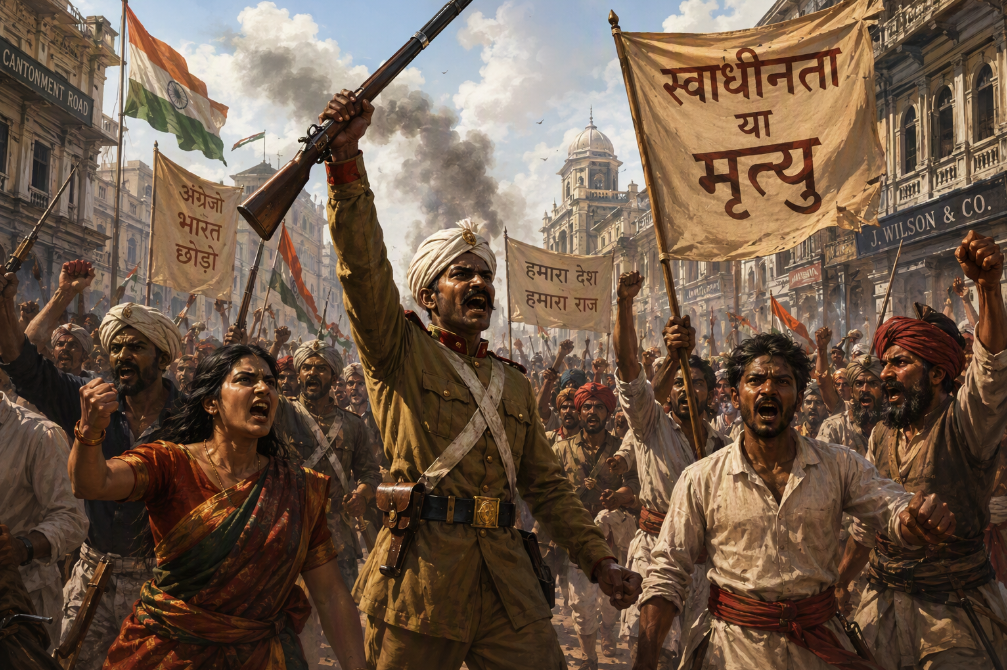
India’s fight against colonial rule was shaped by ideas from around the world. Indian nationalism learned a lot from other places. It took up lessons about rights, mass movements, and protest. At the same time, it answered to what was happening under colonial rule in India.
This coming together led to a special way of political mobilisation. It brought national freedom, social reform, public involvement, and moral fairness together. For UPSC, this is important because it shows India’s freedom struggle was linked to local issues, but it was also shaped by big global political changes.
Inspiration from Global Movements
India’s freedom struggle was powered by ideas that had made a big difference in other places. The freedom fighters did not only copy what others had done. Instead, they saw that it was possible to stand up to power. When people get together and join in democratic participation, they can make change. These examples showed that organized public action will help fight unfair power.
- French Revolution: brought new ways of thinking about freedom, being equal, being a citizen, and standing up against unfair power.
- Russian Revolution: made people talk more about classes, changing who owns land, and how workers and farmers can take part in politics.
- Anti-racial struggles like those seen in South Africa: got people to think about respect, fighting unfair treatment, and shared rights.
Indian leaders learned from others, but they changed these ideas to fit what was happening in India. India did not follow just one set or plan. India built a big movement made of mass movements, change, and fighting against the British. There is a reason for this when you write answers for UPSC. You should show where the ideas came from in the world, and also show how India made its own way.
Indian National Leaders and Their Global Connections
Many leaders in India got ideas from world political changes by going to other places, reading books, talking with people, and watching what was happening. They saw that problems like colonialism, race, class, and rights are not separate from each other. These connections helped them see that India is part of a bigger global south fight against being controlled and left out.
Indian leaders learned how some movements turned protest into policy changes. This idea stayed important after India became free. The country then needed to deal with land, caste, gender, and who could speak for people. The chance to see what happened in other countries was not just to show off. It helped shape the way people made plans, used language, and thought about new ideas for institutions.
This global link is important in what happens now. If you look at rights, development, or democracy, you will see that talks in India are a lot like ones in other parts of the world. Seeing this makes your answers better in history, polity, society, and essay papers.
Main Features of Social and Political Movements Relevant to UPSC
For the UPSC exam, you have to look at social movements as much more than just single events. Social movements show us how people come together to work for social change. This happens inside the political system. When normal ways feel too slow or not strong enough, people use collective action to try to make things better.
You have to look at both the way the movement is set up and its main ideas. Who is in charge? Which groups are part of it? What do people do to make it work? What keeps everyone united? These questions help us see what the results are, what can and cannot be done, and why it matters. The next two parts take this and put it into sections about how it is run, plans, leaders, and what people believe.
Organizational Structure and Strategies
The way a movement is set up will affect how far it goes and how long it lasts. Some movements need strong leaders to guide them. Others spread by using networks that are not controlled by one person or group. Both ways help people come together for collective action. But, each way has its own pluses and minuses when it comes to working together, staying on course, and keeping things going.
Common strategies include the following:
- Mass rallies, dharnas, and marches help more people join in and notice what is happening.
- There is also direct action like blockades, satyagraha, and staying in one place to show a message.
- People use legal advocacy, talk to media, and start petitions. This puts pressure on leaders so they make new rules.
In India, the Chipko movement, anti-arrack protests, RTI campaigns, and farm laws protests show how political mobilisation is possible outside formal electoral politics. Digital platforms and mass media help send messages faster to people. Still, the way a movement is organized matters. When a movement can not gather enough supporters, set clear goals, and keep push on leaders, it often loses strength and fades.
Role of Leadership and Ideology
Leadership sets the direction and boosts trust in social movements. It also helps plan how things will work. A leader can be a person who stands out or a group that comes together from the community. No matter where it comes from, the leadership will turn problems into political mobilisation. A good leader will also help people stay focused during tough or long fights.
Ideology is important too. It helps people know what they are standing against and what they hope to build. Gandhian, Marxist, feminist, Ambedkarite, and environmental ideas have all helped shape movements in their own way. These ideas bring people together and create collective identity. They also guide what people do in these movements.
You can see this in India. Chipko showed Gandhian ideas and concerns for environmental justice. Dalit Panthers took ideas from Ambedkar and the Black Panther Movement. The anti-arrack movement joined gender justice, being able to read and write, and family welfare. For UPSC, these examples let us see how ideas help make plans and change what happens.
Key Leaders and Thinkers Behind Major Political Movements
Movements are easier to understand when you look at the people who lead them. These leaders and thinkers set the goals. They also choose how the group will work and what things mean. They help take anger that is all over the place and turn it into collective action. Many times, their ideas stay with us long after the movement is done.
For UPSC, this helps a lot. A question may be about a political movement. But, the best answers include the leaders’ names, what they did, and how they worked for social justice. This makes your answer deeper. It shows that you get the idea, not just trying to remember facts.
Contributions of Prominent Global Figures
Some leaders from other countries have made a big mark. They did more than lead one cause. They changed how people talk about standing up for their rights. Because of what they did in civil society and social reform, their movements are well-known in history.
- Martin Luther King Jr.: joined the idea of fighting in a peaceful way to the civil rights movement. He wanted everyone to be treated the same by law.
- Leaders with the Black Panther Movement: stood for being strong, for pride, and for working to help the community.
- Big names from the french revolution and russian revolution: showed how people can fight against kings, bosses, and rule by only the rich group.
For UPSC, you do not need to remember every detail in a leader’s life. Focus on what they did for others. Did they help workers, racial minorities, or women to get rights? Did they change the state, law, or how people saw right and wrong? This is the way to talk about international leaders when you write answers about political change and rights.
Indian Leaders Influenced by World Movements
Indian leaders and indian revolutionaries spent a lot of time thinking about world ideas. They took ideas from talks around the globe about equality, anti-colonialism, class, dignity, and democratic participation. This helped to shape what they thought and also how they acted.
That influence shows up in movements after independence too. Leaders like Medha Patkar, Sunderlal Bahuguna, Chandi Prasad Bhatt, Gaura Devi, Thomas Kocherry, and people behind the anti-arrack drive dealt with local problems. Their work was about more than that. They cared about social justice, the environment, and rights for all.
Their struggles brought policy changes. Environmental campaigns made people talk more about forests and how to help. Women’s movements led to steps on domestic violence and sexual harassment. Dalit assertion made people think more about respect and how people are seen. For UPSC, these show the way global ideas turn into action in India.
New Social Movements vs. Traditional Political Movements
Not every movement goes after power in the same way. A political movement often puts focus on class, land issues, labor, or control of the government. In social movements, the focus is mostly on things like who we are, the world around us, rights, and how people feel every day.
This change is important for UPSC. Many groups like environmental movements, gender justice groups, and rights groups use networks, issue-based action, and digital platforms. They do not use old party styles. If you know this, you can tell the difference between movements better. It will help you answer sociology, polity, and governance questions in a clear way.
Characteristic Differences and Examples
The main difference is in what social movements want and how they try to get it. Old social movements worked on things like class conflict, land reform, labor rights, or taking control of the state. New social movements are more about identity, dignity, the environment, gender, and having a good quality of life. Resource mobilization theory can explain both kinds. But the way these movements use tools and symbols is not the same.
- Traditional movements are often about class. These are usually led by unions or based on land issues. Sometimes, these are linked to political parties or even armed struggle. Some examples are labor movements, Telangana, and Naxalbari.
- New movements focus on issues. These are not run from the center and are about rights. They also use media a lot. Some examples include the Chipko movement, Narmada Bachao Andolan, anti-arrack protests, #MeToo, and climate change activism.
In the world and in India, people still use direct action, but social media and digital networks make things faster and bigger. For UPSC, you need to talk about the goals, who takes part, how it is done, and how it connects to the government.
Relevance to Developing Societies and UPSC Syllabus
This difference is very important in growing countries, mostly in the global south. People in these places do not just fight for elections. They also work hard to get land, jobs, respect, safety from harm to the land, and political representation. That is the reason old movements and new movements still matter so much.
India is a strong example of social change. People in the country have taken part in agrarian protests, Dalit groups have spoken up, women have run campaigns, and others fight for environmental justice. Each movement adds one more layer to how life changes there. Some want things to be shared more fairly. Others ask for recognition, inclusion, or for leaders to take responsibility. All of these efforts help drive policy changes and shape public debate.
For UPSC, use this difference when you answer by looking at goal, start point, way, and end result. If you get a question on democracy or development, show how movements bring out ignored voices. This way, your answer gets more value and works well for GS and essays.
Why should UPSC aspirants study world political movements?
UPSC aspirants need to study world political movements as they show how social movements and civil society shape social change, policy changes, and political representation. This helps you give better answers in GS, essays, and interviews. You get to see history, governance, rights, and public action linked together. The study makes ideas clearer and easier to explain.
How do world political movements influence social reforms in India?
A world political movement brings in new ideas, ways to do things, and moral words. This global influence shows itself in how people think against colonial rule, fight against the caste system, stand up for women’s rights, and talk about environmental justice. These new trends have changed Indian society and shaped talk about social reform and social justice. Because of this, many policies in the country now try to handle these issues.
Which world political movements are most important for the UPSC exam?
For UPSC, it is good to learn about these big movements – the French Revolution, Russian Revolution, civil rights movement, women’s movements, labor struggles, and the fight about climate change. In India, the Narmada Bachao Andolan is also key. This group shows links between development, moving people out, bringing them back, and making sure there is environmental justice.
Conclusion
To sum up, knowing about world political movements is important for UPSC aspirants. It helps you handle tough political topics. These movements have changed histories, touched many nations, and pushed for social changes, especially in India. If you understand the details of these movements, you will be more ready for the exam. You will also see current world problems in a wider way. As you read about these key events and people, try to see how they connect to what is happening in politics and society now. If you want more help or a deeper understanding, feel free to reach out for a free consultation with our experts.