Key Highlights
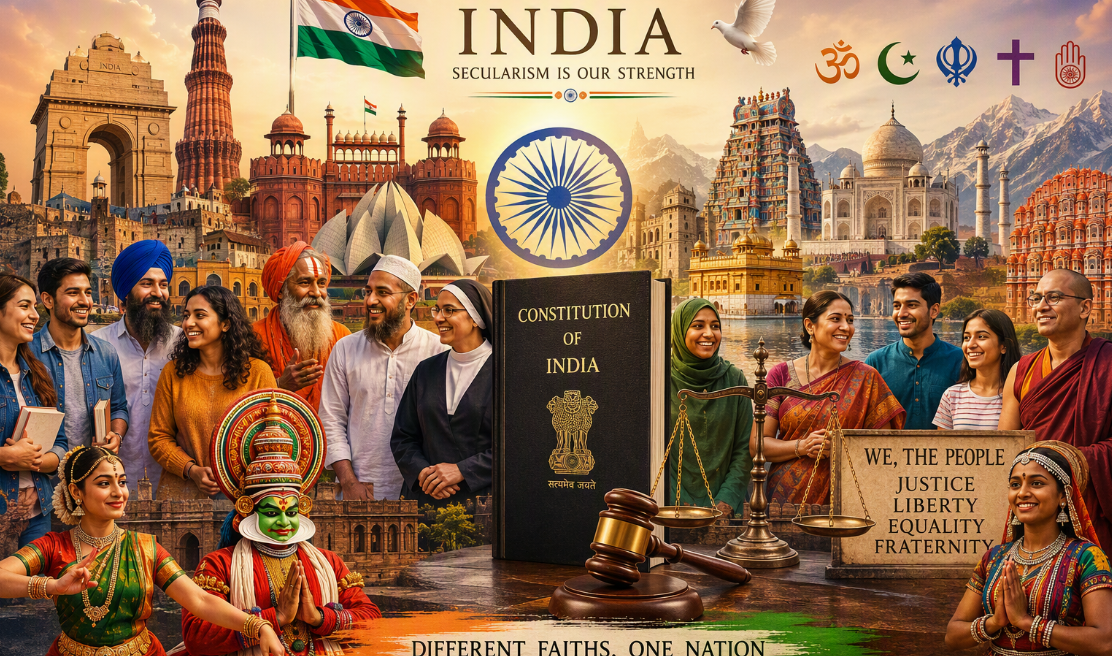
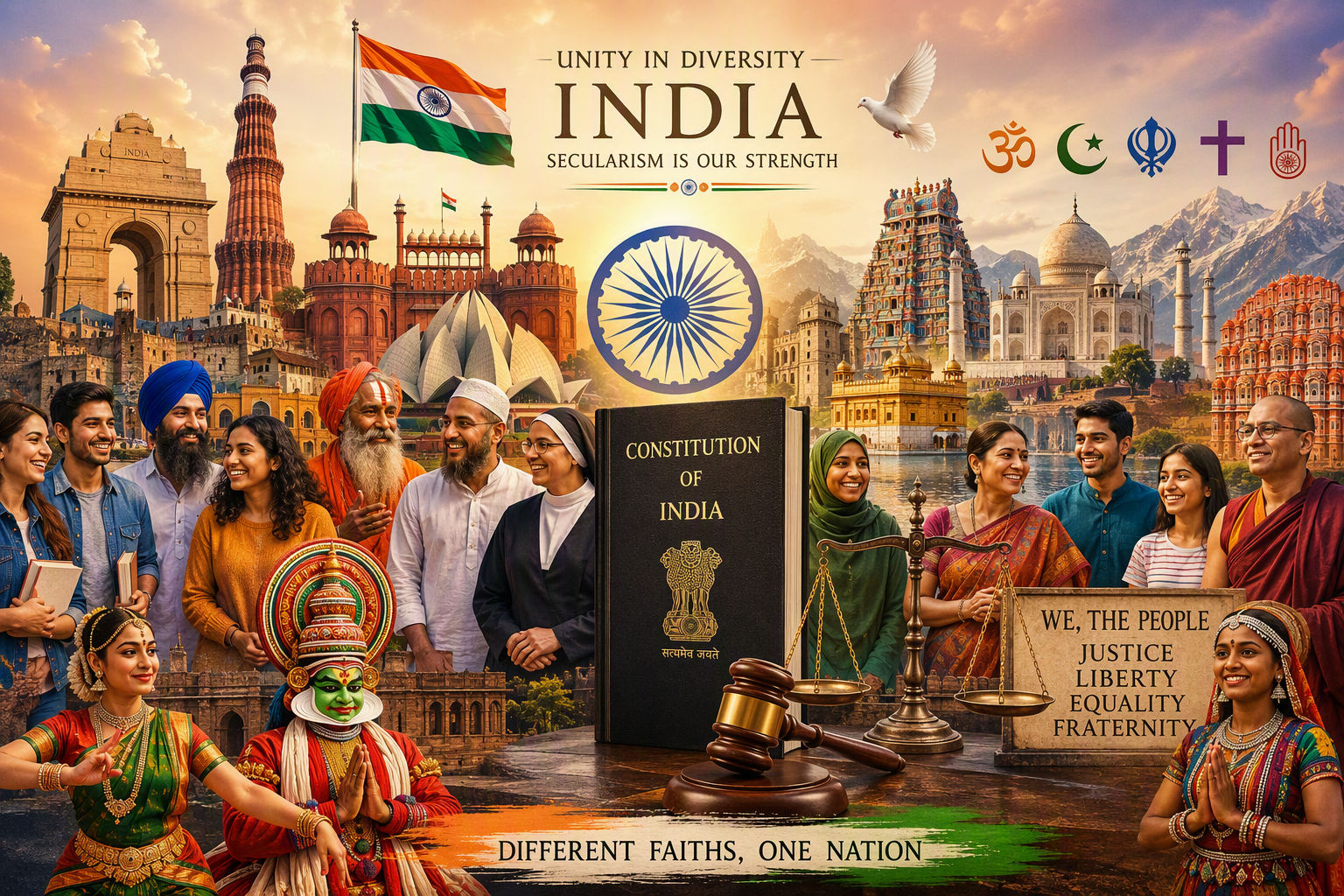
- Dynamic secularism shows how Indian secularism can change to fit real life. It works to keep religious freedom for people.
- The constitution of India supports state neutrality. It gives everyone freedom of conscience, equal treatment, and rights.
- India has no state religion. The state can still take part in some religious affairs to protect constitutional values.
- This model wants to keep social harmony between all religious communities.
- The big debates are about personal laws, minority rights, and the uniform civil code.
- New moves in both court and government rules still shape Indian secularism. This is important for UPSC preparation.
Table of Contents
Introduction
Secularism is a big idea in the Indian constitution. It has a strong effect on public life in the country. If you want to do well in UPSC, you need to know this topic well. The constitution in India does not push religion out of public life. Instead, it tries to keep the balance. It wants everyone to have freedom, respect every faith, and feel equal. So, to see how the constitution works each day, you need to learn how India uses secularism. This will help you get a good start when you learn about the rules and rights we all have.
Understanding Dynamic Secularism in the Indian Context
Dynamic secularism in India is a way to look at how religion and the state work together. It is not a strong wall to keep both apart from each other. Indian secularism does not ask for a state religion. At the same time, it stays close to what is happening in religious affairs in the country. Indian secularism gives people their freedom of religion. It can also step in to fix real social issues when needed.
This is not what you see in stricter models. The Indian state sometimes works together with religious communities. It may help change or control some practices if constitutional values need it. In the next parts, you will find out what this means. You will also see how this is not the same as the usual idea of secularism.
What is Secularism UPSC: Definition and Background
Secularism means the state does not choose one religion over the other. It also does not treat any religion in a bad way. In India, there are two main things about this idea. The first is to be neutral about belief. The second is to show equal respect for all religions. This way of doing things in India is more than just keeping religion and the government apart.
Under the constitution, secularism links with freedom of religion and the idea that everyone should get equal respect. These constitutional rights are made safe by fundamental rights. This means all people are treated the same by law and no one is treated unfairly. There is also freedom of conscience. A person can choose, practice, and talk about their religion. But they should not do anything that goes against public order, good morals, or health.
Dynamic secularism brings something important. It lets the state take action when people need help or when things must change for good. So, in India, secularism is not just about staying out of the way. It is active. It works with the constitution to keep both freedom for everyone and a fair public order.
Dynamic Secularism vs. Traditional Secularism
Traditional secularism often talks about the separation of religion and the state. It says both should be kept apart. Dynamic secularism in India is different. It says religion is a part of public life. The state may get involved if there is a need to bring fairness, reform, or equality.
Here is the key difference:
- Dynamic secularism lets the state get involved with religious institutions for a short time.
- Traditional secularism wants there to be a clear line between religion and the government.
- In India, the state can help or guide religious institutions as long as all get equal treatment.
- Changing bad practices is fine in the Indian model.
This is why many people call indian secularism a model of principled distance. The state is not against any religion. It does not run under any one religion, either. Instead, it keeps a good space from all faiths. It steps in only when our constitutional goals say it must.
Evolution of Secularism in India Since Independence
Since India became free, secularism has started to grow in the country. This is because of the way the indian constitution works, what the courts have said, and from what people in politics say. From the beginning, the indian constitution did not name a state religion. This helped shape what India would be, in a place with many people who are different from each other.
A big change came with the 42nd amendment in 1976. At that time, the word “secular” was added to the Preamble. Later, the court judgments made this idea stronger. If you want to know more about how this happened, you need to look at the main steps and the things in society that shaped it.
Key Milestones in the Growth of Secular Principles
India did not get its secular values overnight. The country built them one step at a time. Over the years, the law changed. Court decisions and the way people solved problems helped build these values too. At first, state neutrality meant the government stayed balanced. Later, it started to mean being fair. It was also about protecting minority rights and making limits on communal politics. This is how India’s secular values grew stronger.
A few milestones stand out:
| Milestone | Importance |
|---|---|
| Independence and Constitution | India rejected the idea of a state religion and protected religious freedom from the beginning. |
| 42nd amendment, 1976 | The Preamble formally described India as secular. |
| Kesavananda Bharati, 1973 | The Supreme Court of India treated secularism as part of the basic structure. |
| S.R. Bommai, 1994 | The Court said a communal state government can face action under Article 356. |
| Recent disputes | Courts linked public order and secular values to current site and property controversies. |
These changes show that there is a clear pattern. Secularism in India started as a big idea in the law. Now, it is more like a rule that people follow in daily life. This shift took place because of choices made by the Supreme Court of India and the way politics work in the country.
Influences of Social and Political Movements
Social movements and political parties have a big part in shaping what secularism is in India. There are many religious communities in the country. Because of this, people often ask for equality and want change. This also makes people think about who they are. So, the topic keeps moving forward and does not stop changing.
Some groups wanted to change religious practices so there would be more gender justice. Others talked about how to keep minorities safe, stop fights between groups, or how people use religion when they vote. The state and courts had to think about all of these things when they made choices on being secular in real life situations.
People talk about secularism a lot because of the way politics work. There is often debate and people do not always agree. Sometimes, you may see parties blame each other for winning votes by caring only about some groups or by bringing together only a few communities. The main goal is still important. That goal is to keep religious pluralism safe and work toward national integration. It is important for social peace that all groups get treated in a fair way.
Constitutional Framework Supporting Secularism
The constitution of india is built to give strong support to secular values. These values are not part of just one law or just a slogan. You find secular values in the Preamble, in fundamental rights, in directive principles, and even in the fundamental duties. This wide way of seeing things makes the whole framework feel deep and useful for people.
At the same time, the constitution allows the state to step in for some situations. This happens if the public needs help, if there is a need for change, or if every person should be treated the same. India’s way gives people lots of freedom, but it also tries to keep life fair for all. The next two sections will show how rights and the actions of the state help make this work.
Fundamental Rights and the Preamble
The Preamble gives the main idea about India. It shows that the country is a secular state. Even though the word “secular” was added after the 42nd amendment, the Constitution had this idea before too. The Preamble also talks about equality, liberty, and brotherhood for all.
Fundamental rights help make that idea real and offer real protections. Article 14 makes sure every person has the same rights in front of the law. Articles 15 and 16 say no person can be treated badly because of their religion. Article 25 gives you religious freedom and lets you have your own freedom of conscience. Article 26 gives groups the right to handle matters of religion, but they have to follow what the law says.
Other parts in the law help make the system stronger. Article 27 says the government cannot use tax money to support any one faith. Article 28 explains that there are limits on teaching religion in some state places. The Preamble and the fundamental rights work together. They make sure secularism is real for people every day. These tools do not let it be just an idea set apart from daily law and life.
Role of the State in Upholding Secular Values
State neutrality in India is not about the state staying quiet on religious matters. It means the state cannot take the side of one faith or treat people in a bad way for their religion. But, if values like equality and dignity are missing, the state can step in to help. These ideas are important parts of constitutional values.
This shows why there are times when the state can step in. The state can make rules for things like money, economy, or other things tied to religious institutions. It can also work to change things when religious practices go against public policy, gender justice, or other rights given by the constitution.
The most important thing to check is if there is fairness. If someone does something that helps one religion and not others, it is not right in terms of secular values. But if people from every community get treated the same and their rights stay safe, it matches how things happen in India. This is the reason the state gets involved in religious matters, but the constitution always puts some limits on this work.
Key Features of Indian Secularism for UPSC Preparation
For the UPSC exam, you should see indian secularism as a practical and flexible model of secularism. It is not about staying away from religion. There is equal respect for all religious communities. At the same time, there is a need to protect them and bring changes when needed. This model of secularism makes it unique and useful for the exam.
You also need to connect this model to talks about religious discrimination, minority rights, and the uniform civil code. You can see these topics come up a lot in mains questions. The next parts will call out two ideas that can help you the most when you write your answers.
Equal Respect for All Religions
One thing you should know about Indian secularism is that it gives equal respect to all religions. People say sarva dharma sambhava to talk about this idea. The state does not have a state religion. It also does not put any one faith above others in public life.
This idea matters in a society with many traditions. People from religious minorities do not need to feel they have to be part of just one culture. The system we follow knows this is important and helps people keep their identity, group, and beliefs safe.
Equal respect does not mean the state must stay away from all religious affairs. The state can be involved with religion. It just needs to act in a fair way. No group should get special treatment. For UPSC, this shows that India’s way is about accommodation and not about leaving religion out.
Balancing Individual Rights and Community Interests
Indian secularism takes care of both individual rights and what groups need. This is not like other ways that mostly focus on only individual rights. In India, religious freedom is for each person. But groups also get help, mostly in things like schools and culture.
You can see this balance in talks about personal laws and minority rights. The state has to deal with a tough question here. When should the group get to make its own rules, and when should there be change for fairness or justice?
For UPSC, remember these balancing points:
- Individual rights let us keep our dignity. They give us equality and protect our freedom of conscience.
- Community interests help save our identity. They build our institutions and help our culture go on.
- Personal laws often start talks about religious freedom and gender justice.
This tension does not make secularism weak. In India, you can see how secularism works in real life.
Comparative Perspectives: Indian and Western Secularism
Western secularism is about having a strict separation between religion and the state. The Indian model is not the same. In India, people feel that religion is part of public life. A strict separation of church and the state may not fit a place like India, where you have many different groups.
It is easy to see the difference when you look at India and the United States or other democracies together. For UPSC, these comparisons can help a lot. They let you talk about why India chose to go with accommodation and principled distance, and not a strict western model.
Indian Secularism vs. US Secular Approach
The US Constitution is well known for keeping a clear separation of church and state. In the US, people see religion as something private. The government and places open to everyone do not have any special tie to religion. Indian secularism is not the same. It lets the state get involved in some ways but still keeps state neutrality.
The difference can be summed up like this:
- The US model draws a clearer line between the church and the state.
- Indian secularism lets the country talk with and join in some religious things.
- In India, there can be limits on religious freedom if it is about public order, health, or what most people feel is right.
Indian secularism is not as firm as what you see in the US Constitution. In India, the rules for this are more open and can change depending on what is going on. The country does keep people’s rights safe, but it also allows religion in public spaces. This happens as long as everyone has the same rights and follows the basic rules of the constitution.
Lessons from Other Democracies
When you look outside the United States, you can see more choices. The western model is not always what you find in each place. Some countries choose a stronger separation of religion. In some places, the state and faith stay more connected. This shows that secularism and the way people practice the separation of religion can look different in each country’s laws.
The United Kingdom is a good example because it has an official religion. This is not the same as what India does. India does not have an official religion. It calls itself a secular state. This shows that India made a clear choice in its constitution.
The main point is clear. There is not just one way to be used in every place around the globe. India built its own system. It did this because of the many religions in the country, care for minority rights, and the need that people get along and live well together. India did not try to copy a western model. Instead, it made a setup that fits its own way of life and what its people want.
Modern Challenges and Current Developments in Secularism
Secularism in modern India is facing many tests. There is pressure from several sides. Laws create problems, and some rules are hard to follow. People see fights between groups, and there is a lot of anger on social media. Many feel they do not get equal treatment, and this puts the law and constitution to the test.
These days, debates about religious practices, minority rights, and the civil code are stronger than ever. People in public life are concerned about radicalization and hate speech. We also hear more arguments about religious disputes in the open.
At the same time, new things keep happening. People are talking about Uttarakhand’s Uniform Civil Code rules. Some are questioning the Waqf Amendment Act 2025. The courts are also looking into the Places of Worship Act. All these issues and changes have made indian secularism important again. This shows that indian secularism is changing and moving forward because of conflicts, new laws, and what the courts decide. The next part will talk about the main problems in detail.
Legislative, Social, and Political Obstacles
Many problems today happen when law, politics, and how people feel about who they are mix together. It can be hard to make new laws if these changes feel unfair or get too close to religious institutions. Political parties often use religion to get people to vote for them. This can make people feel that the state is not neutral and does not treat everyone the same.
Current areas of concern include:
- There are disagreements about personal laws. Some people say these should change over time. Others think there should be a uniform civil code for everyone.
- Many talk about the uniform civil code. This started when Uttarakhand said it will have new civil code rules in January 2025.
- There are people who questioned the Waqf Amendment Act 2025. They did this under Article 26.
- Minorities still feel religious discrimination. They feel left out in housing, jobs, and many other places.
Social things can make problems get worse. When fake news spreads fast or people use hate speech, things can fall apart quick. Sometimes people come together for the wrong reasons and that hurts peace. So, this issue is not only about the law. It is also about if our public organizations and the way people do politics let everyone feel equal as a citizen.
Conclusion
To sum up, dynamic secularism in India is always getting new ideas and is not easy to explain. So, it is an important thing to know for anyone getting ready for the UPSC exam. When you read about its past, the rules written in the constitution, and today’s challenges, you can understand why dynamic secularism matters in India. By learning what these secular values are and how people use them every day, you will see more of India’s social and political life. Knowing this can help with your studies and also teach you about the many groups in our country. If you want to know more about dynamic secularism and how it works in real life, you can ask us for a free session with our experts.
How is secularism applied in real-life scenarios in India today?
In a secular state like India, the government does not make any one faith its main rule. But in indian society, the government sometimes manages religious institutions. The government may also help minority groups with their education. When there are matters of religion about equality, reform, or state neutrality, the government can step in.
What new developments affect the nature of secularism in India?
Recent changes matter to the people. The uniform civil code rules were made in Uttarakhand. The supreme court is now looking at the Waqf Amendment Act 2025. People also have questions about the Places of Worship Act. All these changes have an effect on civil laws and public order. They also change the way political parties talk about religion in their debates now.
How does secularism relate to other constitutional values like socialism?
Secularism and socialism are important ideas in the Indian constitution. Secularism makes sure that people from all religions get equal treatment. Socialism works to support social justice and helps people by making things better for everyone. Both, together, help the state act when needed and set rules for public policy. This helps every person get respect, feel included, and have equal rights as a citizen.