Key Highlights
- The silver economy includes economic activities, goods, and services that are made for senior citizens and their changing needs.
- In India, the aging population is growing fast. The elderly population now is a big part of future markets.
- This change can help with economic growth in areas like health care, housing, wellness, insurance, and technology services.
- The silver economy also wants to make life better for seniors. It supports active ageing, accessibility, and better care systems.
- For UPSC, the topic connects to demography, social justice, welfare, and development.
- India still has problems with policy, how much things cost, and getting digital access for the elderly population.
Table of Contents
Introduction
The silver economy is now a key topic for many competitive exams. It links the rising number of older people with real economic activities. As the aging population grows, there is more need for health care, housing, money help, and care services. This makes the silver economy important for UPSC preparation when you study society, the economy, and government policy. If you want to know how demographic change works in real life, this topic helps you to see things in a clear and useful way.
Meaning and Definition of the Silver Economy
The silver economy is about all the economic activities made for the elderly population. This covers goods and services like health care, housing, wellness, and assistive devices. It also includes financial services that are good for people as they get older, meet their needs, and fit their likes.
In simple words, this is a system of production and use of goods that comes from a big shift in the number and type of people. It is important for UPSC because it connects how many people there are with rules made by the government, how people live, and their quality of life. To know more about it, you should look at how it happens in India and where this idea started in other parts of the world.
Silver Economy Meaning in the Indian Context
In India, the silver economy is about the market and support that has grown around senior citizens. This shows that older people are not just dependents anymore. They are also consumers, workers, and caregivers. They help and add to the Indian economy in many ways.
This change happens because the way people spend is now different. Older adults now want more medical care. They also need more help for wellness, safer homes, insurance, and services at home. These needs bring economic value to many areas, like technology or real estate. So, the silver economy is closely linked to India’s aging population and how people buy and use things.
The silver economy is not just about how people spend money. It is also about making life better for senior citizens. A strong silver economy gives them more respect, helps them get what they need, and lets them live more freely. This can lead to real changes in the quality of life for senior citizens.
Evolution and Introduction – Origin of the Term
The silver economy is a term that came up because the number of older people is going up in many countries. It is also connected to the idea of the longevity economy. This shows how people who live longer and feel well can play a big part in the economy. The word “silver” comes from the silver hair that people often get as they get older.
The number of older people in the global population is going up. This is because of demographic transition. In many places, birth rates are going down. At the same time, people live longer, and life expectancy is higher. Because of this, there are more older people now than before. This change makes governments and businesses look at age and demand in a new way.
What does that mean in practice? It shows a big change is happening with the silver economy. Now, people see older adults as a real consumer class. They have their own needs, what they like, and money to spend. This is the new way of looking at the silver economy today.
Global Perspective vs. Indian Scenario
In advanced economies, the development of the silver economy is moving fast. Europe and North America have many older people. The public systems there help older people by supporting age-friendly housing. They also use digital care and remote health services, and make sure transport is easy to use. These countries see aging as something important for welfare, but they also see it as a market opportunity.
India is in a new phase now. Many people there are still young, but the number of older population is going up fast. This can cause some pressure, but also brings new chances. India should get ready soon, so the change in people’s age is not so hard to deal with later.
The main thing that sets advanced economies apart is that they are more ready. They have strong systems and good infrastructure in place. India, on the other hand, has to make its services grow and also keep things low-cost. This is why India needs to use new ideas and technology. Doing so can help close the gaps in care, access, and the way services reach people.
Socio-demographic Context: India’s Aging Population
India’s elderly population is getting bigger. This is happening because people are living longer, and birth rates are changing. This demographic shift is starting to change how we live and work. It has an effect on families, jobs, health systems, and the way the government spends money.
You can see the impact of the aging population in everyday life. People focus more on care needs, loneliness, and mental health as there are more older people. When this group grows, the silver economy starts to matter more. The next parts talk about the main trends, the social effects, and the changes in different areas.
Population Aging Trends in India
India is now going through a demographic transition. More older people are there in the country each year. This happens as people live longer lives, and family size is not the same as before. When birth rates drop, the feel of the population changes. So, there are now more older people than before.
For UPSC, the main thing to know is that india’s elderly population is growing very fast. This rise will change how people set up policy priorities. There is a strong link with the silver economy. A bigger elderly population means there will be more need for goods and services made for older people.
| Indicator | Trend in India |
|---|---|
| Elderly population in 2011 | 103.8 million, about 8.6% of the population |
| Projected elderly population by 2031 | 193.4 million |
| Long-term trend | Elderly share expected to cross 20% by 2050 |
| Key demographic drivers | Rising life expectancy and changing birth rates |
| Policy relevance | Greater need for health, pensions, housing, and support services |
Societal Impact of a Rising Elderly Population
A growing elderly population makes many changes in the way society works. Families often have to take on new care roles for older adults. Communities also need to build better support systems. Public institutions must look for ways to meet age-related needs. Older adults may need more help with their health, getting around, and everyday tasks.
There is a strong emotional side to this as well. Many people feel more alone now. The reason is that joint families are getting weak, and more people move away from home. This makes more social isolation. It can hurt mental health for many senior citizens. It also lowers the quality of life for them. So, this is not just about money. It is also a big social issue.
This change can help with economic growth if it is managed right. When seniors stay active, feel healthy, and feel part of things, they help drive demand. They share what they know and take part in the economy. This is what the silver economy can do—it helps people and the economy at the same time.
Urban vs. Rural Dynamics in Aging
Getting old feels different in cities and rural areas. In cities, older people can get to hospitals, use online services, and see special doctors more easily. But they can feel lonely, pay higher costs, and not feel close to their neighbors.
In rural areas, older people often lean on their family and other people nearby. But there is still a big problem with getting the help they need. Many health conditions do not get the care that is needed. This happens because there are not enough health centers, transport is hard to get, and there is not much trained help for older adults. In a lot of these places, home care services are also hard to find.
Accessibility is a big challenge in both cities and villages. But, it shows up in different ways. In urban India, old people need age-friendly roads and buildings. They also need good digital help. But in rural India, people still need basic services to reach them. Services also need to be cheap and given well by the government.
These differences are important when people set up silver economy plans.
Key Features and Characteristics of the Silver Economy
The silver economy is focused on a system of production and services made for older people. It covers many economic activities. These include health care, housing, insurance, and wellness. It also has digital support. So, the silver economy is broad. It is not limited to just one industry.
Another important part is demand. Older adults are a big part of the consumer class. They have real purchasing potential. Their needs give economic value and help shape the consumption of goods in new ways. The next parts talk about the main traits, key sectors, and some real examples.
Core Elements Defining the Silver Economy
The silver economy is about all the goods, help, and services made for older people. It comes from people living longer and family changes. The main goal is to help older people live on their own. That is why the silver economy is not just about pensions or care for older people.
One good way to look at it is to see how the system of production changes as people get older and what they need. The system joins together markets, help from the government, and life every day. It also helps with active ageing. This means older people are seen as able to take part, not just as people who need help.
- It has financial services, health care, housing, wellness, and help with getting around.
- It shows how the consumption of goods and services is different for older people.
- It wants to make the quality of life better with more safety, care, and easier access.
- It sees seniors as people who buy things, work, and give back to society.
- It wants products that help seniors keep their freedom and stay active for a long time.
Primary Sectors and Industries Involved
The silver economy touches many types of business. This is why it is important for business in India. The older population in the country is growing fast. Companies cannot see this group as small or unimportant anymore. There is more need now for both basic and special services for them.
Some areas stand out because they help with age needs. Health support, long-term care, and financial security are clear examples. There are other areas, like travel, digital access, and housing, that also matter. This is because older adults now live longer and stay active for more years.
- Health care and senior care services
- Real estate that gives senior-friendly housing
- The financial sector has insurance and pension products
- Online services like telemedicine and digital help
- Wellness and home-based support systems
These areas show why the silver economy is important for business and growth.
Silver Economy Example – Practical Applications
A good example of the silver economy in India is how more older adults with long-term health problems now use home care services. A lot of these seniors want to stay in their own homes, but they still need help often. Because of this, there are now more home care services that send people to visit homes, give advice from far away, and help caregivers too.
Another example is how there are products made because of changes in how older people buy things. Hearing aids, mobility aids, fall detectors, and emergency alert devices are now more important because older people need them more. These products help people do things on their own. They also help lower the risk in daily life.
Online platforms are a good way to see how the silver economy works. With telehealth, online doctor visits, and app-based services, older people can talk with doctors, caregivers, and get wellness help. All these examples show that markets change to fit what older people need.
Economic and Social Significance of the Silver Economy
The silver economy is important for both business and the people who live in the world. It helps the economy grow by creating more need for care, housing, technology, and financial services. This means new jobs and more work. It also helps grow the gross domestic product by bringing in new business and services for older adults.
The silver economy is about more than just money. A strong silver economy helps people live better and feel good as they get older. It keeps older people active and helps everyone feel included. It can also help people find new work. In the next part, you will see how the silver economy can give more benefits for people and the economy. It’s about quality of life, active ageing, and more.
Contribution to National Economic Growth
The growth of the silver economy helps the country’s output go up because it makes people spend more in many areas. When more older people look for care, housing support, wellness services, and insurance, spending goes up. This brings good economic value and helps markets get bigger.
When services are well planned, their contribution to gross domestic product grows stronger. Health care, assistive devices, senior housing, and financial services help make money, create jobs, and bring in investment. This makes changes in who lives in a place more of an economic driver, not just a cost or issue for welfare.
There is another side to this. A lot of older people have savings, assets, and a steady income. This helps them keep their spending power. When there are policies that help their needs and let them keep buying, the silver economy can be a key part of long-term economic growth.
Social Benefits and Inclusive Development
The silver economy helps make development better for everyone. It looks at the needs of the growing elderly population. It does not leave senior citizens out. Instead, it brings them in when there is planning, when services are made, and when people think about markets. This way, development can be fair and balanced for all.
The main social benefit is a better quality of life. Older adults get better care, safer homes, good transport that fits their needs, and helpful people around them. These things help them feel respected. This is important because family support is changing, and more older adults feel alone now.
It also helps push for social innovation. Silver economy leads to ideas like age-friendly cities, community support models, and new service platforms. All these work because the focus is on what older people need in day-to-day life. When these things come together, the silver economy helps connect goals of welfare with real, everyday inclusion.
Employment Opportunities and Job Creation
The silver economy helps make more jobs, both straight away and through other ways. As there is more want for things that help older people, more people need to work in care, health help, tools that make life easier, wellness, and home services. This means there are jobs for all types of skills.
This change also affects the system of production. Companies will need workers who know about age-linked needs. This can be anyone like caregivers, nurses, designers, service team members, and people who help with digital needs. Senior care turns into a good field for work because there will be a lot of demand for it in the future.
There is a chance for older adults to stay active in the economy. Flexible work can be good for them. They might learn new skills and work in places that care about their age needs. This helps older adults keep working and giving back.
The silver economy is more than just making jobs for others. It also lets older adults be part of productive work themselves.
Business Opportunities within the Silver Economy
For businesses, the silver economy is a big and growing area. The elderly population is getting larger every year. Their consumption patterns are also changing. This gives businesses a chance to offer products and services that are practical and easy for them to use. People now look for things that fit their needs in health, housing, care, and finance.
You can also see that new trends for investment are now coming up in this area. Startups, companies that give services, and big businesses all get chances to do well in financial services, home help, and care that uses technology. The next parts look at these parts, what startups are doing, and how smaller companies take part.
Emerging Sectors for the Elderly Market
The elderly market is growing in many areas now. That is why the silver economy is getting so much attention. When businesses know what older people need, they can make helpful services. This also helps meet a need in society for a long time.
A big trend now is people want more convenience, safety, and to live on their own. This is why there is growth in markets for home-based care, digital access, and ways to live that are good for people as they get older. These things are not just short-term changes. They are happening because of important changes in the number of people and how they live their lives.
- Health care services that help people with long-term sickness and give support to stop sickness from starting
- Home care services for seniors who want to live at home for as long as they can
- Real estate projects made for seniors to feel safe, feel at home, and get help from the community
- Online platforms where people can use telemedicine, book services, and talk with others
- Financial services that give things like insurance and products linked to pensions
These are some of the best business chances in the silver economy right now.
Investment Trends and Startups Targeting Seniors
Investment trends show that aging is now a big market need. Many elderly people want care that fits them, has easy access, and gives safe places to live in. So, money will likely go to ideas that solve real problems for these people and help them in daily life. This is why more people and groups now find this field very interesting.
Startups are important in this area. They often build online services, health tools, and options that help people get care more easily. These companies make things easy to use. The information also gives some examples of startups working on things like barrier mapping, care planning, and making digital options easy to use for everyone.
These changes show that there are good business chances out there. A company that moves fast can reach more customers and help create what people ask for in the future. In India, new ideas from startups can give us local and cheaper plans. We do not have to always follow costly plans from other places.
Role of Small and Medium Enterprises
Small and medium businesses can have a big part in the silver economy. A lot of needs for older people are local and driven by services. Seniors often want good help that is close by, like someone they know. They need many things, from health help to daily services and simple products they can use. This lets small firms get a good place to start in the silver economy.
They can move fast when the use of goods or services changes. For example, small and medium businesses can help with special devices, health support, food made for each need, ways to help people move, or set up care in the area. In many places, they might do better than big companies because people trust them more.
These firms can help with financial security by giving simple and low-cost options, not just expensive ones. If more people start to back elder-focused businesses, small and medium businesses can play a big part in the silver economy in India.
Challenges Facing the Silver Economy in India
India’s silver economy has a lot of potential, but there are still big barriers. The number of senior citizens is going up fast. The systems are not growing in the same way. There are gaps in policy. The infrastructure is not strong. Planning that focuses on age is also limited. These things slow down progress for senior citizens as the country goes through this demographic shift.
There be everyday problems that people face. It can be hard to get or afford things like health care, insurance, and digital services. A lot of people still believe myths about aging, which means not enough people in the market or in policy focus on helping older people. The next parts will talk about these problems more.
Policy and Regulatory Gaps
One of the top problems for the silver economy in India is policy gaps. The elderly population is getting bigger, but the support is not all connected. This problem makes it tough to plan for health care, pensions, housing, digital inclusion, and how local services are given.
The problem is not just because there are no schemes. There is a bigger issue with the rules that are in place. Without clear rules for eldercare services, senior housing, transport that is easy to use, and digital systems made for older people, the market does not grow well. People also do not feel sure about these services.
Financial services make this clear. A lot of seniors need insurance, pensions, and safe access to their savings. But there is still not enough coverage. The silver economy will only be wide and helpful if welfare policy and market rules work together better.
Accessibility and Affordability Issues
Many seniors have a hard time getting to helpful services, even when the services are there. There is weak transport in some places, and many public areas are not made for older people. In a lot of regions, there are not enough services close by. A big problem is the cost. This is especially true for people who don’t have any pensions, savings, or insurance.
The digital divide is a big challenge for older adults. Many new things like telemedicine, online banking, and app-based services can be helpful. But older adults often find digital tools hard to use. This means they can have trouble meeting their health needs or claiming benefits by themselves.
- High out-of-pocket spending can make care hard for many seniors.
- Low insurance coverage can hurt their financial security.
- Poor digital access can stop people from fully using online services and support platforms.
If these barriers are not lowered, the silver economy will stay small. It will mostly help a smaller group of people who already get better support.
Myths and Misconceptions about Senior Consumers
A lot of people think that older people can only depend on others and do not see them as active buyers. This idea can stop many from seeing the real purchasing potential that senior citizens have. When people think this way, businesses do not pay enough attention to how the need for housing, wellness, care, travel, and assistive products is changing for older people.
These ideas can change the way we think about policy and markets. They also make it easy to miss the different ways older adults spend their money. The truth is, not all seniors have the same income. Their needs and style of living are also not always the same. Some older adults stay active for many years. They keep using digital tools, and they have enough money.
- People often think of seniors as ones who just get help, and not as people who buy things.
- The way we look at age hides good business chances in services made for older people.
- A lot of the time, mental health issues and feeling lonely do not get enough notice or help.
It is important to clear up these wrong ideas if India wants to develop a silver economy that is real and includes everyone.
The Silver Economy and Technological Innovation
Technology now plays a big role in the silver economy. The use of technology is helping people get better health care. It can help them stay independent and takes some of the work away from families and care centers. Things like remote monitoring, telemedicine, and artificial intelligence are bringing a new way to give care to people.
New ideas help only when people can use them. This is why digital inclusion and tech literacy are just as important as the devices. The next parts talk about assistive tools, digital learning, and health-focused tools for seniors.
Assistive Technologies for Aging Populations
Assistive technologies make life safer for older adults. These tools help them stay more independent. They are very useful when someone has health needs, moves less, or has trouble with senses. The silver economy now uses these tools to meet health needs that come with age.
Remote monitoring is one of the best new areas right now. Wearables and connected sensors can keep an eye on things like vital signs and movement. They can also notice emergencies and send alerts right away. Artificial intelligence can help make response systems better. It can also offer support that fits each person.
- Hearing aids help people hear better, which makes talking and daily life easier.
- Mobility aids help you move, feel safe, and have more confidence when you are at home or outside.
- Remote monitoring devices let you keep track of your health needs over time.
These tools help with more than just daily tasks. They can lower risk, improve ongoing care, and help people stay in their homes as they get older.
Digital Inclusion and Tech Literacy for Seniors
Technology will not help the silver economy if older people cannot use it. The digital divide is still a big problem. Many older people struggle with online systems. This is even harder when the apps do not work well or there is no help for them.
This is why tech literacy is so important. Older adults need easy training and patient help. They also need online platforms to be simple to use. This helps them use the internet for things like health, finance, staying in touch, and services. This is not just a skill problem. It is about making sure they can be part of things.
Lifelong learning is a good answer. When older people have chances to learn, they can keep up with new ways people buy things and digital systems. This can help them stay independent. It also helps make technology something that works for them, not something that gets in their way.
Healthcare Innovations in the Silver Economy
Healthcare innovation is a strong part of the silver economy. Older adults need support all the time, not just when they go to the hospital in an emergency. For this reason, digital tools, systems that can be used at home, and services that are easy to change are getting more important for them.
The information shows that telemedicine, wearable devices, sensors, and remote care are growing fast. These things can make medical care better for people. They help reduce wait times. People do not have to travel all the time to see a doctor. These tools are very helpful for those who need to handle health problems for a long time.
- Telemedicine lets people get healthcare with online services. This means you can talk to a doctor or get help without going in person.
- Wearable sensors help you find health problems early. They also make it easy to check your health often.
- Preventive healthcare tools help seniors check for risks. They let people take care before things get worse.
When you use such innovations the right way, they help more people get care. They lower stress on families. They also make eldercare better and more helpful.
Impact on Health, Wellness, and Care Services
The silver economy affects health care, wellness, and care services in a big way. Many older adults need steady support as they grow older. When people age, health conditions often become more common. So, there is more need for elderly care, help with getting better, and long-term support.
There is also a bigger benefit for people. Better systems can help mental health, make it easier to get geriatric care, and help preventive healthcare be stronger. This can help people live longer and keep their dignity. The next sections talk about changing health needs and care models in India.
Evolving Healthcare Needs and Responses
Healthcare needs change as people get older. Many older adults face long-term health problems, trouble moving around, and need more time to get better after illness or surgery. Because of this, they need care that happens often, works together well, and is easier to get than care that they only receive once.
India should do more than give care in hospitals. It needs to focus on preventive healthcare, home support, rehabilitation, and better mental health. People feel lonely and alone. This can hurt well-being just like being sick in the body. So, care systems must help with both the mind and the body.
When services fit these needs, the quality of life gets better. Seniors can feel healthier. They can live on their own for more time. This can help them stay away from more problems. The silver economy helps to move healthcare to focus on more follow-up, stop big issues before they start, and give care that makes people feel respected. It is not only about responding when there is a crisis.
Models of Geriatric Care in India
India’s way of caring for older people is growing, but a few main types can be seen now. Some older people stay at home and get help from their families. Some go to places like care centers, clinics, or use nursing help. The problem is that these services do not reach everyone, and there are not enough special care services for seniors.
Home care is getting more important now. A lot of older adults want to stay in the place they know. This way works well if someone has health conditions that last a long time. With home care, people can get medical care, have someone check on them, and get help from caregivers, all at home. They do not need to travel often.
- Elderly care at home with help from family
- Home care services that give medical and daily living support
- Geriatric care in a facility or institution for those who need more help
A mixed way will help the most in India. This will work well if the services can be good, easy to get, and do not cost much.
Importance of Preventive Healthcare for the Elderly
Preventive healthcare is very important in the silver economy. It helps find and handle health conditions early, before they get bad. For older adults, this can mean going for checkups often. It may also be talking to doctors at the right time, keeping healthy habits, and getting help to deal with ongoing health problems.
Its value is more than just helping with a sickness in the body. Prevention means you must also care about things like how well you feel, how much you can move, mental health, and being part of things with other people. If these things are missed, small trouble can turn into big health troubles. This can take away the chance to take care of yourself and make care cost more.
A prevention-focused approach can help people live better lives. It helps seniors stay active for more years. It also means families and health systems feel less stress from care needs. This is why preventive care needs to be a main part when we talk about the silver economy. It makes it better for all, so the quality of life goes up for everyone involved.
Government Initiatives Supporting the Silver Economy
Government help is key if the silver economy is to grow in a way that includes all people. In India, there are now different plans and rules that focus on senior citizens. These cover things like elderly welfare, financial services, health care, and social help for them.
These steps show that the issue is now part of talks about rules and plans. Groups like the Ministry of Social Justice & Empowerment, along with programs like APY, SACRED Portal, and SAGE, are all part of this bigger plan. The next parts explain what these groups and programs do in a simple way.
Key Schemes and Policies for Senior Citizens
India’s approach to the silver economy is still growing. There are already some plans in place that help the elderly population. These efforts mainly aim to make sure there is financial security. They also help people get welfare and support services. For UPSC, it is helpful to look at how these steps link to changes in the number of old people and making development fair for all.
The gathered material talks about plans to improve pensions, offer more ways to work, and build better care systems. These things matter because a lot of senior citizens do not have steady help, especially those who work in the informal sector.
- The Atal Pension Yojana helps give more people a pension. This program is for their financial security in old age.
- The SACRED Portal helps people find new skills. It also makes it easier for them to get flexible work.
- The SAGE Programme helps set up eldercare. It also looks for new ways to improve these services.
These schemes are important because they help people move from simple relief to better social services and support for the long term.
Role of the Ministry of Social Justice & Empowerment
The Ministry of Social Justice & Empowerment is key in India for looking after older people. The ministry supports rules and plans that help senior citizens. It works on social care and gives help that fits what older people need. Because of this, the Ministry is very important when we talk about the silver economy and the lives of older people.
The ministry does more than just handle papers and files. It also shapes the way the country treats aging in its rules and laws. If older people are seen as citizens who have rights and their own needs, then plans to help them will be better and more useful.
For UPSC preparation, keep in mind that the ministry is important for linking social justice with change in people’s age groups. As India’s elderly population gets bigger, this ministry and others like it become key. They help change big ideas about the elderly population into programs, help with teamwork, and set the rules that guide what will be done.
State-level Programs Promoting Elderly Welfare
State-run programs matter a lot, as growing older can be different depending on where you live. The needs of senior citizens are not the same in all parts of the country. A state can often see the needs in health, transport, community help, and other services that its senior citizens need. This is why the state can give better help in these areas.
The put together information does not say which state or name of the plan is talked about. It does, however, make it clear that elderly welfare needs to happen where people actually live. This means we need help from public services. There should be awareness so more people know what is needed, and there should be age-friendly places that fit local needs.
- State-level programs can help make welfare schemes work better in each area.
- They can help fix some gaps in health, access, and what people know in the region.
- They can work with national policies and give support based in the community.
A strong silver economy depends on both what the Union plans and what the states do. The Union can set the direction. The states have to put the plans into practice. Both parts must work together for the silver economy to grow well.
Global Approaches and Learnings for India
Many advanced economies have seen a lot of their people get older. They have made systems to help with this change. The European Union and the United States show good ways to handle care, housing, and technology for older adults. They also have ideas for long-term planning for a growing older global population.
India does not have to use these models just as they are. But, it can still learn helpful things from them. Other Asian countries give many useful examples, too. These may fit better with what is real and happening in this part of the world. The next parts talk about what the developed countries do, show how Asian countries compare, and bring up ideas that India can also use.
Silver Economy Example from Developed Countries
Developed countries see aging in two ways. It can bring problems for people and for the government, but it can also bring new chances to make money. In advanced economies, the silver economy is linked to the idea of the longevity economy. That means as people live longer, there are more products, services, and systems to help them stay active and live well.
The European Union talks about the silver economy as all the things that help people who are 50 or older. In the United States, there is a lot of focus on ideas like making it easier for older people to live in their own homes. People also work on age-friendly design and planning for care in the long run. These things have got a lot of attention from both rules and the market.
- The European Union looks at the silver economy as a big part of the whole market.
- The United States focuses on aging in place and new tools to help people.
- Rich countries put more money into buildings and services that help older people feel welcome.
India can learn from this early planning mindset.
Comparative Analysis with Asian Peers
Asian peers help India because they mix fast growth with a growing ageing population. Their actions during demographic transition teach us a lot. These countries often improve health care, add elder services, and build better social support. This way, people can see how to manage an ageing population. This is good for India as it faces the same change.
India is not as far along in aging as some other countries. This is actually a good thing. It gives the people who make laws some time to get ready before there are many old people. The main thing is to learn how to handle this before it turns into a big problem.
| Area of Comparison | Broad Lesson for India |
|---|---|
| Demographic transition | Plan early as the older share begins to rise |
| Health care response | Build age-sensitive and continuous care systems |
| Quality of life focus | Combine medical support with social inclusion |
| Infrastructure approach | Create safer, more accessible spaces for older adults |
| Policy value | Treat aging as both a welfare and development issue |
Lessons Adaptable to the Indian Ecosystem
India can pick up some lessons from advanced economies, but it does not need to follow them in the same way. The first thing to do is get ready early. Aging is not just something that will happen later. It is a big change for a country, and it needs to be taken seriously right now. A good policy mindset starts with this understanding.
The second lesson is about why social innovation matters. Things like homes that are good for all ages, health help that you get online, city spaces that are easy for everyone to use, and ways to care for people in the community can work in India. But first, the solutions need to be made so they cost less and fit what local people need.
The biggest lesson here is about changing how we all think. We need to see the older people as more than just those who need help or care. There is real potential of the silver economy when we see them as full citizens, customers, workers, and people who play a role in the community. This kind of paradigm shift can help guide the way policy is made and how markets work in India.
Social Inclusion and Senior Empowerment
The silver economy is best when it helps connect people, not only when it helps things grow in the market. When the community gets involved, or public places feel safer, or when cities feel good for all ages, older adults feel more active and closer to people. This makes the quality of life better for them in a clear way.
Senior empowerment is not just up to the state or the market. It also needs help from NGOs, civil society groups, and local people. These groups can help reduce isolation for seniors. They give them a way to join and feel pride in what they do. In the end, a good silver economy must make sure people have a place to belong, ways to get what they need, and feel respect.
Community Engagement Strategies
Good community engagement strategies are important for growing the silver economy. The silver economy means the money and activities from older adults. You can set up places, in person or online, where older adults talk and join in economic activities. This helps them feel more involved and can make their lives better.
Getting older adults to use technology, such as online services and social media, can help close the digital divide. With this, seniors can get to important resources and talk with others.
Working with local nonprofits and civil society groups is also a good way to help. These groups can give the social services that the aging population needs most. When many people work together, they make sure older adults feel safe with money and stay part of their communities. This way, everyone has a chance for a good quality of life.
Role of NGOs and Civil Society
NGOs and civil groups help make life better for senior citizens. They speak up for the rights and needs of the elderly population. This helps make sure their ideas and voices get heard when rules are made. These groups set up programs that help seniors stay active and get good health care. In this way, they help fill gaps in economic activities.
NGOs also use new ways, like social innovation, to help with mental health problems. This work is for the good of older individuals’ lives, too. With teamwork and talking together in the community, these groups make a safe and happy place for seniors. This helps deal with the big changes in the aging population. Through these efforts, they work to improve mental health and boost the quality of life for all older people.
Age-friendly Cities and Public Spaces
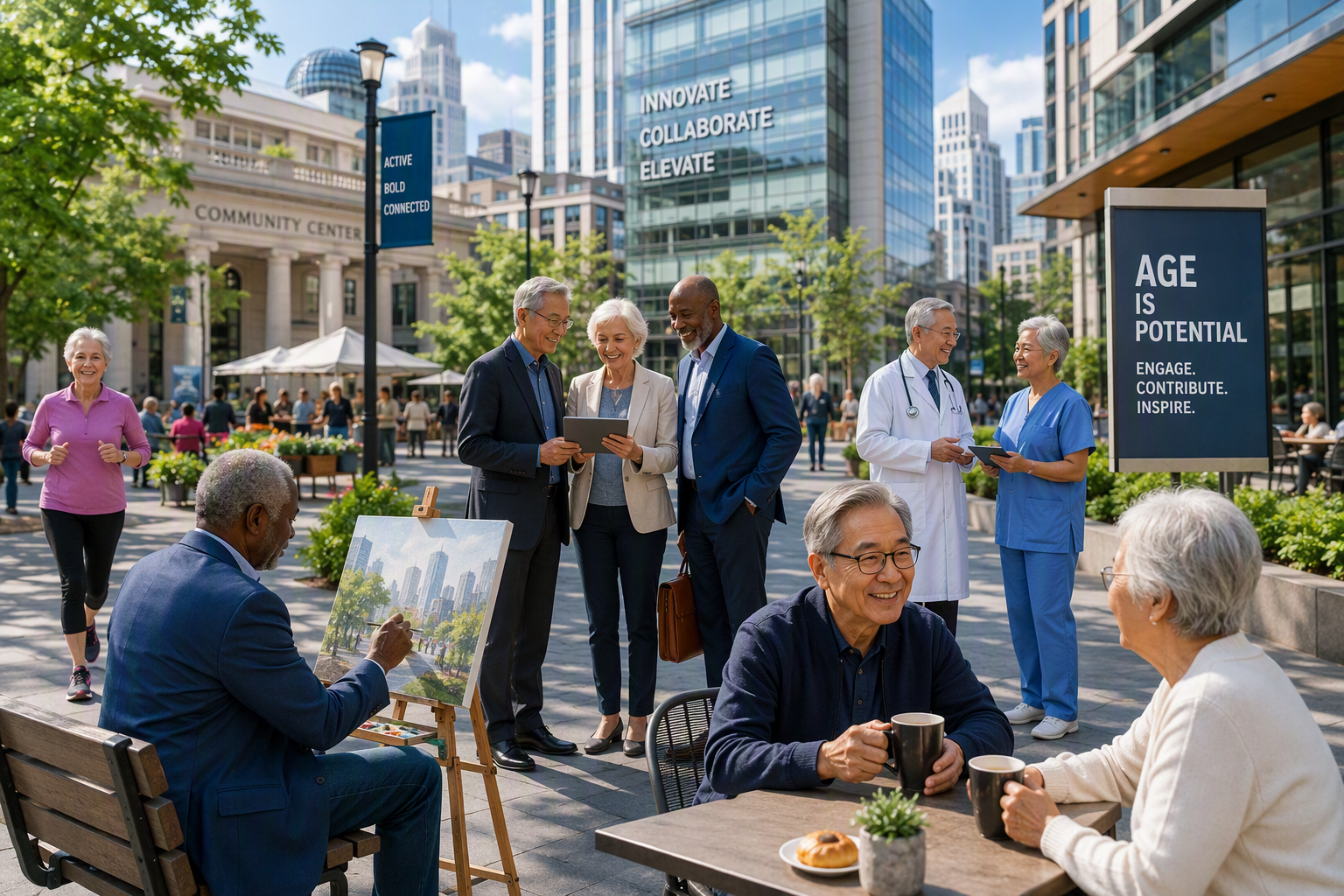
Creating age-friendly cities means making public spaces and services that fit the needs of older adults. When cities do this, they help make life better for them by giving more ways for people to meet, move around, and use what the city has. Walkways, parks, and good ways to get around help older people stay active. With these in place, they feel more part of the groups around them. Using the right technology, like remote monitoring, makes daily life even easier for seniors. Mobile apps can also help meet some health care needs. These tools let older individuals feel more free and in control.
In the end, age-friendly places help support active ageing. They give the right kind of help so older people can feel good about their lives, stay busy, and get the care and things they need every day to feel happy and healthy.
Future Prospects and Emerging Trends
The silver economy is getting bigger and it offers many new ideas. People are living longer and there are more older adults now. This change makes banks and other places offer new financial services and products for the elderly population. Because of this, market trends are shifting.
There is also the development of technology, like artificial intelligence and online platforms. These tools help to make things easier for senior citizens. They can use these to get help, connect with others, or find new things to do. This helps improve the quality of life for them.
In the future, new trends will be about health care, mobility aids, and lifelong learning. These things will let older adults stay healthy and take part in activities they like. As seniors become a bigger consumer class, all these changes will help India grow. It will also help India’s place in the global market get better.
Projections for Market Growth in India
India’s economy is changing as there are now more older individuals in the country. With life expectancy going up and a larger elderly population, there is a strong market potential that people are starting to notice. Experts say the silver economy could have a big effect on India’s gross domestic product.
This demographic shift is opening up chances for growth in health care, financial services, and many other consumer goods. It also shows how important it is to have policies that help improve the quality of life for older adults. Meeting the needs of older individuals will ask for new ways of thinking and working. There is now a need to pay more attention to all these changes, so people can also feel good about getting older in India.
Evolving Consumer Preferences among Seniors
Seniors now want more products and services that help them feel better in their daily lives. Many older individuals look for things that make life easier and faster. You can see more people in this group use online platforms to shop and find services. Health care is important for them, and so is technology. Social activities also matter, as they like to stay active and take part in the community.
There is a growing demand for things like mobility aids and hearing devices. Many want more choices for digital learning, too. This shows that older people want to keep learning through their lives and stay independent. The way this group thinks also shapes how economic activities grow. All these changes point to the big potential of the silver economy. It shows how much this market can give to our world and improve the quality of life for seniors.
Policy Priorities and Innovation Directions
Taking care of the aging population needs us to focus on the right policy priorities. It is important to talk about new ideas in many sectors. Good plans to improve financial services and health care for India’s elderly population can help grow the economy. These changes can also give older people a better quality of life.
Helping older people stay active through lifelong learning and better social services can bring out the full potential of the silver economy. New things like remote monitoring and digital platforms help close the digital divide. These tools also serve the health needs of older individuals.
When all stakeholders work together, we can make strong policies for senior citizens. This can support India’s elderly population in a big way.
Conclusion
Understanding the importance of the silver economy can greatly change how we look at policy and new ideas today. There is a growing elderly population. So, we have to pay more attention to the health needs and buying habits of older adults. Economic activities that focus on older adults, such as health care and online services, will help improve their quality of life. When we use new technology like artificial intelligence, we support a strong longevity economy that helps people live longer and better lives. Working with senior citizens pushes economic growth and makes active ageing possible. This helps the whole society be healthier and do well.
Frequently Asked Questions
What is a real-life silver economy example in India?
A good example of the silver economy in India is the rise of age-friendly startups. These businesses focus on what senior citizens need. Companies now sell health monitoring devices, run fitness programs, and offer home care services. This shows how people in business are finding new ways to help and support this group. It also shows that the silver economy is growing strong in the country.
Why is the silver economy important for UPSC aspirants?
The silver economy looks at the needs of the aging population. This is important for UPSC aspirants because they have to think about policy-making, social welfare, and planning for cities. If you understand the silver economy, you will be ready to handle new challenges and spot chances for better work in both governance and economic development.
How does the silver economy benefit social development in India?
The silver economy helps India grow. It does this by supporting older adults. It lets people stay active as they get older. It makes people in the community work together. It builds places that feel open and friendly for all. The silver economy makes more jobs. It helps make new rules that are good for older adults. All this makes the country stronger and helps people feel better in their lives. This is why the silver economy is good for both economic growth and the well-being of older adults.