Key Highlights
- The blue economy is about using ocean resources in a way that helps with economic growth and also keeps the ocean ecosystem healthy.
- In India, marine resources are important for moving goods and people by sea. They also help coastal communities and give support for food security.
- The blue economy brings together economic benefits and works for sustainable development. It helps to make new jobs and looks after the environment.
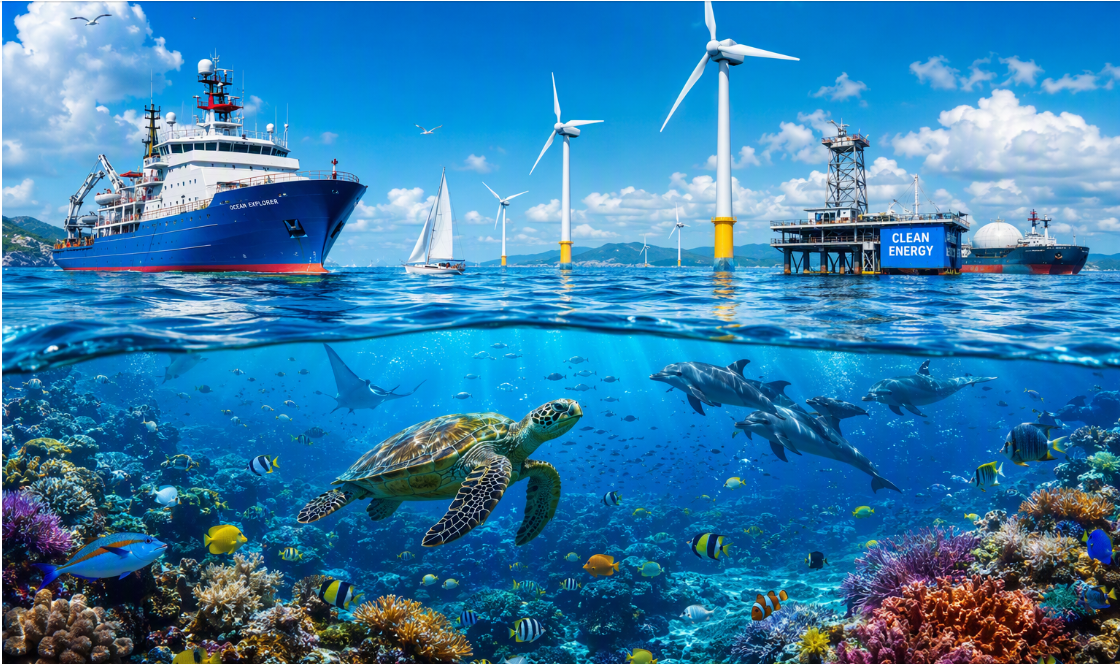
- The main areas are sustainable fisheries, tourism, renewable energy, and work that happens around ports.
- Climate change, marine pollution, and gaps in policy are still big problems.
- The Government of India supports the blue economy by starting the Blue Growth Initiative and other missions.
Table of Contents
Introduction
If you want to get ready for the UPSC exam, you need to know about the blue economy. The blue economy is important because it connects economic growth with environmental sustainability. It is about using ocean resources and marine resources in a smart and careful way. It is also important to protect the ocean ecosystem health. This idea matters a lot in India. India is close to the Indian Ocean, and there are many coastal states in the country. The blue economy is also linked to climate change, people’s jobs, and ways to help with good, sustainable development.
Blue Economy in the Context of UPSC – Key Concepts and Definitions
For UPSC, the blue economy means the sustainable use of ocean resources. The goal is to help economic growth and make lives better without harming the sea. It is not only about getting value from the ocean economy. The focus is to bring economic benefits together with sustainable development. The blue economy is for a better, clean future by using ocean resources in a smart way.
In answer writing, you should talk about how we use ocean resources and marine resources. Make sure you say that sustainable marine energy can help us a lot. It is good to add that India has a large exclusive economic zone. You can also mention that the World Bank supports the idea of the blue economy. This blue economy idea wants us to grow and make things better, but also cares about keeping our oceans safe for many years.
Understanding the Blue Economy: Meaning and Scope
The blue economy is about how we use ocean resources to help growth, create jobs, and make life better for people. For UPSC, you should know that the blue economy means both using ocean resources and caring about sustainable development. It is not only about shipping or fishing. This is a bigger idea. It brings together the ocean economy and the need for the sustainable use of ocean resources.
The scope of this is large. It looks at marine resources, fisheries, tourism, renewable energy, and ways to control waste. The main idea is to reach higher productivity. It does this through greening of ocean development. This means development should make more things. At the same time, it should not hurt ocean ecosystem health.
In India, the blue economy is linked to people who live along the coast, climate change, and the way the Ministry of Earth Sciences makes plans. The blue economy is about how to use ocean resources in the best way. It looks at both the money people can make and how to use these resources without harm. When you talk about the blue economy, it is important to mention how using ocean resources well gives economic benefits and also takes care of nature.
It matters to know what people can get from the ocean and, at the same time, help coastal communities. The best way to use ocean resources helps both now and in the future. This supports people who live near the sea too. It matters for the health of the climate and how all people by the sea live. So, always show both the economic benefits and why sustainable use of ocean resources is important, just like the Ministry of Earth Sciences does.
Distinction Between Blue Economy and Traditional Ocean Economy
Many students say that the blue economy and the old ocean economy are the same. But these are not. The ocean economy is about getting things from the sea to make money. The blue economy is different. It is about how to use ocean resources in a good way. It also looks at sustainable development and how to keep the sea safe for all of us.
Both blue economy and economic growth focus on making more money. But, the blue economy is also careful with how people use ocean resources. It wants new jobs and income, but not at the cost of the ocean. The main idea is to see if we can use ocean resources for a long time without harm. Sustainable use and long-term balance are the things that matter most in the blue economy.
- The traditional ocean economy is about how much you can get or take from the sea.
- The blue economy focuses on economic growth and protecting the environment at the same time.
- Traditional ways do not always think about putting too much stress on resources or hurting the ecosystem.
- The blue economy helps us use sustainable marine energy and guides us to use the ocean in a careful and smart way.
For UPSC, this key point helps you make your answers more fair and balanced. You can use it to compare old development models with new development models in a clear way.
Pillars and Key Sectors of the Blue Economy
The blue economy is made up of a few key things. Some of these are the use of ocean resources, making sure to use ocean resources in a way that they last, and looking after the environment. People also look for ways to earn income from these things. In India, the blue economy is very important. It helps with economic development, food security, and job creation in coastal regions and coastal areas.
Its main industries are maritime transport, marine tourism, renewable energy, and sustainable fishing. These key ocean activities are important for India because the country has a long coastline. These things are also part of the sustainable development goal plan. The next two sections will talk about these sectors in a way that will help with UPSC preparation.
Principal Industries Driving Blue Economy in India
India’s blue economy depends on a few key sectors. These areas help many people get work and make trade better. They are very important for economic development in the country. They help create new jobs, let people connect more, and make good use of marine resources. India’s blue economy adds value by using the sea and marine resources in smart ways.
You can use this table. It will help you remember the main sectors:
| Sector | Role in India’s blue economy |
|---|---|
| Fisheries | Supports livelihoods, food supply, and income generation |
| Maritime transport | Carries most trade and strengthens port-led growth |
| Coastal tourism | Brings local income and service-sector employment |
| Marine tourism | Expands travel-linked business in coastal areas |
| Renewable energy | Includes ocean energy and the form of offshore wind |
These sectors bring good economic benefits. They help by creating jobs. You can often see this in coastal areas. For UPSC, these examples show how marine resources can support growth. But it is important to manage these resources with care.
Emerging Sectors and Innovation in Blue Economy
Some new areas are now a big part of India’s blue economy along with the older industries. These new fields show how the use of technology can help the country with economic growth. They also make sure to be good for the planet. These fields matter for climate change as well. They play a part in forming future plans and policies for India’s blue economy.
A few areas deserve special attention:
- Blue carbon shows that the ocean is an important carbon sink.
- Ocean energy and sustainable marine energy can help us meet rising energy needs.
- The Deep Ocean Mission supports research and helps make better resource technology.
- Waste management is a big part of protecting the health of the ocean ecosystem.
For UPSC, you can look at these sectors as good examples of how greening of ocean development is taking place. They show how there can be higher productivity. The Indian Government thinks these are tools for sustainable development. In these cases, science should work with how people use resources.
Significance of Blue Economy for India
The blue economy is very important for India. It helps the country to grow and adds to economic growth. More jobs are created, and more people get work because of it. The blue economy also lets India use its marine resources in a better way. People in coastal communities can get more jobs. They work in things like trade, fisheries, and coastal tourism. This helps them have a better life.
India is in the Indian Ocean, and this matters a lot. Many things, like maritime transport, getting ocean resources, and being in touch with other countries, rely on the ocean. At the same time, using ocean resources fits well with the vision of New India. This idea can give economic benefits, help social inclusion, and support sustainable development. It also helps deal with climate change. The next parts will show how people and the whole country can get these gains in detail.
Economic and Social Benefits of Sustainable Ocean Use
The sustainable use of ocean resources can give direct economic benefits to India. This is good for places like fisheries, ports, transport, and tourism. For coastal states, the use of ocean resources in a careful way helps local economies grow stronger. It also helps people get better jobs and more steady income.
The blue economy helps make life better for people who live in coastal communities. When there is new economic growth along with ways to keep things good for nature, it stays helpful for people for a long time. That is why the blue economy is seen as a way to bring economic growth and good results for people’s lives together.
- It makes more jobs in fisheries, ports, and marine tourism.
- It helps food security with better-managed aquatic resources.
- It helps coastal communities by giving income and supporting how people make a living.
- It helps with sustainable development by using ocean resources in a way that is good for the earth.
For UPSC, these points help you show that the blue economy is more than just what we get out of it. It also brings gains that can include all people.
Environmental Protection and Blue Economy’s Role
The blue economy matters because it ties together growth and looking after nature. Oceans are blue carbon systems. They take in carbon emissions. So, they help in the fight against climate change. Oceans also keep nature in balance for a long time.
Marine pollution, using too much, and not having strong waste management can hurt the health of the ocean ecosystem. If people do not stop this, the economy will get weaker. This is why conservation of ocean is not something away from development. It is a part of development.
Sustainable fisheries, cleaner coasts, and smarter use of resources can help the blue economy last longer. If you are preparing for UPSC, you can say that true sustainable development happens only when you include environmental protection in your plans right from the start.
Major Challenges and Issues in Developing Blue Economy in India
India’s blue economy has a lot of promise. But there are some big problems too. Marine pollution is getting worse every year. The effects of climate change are harder to deal with now. Some people take things from the sea without the right permission. Natural disasters happen often. These things all make it harder for India’s blue economy to grow. They slow down economic growth and hurt environmental sustainability in the country.
There are a lot of problems, such as rules, social worries, money problems, and tech issues. Many people who stay near the sea find it hard to make a living, especially when the government is weak or when there is not enough help or things they need. For the Government of India, the main job is to give more chances to people, but still not hurt the earth. The next parts talk about these problems in two groups.
Environmental and Policy-Related Obstacles
One big problem for the blue economy is the pressure on the environment. There is marine pollution, oil spills, untreated waste, and plastic trash. These things hurt coastal regions. They also make it harder for the environment to get better. Climate change makes things worse. It changes the sea and is bad for marine life.
Policy problems make this even harder. When different parts work on their own, the sustainable use of ocean resources gets tough. That is why people need to plan together and follow science. When the work is done with the Ministry of Earth Sciences, it helps in the sustainable use of ocean resources.
Key obstacles include:
- Marine pollution is often caused by waste and runoff.
- Many coastal regions do not have good waste management.
- Climate change makes things harder for marine habitats.
- There are still gaps in policy for waste management, sustainable fisheries, and blue carbon protection.
For UPSC, you have to show that environmental sustainability is not only about learning or knowing more. It also needs better groups to handle things and good rules to follow.
Socio-Economic and Technological Challenges
Not every problem in india’s blue economy is about the environment. There are also issues that relate to money and people. A lot of coastal communities want safe jobs. They want a good way to live. These people ask for fairness and more social inclusion, too. If the blue economy grows but only helps a small group or some sectors, then many do not get these benefits. This makes the push for economic development feel weaker for all.
Technological problems are important too. India needs to build better systems for offshore work and marine research. The country also has to focus on new things like renewable energy. If people do not work on skill development and use modern systems, it is hard to get higher productivity. It also becomes tough to manage resources in a good way.
There is now more need for energy, trade, and aquatic resources. This means there is more pressure on fisheries policy and planning. For UPSC, the idea is simple. Economic growth in this area needs people, technology, and groups to move forward together.
Government Policies and Initiatives Promoting Blue Economy
India has started many programs and taken steps to make the blue economy stronger. These include Sagarmala, the Deep Ocean Mission, and projects run by the Ministry of Earth Sciences. All of these work together to help the country grow. They help people use the best technology and make good use of the sea areas.
The Government of India supports the Blue Growth Initiative with its National Fisheries Policy and more plans. These steps are taken for sustainable development. They also aim to keep ocean ecosystem health safe. The government looks to make better use of India’s exclusive economic zone. The next parts will tell you more about these schemes. They will also talk about wider help and work in this area.
Key Schemes, Projects, and Missions (Including Sagarmala and Maritime India Vision)
India is making progress to grow the blue economy. The government of india has started different plans and missions. These focus on ports, research, fisheries, and how people plan at the coast. This shows that they want to build the blue economy in the country.
Important initiatives include:
- Sagarmala is a plan to make ports better. It aims to help development along with the ports.
- Maritime India Vision is a plan for the long-term growth of the sea sector in India.
- Deep Ocean Mission works on new technology and finding resources in the deep sea.
- National Fisheries Policy supports sustainable fisheries. It helps blue growth with this fisheries policy.
There are some other useful steps as well, like O-SMART and Integrated Coastal Zone Management. The Ministry of Earth Sciences is also playing a big part in making policies on this. For UPSC, you can say that these steps help with sustainable development. They help with conservation of ocean resources. They also make life better for people by using better ways to live with the ocean.
Role of Technology and International Collaboration
Technology is a big part of the blue economy. It helps people do research, find more resources, and improve maritime transport. Technology also lets us keep an eye on the sea. In India, people need new tools to work deep underwater, make maritime transport safer, and keep the coasts clean.
It also helps support sustainable marine energy. People can get higher productivity from areas like ocean energy, offshore systems, and better port services. At the same time, these things make it easier to move away from old methods. Waste management needs better systems and technology, so the coastal waters stay clean, safe, and good to use.
International collaboration is important too. India and Norway work together on the blue economy to help with sustainable development. This is a good example of two countries coming together for a better future. For UPSC, you should also read about how worldwide groups such as the World Bank and the Blue Growth Initiative link economic development with being sustainable.
Conclusion
To sum up, it is very important for students to know about the blue economy when they are getting ready for the UPSC exams. The blue economy is not just the use of ocean resources. It is the sustainable use of ocean resources. This means we need to use ocean resources in a way that helps us today and also protects the future. This idea brings many good things to India, like more jobs, money, and a better world.
When you know the main points, pillars, and problems of the blue economy, you can see how it helps people and the earth. It is useful to read about government plans and how India works with other countries on this topic, as it can help you learn even more. If you want to do well and get ahead, read more about the blue economy or talk to someone who knows a lot.
If you have questions or need more help, feel free to ask for a free talk. This can help you know why the blue economy, and how the sustainable use of ocean resources, is so important for your studies.
What are the important points for blue economy upsc notes?
Your blue economy UPSC notes should explain what the blue economy means. You need to talk about the main ideas, why it is important for India, what problems are there, and what the government is doing about it. Be sure to focus on sustainable development, the economic benefits, and the sustainable use of ocean resources.
It is important to know that using ocean resources for quick gains is different from taking care of them for a long time. We need to use ocean resources in a way that helps us now and also protects them for the future.
How is blue economy represented in blue economy upsc pyq?
The blue economy often comes up in UPSC exams. You may be asked to say what it is and why it is important for India. The answer should show how the blue economy links ocean resources to economic development. It is also good to point out why environmental sustainability is needed as we plan and work in this area. Many old exam questions are about the potential, value, and issues India faces with the blue economy, as well as what government is doing through new steps and policies.
How can India balance economic growth and sustainability within the blue economy?
India can help economic growth and support the blue economy by taking care of sustainable fisheries. The country can also keep the coasts clean. By using better rules and planning with science, India can look after environmental sustainability. With these steps, trade can get better, more jobs will be made, and people living in coast and sea areas can have a better life.